Sunday, April 24, 2016

The World of Gloria Vanderbilt

8014810

Rating: 3.5 Stars

Review:

This will be a shorter review, as this book is shorter on text than my usual fare. it is also harder to review, as there were tons of photographs along side the text. 

First though, I don't know how it has escaped my attention for the last decade or so that Anderson Cooper is a Vanderbilt. I can see why he would not want people to know it immediately - not because he was ashamed, but because of all the 'baggage' he rightly claims that comes with it.

I'm terribly intrigued by Old Money New York of the Gilded Age. The Vanderbilts, Rockefellers, Morgans, etc. What I especially found interesting about this books is it gives an account in photos and text of the life of a Vanderbilt in the modern era. Gloria Vanderbilt is certainly an interesting figure, from her many marriages, her multiple careers, and the tragic suicide of her son, Carter.

I must confess: Everything I wrote prior to this sentence, I wrote a few days ago. I saved this review as a draft and have just now come back to it. I can not for the life of my explain why this review has been so much harder for me to write than others. At first I thought as I struggled with this one on Friday night, that it was because I was just in a reviewing slump, that I know I am 8 books behind in my 2016 Challenge if I want to get it completed, this, that, whatever. But it can't really be a slump OR the Challenge, if I managed to write three reviews since then for three other books I had just finished recently, right? I don't know what it is, but for some reason I am just struggling with this one. And that is certainly not fair to the book, because I enjoyed it. Every book deserves a fair review and not one that is half-hearted.

So, here is what I will say: The text was lacking in detail of Gloria's life, because I do not think this was meant to tell her life story in words. Certainly, she has written her autobiography and there are other books that do so as well. This was meant to tell her life in pictures and there it was successful. Personally, however, I just could not get over the fact that in so many rooms she was pictured in later in life, the walls are quilted. It is just weird to me. I do recommend the book, especially for those interested in the remnants of days gone by and seeing how the children of the Gilded Age grew into adulthood, and what it is like to be a Vanderbilt now.

The Little Book of Saints

10899242

Rating: 4 Stars

Review:

Perhaps in a past life I was Catholic - maybe even Catherine of Aragon herself, ha! - if I believed in that sort of thing, given the fact that I am actually Lutheran and we don't. But wouldn't that be kind of ironic in itself? Maybe it is precisely because I am Lutheran that saints and relics are all so fascinating to me.

This little gem is one I picked up on BookBub and I am so glad I did. It is a short volume, containing brief - very brief in some cases, when there are not a lot of hard facts to begin with - summaries of the lives of each saint and how they came to be a saint in the first place. I truly know nothing about any of the saints, I don't even know if they are all included in this text, but what I did read was very engaging and made me want to know more about the lives of many of those I read about. The unfortunate side effect is that since so many of these people lived before 1600, finding out any more information than what is contained here is quite unlikely. The search is half the fun though, isn't it?

Overall, this is a simple and sweet little volume that I breezed through quickly in terms of reading. The photos of the cards are equally as interesting, especially the details in how each saint is often depicted - usually with either an item relating to their works, or the way in which they died or were martyred. I only had a copy on my Kindle, so I'd like to have seen a hard copy to have a better look at the plates themselves larger and in color. Definitely recommended.

Saturday, April 23, 2016

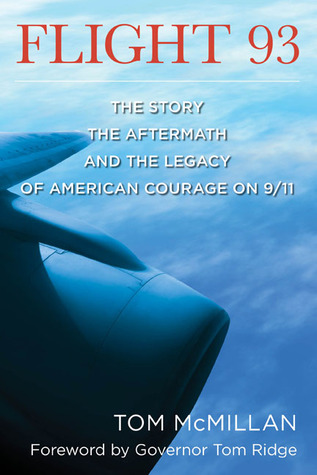
Flight 93: The Story, the Aftermath, and the Legacy of American Courage on 9/11

20820679

Rating: 5 Stars

Review:

It will be 15 years this September since the United States was attacked from within, and I am still not sure I am capable of writing a passable review about any book on the subject. I recall with near-perfect clarity that entire, terrible day. I was getting ready for class in the early weeks of my freshman year of college that Tuesday morning and heard something about a plane hitting one of the Twin Towers. By the time I trekked to the opposite end of campus for my first class of the day, both towers were in flames, hundreds of people were dead, and may more would die before it was finally over. Being in a journalism class, you'd think our professor would have understood why our eyes were glued to the television instead of listening to him. We watched in awe as the first tower fell, and then he did the unthinkable. He turned off the t.v.

Yes, I am totally serious. A few students walked out of class. Some were still too stunned by what they had seen to do anything. The rest of the day was very surreal. I didn't go to my next class, but in hindsight I assume it was probably cancelled anyway. I sat in my dorm room the rest of the day and night, watching the live coverage continue, seeing the devastation at Ground Zero, the gaping wound in the Pentagon, and that final, lonely field in Pennsylvania.

Nearly 15 years on however, I realize Flight 93, and these brave passengers, were the ones I knew least about. I don't know if I can give a review here that will do justice to these heroic men and women who fought back against these monsters bent on killing as many people as possible, but I will certainly try. It has been frustrating to me that Flight 93 has become a kind of afterthought when looking at the destruction of NYC and DC. I am not sure why this is. Perhaps because there was literally nothing left of the plane, nothing to identify it in anyway as related to the terrorist attacks, save for a large pit? Whatever the reason, books like this one are important, so that we may remember everyone lost that day, and those who did everything they could to try and stop it. While the target of Flight 93 has never been determined, the most likely destination was the Capitol, considering Bush wasn't at the White House at the time. On the other hand, what better way to demoralize a country further, than to destroy the very home where the country's (contested - I definitely wouldn't have voted for him) leader lived? Either way, who knows how many were saved due to the actions of those on-board Flight 93.

This text is incredibly well-researched, down to the smallest detail. My initial concern with giving this one a try was that I did not want to read a bunch of conjecture about what might have happen in those final minutes. I was surprised to find that, thanks to the numerous phone calls that passengers made to their loved ones, we actually know quite a bit about their final minutes. The author presents the information from numerous perspectives. We get a great details of information about the various passengers, the little town of Shanksville and her coroner, who went above and beyond the call of duty for the families, and even of the hijackers. For the most part I wanted to know very little about these murderers. I prefer to forget them and remember those who are deserving, those who sacrificed themselves so others might live, not those who murdered innocent people and called it war. Still, I do not believe this was done in a tasteless way, and the whole story together flowed. It also gave an eye-opening experience as to just how easy the hijackers had it in coming here, getting their licenses, and eventually going on to their deaths.

As I read this in Kindle format, the actual text of the book only comprised 58% of the entire file. Following that was a list of crew and passengers, along with their job, hometown, and reason for being on the flight that morning. Something I would have appreciated in this section were photos to accompany the names, to see who these people were. One aspect of the book that bothered me was that after this list, came four photos of the hijackers. I later found that any passenger photos that were included were mixed in among photos of the crash site and items recovered. I was surprised to see what items could survive such an impact and that there were physical things returned to loved ones after all was said and done. This bothered me because I did not want to see those faces. I did not want those murderers given any more attention than they have already had and I could not care less what they looked like. How many times do you recall seeing their photos all lines up in rows, newscast after newscast? And yet, I do not remember seeing the victims' faces nearly as often. I can understand if some families did not want to include pictures of their loved ones, but if they were available publicly, it would have been a service to the book to include them. Certainly, the photos should not have been scattered among the debris AFTER the terrorists. The photos should have been included with the passengers' names on the list immediately following the text.

The final 26% of the book then was devoted to the author's notes and sources for the book. These were incredibly exhaustive, and broken up by chapter. I have not seen quite so extensive a bibliography in such a while. Following that even was a more general bibliography, also containing numerous titles that would be of interest to anyone seeking more knowledge of that terrible day in September. Highly, highly recommended.

Friday, April 22, 2016

Elizabeth I: The Golden Reign of Gloriana

Elizabeth I: The Golden Reign of Gloriana

Rating: 3 Stars

Review:

If you have ever read any of my past reviews, you might know that I am no great fan of Elizabeth I. While I do understand and acknowledge that she is among the most successful of monarchs, I am wholly unimpressed with her woe-is-me behavior in regards to her favorites and the handling of the execution of Mary, Queen of Scots.

This does not mean, however, that I do not find value in books written about her. I still enjoy reading about the Tudor Dynasty, even if I am not fond of all the monarchs who reigned in that time.

The greatest strength of this short volume is the multiple uses of contemporary sources. In all, there are twenty documents that give readers a glimpse into the life of Elizabeth, four centuries on. The majority of these documents are letters to or from the queen at various points in her life. Each was first accompanied with a summary of the item, the full text following that, and then a photocopy of at least a portion of the original document. I found these most fascinating and could leaf through pages of parchment for hours.

In addition these primary sources, there book is filled with photographs from the period, giving faces to the numerous names that can sometimes be hard to keep straight. These really make the story and give life to the important players from that time. An additional resource at the end of the text is a 'Who's Who', which will be just as helpful for those who are new to the dynasty, as well as a chronology of events in Elizabeth's life and a solid list of 'further readings.'

So while this is a short review, I believe it is fitting for this short, succinct volume outlining the life of Elizabeth I. While I do not necessarily agree with all 'facts' as presented (some things will forever be up for debate), the text does its job for its purpose. The author states from the beginning it is not his intention to give an in-depth analysis of her reign. If that is what you are looking for, this volume will be disappointing. If you are looking for an overview, however, and want something that will not be overwhelming, give this one a try.

Weekend Giveaway!

Over on my Facebook page I am doing a giveaway for a $20 gift card to Barnes and Noble. Check it out at www.facebook.com/AllTheBookBlogNamesAreTaken to see how to enter. Good luck!

Tuesday, April 12, 2016

The Assassins

29753536

Rating: 4 Stars

Review:

This book was provided to me by the author, Alan Bardos, free of charge in exchange for an honest review.

I am almost embarrassed to admit how little I really know about World War I. But, think back to your own education - particularly if you are from the United States. How much did you really learn about the start of the war, about any of it prior to the US joining the conflict and being the 'rescuers' so to speak? All I recall from high school or college was that an assassin (never named), killed Archduke Franz Ferdinand, heir to the Hapsburg Empire and within a month Europe was engulfed in war.

I first started to remedy this lack of knowledge when I stumbled upon 'Trigger: Hunting the Assassin Who Brought the World to War', a travelogue by Tim Butcher. In it I finally learned (or possibly relearned) the name Gavrilo Princip, the young man determined to free his country of what he saw as an oppressive regime in the Hapsburg family. Despite the fact that this young man and his compatriots planned and carried out a terrible deed that indirectly or directly, depending on your point of view, results in the deaths of nearly twenty million soldiers and civilians, it is hard to not have a little sympathy for him.. Since then, I meandered my way back to my more typical fare of British history before 1600, and not read much else about The Great War.

This changed about a week ago when an author contacted me and requested I review his book. it was historical fiction, so I did hesitate a bit, but decided that given my coming-and-going interest in the topic, I would give it a try. I was not disappointed. Not, at least in the actual content of the book and the plot. I was HIGHLY disappointed in the absolutely infuriating main character, Johnny Swift, but don't you worry, I will get to him in a moment.

The book follows the fictional character of nineteen year old Johnny Swift, who is employed as a clerk at the British embassy in Paris. He made the dangerous mistake of having an affair with his superior's wife. Not only that, he's gambled away a large sum of Sir George's money with her in Monte Carlo. As a punishment, and in the hopes Johnny will get himself killed while on assignment, Sir George sends his wayward clerk off to see what information he can get about the Young Bosnians and their plans to assassinate Archduke Ferdinand in order to free themselves from Hapsburg rule.

Entwined in Johnny's story are two incredibly important perspectives of the period - that of the Archduke, and his murderer. We see as all three men make decisions that will ultimately lead them to that day, at that time, on Appel Quay, in one fateful moment. We see Gavrilo and his fellow conspirators working together, plotting diligently, even arguing and eventually making final preparations. We also see Ferdinand and his wife Sophie, even small glimpses of them with their three young children before leaving for Sarajevo.

Swift manages to gain the trust of the assassins and becomes a member of the group. He has not, however, lost his poor decision-making skills despite the high stakes. His contact is a man by the name of Lazlo Breitner, a Hungarian man who had been all but banished to his current job due to a previous dishonorable association with a corrupt official who had been allowed to commit suicide rather than face the consequences of his crimes. Johnny keeps himself from being discovered as a spy, right up to the assassination, and after...and the rest is history.

I knew very little about Ferdinand or Sophie before this. I certainly did not know their background, how the marriage was so despised by his family. It was very easy to become sympathetic to the Archduke for this, and as he is shown with his wife and family in the days leading up to the trip. Even though this is a fictionalized account, it is still heartbreaking as he and Sophie leave their children to go on a trip he did not want to take in the first place. I guess there is some comfort in the fact that Ferdinand and Sophie were able to die together, though still tragic that they left three young children behind. Prior to this, I did not have much of a picture of Ferdinand in my head relating to his personal life. I kind of viewed him much like Princip would have - part of this oppressive government that did not allow freedom to the people. While this is a work of fiction, it certainly helped see another side of the Archduke.

Johnny Swift is entirely fiction, and thank goodness for that. I could not stand him. From the start he is arrogant and selfish and a total weasel for stealing both Sir George's wife and money. I did not much care for Libby either, Sir George's wife. I get that they were both young, but what a meaningless existence she had, just hanging around in Monte Carlo and wasting her husband's money, then traipsing from spa to spa and whatever random old moneyed guy she could find when she grew bored with Johnny. I honestly do not know who was worse. Libby disappears for a while and I found myself in those times wanting Johnny to be successful in his mission. I can't say anything else without giving away some things, but she shows up at the worst time and makes Johnny a terrible person all over again, just when I thought he could be a little redeemed. Again, being fiction, I knew he could not stop the assassination, but I was hoping for some effort.

I found the chapters focused on Gavrilo and his fellow conspirators just as enthralling as those relating to Ferdinand. There really is so little information available about these young men, to see them come to life even just a little bit is quite fascinating. I am torn on how I feel about Princip especially, being the one who actually committed the murders. I touched on this in my review of 'Trigger' as well. He had no way of knowing his actions would bring about such a tidal wave of death and misery in the following four years, he was doing what he had always done his whole life - be the little guy, standing up to those who he viewed as the bullies. He repeatedly refers to Ferdinand in the book as 'the tyrant'.

Now, logically of course, this book can only end one way. Archduke Ferdinand and his wife Sophie will be shot on Appel Quay by Princip, they will die, and this spark will ignite the entire world. I also know this was historical fiction, not speculative fiction, so it had to stick to the real events. This means Johnny could not REALLY have done anything to stop the assassination, but come on! What a self-centered dope!

Overall I was very pleasantly surprised with how much I really got into this novel and wanted to see how Johnny would handle the situations he was thrown into. I had no idea what to expect, but the author did his research and it shows. I always appreciate when an author leaves a note for his or her readers, when they have used real people from history. As I read through this note, I was pleased not only to see the author used books that I have on my to-read list, but to see a few texts as well that I had not yet heard of. I enjoyed the multiple perspectives, especially as Johnny began his mission and was interacting with the group. I only wish he could have been successful and there is a brief moment where you think, despite logically knowing better, that he might actually be able to save the royal couple. But it is not to be. I definitely recommend this one to those who enjoy historical fiction, but who have a special interest in World War I.

Saturday, April 9, 2016

The Gettysburg Campaign: The History and Legacy of the Civil War’s Most Famous Campaign

25530852

Rating: 3 Stars

Review:

I have been trying for some time to find an interest in the Civil War. It is easily one of the most important series of events in the history of the United States, yet it is something I have never really been interested in. I'm not sure why, because when I was younger I loved learning about the 1800s and I wanted to be a pioneer (I know right?!). But I definitely do not enjoy reading about military history, war, weapons, battle plans, etc. I am interested in the social and cultural aspects of the war, and was looking at this one to supplement that and start small, by looking at one battle. And naturally, I had to choose the most famous battle of them all.

Overall this was a decent introduction to a very dense and complex topic. I really enjoyed the fact that there were so many photographs included, especially of the many generals and other military men when they were discussed. I find this especially helpful in non-fiction texts, particularly when there are a lot of players involved and it is a new topic to me. There were also multiple instances of primary sources included, which I can always appreciate. The editors included many, many parts of whole letters from various generals to their wives, to fellow generals, or their superiors. It is always interesting to have insight into historical figures in this way, to get the words directly from their mouths or pens.

The book is, however, not without issues. These seem to be editing issues for the most part. Especially early on, I was finding whole paragraphs, or at least sections of paragraphs, repeated within pages of one another. This was incredibly distracting, especially on a Kindle. I would read a section and then suddenly be reading it a few paragraphs later, and I would think I had somehow gone backwards. This is something that must be taken care of in order for the book to be taken seriously, as it reflects poorly on the scholarship and the text itself.

I found this quote wryly amusing: "Perhaps none other than George Pickett himself put it best. When asked (certainly ad nauseam) why Pickett's charge had failed, Pickett is said to have tersely replied, "I've always thought the Yankees had something to do with it.""

I can recommend this with some hesitation due to the above-mentioned editing. Luckily the issues do not occur throughout the entire book, otherwise this would be one I would not have finished.

Henry VIII

25098382

Rating: 1 Star

Review:

I really should know better when it comes to very short volumes purporting to tell the story of a complex monarch. I have made this mistake in the past and am not sure what I was thinking when I grabbed this one after seeing it advertised on Book Bub. Luckily, I do not think it was more than ninety-nine cents, so that is some comfort.

The writing itself it not poor, and perhaps if the author had had a larger vision for the work, or more research, this could have been a much better book. Unfortunately there were simply so many inaccuracies, it can not be taken too seriously as a comprehensive and well-researched book.

Early on, it was easy to see how superficial the book was going to be. The reader is also confronted very early on with questionable research based on the information presented. When discussing the issue of Catherine potentially marrying Henry after Arthur's death, the author implies that Henry VII wanted the marriage to go forward. This is not actually true, as has been documented several times by several different historians. Catherine was effectively isolated for quite a long time after Arthur's death and was merely a pawn as her father Ferdinand and Henry VII argued over her dowry and payments, among other things. Most other accounts even state that Henry VII steered young Henry away from the marriage, and that is why it took place only after Henry VII died. That is not to say that Henry VIII was always in favor of the marriage himself either, but it is a bit of a stretch to say that he was the one who prevented it from taking place while his father was alive. Prince and princesses had little say in who they did or did not married while their parents lived.

The inaccuracies continue after Henry and Catherine wed. I am not sure if it is intentional, but either the author is sometimes-biased against Anne Boleyn, or she simply did not do the research to now the difference between Anne and her sister Mary. As a slight to Anne's character (please do not mistake this statement by me and being an Anne supporter in any way. I am certainly not and was not unhappy to see her replaced by Jane Seymour). the author indicates Anne being something of a girl with loose morals so to speak when she remained in France after Henry's sister Mary returned to England. yet most other accounts written about the time period indicates that these things were spoken about Anne's sister, also named Mary. I am not looking to make Anne look good by any means, but I read non-fiction for a reason: I like facts and the truth. This book plays fast and loose with both. If such things were even spoken about Anne, would Henry have pursued her for so long? He and Francis were frenemies, so I find it highly unlikely that a person of such ego as Henry VIII would pursue such drastic measures for a woman who could not say no to a king who most of the time Henry could not stand. Later she also makes claims that there are scholars who think it is likely that Anne had affairs while married to Henry. How would this have even been possible? Queens were always attended by their ladies-in-waiting, they were never alone. While Katherine Howard later did have affairs, it was with the help of some of her ladies. I find it hard to believe that once the idea was planted for Jane to take Anne's place as queen, Jane would not have come forward with some information of said affairs. Despite my disdain for Anne Boleyn, I think it is safe to say that the crimes she was accused off later, including an affair with her own brother, were pure rubbish concocted in order to make it easy to get rid of her. Any scholars who do believe she had any affairs is not one who is in the majority.

Perhaps my biggest source of contention with this book, however, come in regards to Henry and Anne's reaction to the death of Catherine of Aragon. The author claims that the two were in mourning and wore yellow, as yellow was the color of mourning for royalty in Spain. This has been disproven. Even Alison Weir, who claimed this was once true in her book on the wives of Henry VIII, later recanted that fact in her book about Anne, 'The Lady in the Tower', saying that it was falsely concluded that yellow was the color of mourning. Not only is this just poor research and silly belief, but there is simply no way Henry and Anne would have mourned Catherine's death, considering all the "trouble" she gave them in fighting for her own marriage. The pair would have been joyous, relieved, even celebratory, that their foe was finally vanquished.

As I went on it seemed less and less likely that much research went into this book. At one point it was stated that in 1526, Cardinal Wolsey gave his beloved Hampton Court to Henry. really? REALLY? That is point blank not true. When Wolsey fell from favor, Henry TOOK Hampton Court and all of Wolsey's other property as well. It even says so on the palace's website. I mean, come on. Something so easily verifiable, yet totally wrong.

While there are many more inaccuracies that I could address, I think these major ones have served their purpose well. The Tudor Dynasty during Henry's reign was very complicated. This book, however, is very superficial at best. I would hate for someone with an interest in Tudor history to start with this book and think that the conclusions and facts are correct or legitimate, or that they are building a foundation of Tudor history. They will be sorely disappointed when moving on to better, more accurate, and more detailed books and realize this one was a waste of time. There are too many inaccuracies and I can whole-heartedly say I do not recommend it at all.

Saturday, April 2, 2016

See You in the Streets: Art, Action, and Remembering the Triangle Shirtwaist Factory Fire

27214143

Rating: 4 Stars

Review:

I received this book as an ARC via NetGalley in exchange for an honest review.

As I was reading this one, I recalled borrowing a friend's copy of Triangle: The Fire that Changed America in college and for the life of me, could not remember learning about it in school at any point. As fate would have it, a random conversation with a friend from high school around the anniversary of the fire on March 25th jogged my memory and I remembered we DID learn about it in my 10th grade AP history class. Not only did we learn about it, we performed a mock trial in our combined AP English/History block about it. Unlike in real life, we found the factory owners (Isaac Harris and Max Blanck) guilty. Then in college a friend was reading the above book I mentioned for one of her journalism classes and I borrowed it. It was fantastic and the story has lingered in the back of my brain ever since.

For those who do not know, on March 25th, 1911, 146 people (mostly young women between 16-22), died when the factory they worked in caught fire. These people either jumped to their deaths to avoid the fire when the heat became unbearable, or were burned in the fire. So many things contributed to this fire - unsafe working conditions and crowded factory floors, flammable materials, rubbish heaps, rotted fire-hoses, no phones to communicate between factory floors, no sprinkler system, locked doors, insufficient fire escape...the list goes on and on. If the tragedy and its aftermath is a topic you are interested in, 'Triangle: The Fire that Changed America' by David von Drehle really is fantastic and through BookBub I was able to purchase it on March 25th for $1.99. It was a pleasant surprise, as I had been hoping it might go on sale on the anniversary.

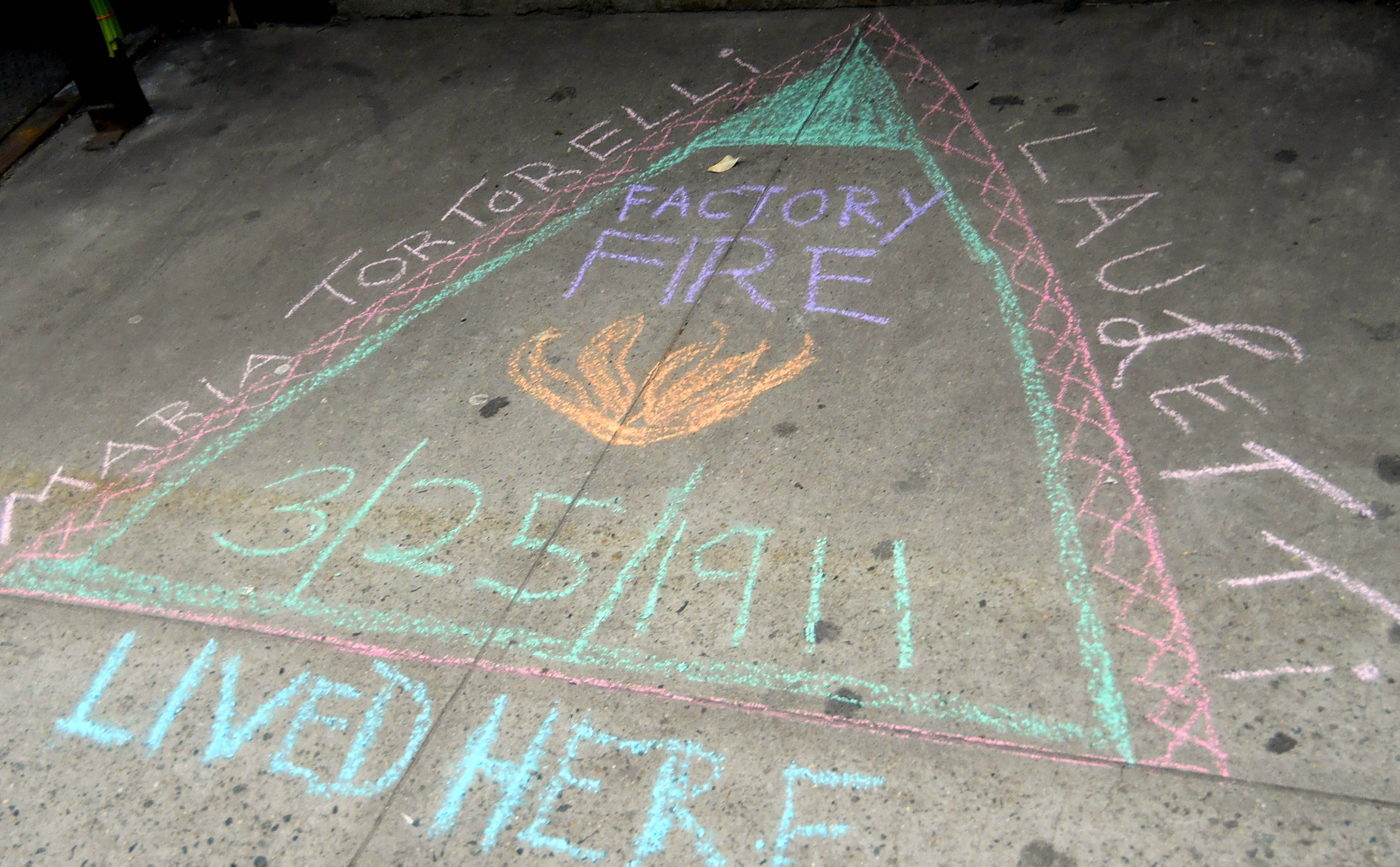
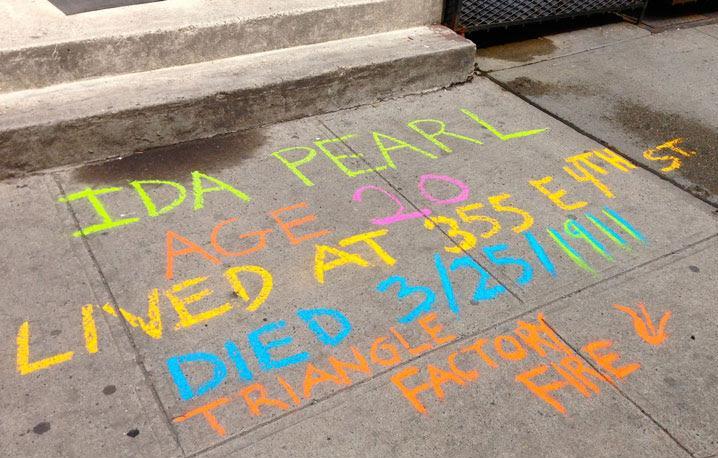
Despite it being over a century now since this tragedy occurred, I was pleased to find this title on NetGalley and see that these victims, so many of them young immigrant women (two victims were 14) working to support their families, are still being remembered today. The book details the beginning of Chalk starting in 2004, when the author invited several people to participate in a public memorial whereby they were each given a number of victims' names, ages, and addresses. Each person then went around the city, chalking the sidewalk where the victim had lived. Here are a few photos from around the Internet, such Huffington Post's article. of some of the chalkings. I did not take any of these photos, they do not belong to me.


The Chalk project eventually lead the author to create the Remember the Triangle Fire Coalition, which invited the participation of people from a wide variety of backgrounds to help put together a memorial to honor the 100th anniversary in 2011. The book details the author and group's struggle to work together at times, especially in the face of very differing opinions. With so many people involved, and new people taking an interest all the time, it became difficult at times to manage and the book presents those ups and downs as the group experienced them.

The piece of the project I found most interesting and powerful was the making of the shirtwaists for the 2011 commemoration. The group not only made the shirtwaists and attached them to bamboo poles in order to carry them, but also made a sash for each victim so again, their names would not be forgotten. (Photo from Wikipedia page regarding the Triangle fire.)


While I appreciate the author's background in film-making and other projects, I was reading this solely for the Triangle fire and the projects/coalition working to remember these workers who never had a chance to survive. I realize the author's background is somewhat important to the story, in order for the reader to see how she might be qualified to undertake something like this. What bothered me most though was the inclusion of the 9-11 project as well. I feel like discussing that as well took away from Triangle's story. New York and tragedy often go hand-in-hand, but comparing tragedies, even by accident, lessens the impact of one or the other. September 11th will never be forgotten. Almost 15 years later, I still remember every moment of that day, in my freshman year of college. I will never forget it. But so many people do not even know what the Triangle Shirtwaist Factory was. It deserves attention all its own.

Overall, despite my issue mentioned above, this was an interesting read about a little-known topic. I was happy to see attention still being brought to this event in our history, as it seems largely forgotten overall. Seeing these women and men continue to be honored is so important to our history and our future and they should never be forgotten. Definitely recommended.

Friday, April 1, 2016

Making Monte Carlo: A History of Speculation and Spectacle

Making Monte Carlo: A History of Speculation and Spectacle

Rating: 4 Stars

Review:

I received this as an ARC via NetGalley in exchange for an honest review.

Normally as I read I make multiple notes with the aid of Goodreads. I update my progress constantly to keep track of thoughts and ideas I have as I go, in order to match them up to the page or percent I was on at the time. When looking back at my log of reading for this one, there is one single, solitary note at 60%:

"Elsa Maxwell is fascinating."

Seriously, that is all I wrote the entire time I was reading this one (which took me all of four days total because it was a fantastic, fun read that I did not want to put down).

And it is true. I had never heard of Elsa Maxwell before this, but the pages devoted to her and her relationship with Monte Carlo, as well as her life in general, made for a great read. 

I have little interest in gambling in itself, but a special place in my heart for the glitz and glamour of the 1920s - the decade following WWI which saw Monte Carlo rise again as the destination for the rich and famous in Europe.

This is just as much a biography of sorts of Francois Blanc, the founder of Monte Carlo, as it is of the resort-casino itself. I have very little knowledge of the place as it is now - as I am neither rich nor famous - but as you might know if you have been reading my reviews for a while, I love history and am always looking for a good story. I found his life story to be a very interesting one, starting in his younger years with a variety of stock market scams, to his first successful casino ventures, to what can be considered his crowning achievement in turning Monte Carlo from a sleepy, small town into what we know it as today.

Aside from Blanc, there are numerous other names you will recognize - notably of course F. Scott Fitzgerald and his wife Zelda, Picasso, and Hemingway. There will also be some you may be unfamiliar with, as I was. Worth mentioning a second time is Elsa Maxwell, who is best described as a party-planner to the stars so to speak. She was famous for the outrageous soirees she held and brought her magic touch to Monte Carlo to help revive the resort and bring it back to the forefront of society again.

Overall, this was a great read that I really enjoyed. It was a fast-paced read with a writing style that flowed well. Definitely recommended!