Thursday, February 23, 2017

First Line Friday: Eleanor Edition III


It's Friday already and here I have yet another line from one of my Eleanor books to share. Okay, I am lying a bit - it is actually a paragraph. But, you'll have to excuse the stretching of the boundaries for First Line Friday because it is Eleanor and she is too cool to confine to one little line.


654901

"Beneath the dome of the church at Fontevraud - in the twelfth century, one of the largest and most prestigious abbeys for women in France - one sees today four recumbent statues, the remains of old funerary monuments, Three of them are carved from soft limestone: that of Henry Plantagenet, count of Anjou and Maine through his father, duke of Normandy and king of England through his mother; that of his son and successor, Richard Coeur de Lion; and that of Isabella of Angouleme, second wife of John Lackland, Richard's brother, who became king in his turn in 1199. The fourth effigy, of painted wood, represents Eleanor, heiress to the duchy of Aquitaine, wife of Henry and mother of Richard and John; she died at Fontevraud, where she had finally taken the veil, on 31 March 1204."

And just for your viewing pleasure, here is a photo from the abbey and what the effigies look like today. Unfortunately the monuments were disturbed long ago, during the French Revolution. It pains me to no end in knowing that Eleanor's bones were lost or purposely destroyed, as well as those of Henry, Richard, and Isabella. This was a sacred burial place and their graves, and others, were needlessly desecrated. I am at least glad that the effigies survived. Without those, we wouldn't even have an idealized version of Eleanor. That's my girl, holding a book.

Image result for eleanor of aquitaine effigy
(Photo from Wikimedia)

After you leave your first line below, check out what my fellow First Liners have waiting for you this week. If you want to play too, contact Carrie from Reading is my SuperPower.


Rachel - Bookworm Mama


Lauraine - Lauraine's Notes


Robin - Robin's Nest


Kathleen - Kathleen Denly


Happy Reading!
Sarah

Thursday, February 16, 2017

First Line Friday: Eleanor Edition II


Hello lovelies! I am still elbow-deep in research and I wouldn't have it any other way. One of the books I was most looking forward to finally arrived within the last week and it is one I am hoping will be most beneficial in really weeding out fact vs fiction in regards to Eleanor.

17684947

"Eleanor of Aquitaine is one of the most famous women in medieval history, yet also one of the most inaccessible."

Now, I am still inclined to lean toward the 'exceptional', though I know that train of thought is going to be challenged a lot by this book. I'm cool with that, so long as my girl still gets her due respect. I mean, seriously, she was hauling ass all over England in her twilight years to collect Richard's ransom, which she HAND-DELIVERED HERSELF. And when her beloved Richard was dying, who stopped at nothing to be there with him when he died? Oh, right, HIS MOMMA!

After you've left your First Line below, stop by the blogs of my fellow First-Liners to see what they have waiting for you this week!


Rachel - Bookworm Mama


Lauraine - Lauraine's Notes


Robin - Robin's Nest


Kathleen - Kathleen Denly

Happy Reading!
Sarah

Thursday, February 9, 2017

First Line Friday: Eleanor Edition I


As you might have surmised by now given my posts here, on Twitter, and Facebook, I am in the process of writing a book about Eleanor of Aquitaine. I am supremely excited about this, because Eleanor is quite possibly my numero uno when it comes to favorite historical figures. I mean, come on, I named my daughter after her (Boudicca would've been a second choice, perhaps). I had a decent collection of non-fiction books regarding the original Eleanor started for my own little queen, but have now added multiple volumes as I read and research. So, as I will be immersed in the 12th century for the foreseeable future, I present my first of many First Lines about one of the most bad-ass women in history: Eleanor, Queen of England, Duchess of Aquitaine.

654897

"When Eleanor of Aquitaine died in 1204 her long career had been the most colorful and the stormiest of any English queen consort before or since."

Ain't that the truth!

After dropping me a line, check out what my fellow First Liners have for you this week.


Rachel - Bookworm Mama


Robin - Robin's Nest


Kathleen - Kathleen Denly

Happy Reading!
Sarah

Sunday, February 5, 2017

Update!

No automatic alt text available.

"From the heated loins of Henry Plantagenet and Eleanor of Aquitaine had sprung a genetic order of fighting royal monsters" (pg 38).

I'm not sure this could've been said any better.

#AmWriting

Happy Sunday!

Friday, February 3, 2017

Update!

While perusing It Ended Badly: Thirteen of the Worst Break-Ups in History, by Jennifer Wright...

This one is too pop culture-y for me to take seriously, but I enjoyed this line:

"Eleanor never responded because she had blocked Henry's number. Besides, she'd already overruled the pope in her last marriage. No one could expect her to take an archbishop
seriously" (page 41).


Sunday, January 29, 2017

Update!

Okay, so there has been a little less activity here lately, especially noticeable last Friday, for First Line Friday. The reason for that is I suddenly have a new book project to work on that kind of came out of no where. I am still reading and reviewing, but now I am also working on something really special that I am super excited for. I may not have as many reviews up in the next couple weeks, because even though I know my subject very well, there is always more to learn. Wish me luck!

#AmWriting


Happy Reading!
Sarah

Friday, January 20, 2017

First Line Friday!


It's First Line Friday!

This week my first line is from Hunting the President: Threats, Plots, and Assassination Attempts - from FDR to Obama. (Don't ask me why that weird hyphen is there; I have no idea.)

18211008

"President Roosevelt, the only president elected four times, who led America during the Great Depression and through World War II, was the target of would-be assassins who threatened to bomb his train, blow up the White House, and simply shoot him."

Leave your First Line below and then head over to my fellow First-Liners blogs to see what they have waiting for you this week!

Rachel - Bookworm Mama


Robin - Robin's Nest


Happy Reading!
Sarah

Monday, January 16, 2017

Shopping, Seduction and Mr Selfridge

19121534

Rating: 4 Stars

I first learned of Selfridge from a PBS documentary in the last couple years and was forever intrigued by his story - particularly the part where he was eventually banned from his own store, the one he had worked so hard for decades to make into the ultimate shopping destination. He lived an incredible and interesting life, but came to a sad end in being forced out of his store. Selfridge's would not exist or have been as successful as it was without him, that much is obvious from the text. To have someone so forward-thinking, building his empire from the ground up, what a journey.

I not only learned about Selfridge and his own business, but a bit about the time period before he ventured out on his own when he worked at Marshal Field's in Chicago. Seeing Field's store in Chicago during and after the World's Fair in 1893 must have been amazing; Selfridge was very much the showman and the displays he put on must have been just amazing. I think about these times when the World's Fair was still a thing people went to see and department stores were still an all-day destination, and wonder if it would mean as much today? Now with news literally at our fingertips and social media galore, I don't know if these things would hold the same kind of wonder. I think technology has deprived us of a lot of really cool experiences, we are so desensitized to everything - not to mention the Mall of America and other mega malls kind of negate the whole 'department store experience'.

As an aside, which I seem to do a lot in my reviews recently, this book sparked my interest in the fair of 1893. My only knowledge of it thus far comes from this book and Erik Larson's fantastic Devil in the White City. Here I gained a bit more information though, and I will have to look into info about George Ferris, who debuted his Ferris Wheel at the fair, yet had to fund plans and construction costs himself. Due to that heavy burden, Ferris died just three years later alone in a hospital.

My only real gripe about this book has to do with photographs. I loved the ones that were included at the end of the text and being able to see the store and Selfridge in their primes was really cool. I only wish there had been MORE photos, and that they had been included within the text itself wherever the subject of the photo was being discussed, instead of all lumped together at the end. Looking back at my notes, I was already complaining about this in my notes, and that for all the fuss about how grand Selfridge's window displays were, there were zero photos. Given his positive relationship with the press, you know the photos have to exist in an archive somewhere. The author stated at one point that many of the displays "wouldn't look out of date today" (29%). Okay, so...where are they? I was also bothered by the fact that there were numerous mentions of these 12,000 architectural plans for the London store, yet no prints of the plans. Those would have been so cool to see and given the fact that there were so many of them, surely it would have been interesting to explore the differences in some of the plans.

I really kind of feel bad for Selfridge in regards to his personal life, especially in regards to his relationship with Jenny Dolly; what a horrible human being. Reading about some of his female companions and that aspect of his life was difficult, especially because he was so much older than him. On one hand, he made these decisions himself to spend thousands and thousands of dollars on them, but on the other hand given his advanced age, one has to wonder if he really was of sound mind. If not, these women were taking advantage of him. If he was, then I suppose he had the right to spend his money as he wished.

As the book neared its end, I felt bad for him, because I knew what was coming. For so many decades he was on the cutting edge of retail, built this magnificent empire, and made shopping an experience. The firing by his board still makes me angry, he built the place from nothing. Imagine how different things might have turned out for Marshall Field's, and Selfridge himself, had Field approved the name change to include Selfridge.

Overall, I found this an informative and interesting read. I have a bit of a soft spot for Selfridge because of how things ended, and I definitely recommend this read.

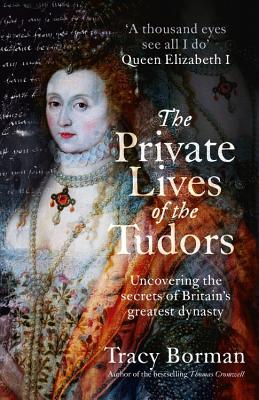
The Private Lives of the Tudors

27904523

Rating: 5 Stars

Do we really need another book about the Tudors? Of course we do, especially if it is one that is as well-researched and well-written as this effort by Tracy Borman. I like to consider myself pretty knowledgeable about the Tudor dynasty, and as such a lot of the information here were things I already knew. However, the strength of this book is that it really is an in-depth look at the lives behind the curtain, so to speak. The focus here is those closest to them, the clothing, hygiene, and of course that pesky question of Elizabeth's virginity. The fact that I took so few notes while I was reading is a testament to how much I enjoyed this book; I rarely stopped reading long enough to take many and did not realize this until I was in over 200 pages. It will make writing the review itself a bit tougher, as there was so much information to absorb. I really loved that the focus was on the daily lives of the Tudors and those close to them, not the wars or the political maneuverings so much as the things that made them human. It really was a fantastic and thorough read, but I expect nothing less from Borman.

One of the first subject in regards to their private lives comes in discussing pregnancy and birth in Tudor England. Reading about giving birth in that time never ceases to amaze and terrify me. I can't imagine having to go through the whole process; it was hard enough having a baby in 2013, even with medication! Though, to be fair, I had an emergency C-section and medication was kind of necessary. Some information in this section was new to me, and quite funny - such as the things pregnant women should not eat, do or LOOK AT. That's right, look at. If a woman looked at a hare, her child was sure to be born with a hare-lip, while gazing at the moon would make sure the baby was either a lunatic or sleepwalker (page 29). Oh, you silly Tudors. I am interested in reading more about pregnancy and birth, and these superstitions that were taken so seriously that we now consider silly and amusing. I also was interested to find actual information about who midwives were and what was considered qualifying factors for them to do the job.

"The Tudor version of a pregnancy test was to mix the woman's urine with wine, or alternatively to make her drink rainwater at night or eat honey with aniseed, both of which would bring pain to her stomach if she was pregnant" (page 38). This part was a bit unclear to me - and gross if I am understanding correctly. She was supposed to drink the urine/wine concoction? Ew.

I have read several books and articles in the last couple years that have tirelessly tried to use modern medicine to diagnose why Henry VIII went from the epitome of Renaissance Prince to a petty tyrant in his final years. The problem with this line of work is that we are talking about to vastly different centuries and it is all but impossible to truly make an accurate diagnosis. Borman states in regards to Henry VIII, "But the new king had an altogether darker side. Indulged in childhood, he had grown into a highly strung, impulsive, vain young man with a terrifying and unpredictable temper" (page 79). with descriptions like this, it is easy to see how he became the man he did in later years. We don't necessarily have to look at disorders like McLeod's to provide any further explanation.

The issue of whether or not Elizabeth remained a virgin her entire life, and why she refused to seriously entertain the idea of marriage, is one that is still hotly debated today - though I myself am not sure there is any significance, not that way it mattered whether or not Catherine of Aragon was a virgin when she married Henry. Borman discusses several theories that historians have put forth over the years, but there was one that was totally new to me. This particularly absurd rumor involved the death of the real Elizabeth at age nine after being sent to Overcourt House when a nasty case of the plague was ravaging London. Henry was due to visit, on his way in fact, when Elizabeth supposedly became ill and died. Those caring for Elizabeth combed the village for a girl who looked similar enough to her to fool the king but none could be found that was the right age except a boy. Rumor goes that the boy was dressed up in Elizabeth's clothes and from then on, for the rest of his life, he was Queen Elizabeth. This rumor probably would not have gone anywhere had a stone coffin containing a skeleton wearing remains of Tudor-period clothing not been found in the 1800s during renovations at Overcourt. Then Bram Stoker included the story in his book titled Famous Impostors and from there it just grew. Still, this is one I had not heard and seeing it addressed here again goes to show how detailed and thorough the research was.

As always, no Tudor book can be complete without at least somewhat examining the relationship of Elizabeth and her cousin Mary, Queen of Scots. I always feel the need to comment on such goings-on, as this is the biggest reason why I have such a beef with Elizabeth and why I do not hold her in as high esteem as so many others do. Elizabeth's treatment of Mary is on full display here, and while Mary is by no means innocent - she certainly made some terrible choices - I feel like some of the hostility came from the basic fact that Elizabeth was jealous of her younger, more beautiful cousin. Mary took a huge risk even fleeing to England, and in the end it cost her her life. But, after being held as a prisoner for so many years, I don't blame Mary one bit for the plots she actually did encourage against Elizabeth. What did she have to lose after all, when it was clear Elizabeth would never let her go, let alone even agree to meet her face-to-face. (Not to mention, for James to be so disloyal to his mother was gross, though his excuse at least was that he had been apart from her his whole life and raised by people who hated her.) I will never believe that Elizabeth was remorseful over Mary's death. She signed the order and she knew it would be carried out because her secretaries had been clamoring for Mary's blood for years. If Elizabeth would have at any time at least owned up to the fact that her actions were purposeful, perhaps I would not loathe her so much. Not to mention that it disgusts me that Mary was not even given a proper burial and that her "corpse still lay rotting in Fotheringay Castle" five months after she was executed (page 347).

The most interesting aspect of the book to me came towards the end. I am endlessly fascinated by the women who served Elizabeth so closely, and many who served who for decades. We know so little about the lives of these women beyond what was recorded while they were in service to Elizabeth, and that was the only part of their life that mattered. I wish we could know more about them, as they often sacrificed their own personal happiness to remain at their posts in the privy chamber. I can't imagine returning to work so soon after giving birth, but I suppose in an age where the children of the nobility were not raised by their parents anyway, the loss was not felt so greatly.

Overall, this was a wonderful and insightful read about an endlessly fascinating dynasty. Not all of the stories will be new, especially for Tudorphiles, but they are still woven together to present a complete picture of a complex age. Highly recommended.

Sunday, January 15, 2017

The Roaring Twenties

26816813

Rating: 3 Stars

Because of my fascination with this decade and the drastic change in lifestyles after WWI, I jumped on this one when it came up on BookBub. As sometimes happens though, I have a tendency to use that stupid "buy now with 1-click" option without thoroughly examining a book. The book ended up being far shorter than I anticipated - roughly 100-some pages on my Kindle. I wish I had paid more attention, because this one ended up feeling like an overview. The does not make it a bad book necessarily, but it was certainly not an in-depth look at a complicated period in history. The majority of the book seemed to relate to the actions of the presidents and only a small percentage covered the culture and economy that made the decade roar. Kind of disappointing for what my expectations were, but this would be perfect for someone just looking for an overview.