Showing posts with label True Crime. Show all posts

Tuesday, July 29, 2025

NetGalley ARC | Blood in the Water: The Untold Story of a Family Tragedy


I received a free digital ARC from the publisher via NetGalley in exchange for an honest review.

Rating | ⭐⭐

I vaguely recall hearing about this case, and maybe in the hands of a better writer, I would have liked it more? I think at this point Sherman and I are just not vibing. He does not write in a compelling way. This book was such a chore to get through. I could not even finish his Cape Cod Killer book, and A Murder in Hollywood only kept me going because it involved one of my favorite eras in Hollywood history.

Nathan Carman and his mom went out fishing, and a week later he was found in a lifeboat with his mother gone. He spun a story about how the boat sank and she drowned. Yet he was in pretty great shape for being lost at sea for a week in the North Atlantic.

A few years earlier, Nathan's extremely rich grandfather was murdered in his home, which made Nathan's mom extremely rich as a result. It's easy to see the conclusions that the investigators came to.

The family is weird, I don't know how else to say it. Maybe you just become a big weirdo when you have a lot of money, I don't know. The only person who was not weird was Nathan's grandmother, but her death occurred pretty early in the account. The grandpa who was murdered (likely by Nathan) was icky, and the mom who drowned (murdered actually, likely by Nathan)...I'm not sure how to describe. She was super attached to Nathan even though he wanted nothing to do with her and it really reminded me of the Sandy Hook killer and his mom.

As horrible as it sounds, I did not care about anything that was happening in this book. And I don't think it is the story itself, but Sherman's writing. It's just not good.At times it is awkward and just kind of  clunky. There's a lot of filler that ended up just being distracting and not necessary to the story.

This was my first in-depth look at the case, and it was disappointing. If you are already know a lot about it, you can skip the book. If you don't, then I am torn on recommending it. His writing is simply not good, but I am not sure there are other books out there on the subject.

Sunday, July 20, 2025

Publisher Gift via NetGalley | Whack Job


I received a free digital ARC from the pubisher via NetGalley in exchange for an honest review.

Rating | ⭐⭐...barely. EDIT: ⭐ only

This is not a history of axe murder. How can you write a book about axe murder and not write about any axe murders as we traditionally think of them - with the exception of Lizzie Borden? Where was the Axeman of New Orleans? Or Villisca? And to top it off, Lizzie doesn't even show up until chapter nine. NINE! Out of something like twelve chapters, hers and the chapter on the murders at Taliesin are the only ones that are actually axe murders.

Instead we also get stories of a possible 'first axe murder' half a million years ago, we look at the axe as it was used in war, and then take a look at Henry VIII and his love of chopping off heads of people who looked at him sideways.

Had I realized the author is the same one who wrote so flippantly with her father about axe murder victims in the book The Man from the Train, I would not have bothered with this one. Her casual approach to some of the deaths was honestly offensive. She's at times dismissive and bordering on straight disrespectful. I assume her aim was cheeky or funny, but she is neither. I hope she stops writing about this topic.

I honestly got more annoyed by this book as I wrote up the review and am knocking it down to one star.

To sum it up, this is a history of the the axe as a tool to build and how it was also used as a tool of death. But it is definitely NOT about axe murders.

Not recommended.

Thursday, July 17, 2025

NetGalley ARC | Murder in the Dollhouse


I received a free digital ARC from the publisher via NetGalley in exchange for an honest review.

Rating | ⭐⭐⭐

Jennifer Dulos dropped her kids off at school one morning, and was never seen again. She came from incredible familial wealth - and Liz Claiborne was her aunt. Jennifer was in the middle of an incredibly nasty divorce from her scumbag of a husband, with whom she shared five children. They'd met back at Brown University and at one time appeared to live a charmed, happy life. After Jennifer's disappearance, her husband and his girlfriend were arrested. He killed himself the day he was suppose to report to court, she was convicted of conspiracy to commit murder.

Unrelated: my grandma worked for Liz Claiborne when I was a kid and I loved back-to-school shopping there. In third grade I got this cute shorts/shirt set I loved, and one day for gym we went out to the playground. Mrs. Ewan asked us all to sit down on the blacktop and I moved to the back of the group to stand. She asked me to sit down and I deadass looked a grown woman in the eye and said, "Oh I can't sit down, these are Liz Claiborne shorts." She didn't say anything for a moment, then moved on with the lesson.

This isn't really a true crime book because the majority of the text is devoted to Jennifer's life. I appreciate this because I would much prefer books celebrate victims rather than perps.

That being said, there was so much more detail about her life than what we probably even needed, in order to understand who she was and how she ended up married to such an awful person. Jennifer led a very sheltered life due to her father and I think that is part of what set her up to get stuck in a situation like this. It seemed like she felt she was supposed to get married and have kids, and that was the only course after college. But she was also very selective about who she dated, and then as the years passed maybe she panicked a bit, ending up with Fotis who was an absolute narcissist. Well over half the book, maybe even closer to 70% is devoted to her life before her marriage, divorce proceedings, and disappearance.

The author really got to know his subject, and seems to care deeply about what happened to Jennifer. Which is why it was super weird to get a vibe that the author thought had Jennifer not fought Fotis so hard for custody of their children during the divorce proceedings, maybe she would not have been killed. I really hope I am wrong, because that's disgusting, but it was the impression I got. She had every right to fight for her children.

This is such a sad, senseless crime. While Fotis and his girlfriend are 100% responsible for their actions, I place some blame on the court and attorneys who continued to drag out the proceedings, just so everyone could keep making money. All that did was create more room for both parties to get angrier and angrier at one another, really dig their heels in, and ultimately Jennifer lost her life.

I hate that he evaded justice and that his side piece/almost future ex-wife only got fourteen years. She can still do the right thing and tell the children where their mother is so they can give her a proper buriel. But she won't and it is heart-breaking.

Recommended. Mostly. That vibe really bothers me.

Sunday, March 23, 2025

Publicist/Marketing Gift via NetGalley | Tangled Vines: Power, Privilege, and the Murdaugh Family Murders


I received a free digital ARC from the publicist/marketing team via NetGalley in exchange for an honest review.

Rating | ⭐⭐⭐⭐

I don't usually pay much attention to current big crime type stories. I only heard of this one because my favorite singer talked about watching a documentary on it, a couple years ago.

I can't think of a better motto for this family than "absolute power corrupts absolutely".

The author does a phenomenal job tracing the family lineage, and it is clear from the start that they are, in fact, corrupted with power. We see the family rise from humble beginnings and grow into a dynasty, with the first three Randolph Murdaughs serving as the solicitor for the 14th circuit for a total of 87 years. To say the family controlled their little kingdom is an understatement.

Yet it is not because of their stranglehold on the Lowcountry that we know of them. Nor is it because of the 100 year-old family law practice that made them millionaires. Instead, it is because of the most recent patriarch's conviction for murdering his wife Maggie and son Paul that we know the secrets this family would have preferred to keep hidden.

Those secrets include two other deaths, which can be classified as homicides based on the evidence provided. There's Gloria Satterfield, the family's long time housekeeper, who practically raised Buster and Paul. She fell down the stairs at one of the family homes and died. There is the question, however, of how she fell, or if she was pushed. Alex told her sons he would take care of them, the family would take care of them, they would "sue" him to be able to get money to survive. Instead, all that money went to Alex and Gloria's sons not only lost their mother, but also a chance for financial help in the wake of her death.

Stephen Smith's death is also quite questionable, given the location of his car vs. his body on a rural road late at night. It was classified as a hit and run, despite there being literally no evidence to support this conclusion. Smith had been a classmate of Buster's and there were rumors of a relationship, of Buster possibly being gay, etc. The Murdaugh family did what they do best and hid any possible connections. Smith's case was re-opened after Alex's arrest, and investigators stated that information they uncovered during their investigation of the disgraced former lawyer led to them doing so.

Then there's also the case of the death of Mallory Beach, who was killed in a boating accident the night she and some friends were on the Murdaugh's boat, with a highly intoxicated Paul at the helm. It was no secret to anyone about how awful Paul was when he was drunk. He'd pick fights, hit his girlfriend, was basically an all around trash bag of a person, and refused to let anyone else drive his boat. The accident left several of the teens injured, and Mallory missing. Yet Paul somehow escaped any kid of consequences for the the death he caused and it was clear to all that the Murdaugh's really could get away with anything.

And as if murdering his wife and son wasn't enough, the crimes he'd committed for years in the lead-up to those murders would've been enough to put Alex Murdaugh away for a long time. It turns out he'd been embezzelling from his clients, millions of dollars over who knows how many years. Within all that, there are the many years of drug addiction, which Alex needed the money for, as well as to continue supporting the life that he and his family had always been accumstomed to living.

For decades the Murdaugh family was untouchable. Outwardly the family was a pillar of strength for the community, upholding law and order. Yet underneath the shiny veneer were layers of protection by those they paid off in order to keep their influence spreading far and wide over their domain. Just when think they could not possibly get away with one more thing, they do. Easily. It's truly gross just how much this one family had for a century. And even though Alex never became solicitor like his father, grandfather, and great grandfather, he did volunteer part time in the solicitor's office. He could hide his money laundering, embezzelling, and drug use behind his family name, because who would belive that the Murdaughs were not as upstanding as they appeared?

June 7th, 2021 triggered the beginning of the end. Alex discovered the bodies of Maggie and Paul at one of their homes and he naturally assumed once again that his word about what happened would be accepted as the gospel truth, and he'd be able to continue doing what he'd always done.

Not this time.

Instead, investigators did their jobs for once where the Murdaughs were involved.

As a result, the Murdaugh dynasty came to an inglorious end when Alex was found guilty of Maggie and Paul's murders, though far to late for their many, many victims over the years.

I think it was crucial for the author to include a detailed background of the family from the beginning. Men like Alex Murdaugh are made, not born. The wealth and privilege available to those that came before him set Alex up to be the entitled monster he became. This does not absolve him from anything. He could have chosen to not be a shitty human being. He could have chosen to give money to his clients that they won, he could have chosen to not cover for Paul with Mallory's death, he could have chosen to NOT murder his wife and son. But the environment in which he was raised made it seem as though he was entitled to whatever he wanted.

Even if you've seen documenteries about the family, I would still recommend the book. I feel like the author had much more time and opportunity to really delve into the family history, which is critical to the story as a whole.

Thursday, March 16, 2023

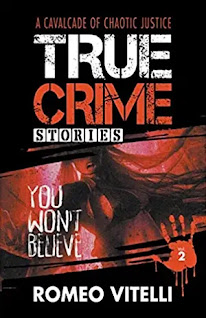
BookSirens ARC | True Crime Stories You Won't Believe Volume 2

I received a free digital ARC from the author via BookSirens in exchange for an honest review.

Rating ⭐⭐⭐⭐

I previously read the author's first book in this series, the review of which you can find HERE. I like this author because he remains respectful of the victims, no many how many years, decades, even a century or two that they have been gone. Sometimes A lot of the time with true crime, the murderers are intentionally or unintentionally glorified, and the victim is lost in the chaos (Meredith Kercher, anyone?)

One thing I really appreciate about this author is that he strictly in the business of providing the facts. He does not use any filler or attempt to tell us what anyone involved "might" have been thinking. I think that is especially important when it comes to true crime because in many cases, we will simply never know - especially those cases that happened so long and all involved are long since gone from here.

As with the author's first volume, there was a good variety here of stories both new to me and ones I was familiar with. I appreciate his ability to convey the story efficiently by giving enough information for me to decide if it is something I want to find more information about. Some of the crimes relayed have full books dedicated solely to them, so it is nice to have a good jumping-off point if I do choose to seek out more information.

I appreciate that the author takes time to research his subjects, including seeking out primary sources from the time period. Even when those Victorians are ridiculously sensational (and they are ALWAYS sensational), there are still good bits of information to be gleaned from their reports.

I am looking forward to volume three!

Tuesday, July 19, 2022

BookSirens ARC | True Crime Stories You Won't Believe


I received a free digital ARC from the publisher via BookSirens in exchange for an honest review.

Rating ⭐⭐⭐⭐

Books like this can be very sensationalistic (thanks, Victorians) so I was pretty cautious going in, given the title. I have read books similar to this before that make it a huge gross spectical and the victims get lost in the chaos. I was pleasantly surprised to find that was not the case here. The author did a remarkable job conveying the facts of the case and the outcome, while preserving the dignity of the victim(s).

I would not say that I am a true crime junkie, because I think that is weird. People get so caught up the clues and the crimes, trying to solve the murder themselves that the victims are sometimes forgotten as once being living, breathing people who never asked for such excruciating and oftentimes humiliating publicity. It's weird and not okay. Yet the genre of true crime has grown so massive, so mainstream, that it is hard to avoid.

Also, I tend to prefer my true crime stories to come from the Victorian era or earlier and I am not sure why - the Victorians themselves were absolutely bonkers about murder, but the crimes themselves are usually intriguing. It's almost like murderers in the era wanted to make sure to get the maximum amount of shock value that they knew would encite hysterics.

Unless you read a lot of books about the same era, a lot of the cases will be new to you. I was familiar with a few of them, such as Joseph Vacher, a serial killer from the 19th century also known as the French Ripper. I read a book about him not too long ago, The Killer of Little Shepherds: A True Crime Story and the Birth of Forensic Science. Great read. I'll review it eventually. Probably.

There are 32 in all, and there was a bit more detail for each than I had been expecting from a book like this. Each chapter runs six pages or so, but the author packs quite a bit into each. Nothing too in-depth, but enough of a clear picture for the reader to decide if they want to do further reading on that specific case. I always think it is a great sign when an author can get me to do so, because when you read as much as I do, there's a certain point where there's nothing new left to learn about a topic for the time being (ex: the Tudors and Plantagenets. I know these families inside and out it feels like, so I do not typically read generla histories on them anymore and gravitate toward biographies of specific historical figures from the periods).

The cover notes that this is volume one, and I am planning on reading any subsequent volumes if they remain of this quality. Though many stories are quite obscure, I think that is part of what makes this work. Though Ed Gein is given a chapter, for the most part they are stories that many are not familiar with. I also appreciated that even in instances where I knew about the case, and knew of some of the yuckier details being available, the author did not choose to go that route. He gave details without being grusome or sensationalizing anything.

There are also a wide variety of stories here, from various countries and time periods, crossing the socio-economic spectrum. I also appreciate the fact that he did not glorify the killers.

Highly recommend for true crime fans, and recommended for those looking for something different from their usual fare. 

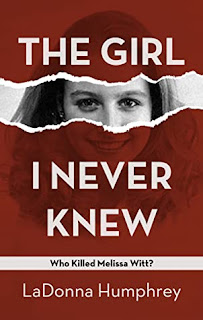
BookSirens ARC | The Girl I Never Knew

I received a free digital ARC via BookSirens in exchange for an honest review.

Rating ⭐⭐1/2

The author's book details her investigation into the unsolved murder of 19 year old Melissa Witt in 1994. Witt disappeared from a bowling alley where she had gone to meet her mom for a burger, and despite blood on the scene and signs of a struggle, no firm leads went anywhere. A month and a half later Witt's body was found deep within Ozark National Forest. Humphrey has dedicated nearly seven years of her life tracking down leads, witnesses, suspects.

The case itself is interesting and important; all victims deserve justice. But the author and I were not clicking. I don't think this was the author's intention, because she seems very sincere in her quest to solve the case, but sometimes the book became too much about her and what she was thinking and feeling. I understand that perhaps she included so much of herself to show how it was impacting her and how she dedicated is, but it is SUCH a fine line to walk when it comes to true crime - authors are always in danger of inserting themselves into the case even when they do not intend to. Like I said, I don't think that was the author's intent, but that's how it came across. It made me so uncomfortable.

Another thing that I truly hate with the fiery passions of one thousand suns is re-created conversations in non-fiction books. I have tossed many a book aside when that happens and it always seems to be such a fixture in true crime books. There is no way someone remembers every single conversation about every single instance the case was discussed unless the conversation was recorded and thus trascribed. I absolutely abhor it, and it drives me bonkers. Unfortunately, it happened a lot here.

There was also a bit of filler relating to other cases. There are times when the author mentions various suspects and gives the reader background on them and why they make sense as a suspect. But sometimes various people are introduced who have literally nothing to do with the case, were not a suspect in any way, and did not belong here. Not often, but should not have been included at all.

There are some positives here, and I truly do hope that Melissa Witt's killer will be brought to justice. Her friends and family deserve to know what happened and I do think it is important work being done by those who investigate these crimes when it seems like the police are not terribly interested anymore, or more often, do not have the man-power to dedicate the time necessary to cold cases.

The writing itself is fairly clear and concise - there are several suspects and pieces of evidence to keep track of, but it was never confusing. The author truly does have good intentions I believe, and explains how she came to learn of Witt and her murder. Based on the information provided by the author, I do believe she is on the right track and that she has spoken to the murderer in her quest to solve the case. I feel pretty certain that Humphrey also recognizes this, and the safety of her and her family is a concern. I don't know that there is some big conspiracy, but I am pretty sure even nearly three decades later, the man who killed Witt is not keen about that information going public.

Unfortunately there is no conclusion, because the case has yet to be solved. Her mother passed away in 2011, never knowing who murdered her baby. But we can hope that one day those left behind will finally have answers.

Friday, June 24, 2022

NetGalley ARC | Helltown: The Untold Story of a Serial Killer on Cape Cod


I received a free digital ARC in exchange for an honest review.

Rating ⭐

I really tried with this one because Costa's victims deserve to have their stories told. But the alternating chapters with Vonnegut/Mailer were not necessary and added nothing to the story, though then I suppose the book would have been much shorter. I skimmed those chapters because I did not find them interesting or valuable to the real story. I also find it difficult to believe massive re-created conversations and don't believe they belong in a non-fiction text unless the original conversation was recorded word-for-word. A few lines of dialogue, sure. But long conversation? Nope. If the book is marketed as non-fiction, then it should BE non-fiction. There is even an author's note where he states he took some fictional liberties with the story, which is not cool at all and that should have been at the beginning of the text. I was incredibly disappointed in this one, it was a jumbled mess, and I could not finish it despite several attempts. There are better books on the subject, and I do not recommend this one at all.

Monday, March 22, 2021

Book Review | Murder by the Book: The Crime that Shocked Dickens' London


Rating ⭐⭐⭐

I am strangely drawn to the Victorian era for one very specific reason: their weird obsession with death and murder - by poison in particular. The way murder and death was written about in that time period is so scandalous and salacious, which seems to be a direct conflict with the 'values' and 'morals' of the era. You may have noticed I have reviewed a lot of these books lately, and there are a couple more coming.

The murder of Lord William Russell is little-known today, but in 1840 it was a HUGE story, not only because of the viciousness of the attack, but because of how it shook the very foundation of the literary circle of London.

The well-known member of parliament was found dead, a massive wound to his throat/neck/head from an ax left at the scene. It was a brutal murder and his valet was immediately suspected, though there was little physical evidence. Small items such as coins and a watch are missing, and before his murder Lord Russell had reported that the locket containing his deceased wife's picture had gone missing also. Eventually, in an unlikely turn, it is discovered Courvoisier (the valet) had done quite a bit of reading in the couple years before the murder. At a time when the publishing industry began to boom, with books being made quickly and cheaply, it wasn't hard to find true-crime stories - which no one will be surprised about because Victorians loved the lurid tales of murder.

The valet finally claims in what feels like his fifty-third confession that he was influenced by the book Jack Sheppard, written by William Harrison Ainsworth. The story tells of a criminal who manages to escape justice time and again. He actually used this as a defense, but the idea was solid enough in that time to get the likes of Dickens, Thackeray, and even Queen Victoria talking about it.

Though this was a fairly quick read, it ended up being a bit of a disappointment. I thought the literary aspect would be a lot more interesting than it was.  It is still a decent look at a horrible crime, but the connection to Jack Sheppard is tenuous at best. The parallel commentary about the works of Ainsworth and Dickens, among others, and how the criminal element of their novels is interesting at times but also felt kind of forced. It is interesting to note that the arguments being made about violent music and video games in our lifetime were made back then about books.

Recommended for those with an interest in Victorian true crime.

Sunday, March 21, 2021

Book Review | The Invention of Murder: How the Victorians Revelled in Death and Detection and Created Modern Crime


Rating ⭐⭐⭐

I had such high hopes for this one, but it ended up being somewhat of a disappointment.

The premise was fantastic. The author set out to explore some of the most sensational attention-grabbing murder cases of Victorian England. I feel like the title and subtitle were misleading because we know the Victorians did not invent murder. They did, however, invent making it salacious. Sensational newspaper accounts shouted grisly details (often inaccurate, but who cares? It's murder!) and people actually went sight-seeing to the locations of the crimes. So gross.

Side Note #1: It reminded me of the Villisca Axe Murders in Villisca, Iowa in 1912. A family of six and two girls who were friends with the children were horrifically murdered with an axe and the killers never captures. People from all over the town traipsed through the house when the murders were discovered, even HANDLING THE MURDER WEAPON. So gross, on so many levels. No respect for the dead.

Side Note #2: Okay, so I have been to the Villisca Axe Murder house on a tour given by owner Darwin Linn, who has sadly passed away since then. But we were on a tour of the restored house, not the bloody crime scene, so it is not the same.

Murder became entertainment and the author recounts all the ways in which this entertainment was produced - ballads, operas, novels, broadsides, and more. It is easy to see how this fascination with gruesome deaths paved the way for novelization of these crimes to develop - Sherlock Holmes is a product of this age.

Overall it was not a terrible book, but it became a repetitive one. The chapters were long, and followed the same format: the murder or group of murders were discussed with a good amount of detail, and then we are told how the crimes were depicted and in what medium. I skimmed at times only because the latter was indeed repetitive.

The author has researched and explains the ones you would expect of the era: Burke and Hare, Sweeney Todd, and Jack the Ripper, but also delves into some cases that are lesser-known today, but were huge when they occurred. I appreciate the variety, as many kinds of crimes were explored, though murders were always the most sensational and best-selling.

Side Note #3: When my mom and I were in Edinburgh, we went on a Burke and Hare night tour. It was November, so it ended up just being the two of us and our tour guide, Dougal. He was lovely and quite pleasant to follow around the city. We saw all the places associated with the body-snatchers and their crimes. This is kind of morbid too I suppose, but again, at least we didn't make a day of visiting a crime scene to look at dead bodies and having a picnic lunch with the kids!

I did find it distracting and unnecessary that the author would randomly insert herself in the story to make some quick little quip about the research she conducted. I really hate when authors do this.

Recommended for those with an interest in the shenanigans of Victorians  who were obsessed with murder.

Wednesday, March 10, 2021

BookSirens ARC | Satin Pumps: The Moonlit Murder that Mesmerized the Nation


I received a free digital ARC via BookSirens in exchange for an honest review.

Rating ⭐⭐

I am late on my review of this one, because I am not quite sure how I feel about it still. The story is part true crime, part memoir. The author is indirectly related to the case, only because the murderer was his family doctor for many years. Honestly, I feel like that part bogged down the story to me. It was important for the author to disclose the fact that he knew Dr. Finch, but I don't really feel like anything beyond that was necessary. It kind of slowed down and already-slow story.

I am by no means a true crime queen, but I have read my fair share and this case was new to me, so I was surprised to learn that it was supposedly so captivating to the nation. This is a terrible thing to say, but the murder itself was so boring that I don't see how that was possible. The synopsis makes everything sound so enthralling...

"Did the handsome, wealthy doctor and his beautiful young paramour plan to kill his glamorous socialite wife? Or did the gun accidentally discharge as he claimed?"

also...

"Set against midcentury CinemaScope glamour of Hollywood, Las Vegas and Palm Springs..."

...except we get no sense of any of them as real people, just these kind of true crime caricatures. Even Barbara, the actual victim, is practically relegated to the sidelines in her own story. As for setting, there's hardly a sense of these places, either. The story could literally happen anywhere and it would not change the excitement level or the way in which the story was written.

The book moves along pretty slowly and took me a bit to get into. The personal memoir parts were distracting and in the end I feel they were not necessary. I think the story could have been tighter and more interesting had it been solely about the crime and its aftermath. The research put into telling Barbara's story is evident, and is certainly a positive I can comment on as something the author did well. I would have appreciated if the memoir-type items would have been left to the intro or conclusion.

I can't say that I would recommend this one for someone who is a huge crime buff and is used to a fast paced story. It might be a good place to start for someone who has never read true crime before, as it is not terribly graphic or messy.

Monday, December 28, 2020

Mini Reviews | Belle Epoque Murder and Mayhem


I don't typically care to read much about France unless we are talking 900 years ago and Eleanor of Aquitaine. But I recently read a great book that I'll be discussing shortly, which lead me to books specifically about certain crimes described in that book. Overall they were hit-or-miss, and I think from here on out I will stick to the era of the first Plantagenets.

 Rating ⭐⭐⭐⭐

This book is so much more than a collection of vignettes about various crimes that occurred in the City of Light during the Belle Époque. Despite being considered this 'beautiful time' of artistic and cultural advancement/comfort before the abject horror of WWI, Paris was also a violent place filled with criminals - much like every other major city in the world.

The initial focus of the narrative is one of the greatest heists ever - the stealing of the Mona Lisa from the Louvre. Based on this, I assumed incorrectly that much of the book would focus on her disappearance, but instead I got so much more. Early on we are introduced to Alphonse Bertillon, a Paris detective who would transform investigative techniques with his system that recorded several markers of each person arrested and catalogued that information in order to identify culprits of future crimes.

Several other crimes and notorious criminals are discussed as time goes on, with the narrative coming back around to advancements Bertillon and others made in techniques, as well as to give progress or lack-of in regards to the Mona Lisa. One group I was interested in learning more about was the Bonnot Gang and their reign of terror as they rampaged across the city, stealing and killing. The shoot-out which eventually claimed Bonnot's life was quite the intrigue and I decided to find a book that detailed the evolution of the gang, its members, and their crimes.

Despite all of the above, I don't think this book can truly be classified solely as a true crime book, as there is so much cultural history here as well. The authors did what must be a fantastic amount of research in order to really set the tone to immerse their readers in the world at the time. There is a gritty feel here as we see the dark side of the city, but there is also light.  The political climate plays a role as well, and anarchists seems to rule the day, but we also see the rich artistic and intellectual culture that flourishes.

Definitely recommend for those who enjoy history of this kind.

 Rating ⭐⭐⭐

This was one of the stories touched on in the above book, so I was delighted to find it when I was at the library to pick up another book on a similar topic.

At the heart of this story is not the brutal murder of court official Toussaint-Augustin Gouffe and the search for his killers, but the idea of hypnotism and whether or not someone can:

a) commit crimes such as murder while under hypnosis
and
b) be held accountable for said crimes if determined to be acting under hypnosis

This story was really hard to stay with sometimes. There would be sections that were really tantalizing and I couldn't put the book down. But other times it was such a snooze-fest that I skimmed sometimes pages at a time - especially when it came to the hypnosis information itself and the competing schools of thought who did believe it was possible to get someone to commit criminal acts/violations against a person's own morals when hypnotized vs. those who said it was impossible. Either way, all boring.

But, like I said, that was kind of the heart of the story because it determined whether Gabrielle Bompard would face execution or not for Gouffe's murder. Bompard  insisted she had been hypnotized by her lover, Michel Eyraud, a much-older married con-man. The couple was short on money and a scheme was devised where Bompard would lure Gouffe to a room set up in which to kill him in. Eyraud hid behind a curtain in the alcove as Gouffe and Bompard sat on the couch. What happened next was a matter of who you believe. Bompard insists Eyraud grabbed the loop from her hands and hoisted Gouffe in the air, but when the ceiling beam broke, he fell and Eyraud strangled him with his bare hands. Eyraud insisted it was Bombard who put the fashioned noose around the man's neck herself. Either way, Gouffe was dead. They stuffed his body in a trunk after discovering they did not get the money they thought they would in the robbery, then took a train to Lyon and dumped the trunk on the riverbank.

When Bompard and Eyraud were finally in custody - and no longer together - the whole sordid affair captivated society who dubbed Bompard the "Little Demon". The sexism is obvious to us now, even though it was not considered an issue at the time.

Overall I found the writing inconsistent. It's not a terrible book, but there are parts that really dragged. I'm not sure why, because there was such potential for something really good here. If you're interested in whether or not the hypnotism defense worked, give it a read. If not, you're not missing out.

 Rating ⭐⭐

So...the city of Paris may have been gripped by the terror of the crime spree that occurred over sixth months in 1911 and 1912, but this book is the opposite of gripping. Who knew anarchy was so boring?

I first learned of the Bonnot gang in the first book I reviewed in this post. I thought surely the entirety of the story would be as interesting as the pages devoted to it there. How wrong I was.

The entire first section of the book was devoted to biographies of each of the anarchists who would figure in prominently later. I skimmed a lot of that because I didn't feel it was important - I was right - and it was not written in an engaging way. I did not care about their backstories.

The narrative picks up a bit in the second and third parts when they begin their crime sprees. They spread out across the city, robbing banks and wealthy members of society and killing anyone who tried to stop them. Not too sympathetic, but it really seems like the author tries extremely hard to wring some sympathy from the reader, but no thanks. I tend to not feel bad for murders who die in gunfights with police.

Unless you are SUUUUUPER interested in a bunch of anarchists who were thieves and murderers, you can pass on this one. It was boring and I found The Crimes of Paris to be better in telling the story because it was not bogged down with dreadfully boring details that I did not care about.

Tuesday, November 3, 2020

BookSirens ARC | The "Supreme Gentleman" Killer: The True Story of an Incel Mass Murderer


I received a free digital copy via BookSirens in exchange for an honest review.

Rating ⭐⭐

Ugh. This fuck-weasel doesn't even deserve this attention so I am going to keep this short and not-so-sweet.

I remember when these horrific events occurred. I saw his 'manifesto' videos and the entire time I watched it I could not help but think this pathetic little boy thinks he is big and bad, with his awkward and poorly timed laughs, 'educating' us on why this Day of Retribution was coming.

How about you just fuck all the way off, okay Elliot Rodger?

I mean, I get that he can't, on account of the being dead and all, but GOOD GOD! It was so easy to see in the first minute of the video why he had no friends and girls would not be interested - he is CREEPY AF.

I am not giving the book two stars merely because the subject is absolute garbage, but I struggled to get through it at times due to the repetition of certain facts that were CONSTANT.

I get it, dude was a budding psychopath who had no friends, and played a shit-ton of World of Warcraft. He thought he was owed something, and he wasn't, so he ranted and whined like a little bitch, then took the cowardly way out by killing himself before justice could be served.

But these things were obvious from the start and did not need to be repeated SO. MANY. TIMES.

At times I did feel like parts of the book were more filler, because honestly there is not a lot to be said about a fuckboy who thinks he deserves to have sex with all the beautiful women that he wants to, but can't figure out why they're not interested? So many times it was mentioned how he was out in public, sitting at a table or whatever, waiting for young women to approach him. Why would they do that? Why would he think he wouldn't have to make any effort? I mean, seriously.

A major issue here is that even if you did take out what I or other readers might consider filler, the short book becomes even shorter. I believe it is between 150-175 pages, though not sure of the exact number. There is simply not enough material, in my opinion.

The author states early on that basically no one wants to talk about Rodger. That would be another indication that perhaps there is not going to be enough material for a full-length book. Even interviews with those who knew him would have helped broaden the picture. All we really have of Rodger is his rambling manifestos about how boo-hoo women don't like him. I think interviews with survivors would have also been incredibly powerful and add another aspect to the story that seems to be missing.

it is clear from the start that Elliot Rodger has severe mental health issues. He would possibly have benefitted from consistent and intensive therapy, but he was such a good liar at a fairly early age, that we are talking intensive therapy+very young. Something was broken in his brain, and honestly maybe it was not fixable. But this kid never stood a chance because he was all but left to wallow in his misery. His family simply saw him as an extremely shy and awkward kid, but there was so much going on just below the surface that they either couldn't not see, or chose not to see.

Aside from having no perspective of others to give a more fair view of the situation as a whole, we instead only have Rodger's word to go on. Are we supposed to trust that he is reliable in relaying all the ways he has been wronged, when it is obvious how messed up he is? Was his life really so terrible and difficult? How would we really know? We already know he had an incredibly skewed sense of reality, what with all the entitlement oozing from his pores.

Overall the book was okay for me, but not great. I get there might not be nearly enough source material, but that would be an indication that maybe he could be part of a case study as a part of incel "culture" (eyeroll), instead of one volume dedicated to this one person who chose to murder in cold blood because he could not get laid.

Saturday, April 18, 2020

NetGalley ARC | The Kidnap Years: The Astonishing True History of the Forgotten Kidnapping Epidemic that Shook Depression-Era America

50204801. sx318 sy475

I received a free digital ARC from the publisher via NetGalley in exchange for an honest review.

Rating ⭐⭐⭐⭐

I would have given this five stars if there were not so many damned exclamation points.

Naturally when one thinks of kidnappings in the 1930s, the first case that almost always comes to mind is that of Charles Lindbergh's twenty-month- old son, Charles Jr. That case is discussed extensively throughout the book, while other less high-profile cases are also given equal footing.

One thing I really appreciated about this book is that it was more or less chronological, and did not tell each kidnapping story individually. As the author moved through the decade when his epidemic was at an all-time high, we see which cases overlapped, and sometimes had to wait several sections for any kind of resolution. I personally liked this, as it was as realistic as one can get without having actually lived through it.

There is such a blend of themes here and they are woven together well. The Great Depression is in full swing and families are struggling to simply survive. Prohibition was coming to an end, so those who made their living that way were seeing income dry up as quickly as the country was supposed to when the law went into effect in 1920. On top of that the likes of Dillinger, the Barkers, and so many others were terrorizing the country, sometimes opposed by police and sometimes assisted. The constant message though, was one of desperation and despair that drove so many to attempt or carry out these crimes.

While it would be impossible to recount every single case, there are enough discussed here to really give the reader a feel for what it felt like to live through such a time. Most of the time the victims or survivors were held for ransom. Some were lucky enough to see their families again, though they were scarred for life from the experience. Others were not, and only in death were reunited with loved ones.

I found it especially difficult to read about the children who were kidnapped for far more nefarious reasons than ransom. The story of Grace Budd was absolutely heartbreaking and I feel so terribly for her parents and siblings. It is a horrific case and one I would rather not dwell on much here or I will probably start crying again, just thinking of the anguish her parents felt and the blame they put on themselves for believing the lies they were told and allowing their beloved daughter to go to the birthday party for a man's niece, the man whom they had only recently met.

As one would expect, we see ol' Hoover trying to insert himself into any investigation he could. Even when, and maybe especially because, his agency often came under fire for being incompetent and out of control. He wanted to be seen at apprehensions and discoveries in order to portray himself as the one who was cleverly solving these crimes and in full control, that the newspaper reports were wrong.

I found it especially interesting to read of how many families contacted police to inform them of the kidnappings, but also asked they stand down while the family also contacted those who might, shall we say, have connection to the world in which the kidnappers moved in. More than one case detailed in this book was solved this way and it should not have surprised me. After all, many wealthy families had some underworld contacts for a variety of reasons, and sometimes those contacts were able to make far more progress than law enforcement. One must also not overlook the corruption that permeated some police forces, so many were right to not trust those supposedly sworn to protect them.

The plethora of exclamation points aside, the author does a fantastic job transporting the reader back to this turbulent period where no one was truly safe from the epidemic, whether rich or poor - it merely depended upon the perp's purpose for the kidnapping. Most were for ransom, and more were returned to their families than not - here, at least. I can't speak for the statistics overall, but from the cases presented in the book only.

Any reader interested in this period will find value in this book. I hesitate to use the word 'enjoy' because how does one enjoy a story about kidnapping and murder. I think, however, everyone gets the point. Highly recommended.

Friday, March 20, 2020

Book Review | Black Widow: The True Story of Giggling Granny Nannie Doss

45549805. sy475

Rating: ⭐

First off, the cover is terrifying.

That is just about the only good thing I have to say for this book, so this will be rather short and sweet.

I have, as of late, been drawn into the True Crime genre - mainly when the crimes have occurred in earlier times (the Victorians were nuts about murder, especially by poison, and I am 100% here for it.) I don't even know how I came across this one via Kindle Unlimited, but I did and I regret the time spent, but am glad no money was exchanged.

The problem with the book, besides the constant repetition of the phrase 'marital bed', and constant repetition in general, is that the story is told from this crazy lady's perspective. With no bibliography, how are we to know these were truly her thoughts and feelings as she flitted about, murdering at will when she was angry? I think that is dangerous and irresponsible for any author to do, to put words/thoughts into the mouth/head of someone else without backing it up with documentation.

As the book is only told from Doss's perspective, the story is completely one-sided and lacking in big-picture. At one point the author mentioned other biographies of Doss, so I think if you are interested in the story, any one of those would be a much better option. There is no analysis here whatsoever. It is just the laying down of the timeline of events, what happened, on to the next, peppered with all these thoughts of Doss's as she goes about murdering two of her children, two of her grandchildren, two mother-in-laws, her own mother, one of her sisters, and four of her five husbands.

The inaction of those who knew she was a murderer also baffles me. Doss's oldest daughter Melvina watched her mother stick a hat pin into the head of her newborn baby girl, killing the child. No one else was in the room, and Melvina at first thought that she had imagined it, with all the ether she had needed during the very difficult birth. But once home, Melvina and her younger sister discussed it, and their step-father even knew, because they had always suspected Doss of murdering the middle two children years earlier. But instead of going to the police, they all just cut ties with her (except the step-father, who would end up poisoned too), and allowed her to continue poisoning anyone she came across who disrupted the way she thought things aught to be.

When Doss was a child, during a family trip via train she was knocked unconscious when the train stopped suddenly and she hit her head against a metal bar in front of her. She had blackouts and severe headaches the rest of her life, as well as suffering from depression. This is briefly touched on as a reason for her behavior, perhaps, but truly only briefly. The book indicates she often flew into rages after the accident, though there is mention that she was not exactly always even-tempered before the accident either - though she was much worse afterward.

The story itself is an interesting and horrifying one, but I can not recommend this book. In the future I may seek out other texts that will give a much clearer picture of the murders as a whole.

Saturday, February 15, 2020

Book Review | My Daddy is a Hero: How Chris Watts Went From Family Man to Family Killer

49121932. sy475

Rating: ⭐⭐

I struggled with this one a lot, and not only because of the horrific content.

For those who don't know the story or live outside the US, in 2018 Chris Watts murdered his pregnant wife Shanann and two young daughters Bella (4) and CeCe (3). He buried his wife in a shallow grave at one of his work sites, and dumped the bodies of his daughters into separate oil tanks also on the property. Even more horrifyingly, the girls were alive when he buried their mom. They rode in the truck with him as he drove to the site. Watts has given conflicting accounts, but stated that he then killed Cece, with Bella watching, and she begged him to stop when he went after her next. He also stated initially that he killed Shanann in a fit of rage after discovering she had smothered the girls in their sleep. Instead, it was he who had attempted to do so - he and Shanann were arguing, he left their room and smothered the girls with a pillow, then returned and killed Shanann. Watts stated the girls woke up and had only been unconscious, that both came into their parents' room with bruising, traumatized. He has also stated that he put them in the oil tanks so they wouldn't wake up again.

I don't understand it. I never will. This man is a monster. He wanted to be with his mistress, he even tried to somehow end Shanann's pregnancy (a boy, already named Nico) because he thought he could not divorce her if she was still pregnant. When that didn't work he resorted to murdering his whole family, just for a new piece of ass. This whole situation is disturbing and disgusting and I wish crimes involving the murder of children were automatic death sentences. (Actually, any crime involving children, especially rape and sexual abuse. There is no rehabilitating that.) I can't even look at pictures or videos of those sweet little girls, girls who loved their daddy so much, their bright happy faces, and knowing what he did to them. It is too much, too awful, too heartbreaking.

Aside from the content regarding the murders and everything leading up to that, the part that always makes me uncomfortable with books like this is when an attempt is made to diagnose a mental illness of some kind. Now, in this case the author would be qualified to do so, as she is a licensed psychotherapist. Her specialty practice is in relationships and is certified in Imago Relationship Therapy. I had no idea what that was and had to Google it. And even though she is certified and is a therapist, I do take issue with diagnosing those who are not one's patients. The author even stated she is not diagnosing, though that is in fact how it comes across.

Far less important, but something I will mention nonetheless, is that it bothers me when authors misuse literary references. At 85% the author writes: "For the entire eight years she had spent with Chris, he had acted one way with her and only up until six weeks before he killed her, did he turn from Mr. Hyde to Dr. Jekyll. Shanann stated that she didn't know who he was anymore." So, either Chris was a murdering psychopath for eight years up until the six weeks before he murdered his family and he suddenly could control his impulses in those last six weeks, or the author mixed up who was who. Or I am misunderstanding her intent with that suggestion/quote? Either way, he obviously was NOT a raging psychopath for the first eight years, because literally everyone who ever knew him said they just could not believe he had done this, he was helpful and quiet and kind. Definitely NOT a Hyde.

I found the account of the crime itself to be decently-written and accurate based on what I had read elsewhere of the case, though obviously there was more here than what you would find in newspaper/online articles. For that portion of the book I would give it 3 or 4 stars. But I simply can not get behind diagnosing someone who is not your patient, that you have never had a conversation with. It is negligent at best, and flat out dangerous at worst. It is 100% true that anyone who reads Watts' own statements about feeling nothing for his family as he killed them can come to the conclusion that he is probably a psychopath/sociopath, but even so, doctors know better than to do so. Especially when it involves them making money from a book where such statements are written, no matter if they say they are not diagnosing.

Thursday, July 18, 2019

Book Review | The Trial of Lizzie Borden

40538605

Rating: ⭐⭐⭐⭐

I truly am baffled by the low rating this book has on Goodreads right now, a 3.41. I know to some people that seems decent, but I am a bit more strict in my own ratings, and so anything under 3.5 gives me pause before I read it. I am also confused by the readers claiming this was too much about Lizzie's trial, or it was too legal or boring and not enough narrative. Um, what the hell? First of all, the title should have given you a clue on that 'trial' part. Second of all, nothing about the Borden trial could ever be boring. Third, it's NON-FICTION, not a novel. People who call non-fiction texts 'novels' are seriously the bane of my reading existence.

Personally, I thought this book was fantastic. I couldn't put it down. It is yet another book that appears to be true crime, but that I also feel transcends the genre (I have said that a lot lately, haven't I?) because the case is so well-known, so huge that we are still talking and writing about it well over a century later.

I knew quite a bit about the case already, as I find Lizzie Borden such a confounding enigma. On one hand, there is simply no way that her father and step-mother could have been murdered such a length of time apart, that neither Lizzie nor the family's maid, Bridget, would not notice something was amiss. One of the biggest hurdles for me in any attempt to believe in Borden's innocence is the story Lizzie told about Abby receiving a note to visit an ill friend. No one ever found, or came forward, to say that they had delivered the note, or that they had been the ill friend who sent it. On top of that, the note itself was never found.

On the other hand, if we are to believe that Lizzie Borden is this criminal mastermind who managed to murder both her father and step-mother in cold blood without being caught by Bridget, or even seen through the window from someone outside as she murdered her father, isn't this something she would have anticipated, and thus created evidence in the form of a note?

I feel like for whatever piece of evidence is presented to prove her guilt, it does - but then there is a tiny little thread left dangling that you can pull at to discover a little bit more to prove she is innocent.

To say that this story has captivated the nation is kind of an understatement. It seems that everyone had an opinion on the case, and still does, but in all of that the victims get lost. This happens often, and I have mentioned so in other books of this nature. While we spend so much time deciding if we think Borden is innocent or guilty, we forget that while her life hung in the balance, two had already been taken away. I can't imagine too many more horrible ways to die than to be hacked at multiple times and not being able to defend one's self from the onslaught of the ax.

I feel some deep sympathy for Abby especially. I imagine the living arrangements got rather uncomfortable, considering the fact that her step-daughters openly despised her by the end of her life, for the property deal her father went through with for Abby's sister. The women were then given their own holding of land, because they demanded Andrew Borden make things equal in some way...yet Emma and Lizzie never forgave them anyway, and refused to eat their meals together. It's all just incredibly messy and I think the key to finding out who the killer was depends on truly understanding the dynamic in the house at the time of the murders. There are so many conflicting accounts of the tension, or lack-of. Some witness testified that Emma and Lizzie hated Abby and said mean things about her, were still harboring anger toward their father, and so on. Others said there were no problems that they were aware of. 

What makes this book on the topic so important, and the low rating again a surprise, is that there is a lot of new information here - even if that information does not directly point to the killer (except possibly for the attorney files which are still under lock and key, but more about that later). The author has clearly devoted much time and energy to telling the most complete story she can about the murders and life for Borden during and after the trial. Here she draws from many documents never seen before by the public, such as unpublished journals from attorneys. There is also a treasure trove in the form on Lizzie Borden's own letters that were recently discovered. In addition, information comes from transcripts from the legal proceedings, previously unpublished local reports, and news articles from the day.

Now, back to these files I mentioned above. At the very end of the book the author discusses the files kept by Borden's attorney after the case was over. The files have never been seen by anyone outside the law firm, and I am so incredibly curious as to why. All of the participants have long since passed away, there is no danger anymore in showing these records to the public. And yet...

"So there, in Springfield, Massachusetts, locked in a five-drawer file cabinet, the file languishes, more than 125 years after Lizzie Borden, gloved hand on Robinson's arm, walked out of the New Bedford courtroom a free woman" (page 289).

I can't possibly be the only one who wants to know once and for all if Lizzie was guilty or not and I believe something in those files will tell the truth. Why else might they be kept sealed, away from anyone outside the firm? Perhaps I should see if they have any job openings...

I feel like looking at the case today, people will think almost without doubt that she must have been guilty, there are too many little things that do not quite add up. But we must remember that Lizzie Borden lived in a very different time. The Bordens were a well-to-do family, possibly the wealthiest family in Fall River. Based on class alone, it would have been unfathomable to the upper reaches of society to believe for one moment that a person of Lizzie's station could have even committed such a crime. it was simply inconceivable, in a time when it was thought that one could tell if someone was a criminal by their features, ethnicity, etc. Not surprising for the time, but also totally wrong in its assumption. it would have been very difficult, given the actual evidence presented, for the all-male jury to convict Lizzie Borden. So much of it is circumstantial, there is no 'gotcha' that firmly points to the younger Borden sister.

Not only did Lizzie's class matter in the minds of the jury and her society circles, but gender was important too. The tiny speck of blood found on the inner part of one of her dresses was explained away in that Lizzie was menstruating. This is also set up as a way to explain the rags in the basement at the sink, where Lizzie was observed standing for quite some time, though due to the high window, the officer who did observe Lizzie later that night could not see what she was doing. Perhaps she was trying to wash the blood out of the dress she had worn when she had committed the murders? Or perhaps she was only washing said rags commonly used by menstruating women in the 19th century (side note: I am so glad I live in the 21st century). The theories at the time concluded that women who were menstruating lacked self-control and were prisoners of their hormones, unable to think or act clearly. If Lizzie did indeed have her period, and really did murder Andrew and Abby, this would have been an accepted 'insanity' defense. It would also be the only reason the upper echelons of society could have understood as a reason for one of their own to have committed such a heinous and brutal crime. I really think this social commentary that the author provides is critical to understanding why, even when given enough circumstantial evidence to lean toward guilt, those twelve men serving simply could not bring themselves to say she'd done it.

One of the reasons I enjoyed this book so much is because of the author's own background. Robertson used the Borden trial as the subject of her undergraduate thesis while at Harvard. Instead of taking her professor's advice and turning the thesis into a book then, she went off to Oxford to earn her PhD in English, then her law degree from Stanford. I think those elements in her background bring the story together superbly. Robertson also does not show any bias as she lays out the case. She gives the facts that we know and provides the reader with ample opportunity to make up their own mind. I never felt like she favored the prosecution or defense, and she truly leaves it up in the air. The research is so thorough, and the details add to the big pictures to create a stunning portrait of the murders and their aftermath. Then there are the literal pictures, the photographs that Robertson chose to include. They added further depth to the story and are valuable to it.

After all is said and done, there is no mystery at all - if you hear hoof beats, you think horse, not zebra. Lizzie Borden murdered her father and step-mother, right? She had the means - several axes found in the basement, yet none deemed to be the murder weapon. She had the opportunity - Bridget was sent out to wash the windows and Emma was out of town. (However, all this fuss was made about Lizzie not hearing a sound while she was in the barn looking for irons to go fishing - couldn't the same be said about Bridget? Did Bridget not hear cries for help?) And then what about motive? Understanding the motive seems difficult and easy all a the same time. Why then? The property deal that Lizzie and Emma were so upset about had occurred five years prior to the murders. Mr Borden was very tight-fisted with money it was said, but his daughters rarely wanted for anything - except for their father to finally move out of that home on Second Street to the more fashionable district as befitting a family of their station. He refused. So did Lizzie just finally get so frustrated one day at the thought of it, she decided to kill them?

Yes.

No.

I can't help it. I continue to waver back and forth over this, and will do so I am sure for quite some time.

Highly, highly recommended.