Showing posts with label Fascinating New York Landmarks. Show all posts

Friday, May 13, 2016

102 Minutes: The Unforgettable Story of the Fight to Survive Inside the Twin Towers

10698767

Rating: 5 Stars

I mean, really. How do you write a review about a book like this? I am not sure, but I will try. Though, I am fairly confident I will meet the same challenges here that I did when I reviewed Flight 93 by Tom McMillan, and I probably won't do this book justice. But I will try.

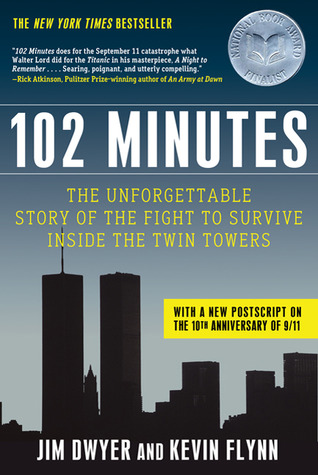
First the cover. I have never once been to NYC in my entire life. It is on my bucket list, it is a dream of mine to go. My first glimpses of New York came in the mid-90s when I started watching FRIENDS. Yes, I was 11, don't judge. I loved the skyline of the city regularly shown in the episodes and something about the towers spoke to me. So, here on the cover there they are, outlined, still standing like guardians.  I can't look at a photo of the Manhattan skyline now and not place the towers back there myself in my mind. Seeing the cover, in all its simplicity, is comforting and heartbreaking. I just wish there was less text on the cover. In particular, I could do without the plug at the top, comparing it to Lord's 'A Night to Remember'. Still, it is beautiful. The towers are beautiful. That is how I always want to remember them.


While we are sort of on the subject of Walter Lord and his book (that coincidentally, I recently reviewed) 'A Night to Remember', I do have one small complaint. Not only did that little blurb I mentioned above do so, but there are a couple points in the book where the sinking of the Titanic and the terrorist attacks of 9-11 are compared. This bothered me a lot. I always feel like comparing tragedies in this way somehow diminishes their importance. I don't think it is necessary or helpful. Luckily, it only occurs a couple times and it is the only real complaint I have. I even feel a little guilty for having a complaint at all.

Aside from the, pardon my language, A-HOLES, who took it upon themselves to crash two airplanes into the Twin Towers, it seems that the two biggest factors that contributed to the senseless deaths of so many innocent people were poor building planning before, and lack of any communication during.

I hope by this point the police and fire departments have gotten over their pathetic pissing contests and are able to communicate. It was so incredibly childish to read time and again of squabbles between the two forces and how it impacted their work on September 11th. There were special radios purchased specifically for the use of the two departments to communicate, yet they could not agree on who would be in charge of the frequency so the radios went unused. The fire commanders had to contact their dispatchers who then contacted the police. Talk about a major time-waster. I honestly could not believe what I was reading and throughout it became painfully obvious that so many deaths would be directly because of this lack of communication.

On the same theme, it baffled me how many people in the south tower began evacuating when the north tower was struck, yet were told everything was okay and they could go back upstairs and resume their days. I understand that when the first plane hit, everyone thought it was an accident. But there is no way I could have in good conscience told people to go back upstairs, nor is that a directive I could have followed. I also realize that no one expected the towers to come down, but remaining inside seemed like such a huge risk to take. For example, when Port Authority employee Patrick Hoey called the PA police desk from his office in the north tower, he was told to stay put and the police would come to him. I don't understand why he was told this. Several people on his floor, 64, left immediately. Flight 11 had crashed into the building nearly 30 floors above them. Mr. Hoey, like so many others that day, should have survived. I don't understand why so many people were told to stay put. I also don't understand why the direction was obeyed. Perhaps many were there for the bombing in 1993 and were unfazed? I am not sure and it is so frustrating to think how many more lived might have been saved. At what point too does the idea of self-preservation kick in, especially when seeing/hearing so many others evacuating from the higher floors?

One thing that may be of comfort to family members left behind that day are the countless stories of heroism. It was so refreshing to see that, despite the lack of communication, the miscommunication, the incorrect information, and so on, there were ordinary people who performed extraordinary feats in the face of death. People like Frank De Martini and Pablo Ortiz who went floor by floor, freeing people who were trapped by jammed doors, directing them to safety. Then there are those who were not named, people like Welles Crowther who, time and again, returned to the burning Sky Lobby to lead others to safety - though like De Martini and Ortiz, would not make it home. I first learned of Crowther specifically when ESPN aired the short, "Man in the Red Bandana", which you can watch HERE if you have not seen it yet. In the book, survivors detail how a man "appeared out of no where", at one point carrying a woman on his back, leading others, performing first aid, rescuing people. Time and again Crowther returned to the 78th floor where Flight 175 had struck, killing so many on impact. Yet Crowther directed dazed survivors and was able to make sure that those he could help reached safety. Yet he was never named in the book, and this bothered me because of the postscript that was included for the 10th anniversary edition. I wouldn't expect them to change the original text, but mentioning the identity of Crowther in the postscript might have been appropriate. This detail bothered me so much in fact, that I emailed the author, Jim Dwyer, at the New York Times to ask about it. He responded quite promptly, saying that at the time the book was first printed, Crowther had not yet been identified as the man in the red bandana, and he agreed that the story is truly an inspiring one. So, I felt a little better, but would still like to see him acknowledged somewhere in a subsequent edition. The courage that so many showed that day is beyond anything I could hope for in myself. I'd like to believe I would think of others, do what I could to rescue people, but we never really know how we will respond until we are in the moment and truthfully, I hope that day never comes for me. Frank De Martini, Pablo Ortiz, Welles Crowther. Remember these names. They are heroes.

Perhaps one of the hardest stories for me to read was that of Ed Beyea. He was confined to a wheelchair, a quadriplegic, and ultimately did not survive. Time and again firefighters and rescuers passed by him as he and his friend, Abe Zelmanowitz waited patiently for help. Though Abe was able, he never left his friend's side and the two men, presumably along with Captain Burke, perished when the north tower came down.

Some have complained about the jumping viewpoints and that the story is not linear, but I could not disagree more. It is written in a way that gives you a feeling for the day, the chaos and terror going on inside the tower for those agonizing 102 minutes. I found myself reading of someone, then flipping quickly to the back where the authors listed the names of those who ultimately did not survive, hoping to not see their names. Of course, 131 times, I was disappointed. The authors cover so many stories of both victims and survivors in the book, and of all of those stories told, 131 people did not survive and are memorialized; employees are listed with which tower they worked in, then those at the Marriott, firefighters, police officers (both NYPD and PAPD), then NYC Emergency Medical Services. There are so many more stories I want to tell, but it is best if you read it for yourself, hear the stories from the survivors and the loved ones left behind.

Though this national tragedy occurred 15 years ago this coming September, the day is very vivid in my mind. The world I grew up in is gone and it makes me sad for future generations, for my own daughter, that this is the world she has to navigate now. It has only been recently that I have been able to start reading about September 11th, and if you are like me and find it difficult still, then start with this one. If you read nothing else about that day, this will give you a much better understanding of how and why so many did not make it home - not only because of the planes, but so many other factors working against the employees housed in the towers. Highly recommended.

Monday, April 25, 2016

Kitty Genovese: The Murder, the Bystanders, the Crime that Changed America

22253762

Rating: None

Review:

At first I was not going to review this book. I just could not bring myself to do so. In fact, here is all I said about it on Goodreads and I was going to just leave it at that:

"It is hard to rate and review a book like this so I'm not even going to try; I hate reading true crime, but something about this story is so heartbreakingly compelling to me. I guess there is some comfort in the fact that "38 witnesses" isn't really true, but aside from the neighbor yelling to leave her alone, no one went out to help her until it was too late. It's also comforting, as much as it possibly could be, that at least she really did not die alone. This whole case is just so heartbreaking, even 50 years later. And what makes it so heartbreaking, is the fact that it is not uncommon."

But after thinking about it for a few days, I realized Kitty deserves better than that. She deserves to have her story told, her voice heard, so that people can really understand what happened that terrible night.

For those of you who are unfamiliar with the story, or vaguely aware of what '38 witnesses' means, Kitty Genovese was a young woman living with her girlfriend in Kew Gardens in Queens in 1964 when she was brutally attacked, stabbed several times and raped over the course of about a half an hour just steps from her apartment. Due to misinformation at the time, it was somehow reported that 38 neighbors saw or heard the attack for half an hour and did nothing. No one called the police, no one went out to help, nothing. Some of this is true. Much of it is not. There were witnesses, but on the darkened street, it was hard to tell what was going on. When Kitty was first attacked by her murderer, someone shouted from an apartment for him to leave 'that girl' alone. This scared him off and Kitty managed to inch herself toward safety. Unfortunately she only made it around the corner to the entry way of her neighbor and so-called friend's apartment when her attacker returned. This 'friend', Karl Ross, heard the commotion both times, and when it was literally happening right in front of his apartment, he OPENED THE DOOR, SAW WHAT WAS GOING ON, and CLOSED IT AGAIN. There is all this lead-up, how he was basically a big scaredy-cat, afraid of everything and a guy who could barely bring himself to leave his apartment most of the time. He was also gay and terribly paranoid people would find out, and even in the 60s, New York was of course no friend to anyone who was gay. I get the paranoia, but he watched his friend being attacked and did nothing to intervene. He did call a friend, who told him to stay out of it, but then he eventually did call the police after sneaking out his apartment by way of his window and going across the roof. At this point others in the building were alerted by phone to what was happening and another of Kitty's friends, Sophie Farrar, went to her aid. Sophie is the only person in this whole sad tale deserving of any respect. As soon as she knew what was going on, she was out the door, even steps ahead of her husband who followed. Despite not knowing what was really going on, that she herself could be walking into a dangerous situation, Sophie did not care. She found Kitty in the stairway, and held the dying young woman in her arms, reassuring her that help was on the way.

In the end it would be too late, and Kitty Genovese would succumb to her injuries. There are so many what-ifs about that night. Had one single person done something when the attack first occurred, Kitty might very well have survived. But many witnesses thought perhaps, at the late hour, what they were witnessing was a lover's spat or people leaving the nearby bar when Kitty was first approached and attacked by her killer. No one actually witnessed the second attack except Karl Ross, as it literally happened on his doorstep. One witness, Joseph Fink, seems to be the only person who actually knew Kitty had been stabbed in the first attack. He was an assistant superintendent of the building across the street and witnessed Kitty being stabbed in the back. He claims he considered going to get his baseball bat, but in the end simply went to sleep. He could have saved Kitty right there in that moment, and his only response for why he did not do anything when asked by police was a shrug of his shoulders. Ross and Fink both had the immediate opportunity to aid Kitty, yet chose to do nothing and it was this idea of "not wanting to get involved" that made these supposed 38 witnesses the poster children for the idea of apathy in New York at the time. Luckily, in some way as much as we can call it that, we can at least know that when others found out what was happening, they chose to act. We know in fact that Kitty did not really die alone.

The author does a really wonderful job bringing the backdrop of the story, New York City and Queens, to life. It seems like such a safe place, even though we know that is not really true, even in the 60s. But we get this idyllic kind of existence for Kitty and her (secret) girlfriend Mary Ann as they lived and worked and played in the city. Some complained about the background information both in relation to Kitty's life and that of her murderer's, but I found it interesting. And it certainly helped to provide a stark contrast of the city Kitty lived in, and the one she was killed in - despite the fact that they were actually the same place.

I did have to skim some of the book, notably the parts directly about the murder itself. As mentioned above, I do not enjoy true crime. Honestly, I can hardly even handle the news anymore, with all the terrible things happening all over the world. I think becoming a parent really made me not be able to stomach these awful things, and I am content to live in a little bit of ignorance. You might have also noticed that I also never mention the killer by name and the reason for that is, everything about him makes my skin crawl. Even just reading his name, especially as it got more into the crimes he was committing both before murdering Kitty, and in the events after his brief escape from prison, made my stomach turn. Aside from his horrific crimes (being a serial rapist before and after Kitty's murder), I can't even look at his picture on the cover of the book without shuddering in total revulsion. I am not ashamed to admit I am glad this scum is dead, having just died in prison in the last month or so. I am also glad he was never paroled and died a caged animal as he should have, for all the terrible things he did.

If you are really into the true crime genre, I highly recommend this one. It is fast-paced and sheds new light on an enduring myth that has persisted for years about the so-called by-stander effect, thinking that if there were something horrible happening then surely SOMEONE ELSE MUST HAVE called the police by now. It also makes Kitty Genovese a real person again, brings her back to life in a way, so that her true story can be told. 

Saturday, April 2, 2016

See You in the Streets: Art, Action, and Remembering the Triangle Shirtwaist Factory Fire

27214143

Rating: 4 Stars

Review:

I received this book as an ARC via NetGalley in exchange for an honest review.

As I was reading this one, I recalled borrowing a friend's copy of Triangle: The Fire that Changed America in college and for the life of me, could not remember learning about it in school at any point. As fate would have it, a random conversation with a friend from high school around the anniversary of the fire on March 25th jogged my memory and I remembered we DID learn about it in my 10th grade AP history class. Not only did we learn about it, we performed a mock trial in our combined AP English/History block about it. Unlike in real life, we found the factory owners (Isaac Harris and Max Blanck) guilty. Then in college a friend was reading the above book I mentioned for one of her journalism classes and I borrowed it. It was fantastic and the story has lingered in the back of my brain ever since.

For those who do not know, on March 25th, 1911, 146 people (mostly young women between 16-22), died when the factory they worked in caught fire. These people either jumped to their deaths to avoid the fire when the heat became unbearable, or were burned in the fire. So many things contributed to this fire - unsafe working conditions and crowded factory floors, flammable materials, rubbish heaps, rotted fire-hoses, no phones to communicate between factory floors, no sprinkler system, locked doors, insufficient fire escape...the list goes on and on. If the tragedy and its aftermath is a topic you are interested in, 'Triangle: The Fire that Changed America' by David von Drehle really is fantastic and through BookBub I was able to purchase it on March 25th for $1.99. It was a pleasant surprise, as I had been hoping it might go on sale on the anniversary.

Despite it being over a century now since this tragedy occurred, I was pleased to find this title on NetGalley and see that these victims, so many of them young immigrant women (two victims were 14) working to support their families, are still being remembered today. The book details the beginning of Chalk starting in 2004, when the author invited several people to participate in a public memorial whereby they were each given a number of victims' names, ages, and addresses. Each person then went around the city, chalking the sidewalk where the victim had lived. Here are a few photos from around the Internet, such Huffington Post's article. of some of the chalkings. I did not take any of these photos, they do not belong to me.


The Chalk project eventually lead the author to create the Remember the Triangle Fire Coalition, which invited the participation of people from a wide variety of backgrounds to help put together a memorial to honor the 100th anniversary in 2011. The book details the author and group's struggle to work together at times, especially in the face of very differing opinions. With so many people involved, and new people taking an interest all the time, it became difficult at times to manage and the book presents those ups and downs as the group experienced them.

The piece of the project I found most interesting and powerful was the making of the shirtwaists for the 2011 commemoration. The group not only made the shirtwaists and attached them to bamboo poles in order to carry them, but also made a sash for each victim so again, their names would not be forgotten. (Photo from Wikipedia page regarding the Triangle fire.)


While I appreciate the author's background in film-making and other projects, I was reading this solely for the Triangle fire and the projects/coalition working to remember these workers who never had a chance to survive. I realize the author's background is somewhat important to the story, in order for the reader to see how she might be qualified to undertake something like this. What bothered me most though was the inclusion of the 9-11 project as well. I feel like discussing that as well took away from Triangle's story. New York and tragedy often go hand-in-hand, but comparing tragedies, even by accident, lessens the impact of one or the other. September 11th will never be forgotten. Almost 15 years later, I still remember every moment of that day, in my freshman year of college. I will never forget it. But so many people do not even know what the Triangle Shirtwaist Factory was. It deserves attention all its own.

Overall, despite my issue mentioned above, this was an interesting read about a little-known topic. I was happy to see attention still being brought to this event in our history, as it seems largely forgotten overall. Seeing these women and men continue to be honored is so important to our history and our future and they should never be forgotten. Definitely recommended.

Saturday, March 12, 2016

The Mad Bomber of New York: The Extraordinary True Story of the Manhunt That Paralyzed a City

10447607

Rate: 4 Stars

Review:

Let's take a moment to admire the cover first, shall we? While I am not about judging a book by its cover, I do appreciate the beautiful ones and it is a bonus when the content and cover match to meet/exceed my expectations.

I really enjoyed this one, it was an interesting story that I knew nothing about - you'd think in some US History class I'd have heard about this at some point, a "mad bomber" who planted devices around New York City for SIXTEEN YEARS (1940-1956), and was only caught in 1956 after a few weeks of communication with a newspaper. He hit major targets - Penn Station, Radio City Music Hall, Grand Central Terminal, you name it, there was probably a home-made bomb there at one point in that time period.

Fun Fact: One bomb was planted somewhere in the Empire State Building that to this day has not been found.

The author details the life of George Metesky, this 'mad bomber' who terrorized New York City for 16 years before finally being apprehended. From childhood we meet George, the quiet boy who was the baby of the family, who eventually enlists in the Marines and by all account served his two years admirably, being honorably discharged with a classification of 'excellent'. From that time on, George lived with his two older sisters after the deaths of their parents in the home they'd all grown up in. A fourth sibling had already married and moved out. It is an interesting dynamic created, as neither sister ever married either, and they basically devoted their lives to taking care of George, yet they had no idea anything of his private life, thoughts, feelings. And certainly no idea that there was anything in him that could turn him into such a destructive force for so long a period of time. George's civilian life was fairly standard, though reclusive, for a few years until he gained a job at Hell Gate in the city, a massive power plant owned and operated by Consolidated Edison Company of New York, Con Ed for short. By all accounts there he was shy, considered 'peculiar', but was polite and courteous to his co-workers. The reclusive tag stuck there as well though, as he never seemed to develop many - if any - work friendships. It was here at Hell Gate that a workplace injury would set the course for the next sixteen years of Metesky's life.

After being exposed to a toxic mix of chemicals and soot that left Metesky coughing up blood and supposedly laying on the floor of the plant for two hours with no first aid administered, he eventually is admitted to the hospital in Waterbury and his rage at his former employers grows to the point where he begins fashioning  bombs and planting them in public places in order to draw attention to his plight. This comes after his case is dismissed several times asking for more and additional benefits to help pay for medical treatment and other costs. Bombs accompany notes accusing Con Ed of treachery and this goes on for almost two decades until Metesky is finally apprehended after a few weeks corresponding directly with the New York Journal-American newspaper. The rest of the tale them involves Metesky's court hearings, admission to Matteawan State Hospital (an asylum for the insane), his continuing battle with illness, and finally his release and return home - where he would live until 1994, having outlived nearly everyone involved in his case.

This truly is such a fascinating story, I did not want to put it down (even when I had to do things like go to work). I had no idea that there were so many serial bombers active in the early 1900s, long before the Unabomber, and definitely had never heard of the Mad Bomber of New York, something that in a strange way I feel is unfortunate for this man. It seems a strange thing to say, considering his bombs eventually injured several people, but you really can't help but in a roundabout way kind of feeling bad for the guy. He was injured on the job and Con Ed did little to help with his care - not entirely their fault however, as it was over a year from the incident before he filled his case. But in turn it created what could have been a PR nightmare for them - imagine if a similar incident would have happened today in the age of Facebook, Twitter, and camera phones. Regardless of time limit, public pressure alone would have the company paying millions for the rest of his life.

One thing that baffled me throughout the book was, whenever Metesky planted a device, it was accompanied by a letter that emphasized how he was wronged by Con Ed and published in the newspaper. Given the legal battles that Con Ed had gone through with Metesky, it is a wonder that no one made the connection. He talked of getting justice and their 'dastardly act' against him - the same wording he used when addressing them directly. Did they really screw over hat may of their employees that George and peculiarities did not stand out among them? As years pass, it is equally strange to me that Con Ed worked to purposely conceal employee files when it was finally pieced together that the bomber was a former worker for the company. Con Ed insisted employee files before (I believe it was) 1940 had been destroyed, yet magically they somehow found his file later on when several secretaries were assigned to just that task. It clearly shows they had something to hide, and would at least be publicly held responsible in some capacity for loosing the mad bomber on the city. Another telling factor is that the secretary who found the file, Alice Kelly, declined to accept the reward money and shunned attention from being the one to 'discover' it.

While I felt bad for Metesky, there's a point where eventually you realize someone is going to be seriously injured with his bombs. Metesky always maintained he did not want to hurt the public, and wanted to bring attention to how he had been wronged. Yet he began building bigger and stronger devices that did end up injuring several people. When that fact was pointed out, Metesky claimed that it was the fault of the police for not evacuating the public and keeping them safe. One of the most severely injured men was an elderly Porter at Penn Station who was in the bathroom at the time of one of the explosions. Yet he said he had no ill feelings toward Metesky about what happened, which I find truly amazing. I think there were a lot of people who might have understood why he did what he did, even if they didn't agree with his methods.

I don't typically read books that deal with true crimes, but this story really was fascinating. It helps that no one died in the bombings, otherwise I am not sure I could have handled reading much of the story. That fact doesn't excuse what Metesky did, because people were injured, though I think it is also clear he was mentally ill and a danger to society as a result. But come on, due to what he felt was his patriotic duty, he promised - and kept the promise - to not plant any more devices after the news of Pearl Harbor reached the mainland and would refrain until the war was over. At first you think, well gosh that's nice of him, and on the other hand you're like, wow dude, so self-centered. But then you remember, oh wait you are crazy, and it all makes sense again.

In my lifetime, we have grown accustomed to the uniforms worn by bomb squads, and the methods they use to deactivate explosive devices (Helloooo 'Speed' and Keanu Reeves/Sandra Bullock speeding through LA on a city bus, ha!). That's why I especially love the many photographs included, particularly the one that shows the kind of armor the bomb squad detectives wore in the first half of the 20th century. There were so many wonderful photos included in the book - several of Metesky as well - but among my most favorite was the photo of the detectives removing the bomb from the Paramount Theatre at Times Square in December of 1956. You look at it and think there is no way those guy could survive if the bomb went off. It is amazing how far we have come in that time.

The author does a fantastic job weaving Metesky's life story together and showing how he became the Mad Bomber, without judging him. I found the reporting to come across as unbiased and that to me is the mark of a good storyteller - one who lets your arrive at your own opinion of the subject. Great read, highly recommended.

Sunday, January 17, 2016

St. Marks Is Dead: The Many Lives of America's Hippest Street

25622226

Rating: 5 Stars

Review:

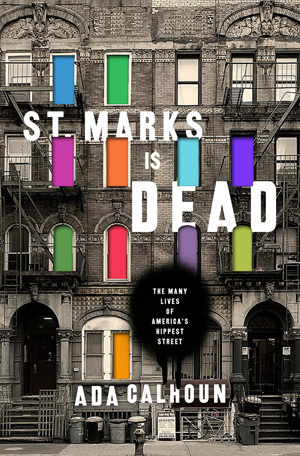
Ugh. Everything about this book is so beautiful and ugly and traumatic and hopeful. I don't even know where to start. So, let's just appreciate that cover for a moment. I love it. Gorgeous. Plus, with an endorsement from King Ad-Rock (my most favorite of the Beastie Boys) on the back once the book was actually in my hands, I knew this would not miss. I was not disappointed.

There are a few things that have fueled my obsession with New York over the course of my lifetime: 1. my general love of history and the fact that NYC is one of the oldest cities in the country 2. Two of my favorite movies that take place there (The Godfather and Newsies. Yes, my tastes are eclectic.) 3. My love for the idea of hanging out in The Village, sitting on a couch in a coffee house with my Friends for hours without a care in the world. I am not sure I can truly convey the powerful hold the idea of New York City has over me. I have never visited the city and the closest I've been was a quick layover in Jersey upon my and my mom's return from Amsterdam in 2010. Somehow, it just wasn't quite the same as walking the streets of the historic neighborhoods, being immersed in the culture of the city. I often wonder if I have built it up so much in my mind that the reality could never live up to the idea I have in my head, and that is a depressing thought.

The first time I ever heard of St Marks came in season 9 of Friends when Ross mentions being at St Marks comics prior to his being mugged in his youth (by Phoebe). I was delighted then to find it is/was an actual place on St Marks, as the author offers a list of pop culture references to the street. The listings are grouped by song mentions and movie/tv mentions or as the location of filming. Incidentally, Friends is not on this list, which is kind of ironic seeing as how it was my first introduction to the famous and infamous street. The book was just published, so I can not see why it would have been overlooked. But I digress.

I guess I should talk about the book itself now; I've talked about myself long enough. The first thing I appreciate about books like this is the author herself. This was not someone who chose a topic to research on whim or because an editor thought it would be a great read. I mean, those things could ALSO be true, but the author is a child of St Marks, having grown up there and experienced living their first hand. Who better qualified to write a history of such an iconic place? Calhoun is a talented writer and it is clear she has a lot of love for the street and the city.

Calhoun begins with 400 years ago, on Peter Stuyvesant's farm and from there weaves an engaging story through time, following the path as Manhattan grew up around it. I loved not only learning about St Marks, but other tidbits along the way. I loved seeing how the names evolved over the years from Bouwerie and Breukelen then to Bowery and Brooklyn now. I also was finally able to discover where the term 'knickerbocker' came from (because I was too lazy to Google it I suppose, or did not realize how much I wanted to know where it came from until I read this). I won't spoil it, the answer is on page 6.

The book flows well and is a quick read. You will cross paths with the likes of The Beastie Boys (only about a page though, my biggest complaint!), Andy Warhol, Leon Trotsky, The Ramones, and Allen Ginsberg, just to name a few. Time and again, the theme is that the street is dead, always proclaimed by the generation that leaves and a new wave takes their place. From a Dutch colony, to the Beatniks, anarchists, punks, drag queens and so on. However, as you will find, that is not actually the case. Each new group to take over St Marks leaves a piece of itself before moving on, contributing to the legend of the legendary street.

I know even as I am writing this, the review here does not do the book justice. All I can say is to read and enjoy for yourself. Only seventeen days into the new year and I think this will be a top 5 book of 2016 for me. Highly recommended.