Showing posts with label Hodge Podge. Show all posts

Saturday, March 22, 2025

NetGalley ARC | The Women of Rothschild: The Untold Story of the World's Most Famous Dynasty


I received a free digital ARC from the publisher via NetGalley in exchange for an honest review.

Rating | ⭐⭐⭐

I'm not quite sure why I did not click with this book as much as I thought I would. I love reading about family dynasties, especially rich ones with secrets and strong women.

There is no question that Natalie Livingstone has done her research. She has traced the movements of generations, from Europe to the US and back. To and from ghettos, castles, concentration camps, and Palestine. Three hundred years' worth of women who were kept out of the family business, so had to forge their own paths ot leave their marks on the world. We meet a wide varity of women, who all took distinct paths - some played the part perfectly of wealthy society hostesses, others advocated for societal changes. Some fit the mold expected of them, and some took that mold and smashed it.

There are several branches of the Rothschild family and for as many women as there are to discuss, this meant a lot of information about the men in the family had to be thrown in too. I feel like this was especially true in the earlier generations, considering how little original source information there must have been. Yet she did well with what information she had, and fleshed the women of those earliest generations out as well as she could.

Livingstone also stated at various times that with the documents she had, mainly diaries and letters, that pages were missing, had been burned, or entire passages blotted out. What secrets those missing papers held, we'll never know. Naturally more information becomes available as time marches forward, and there's much great information about the later generations of women.

Even so, the men of Rothschild still played a large role in the text at times, and it was frustrating but I suppose inevitable.

One of the biggest challenge of the text though, was keeping everyone straight. I had a digital copy, so the family tree wasn't very helpful. This wouldn't be an issue for a physical copy, but there were times I gave up reading for a couple days because I was annoyed with keeping track of everyone named Mayer and Charlotte.

In the end, I am glad I read the book. This is a family I knew next to nothing about, and getting a glimpse at least was interesting.

Recommended.

Wednesday, July 28, 2021

Mini Reviews | Hodge Podge

I feel a potential reviewing slump coming on so obviously the only way to stop it is to write lots of reviews about completely unrelated books. Here's hoping it works!


Rating ⭐⭐⭐⭐

I really enjoyed this book - but I am such a sucker for books about cities, city biographies so to speak. I love learning about how massive cities we now take for granted started out sometimes at tiny villages with futures no could have predicted.

The author does a fantastic job pulling together many threads - history, anthropology, archaeology, and our own modern observations. She is an archaeologists, so that level of expertise is welcome as she not only discusses the rise and fall of some major urban centers, but the process of discovering them.

We visit several fantastic locations around the world - Tenochtitlan, Pompeii, Tell Brak, and the like. In these city remains, and others as well, the author explains how over many thousands of years the city as we know it today emerged. As we journey through the ancient world, even through some of the author's own digs in India, we see that the world as we know it today has more in common with these cities of the past than we think. She makes a lot of comparisons between cities now vs then, and delves into the idea of cities impact the people who live there. I found this part particularly interesting; our environment impacts us as much as we impact it.

I also found her take on the future of cities to be of interest. The likelihood of all major cities simply collapsing over time is not necessarily a given. It's true that many cities in the ancient world came to an end at some point and were abandoned, otherwise archeological digs at these locations would not happen. However, for cities to simply end is not all that common. The citizens move elsewhere, taking the influence of their former cities with them when they move on to other cities, and the cycle continues.

Recommended.


Rating ⭐⭐⭐⭐

I have a fairly good working knowledge of the Kennedys as a whole, but the bulk of my deeper knowledge revolves around Jack, Jackie, and JFK, Jr. I know some about Bobby, but only as he functioned in relation to JFK in the White House years, and then later in regards to his assassination. I was sixteen when JFK Jr. died and was absolutely gutted. Even at that age I remembering wondering how much more one family could take, and that Caroline was now all alone.

Side note: If you are one of those crazies who thinks JFK Jr. secretly survived the plane crash that killed his wife and sister-in-law, and that he would ever in a million years support the former guy and run as his VP, you can kindly fuck all the way off into the sun. A) That would never happen, given the fact that he was a Democrat who many thought could win the party nomination and presidency someday and B) Shame on your for piling more hurt onto Caroline every time you spout this nonsense.

When I came across this book I was delighted, as I am trying to learn more about all of the Kennedys. I am not sure why, and there are many detractors who deride the obsession our nation has with the family, but so many of us still can not look away. Even as the generation after Caroline and JFK Jr. have not managed to capture our attention the way their predecessors did, there are still many who read books such as this, about the eight children of Joe and Rose.

Kathleen, called Kick by her family, was Joe's favorite child and Jack's favorite sister. It is easy to see why. She was adventurous, charming, clever, hilarious. She made her debut into London society in 1938 when Joe was appointed the US Ambassador. London fell in love with Kick as well, as did a specific young man named Billy - William Cavendish, heir to the Dukedom of Devonshire and Chatsworth. They married despite protests of her family over the religious divide, and Joe Jr was the only Kennedy to attend the civil ceremony. Unfortunately a long life together was not in the cards, as Cavendish was killed in action while fighting in Belgium just a few months later. Kick would not live much longer than her husband, dying in a plan crash four years later, at age 28.

Kick was in many ways ahead of her time. She did what she wanted, when she wanted, and saw whomever she wanted - despite threats from her family that she would be cut-off on various occasions. Kick lived her life to the fullest, never minding a bit of scandal that came along with whatever she was up to.

Kick would become the second Kennedy child to die, but certainly not the last. Joe Jr was killed four years earlier in the war, around a month before Cavendish. Her beloved and favorite brother Jack would become the third in 1963, and from out of these family tragedies the so-called Kennedy Curse would emerge.

The author makes good use of sources, relying both on family stories and words by Kick's own in hand in the form of letters she wrote.

I would recommend this one to those with an interest in the Kennedy family dynamics and these 'forgotten' children who have been eclipsed by Jack, Bobby, and Ted.

Tuesday, December 18, 2018

Minimalism: The Path to an Organized, Stress-free and Decluttered Life

35285885

Rating: 2 Stars

I have been toying with this idea for some time. My daughter and I live in a two bedroom, two bath apartment and one of those rooms is not a bedroom, it is a toy room. For the most part this is okay right now, as my daughter and I co-sleep. But eventually we won't anymore, not only because she will age out of it but because she is a GIANT. She's been in the 98-100%tile her entire life and hit four feet tall by her fifth birthday. So, she kind of takes up a lot of space with her flailing around. That means we are going to have to whittle the massive amount of toys down eventually, in order to be able to have her bed moved in there, along with her dresser, night stand, etc. We currently do this whittling thing twice a year, once before her birthday in July and once before Christmas. We always donate toys and clothes to the Open Door Mission, which provides such vital services for our homeless and working-poor populations. I have had a couple students live there at various points and do whatever I can to make sure that Eleanor and I donate items that we know others can benefit from. Plus, it clears out space, even though every year I ask PLEASE, less toys...but it can't really be helped. She is an only grandchild AND an only great-grandchild. I have been asking more for experiences, rather than toys, and this is something that is really catching on, as the author mentioned. Memberships to local museums, the zoo, children's theatre, etc. are all great ways to provide memorable experiences.

I do take some issue with the author when she says about someone needing to look at their underlying issues of why they might hold on to something for sentimental reasons. It comes across as almost feeling like she is suggesting that it is not okay to have emotional attachments to things and it could be some kind of psychological issue. This is not what she says in so many words, but that is kind of the implication how I interpreted it anyway because you know what? Sometimes a mom who knows she is not going to have any more babies wants to keep her only child's baby clothes a while and THERE IS NOTHING WRONG WITH THAT. Now, as my babe gets older, anything that no longer fits and is still in good condition automatically goes in the 'donate bag'. But the itty bitty little outfit I  brought her home in? KEEPING IT.

ANYWAY.

I did find some useful information and I appreciated the ideas of starting small and working up. There is just so much STUFF everywhere. Part of the "problem" too is that Eleanor and I are big readers (SHOCKING, right?!) so there are books on several surfaces, including end tables, night stands, the coffee table, my desk, and various bookshelves. Books are non-negotiable. Books are not clutter and books will not be viewed as such in this home. When I buy books, it is mainly from Half Price Books, and unless I truly love it, I sell it back after I am done with it. I was completely and totally ready to give this book a solid three stars, though I sometimes found it a little trite, and trying to be too cutesy. Then I read this heading at 89%:

"Reducing Physical Books from Your Life

I know, some people out there (myself included) love the feeling of a good book in their hands. The pressed pages and the physical feel of the book itself both contribute to a better reading experience. These things are nice, but the reality is that for a minimalist, books are largely seen as giant space takers. While it may take some time to get used to reading books on a screen, when you replace your large stock of books with a book reader or other type of mobile reading device, you are able to clear so much of the clutter away."

I'm sorry, but did someone just refer to books as CLUTTER? Sorry not sorry, two stars.

P.S. I did find many of the suggestions helpful and look forward to starting them. Just think about how many more books we will have room for once the clutter is gone! Tee hee hee.

Sunday, December 2, 2018

Chasing American Monsters: 251 Creatures, Cryptids, and Hairy Beasts

40334133

I received this ARC from Llewellyn via NetGalley in exchange for an honest review

Rating: 3 Stars

I dig the cover. A lot. It kind of has this old-fashioned vibe to it, with the goldish cover. I am a sucker for a good cover, and totally judge books by them. I can't help it.

The issue with books like this is that they are basically encyclopedias and those can get very repetitive to read. As such, this is not something you would necessarily pick up and read straight through (which is what I did). This does not make it a bad book by any means, I really loved some of these weirdo, creepy beasts that I had never heard of before. But, it does get a case of samesies when you find out that almost every state has a record of Bigfoot sightings. I won't tell you which one(s) don't though, you'll have to read and find out for yourself.

I enjoyed the author's intro as he delved a bit into the idea of monsters and why they fascinate us so - essentially, why we NEED monsters and continue to pass these legends on to subsequent generations. From there the book is divided into fifty chapters, one for each state. The state gets a brief introduction (truth be told, this isn't really necessary. I would much rather have had additional information about some of these creatures, but this could be my personal preference. I suppose it would be helpful for someone reading the book who is not from the US). Even so, there were tons of creatures I would have liked to have seen explored further, but the problem may just be that there is not enough information. Perhaps those should have been left out altogether then? I'm not sure what I would prefer. If further text was cut to make room for those shorter ones, or the repetitive ones, that would definitely be a possible change to make before the final product is published. Using Bigfoot as an example again, I feel like seeing as how nearly every state has had Bigfoot sightings, a chapter could have focused on looking at monsters common across multiple states. This would have saved some of the repetition, as I did find myself skimming over those after I hit the 50% mark.

Some of the these monsters are downright creepy, and others just plain silly. I found it particularly interesting that one of the monsters has been caught, killed, stuffed, and mounted - but I'm not going to tell you which one in that regard though, either. I really liked the sketches that accompanied each chapter; it would have been cool to have more illustrations included whenever possible.

This was a really fun look at some seriously weird creatures that may or may not exist. The author comes down on the side of believing that yes, there is something to all of these sightings. He uses Nessie as an example, that just because one time turned out to be a hoax, that doesn't mean the other hundreds or thousands of sightings are hoaxes too. Fun fact: I've been on a cruise on Loch Ness and it was absolutely beautiful. If I have not said it before (and I know I have, because I am loud and proud about it): I LOVE SCOTLAND. In fact, I love it so much, and Edinburgh especially, that I spelled my daughter's middle name Edin instead of Eden. And the only reason I thought to use Edin was because naming a child Eleanor Edinburgh was kind of mean). Here is my own personal Nessie tour, back in November of 2009:


I would definitely be interested in this book for my classroom. I have a couple boys who are reluctant readers but would absolutely LOVE reading about all the beasties offered up for perusal.

Friday, March 9, 2018

Educated: A Memoir


33135584

I received a free digital copy of this book via NetGalley in exchange for an honest review.

Rating: 4 Stars

This memoir tells an incredible tale, one you would not even believe had we not heard of similar situations in the past. I am still struggling to grasp how someone who had no formal education until college could write something so well. Westover taught herself all she needed to until she was able to apply for college, being accepted to Brigham Young. It was not until age seventeen that she learned of major world events like the Holocaust. Given the fact that her family was far removed from society, scratching out a living on the mountain by salvaging metal from her father's junkyard and assisting her mother's midwifery work, survivalism is all the author ever knew. Despite the increasing violence of one of her brothers as he targeted her, going so far as to force her head-first into the toilet for some perceived slight, to Westover, Buck'sPeak was home.

I could not put this book down. It was literally a struggle for me to do so. But, once having finished the book, it has taken a while for me to fully comprehend what I read and to decompress from it. I can not even fully grasp how she must feel, to this day. Her childhood was both idyllic (the freedom to roam whenever so inclined) and a nightmare (no schooling, no doctor/medicine, a psychotic brother). She loves her family fiercely even as they continue to reject her since she left. I can't even reconcile them, it seems impossible.

We see her religious fanatic of a father, ruling the the family with an iron fist. He has taught his children to distrust anything from the government. As a result they hoard weapons and food for the coming Days of Abomination, while foregoing things we consider standard parts of civilization - birth certificates, medical care, public schooling. As the story went on, and terrible accident after terrible accident occurred I kept thinking, surely this is the time they will HAVE to seek medical treatment. Yet it never happened, despite car accidents, explosions, and all sorts of mishaps that no one else would bat an eye at for going to the emergency room. Yet it was always Tara's mother to the rescue with her herbs and tinctures. So many times I wanted to scream at her parents, to make them see what they were doing to their children, but even if I did, and they could hear me, nothing would change. Not only is Tara's father one to be feared, but one of her older brothers as well. His violence increased rapidly over time and Tara bore the brunt of it. He could have killed her more than once, and no one in her family would have said a word. That is terrifying and heartbreaking and infuriating. How many other children are living through the same situation now, and how many will not be able to make it out like Westover did? There are times also where we see a glimmer of who her mother might have been had she not married Tara's father. While she defers to him almost always, there are these slivers of time where it appears she too might break free. But the moments are fleeting and do not come along often.

I can not for one moment fathom how Westover could even want to have a relationship with any of the family members still living on Buck Peak. The bond was so strong in her youth, from her days on the mountain, that it causes her time and again to want to be a part of the family while keeping her new life as well. And perhaps it is also something I do not necessarily even need to understand for myself. The things that happen in this book defy believability at every turn, and yet they all survive. And even while she was out discovering the real world, the call of the mountain, her family, her home remained strong. This is certainly not a criticism of her and I hope it is not taken that way. I just can't understand it and I admire her for trying to reconcile both portions of her life today. It would be so easy for Westover to renounce it all and go back to the mountain; she loves her family deeply. But she also knows now that there is a whole wide world out there. I don't know if those two pieces will ever fit together for her. I hope they will. One of the hardest parts of the book for me was specifically with her mother, begging her to see, and her mother refusing. There was a brief time where it seemed like Westover was getting through to her mother and sister, and then suddenly everything went back to the way it had always been.That was awful to read, so heartbreaking.

Even so, despite all the brutality and shock of Westover's education both before she left and after, this is an important book and one I highly recommend.

Sunday, October 9, 2016

Hair: A Human History

25673927

Rating: 3.5 Stars

Those who know me well know that I am *kind of* vain about my hair. My most favorite Lady Gaga song is dedicated to this very thing: hair.


If you have not heard the song before, even if you can't stand her, please listen anyway. It's such a fantastic song. I have really lovely, thick, flowing locks myself, though these beautiful strands of hair have been in a perpetual state of messy bun for the last four years (babies love pulling hair and preschoolers love brushing hair which, at these ages, is kind of the same thing).

So, given my deep-seated love for my locks, you can imagine my delight when discovering this book while perusing the new non-fiction releases at the library recently.

Thus, you can then imagine my disappointment in the fact that this book was dreadfully boring at times.

I know, I know. A book about hair is something I should love. But not only were the scientific aspects uninteresting to me, there were a few statements that were incorrect or that I questioned their validity:

1. There was a statement at one point that Anne Boleyn (among others: Joan od Arc and Marie Antoinette) had her head shaved before her execution (page 62). I know a thing or two about Anne Boleyn and I feel like this is something I would have noticed in my readings. On the other hand, I have read so much about the period, it would be easy for some details to escape me after a while. So, if anyone else who is interested in this period has come across information indicating Anne's head had been shaved before she lost it, please let me know!

2. The son of Louis and Marie Antoinette was referred to as the Dauphine, not the Dauphin. Sorry I'm not sorry, but in France, male heirs were Dauphins.

Thus, I was curious about what else might actually be incorrect that I would not recognize as such. So, it made for a somewhat difficult read in that respect.

As mentioned, I was less interested in the scientific explanations and diagrams and such involving hair - though if you are, you will find plenty of information in the beginning sections. As for myself, I was more interested in the social and cultural histories. For example, I had never really considered the idea of how barbershop quartets originated, but it was in actual barbershops. Granted, I do not spend much time at all thinking about barbershops or their quartets, but facts like that made the rest of the book more interesting. Again, I was cautious though, given the errors, as well as others I came across, pointed out above.

Fun Fact: A lock of 10,000 hairs is strong enough to lift more than one adult person (page 80). I mean, wow, that is insane to me.

Oh, gingers: "Red-tressed females were believed to have fiery tempers and unusually aggressive sexual appetites, while red-headed males were considered weak and sexually distasteful" (page 94). The medieval period was not kind to our red-headed brethren, though I myself have also been guilty of gingery type jokes. But, one must only seek out the younger son of Diana and Charles to see that there are some very desirable redheads among us:


(Basically, this was also just an excuse to post a picture of Prince Harry. When I was younger I always thought William was a dish, but Harry really has become quite dashing himself.)

While the majority of the hair discussed is of the natural variety, the author also included references and discussion about wigs. It was here that I discovered pubic wigs are actually a thing. Not that I have ever actually wondered if they are a thing, because who would ever need one? Medieval prostitutes, that's who. He discusses this in relation to how they would shave their pubic hair so not to get lice, but then also may need a covering of some sort to hide the marks left on their skin by any venereal disease. So, there you go, new knowledge for the day: pubic wigs are a thing. To be fair, the author also indicates these are used by actors on stage and in movies to avoid an accidental indecent exposure incident.
Fun Fact: "...the first wig guild was founded in France in 1665" (page 99).

Interesting Quote: "(Of Louis XIII wearing wigs in 1624)...Said to be the first wig in any royal court since ancient Egyptian times, the hairpiece kicked off a new fashion that persisted for almost 200 years, ending with the French Revolution, when royal heads and wigs were separated from royal bodies" (page 99).

There is on bit included that I must comment on, and that is the idea of robots cutting hair. The author discusses this at some length on page 162 in the epilogue regarding the future of hair. Guess what? I think that idea is really stupid. I would never in a million years want a robot to cut my hair. We seriously do not need technology to do everything for us, I promise. Garbage like this is making us so lazy. How hard is it to go to a salon or barbershop and get a haircut? It's not. Don't be lazy. This is technology we do not need.

So, over all, this is an interesting read. There are numerous diagrams and pictures included relating to the wide variety of topics that the author discussed. It was hard for me to get into it at first because of the scientific aspect that came first. I did, however, much enjoy the historical and cultural parts that came later.

Monday, September 5, 2016

Princesses Behaving Badly: Real Stories from History — Without the Fairy-Tale Endings

17412780

Rating: 2 Stars

I originally rated this book 3 stars, but time away from it has given me a better perspective and I am debating between 1 and 2 stars even. Really, this book was not very good. Perhaps I felt inclined to give it the original 3 stars because within the first chapter there was a subsection about fierce queens from Antiquity and a page devoted to Boudicca. I would have liked to see a blurb about Eleanor of Aquitaine (though she did not live during Antiquity, I know), because she certainly bucked tradition in her life time with the way she took control of her life to end her first marriage and begin her second within weeks of returning home to Aquitaine (and most likely, she had been planning it long before).

But the more I thought about it, and looked back over the few notes I took while reading, I had to accept the fact that while parts of the book were entertaining, by and large the princesses were never really made to feel like real people. The author relied a lot on the myths surrounding these women and did not do a decent enough job separating the two. I guess I would have been more willing to rate the book higher had the two been more clearly divided. Perhaps even presenting the myths first and then following up with what was true in the myth, why the myth grew to overtake the facts we do know, etc. But there was none of that and so the author does herself a disservice, and her readers as well.

Immediately in the introduction, I had some misgivings about the book. Even in the table of contents, the author referred to Isabella of France (wife of Edward II, more on these two in a minute) as a she-wolf. It was at that point I already expected much of the book to be a regurgitation of gossip and nonsense. She-wolf was not a compliment at that time, and using it now without explanation is no better.

While still in the introduction, I found it kind of ridiculous that the author would call her book 'Princesses Behaving Badly', and then rant against Disney Princesses and these cultural and gender norms that exist in society now. Why would these princesses in the book be considered to be 'behaving badly' then, unless the expectation of the behavior was the opposite, and more Disney-like? The message there is already mixed, and nothing is ever done to clarify it.

Back to Isabella and Edward II. Edward was not the king his father and grandfather were, nor his son Edward III would become. I have always felt a bit bad for him, as he enjoyed activities that were considered beneath a king, but he made his own problems as well when he let his favorites sway his opinion and policy. Piers Gaveston was a terrible influence on Edward and there will be speculation until the end of time about whether or not Edward was gay and Piers was his lover. What matters in that bit of information is that Edward never bothered to at least pretend that Isabella mattered, and from their wedding day on it was clear she was of no importance to him - considering the fact that he gave the jewels she'd brought with her to Gaveston, and Gaveston sat with Edward at the coronation, in what should have been Isabella's place.

This quote was one of a few that really sealed the deal for me on how untrustworthy the book is:

"When Gaveston was around, Edward was worse than useless, barely able to hold a conversation, much less govern. When Gaveston wasn't around, Edward was a wreck" (page 79).

This seems a bit...sensational, don't you think? I was interested to read the chapter on Isabella, but it ended up just being a rehashing of rumors and gossip. In looking at the bibliography for this chapter, I found that the author only used one book, Helen Castor's 'She-Wolves: The Women Who Ruled England Before Elizabeth'. That in itself is kind of shady, to use only one source. and Castor's book is definitely not sensational and gossipy. I mean, it has its moments, but it was still well-researched and I liked it. Isabella's behavior was more then justified, by our standards today anyway. As far as we can ever really know, Isabella and her lover, Roger Mortimer took power and eventually Edward II died in captivity under dubious circumstances. At the time her behavior was considered unacceptable, and that is why once their son, Edward III came to power, he had Mortimer executed and Isabella basically under house arrest for the rest of her life.

Basically, the book started out decent, but even after the rough introduction I had concerns. By page 55 when the author referred to Tuthmosis III as 'T-III', I just could not take her seriously. There were some solid stories but over all this is more entertainment than academic. That is not a bad thing necessarily, but it is problematic when myths are presented as fact. If there was not enough factual information about someone available to us today, then perhaps that is a sign that they should not be the subject of a book.

Take it or leave it, but keep in mind its shortcomings.

Saturday, January 30, 2016

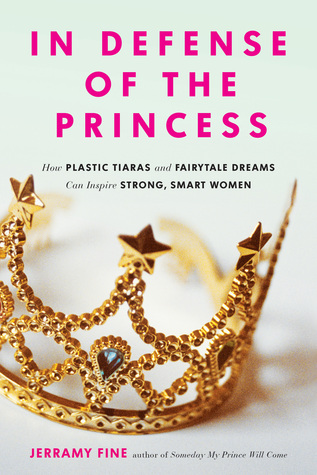
In Defense of the Princess: How Plastic Tiaras and Fairytale Dreams Can Inspire Smart, Strong Women

25898155

Rating: 2.5 Stars

Review:

I received this book as an ARC via NetGalley in exchange for an honest review.

I absolutely loved this one for about the first half or two thirds or so. The rest was such a disappointment. This may come as a surprise, since I seem to be the target audience. After all, I myself am a princess. My name means 'princess' in Hebrew, I have the word 'princess' tattooed in Hebrew on my body, and I was pretty much raised like a princess, being an only child - and only grandchild for ten years. But the problem with this one is that the author applies modern thinking while making general statements about all princesses - that princesses are caring, protective of their kingdoms, etc. Disney Princesses, yes (more on these lovely ladies in a second), but REAL princesses, in the middle ages? They had no power themselves and lived to be pawns for their fathers to gain power through marriages. Princesses then were decidedly NOT powerful, so I think it is important that the author makes the distinction of being a modern princess who has autonomy and control over her own life.

I like how the book started out, specifically focusing on Disney Princesses. We love Disney in this house and I will never apologize for that. My daughter is two and a half and loves to watch Frozen, Tangled, and Brave especially. She dresses up in the Elsa and Anna costumes, then plays with her dump trucks and garbage trucks. I have zero worry that she is being damaged by unrealistic expectations that Disney supposedly promotes. So, I appreciate this aspect of the book and the author suggestions that these princesses display self-reliance, compassion, critical thinking, ingenuity, etc. However, lets be honest, that was not the message being sent when Cinderella, Sleeping Beauty, and Snow White came out decades ago. I do agree that these princesses were more on the weak side when compared today to the likes of Rapunzel and Merida. And before you tell me that Rapunzel waited for a man (Flynn Rider) to help her leave her tower, I must remind you that she had never left the tower and had also asked Mother Gothel to take her. It was not that she needed a man to protect her - she did that just fine on her own. She just needed someone to show her the way to the lanterns.

A quote I particularly liked in reference to this issue: "I'm not suggesting we negate all critical thinking when it comes to viewing Disney films with our children - but if someone tells me that Disney princesses possess zero redeeming qualities, I must and will protest" (8%). This, I certainly agree with.

Another positive: the author mentions Boudicca and Eleanor of Aquitaine in the same sentence and they are awesome. My daughter is named after Eleanor of Aquitaine and her nickname has evolved over the last two years to Boody, for Boudicca. It makes sense in my head and in hers, trust me.

My biggest issue with this book is that the author assumes that women and girls want to be princesses because of the qualities of kindness and compassion, caring for those around them, caring about the 'global and human implications of decisions and not just financial implications'...that is all well and good and OF COURSE we want to raise all our children, not just girls to be kind and caring people. But this assumes then that girls are not also competitive or things that might be perceived as more 'masculine' qualities, because the author uses the phrase 'scientifically proven' several times at the end when discussing the characteristics of women/princesses. Sorry I'm not sorry, but I am super competitive and I always want to win. If I win, that means someone else has to lose. That does not make me any less of a princess. I'd wear my tiara to work every day if I could, but unfortunately I live in the Midwest where people would look at me like I was crazy and I just don't want to deal with that. If I lived in New York or LA, no one would look twice. But I digress. Back to the topic at hand - the qualities the author says princesses have are not the ONLY qualities we possess and that is okay. It doesn't mean that I want everyone else to fail so I can win, and of course it depends on the situation, but still, she is supposing a lot.

Another issue that bothered me was when the author repeatedly discussed Prince William losing his hair in her section on Kate. The author previously made the point about not emphasizing beauty, yet she takes these little potshots at the fact that he is going bald. The first time, I let it go, but then the second mention came in the form of, "...back in the days when his cheeks had color and his head had hair"...and following up with this one a swipe later about, "...November 2010 when his eligibility came to an end and so did much of his hair." Why is it okay to do this and repeatedly comment on his looks, when we should not do this to women/princesses? Speaking of Kate - while I was among the many who watched the wedding, enthralled, I am a bit skeptical of the author's prediction that she will one day be known as 'Kate the Great'. Does the author know that only one ruler in the history of the country - from even before England was united as England - is known as 'the Great'? He goes by the name of Alfred and he busted his butt to secure Wessex and the surrounding lands, fight Vikings, promote religion and learning, create burghs. I am guessing she does not, since she also stated that the royal family of England goes back to the 400s AD. Um, no, they definitely do not. Roman occupation slowly dwindled out and the country eventually became divided into small kingdoms. It was not until Aethelstan, Alfred's grandson, that England even became united into England in Anglo-Saxon times. Please know your history when it is relevant to your topic.

As an aside, the author mentions a 12 year old girl in California who has discovered that all US presidents except one are directly descended from King John (That would be Eleanor of Aquitaine's youngest son, Richard I's brother who is possibly one of the worst kings England had, and thus came Magna Carta). I found this fact very interesting and wanted to know more about this, how she came across this information and what materials did she have access to in order to determine this?

In the end, I was highly disappointed in how the book devolved from how princesses could be strong, powerful and capable, to a diatribe about feminism. I do agree that you can be pro princess and a feminist. Feminist is not a dirty word, being a feminist simply means you recognize gender equality as a must in our world, so let's just get that out of the way. Yet the author goes on saying how we hate ourselves for buying Princess Diana biographies, and don't want our daughters to have princess-themed birthday parties...Um, please. My daughter's first birthday was Disney princess themed, complete with a three-tiered replica of the Disneyland Castle. I am entirely not ashamed of my princess-ness and no one else should be either. Being a princess is awesome.

And for the record, my toddler knows she is a princess too. She says it every day while she twirls around in her fancy dresses, surrounded by all her trucks.