Showing posts with label Bio/Autobio. Show all posts

Friday, April 27, 2018

Book Brag!

37823157

WOOOHOOO!

I requested this one ages ago on Edelweiss and did not think I would get approved once the publishing date had come and gone. BUT I finally was approved today! Definitely going to drop everything else I planned to read/write tonight for this one, and I won't even feel one smidge bad about that!

Happy Reading
Sarah

Wednesday, December 21, 2016

Ruthless: Scientology, My Son David Miscavige, and Me

28113716

Rating: 3 Stars

Okay, honesty time: I am completely fascinated by Scientology. Not in a Tom-Cruise-Jump-On-All-The-Couches-Kind-Of-Way, but in an "OMG WTF?!" kind of way. This is complete insanity to me. But then I remember I live in a country that recently elected an orangutan/Cheetoh for president, so nothing should REALLY surprise me in the level of gullibility or stupidity that exists. And yet, here we are.

There is a review in particular on Goodreads I would like to point you to if you have not seen it, which really sums up the book nicely. The user's name is Meg and her review is as follow: "No matter how bad things get, just remember: at least your dad never wrote a book about how you're a sociopath." And yes! This is such a true statement, on all levels. Firstly, because that is exactly what Ron Miscavige did and secondly, because his psycho son David really is a sociopath. And I  came to the conclusion about the sociopathiness of Miscavige when reading his niece's book a few months ago. This one confirmed it even more.

This is a quick read and is by no means groundbreaking. There is very little information about the elder Miscavige and his son, because there seemed to not really be any relationship to speak of. This could be due to the honesty of the author in depicting how difficult life was for his children growing up because of how much he and their mother fought. I don't blame the younger Miscavige for wanting to get away from home ASAP.

As opposed to Ron's granddaughter's book that I mentioned previously (Beyond Belief: My Secret Life Inside Scientology and My Harrowing Escape by Jenna Miscavige-Hill), the thing I found most useful in this one is that the author delved a little deeper in actual Scientology practices and core beliefs. However, I still don't understand what Scientology actually does. I mean, I get the auditing and the e-meters and all that shit, but when they talk about going on "missions", what are they doing? Just constantly asking for money and building huge worship centers? Except worship is not even the right word, because what do they worship, besides David Miscavige and $$$? They don't believe in God, yet celebrate Christmas. I just don't get it. And maybe that is okay, because it is all just nuts.

I can't help but feel sorry for the author in a few ways, however. As a parent, it would be very difficult to hear that your son had not only instructed private investigators to continue following you long after you left Scientology, but that in a moment where they thought you might be having a heart attack as you reached in your pocket for your phone, your son's words were, "If he dies, he dies. Don't intervene." That has to be hard for a parent to hear.

Ultimately though, there is nothing really new here that you could not have found elsewhere, such as in Jenna's book, or seeing what all the hullabaloo was when Leah Remini's book first came out. The thing is, so much of the author's information was second-hand also, as he was kind of on the outside for a long time before he and his second (I think. Maybe third?) wife finally left the group for good. 

In the end, this is one you can take or leave. But, if you are having a bad day, it might make you feel better about your own life!

Saturday, November 19, 2016

The Step: One Woman's Journey to Finding Her Own Happiness and Success During the Apollo Space Program

27753379

Rating: 3 Stars

I won a copy of this book from the Goodreads First-Reads program.

This was a quick read and one I thought I would enjoy because I am obsessed with the Apollo program and I long for the days when people were excited about NASA and space missions, and the like. While in most other aspects of life I am glad I did not grow up in the 60s, what I would not give to have been alive for the launch of Apollo 11 and to have seen the grainy footage of Armstrong's first steps on the lunar surface. It seems that in this century, we take space travel for granted, like it something mundane and easy - even with the disintegration and total loss of life from the Space Shuttle Columbia tragedy in 2003.

Unfortunately this was not nearly what I had hoped for, and I almost feel bad in saying so, because this was one woman's personal experience, but there were somethings that she discussed that really bothered me. As a single mom myself, I was interested in that aspect of her life in terms of how she handled her career and parenting responsibilities in a time when divorce was nearly unheard of - but certainly on the rise. I was interested in the workings and operations in regards to her position first as a secretary with IBM and then as a PR writer with the program. I was less concerned with the mini skirts and make-up and affairs.

I first came to know about the Apollo missions mainly from one of my all-time favorite movies, Apollo 13. For reasons I can not fathom, this is not something that was covered in-depth in school. For the life of me I can not figure out why not. Space is cool, planets are cool, walking on the moon is cool - what's not to love. Even my three year old digs moon-gazing, something that was especially cool with the Super Moon a few days ago. But I digress. For whatever reason, while we were of course taught about Apollo 11, the rest of the program itself was not a priority. Such a bummer.

But back to the book...

In the end, I found I could relate to the author in some ways - working hard and putting in the hours to support our families, but in other ways her story was very alien to me because of our generational differences and societal expectations of the times. I know it was impossible to even think of leaving the house without hair and make-up done, wearing anything but skirts and blouses, so once again I am thankful I did not live in the 60s or earlier. I myself am more partial to sleep than make-up, and I haven't worn it in ages. Sorry I'm not sorry.

There is a particular scene in the book I struggle with, and it involves when the author was needing to get some photos of the astronauts in an area of one of the buildings where it was against the rules to wear skirts. This was a rule in the name of safety, as they thought that the men working on the catwalks might either get distracted by a woman in a mini-skirt and fall, or get distracted and drop the tools they were using which might in turn injure or kill someone working below them. I thought it was highly stupid of her to flaunt the rule in the name of getting some photographs, but also a highly stupid rule to begin with. If these dudes can't control themselves, why is it HER problem? Perhaps they shouldn't be cat-calling a-holes and concentrate on working on the flight craft instead of ogling any woman in the vicinity. Yet one more reason I am thankful to be alive now - not that guys do not do this garbage anymore, but it is certainly less acceptable by society's standards.

This book was not terrible by any means, and was one woman's view as she saw it and lived her life, working for IBM during one of the most exciting times in our nation's history. I simply was looking forward to more about the program itself. (Also, conversations abound in this text. If you have read any previous reviews, you know my stance on conversations and that I feel unless the conversation was recorded at the time, there is no possible way everything said can be remembered exactly. That was something that definitely bugged me about this one.) The book is both her personal and professional journey and I'd definitely like to know more about women connected to the space program at this time. I have discovered a few books relating to this topic that I am looking forward to reading those as well.

Saturday, October 22, 2016

In the Name of Gucci

20174442

Rating: 4 Stars

Let's just take a moment and admire that cover, shall we? If you have read my reviews regularly, or even some of my Top Ten Tuesday posts, you know covers are VERY important and I absolutely judge a book by them. It doesn't mean I won't read books with terrible covers, but I will point out said terrible cover in my review. This one, however, is not terrible, it is beautiful and simple and a sweet photo of a girl and her father.

However, that girl happens to be Patricia Gucci, and her father happens to be Aldo Gucci, so it is definitely no ordinary family photo as they laugh together at a Gucci event in Hong Kong. Even though they are no ordinary family, it is easy to see their happiness being there together, sharing in laughter.

The back cover is equally as beautiful and I snapped a photo (originally provided courtesy of the author) of it to share so we all can bask in its beauty:


This one was tough for me to rate at first and I wanted to do a proper review, which is why it has been a couple months before I could get this one done. The story within these pages is quite a roller coaster ride and I needed some time to think about it and decide how I felt about the narrative. But truly, the inside dust jacket pretty much sums it up perfectly (and almost makes my review moot, but yes I am still going to write one anyway): "The gripping family drama - and never-before-told love story - surrounding the rise and fall of the late Aldo Gucci, the man responsible for making the legendary fashion label the powerhouse it is today, as told by his daughter."

While I myself am not able to afford the likes of Gucci, I can still appreciate the quality of the product. Basically, that's a nice way of saying that I am very nearly obsessed with the history of fashion, how these great fashion houses got their start, and basically anything related to two of my favorites - Gucci and Louis Vuitton. I appreciated the historical aspect of this book a lot, seeing how the author's father got his start and how the company that began as one small shop eventually grew into a world-wide powerhouse.

But that is not all the story contains. At its heart, it is not about the store or the brand, but about the love story of the author's parents, Aldo and Bruna Gucci. I have to admit I was skeptical at first, reading of their early encounters when the author's mother first began working at the store. It felt at first like he was far more interested in her than she was in him. Perhaps she was scared, for a multitude of reasons - the main one being that he was married and had children already with someone else. It felt at first almost like he was obsessed with her, the way those encounters were described, how he would glance at her or touch her cheek. It seemed to make her uncomfortable, but as I read more and more of their story, it seemed to me that they truly loved one another, and perhaps her unease rested solely on the fact that not only was he married with children, but when they had their own child (the author, Patricia), it was still illegal in Italy to have a child born out of wedlock. For much of the book, Aldo's feelings seem to be more prominent and discussed more at length. Perhaps this is because he was this kind of larger-than-life figure and overshadowed the rest? This quote stuck out for me in particular: "He had fallen hard for a woman young enough to be his daughter. It was an infatuation that ran bone deep and one that he seemed unable to fight even though he was aware of what he was risking - for him and for her" (page 54).

As the story weaves on, we get to see the author's childhood and I felt such sadness for her at many times as she described growing up as this secret child. Her mom couldn't really be a parent to her and was so non-functional whenever Aldo was away, and then for Patricia to lose her nanny, Maureen, when she was old enough to not physically need a nanny anymore. Emotionally though, she certainly still needed the love and care that Maureen had provided for her. It was quite heartbreaking. Her father's visits were not long, a weekend at most, usually once a month or so, and that part also made me sad for her. From the moment he arrived home, Bruna occupied his attention with her 'venting' as it was referred to in the book and it seems that even though they both always looked forward to his visits, the author didn't get to see him nearly as much as she wanted or needed. When Aldo became ill and was on the verge of passing away, I was in tears. It was a combination of everything he had gone through in his later years, when he should have been enjoying life with his family, and the hard fact that everyone eventually has to say goodbye to the people they love, that hit me so hard. But the author handles these last stories of her father quite elegantly, and it is as beautiful in her writing as it is devastating for her loss.

The one thing I could not relate to at all, was the absolute deviousness of both Aldo's sons from his first marriage, and his nephew to boot. I just can't imagine ever doing something so cold and heartless to anyone in general, much less a family member who had provided me with a life beyond anything a regular person would ever experience. His sons were horrible, and his nephew needed a good slap upside the head and a kick in the ass, just for good measure.

Overall, I enjoyed the book - but as I mentioned above, it is not without drama or sadness at times. I am sometimes cautious at first when family members pen memoirs of their own loved-ones, because often the story is told through rose-colored glasses with an obvious slant. Not so with this work, as the author seamlessly combines the two parallel stories - her family and the family business. I think Patricia Gucci has written a wonderful memoir that her father would be quite proud of her for.

Saturday, October 8, 2016

My Life in Ink

25817333

Rating: 3 Stars

It usually comes as a surprise to people when I talk about my tattoos. Mostly, I think, because apparently I don't look like a person who would have any. Stereotypically, it makes sense. I am, after all, a teacher by day, writer/reader/blogger by nights and weekends, and a mom full time.

Well guess what. I DO have tattoos.

In fact, I have eight of them. And every single one was done at Iron Brush in Lincoln, Nebraska. Best shop in the state, no contest. The guys at the shop are amazing and even though it has been about five years since my last piece of art and I no longer live in Lincoln, I am always toying with new ideas and randomly telling Kevin on Facebook that I have a new idea (Kevin Chasek is the artist who has done 7 of my 8 tattoos and he is phenomenal and patient. Seriously, I have the lowest pain tolerance of anyone, ever. Nate Deal did my very first one and was equally as patient with me. Nate is no longer at Iron Brush, but you would do well to get a tattoo done by either of them. Or Tyson, who owns the shop. All really good guys). This book made me seriously crave a new piece of art, because I love tattoos. I love looking at them, hearing the stories behind why people chose what they did to represent themselves in that way, I love coming up with new ideas and seeing Kevin make it a reality, all of it. I love tattoos. Just not the pain part, but all the time and pain is worth it when it is done if you have a good artist.

Now then, on to the book.

Well...it was okay. Bang Bang (real name Kevin McCurdy) is one of the most sought-after artists in the world and has celebs flying him all over the place to do their tattoos. He doesn't come across nearly as arrogant as he could, but it's there, like he COULD just come out and be the most arrogant guy in the world at any moment. Honestly, I was surprised at how humble he came across to me, but then again he did admit that Justin Bieber is his friend, so he kind of has to be humble because Justin Bieber is a tool.

Admittedly, I was more interested in the photos than his stories, because the artwork is amazing. I don't really care about any of the celebrities that he works with, and loved seeing photos of non-celeb tattoos more than anything. I myself am not really a fan of the whole 'tattoo a face on my body' kind of work, but his talent shines through even in tattoos I would not be interested in getting for myself. But that is kind of the whole point and what makes getting a tattoo such a personal experience - we all have our own stories to tell and things that mean something only to us. With every single one of my tattoos I toyed with wording and design, then set it aside for a couple months and if I still wanted it after that time, took my idea to Iron Brush and let Kevin work his magic on the final design, lettering, etc. I was never disappointed, because the work was quality and he knew even better than I did what I wanted. That's how tattooing should be. Yes, they are costly, but this a piece of art you are going to wear for the rest of your life, shouldn't it be costly?

Sorry for the sidetrack, I can really talk about tattoos forever.

All in all, it is not a bad book. It is clear that Bang Bang is not a professional writer, but I get the feeling the book is written in the way he talks, as it is very conversational. I am okay with. I just can not take someone totally seriously who has a high opinion of Justin Bieber. Don't let that make you shy away from the book though. If you are genuinely interested in tattoos, give this one a try. The photos alone are amazing.

Friday, October 7, 2016

The 15:17 to Paris: The True Story of a Terrorist, a Train, and Three American Heroes

28691794

Rating: 3 Stars

This is a tough one to review, or even rate. I feel like if I give it a lower rating or speak to the disjointed flow of the narrative, then I am somehow devaluing the experience of these three young me and their actions to help stop an ISIS attack on this train and its passengers. That is not my intention at all. The story itself is captivating but the writing really just made it difficult to stick with.

I would assume that Jeffrey Stern did most of the writing despite the fact that the three young men are billed first. That is typically the case with books such as these. If Sadler, Skarlatos, and Stone had done all the writing themselves, I would be far more willing to cut these guys some slack, not being professional writers. But with the presence of Stearn, I expected better. The flow of information and the unfolding of events prior to the attack itself were simply told in a totally boring way. Then the disjointedness comes from the fact that the attack was not told in one section and was interspersed between the stories of each young man and how they met and became friends, growing up together, and eventually meeting up to travel together on that fateful day to Paris.

One thing of interest that struck me was their waffling on whether or not to actually go to Paris in the first place. While traveling, others had suggested foregoing Paris for other locations, but in the end, these men ended up on that train. And thank goodness they did. Who knows how many might have been injured or killed had this terrorist been successful. This idea of fate is an interesting one and there have been many times in my life I have acted on gut instinct to make a decision. Part of the reason is because, in high school I ignored a gut instinct and moments later was hit nearly head-on in my little 1986 Chevy Nova by a Ford Bronco running a light. I don't often ignore my instincts anymore and I am so glad these young men didn't either.

If the book does nothing else, it at least points out the glaringly obvious fact that the media in the US is totally screwed up (something we already knew, given the media's treatment of Bernie compared to Hillary throughout the primary season). I remember when this story first broke, it was all about how three US Marines on leave had thwarted a terrorist attack. That was completely inaccurate. Two of the three young men are in the military, however NONE were Marines. It just goes to show you how quickly the media will jump on a story without having all the facts. This is certainly nothing these men did wrong, but is an big indicator of how ridiculous media outlets here are.

I am really going to miss President Obama and his sense of humor once he leaves the White House. There is a point in the narrative when they are recalling their initial phone conversation with Obama and he says, "...I was just talking to Spencer and told him, like, when I have a class reunion kind of thing, we just have a beer, we don't like, tackle terrorists or anything" (page 84).

In the end, it is not a bad story, but still a poorly told one. The moving back and forth between their childhoods and the event on the train was frustrating because it made the narrative so choppy. That does not diminish the importance of the story and I feel like it is still one that needs to be told and read and applauded. The way it was told simply did not work for me.

Friday, July 15, 2016

C.S. Lewis: A Life Inspired

20879829

Rating: 4 Stars

I might be one of the only people in the world who has not read the Chronicles of Narnia. I am not sure why this is, but I haven't. I am interested more in his non-fiction work (and the Screwtape Letters). This might also be my shortest review ever.

His life is incredibly interesting to me, but the book is not very long - maybe 100 or so pages in length (not exactly sure how to quantify it, as I read it on my Kindle). I feel like this is a good starting point for someone who knows nothing about C.S. Lewis - like me. It is also harder for me to critique and analyze anything within the text, because this is literally all I know about him. Anyone who knows more about Lewis and is familiar with his life and works would probably know everything written here already. I also feel like he is probably a much more complex man than this biography allows for, again due to length. If you know nothing about his personal life and are interested, this is as good a place to start as any. 

Sunday, May 29, 2016

The Phantom of Fifth Avenue: The Mysterious Life and Scandalous Death of Heiress Huguette Clark

18453221

Rating: 4 Stars

Basically this book shows you that everything you think is probably true about people that you wish was not actually true, is true.

Is that a sentence?

At least it makes sense in my head. People are selfish and manipulative and will do whatever they can to cash in on an inheritance that does not belong to them, all under the guise of 'caring for a family member'. What bullshit.

Having first read Empty Mansions by Bill Dedman, I feel like both are well-written and engaging. I don't really recommend one over the other and think that if you are interested in the strange life and sad death of Huguette Clark, you should read both.

This book doesn't just cover the end of Huguette's life when she voluntarily chose to leave her number of homes and live in Beth Israel Hospital. Instead, the author traces Huguette's life from the start - her life in Paris, growing up in Butte, Montana, the family's home in Santa Barbara at Bellosguardo, and the main residence on Fifth Avenue that stood for only eleven years before being torn down after her father's death. By all accounts, Huguette was an active social - albeit shy - young lady who  enjoyed the life that her robber baron of a father provided with his copper fortune.

So what changed?

First, Huguette's beloved older sister Andree died of meningitis at 17, when Huguette was only 13. I feel like this was really the point that changed Huguette and her mother. Then her father passed away in 1925 - but not before imparting this gem on his youngest daughter: "No one will love you for who you are. They will love you for your money." It seems like a harsh lesson to have dropped on such a 16 year old, but he was not wrong. As Huguette neared the end of her life, family members from her father's first marriage seemed to come out of the woodwork to get their hands on her inheritance - despite the fact that they had all already received their shares of the family fortune. Not that anyone else in Huguette's life was any better. Her nurse, doctors, the hospital, her lawyer, and accountant - all of these people just wanted her money and it was painfully obvious that the only two people in her life who were not gold diggers were her goddaughter Wanda and her assistant Chris. I get the fact that there was concern about elder abuse, that Huguette might be a hostage of some kind and being coerced into giving her money to those around her. However, her money-grubbing family members had no footing on which to claim they were looking out for her best interests.

There are so many aspects of Huguette's life that are intriguing and tragic and heartbreaking. The whole 'eviction' notice from her father in his will was awful. So, basically Clark spent a ton of money to build this house that everyone said was ugly. I thought it was beautiful, and wish all these old mansions still existed as a testament to this bygone time.


"The public be damned - William Clark was happy with his new home" (page 82). I'd agree with the sentiment.

Huguette and her family lived in the house for only eleven years and then it was demolished to make way for apartment buildings. Huguette and her mother moved into an apartment and slowly but surely withdrew from their once active social lives. They stopped visiting Bellosguardo in the 1950s, but continued to maintain the home at a cost of $1 million per year. Were they just so dependent on one another, or was it more so that Huguette was terrified of losing the last person she loved and cared about, and so they kind of wrapped themselves in this cocoon and never went anywhere or saw anyone because they were so afraid of losing one another? I don't know. And now, after Huguette passing in 2011, we will never have the answers to any of the questions we might have about what made Huguette behave the way she did, make the choices that she did, and ultimately end her days in a hospital as a healthy individual who could have gone home.

In the early 1990s it was discovered that Huguette had skin cancer and she was taken to the hospital, from which she would never leave. This is another issue that will never really be resolved - why would she refuse to go home once she was cancer-free and healthy again? The author contends that while change was difficult for Huguette, once she discovered this new world she could live in and have limited contact with other people on her own terms, she did not want to return to her home.

The problem became that everyone she came in contact with after her arrival and subsequent stay in the hospital, they are wanted her money. It is absolutely disgusting how these people behaved. Huguette's close friend Suzanna helped to hire a full time private nurse named Hadassah, who for many years worked 12 hours a day, seven days a week to be with Huguette at the hospital. So apparently, because Hadassah agreed to Huguette's outrageous terms, she felt entitled to every penny she could get out of her employer? Whether that was the intent or not, that is exactly how she comes across - especially with the issue of this check for $5 million that she felt she was owed because Huguette has promised it. THEN she and her husband had the nerve to be pissed that they did not have the money when they wanted it. It's all just so gross.

If you are in any doubt about how yucky these people were in grubbing for Huguette's money, here are a few gems from the book:

"What Hadassah learned was that if she simply mentioned her problems to Huguette, her wealthy and healthy patient would reach for her checkbook" (page 245).

"The secret of Hadassah's salesmanship was that she never had to directly ask for anything. All she had to do was discuss her concerns over the high cost of private school (and the college) for her three children; Huguette began paying not only the tuition bills but the cost of after school activities" (page 245).

The hospital staffers were no better, from the CEO to her doctors, they all wanted money for the hospital. They were constantly coming up with ways to mention to Huguette that the hospital was in need of donations; one doctor even used his own mother to spend time with Huguette in order to try and get money that way. All of these people were taking advantage of her kindness, and had not done anything to deserve the thousands and thousands of dollars she gave to them. At first they were keen to send her home, but when they realized how much money she was worth, it is pretty clear they wanted her to stay to keep the money coming in.

"The nurse was not alone in seeing dollar signs above Huguette's hospital bed; the administrators and doctors running Beth Israel Hospital wanted their share, too" (page 264). Except, wait, they were not entitled to her money just because. Again, so disgusting.

So many of Huguette's actions I simply do not understand. Perhaps it is because she had so much money her entire life to do whatever she wanted with, that $1 million meant nothing to her? For example, she never took any legal action when she was wronged. Was it really that terrible to have her name in the papers, that she would rather just let the money go than claim what belonged to her? At one point, "Even when she was wronged, she refused to sue. Citibank had informed the heiress several years earlier that more than $5 million worth of jewelry, including her mother's wedding ring and a magnificent bracelet adorned with sapphires and diamonds, had been pilfered from a custodial account at a bank branch" (page 259). How does this happen? I don't understand. THEN, on top of that, the remaining pieces that had not been stolen had been put into a new safety deposit box, which was 'inadvertantly' listed as abandoned and the rest of the contents sold at auction. These were family pieces that Huguette had thought were safe, and twice she was robbed. But again she did not choose to sue. Instead she accepted a monetary settlement for far less than the pieces had been worth. It's just so sad that all these terrible things kept happening to Huguette and she continued to just grin and bear it.

So, in the end, the book paints a pretty grim picture of a woman who was completely surrounded by vultures. Even so, she continued to spend her time as she wished, creating grand art projects that occupied her time up until the very end. Perhaps she did not mind people constantly asking for money? Perhaps it really meant nothing to her. When her attorneys continually tried to get her to sign a new will (her previous one left her inheritance to her mother), she was reminded time and again that without a new will, the descendents of her half-siblings would get her money. And still she refused to entertain the idea of a new will. It doesn't make it right that they all came after her money anyway, but still.

Anyway, Huguette Clark is a fascinating figure. The people around her will infuriate you with their greed. I would like to think that she was mentally competent to be signing these checks, and that all the money really did mean nothing to her. Above all, I hope she was happy with her choices. Highly recommended.

Saturday, April 30, 2016

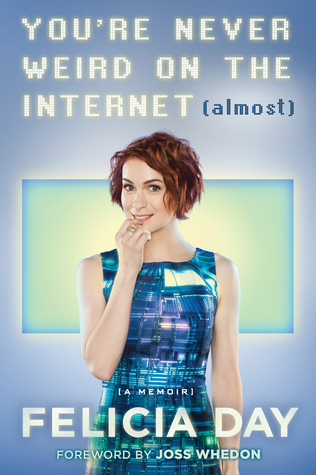
You're Never Weird on the Internet (Almost)

23705512

Rating: 3.5 Stars 4 Stars

EDIT: Changing to a full 4 Stars because Felicia Day liked my Tweet of my review and any celebrity who notices the little people is a-oh-kay in my book. I am still shaking a little bit.

Review:

I am definitely not a geek. Nerd, yes. Geek, no. My extent of gaming involves an original Nintendo, and SNES, a PS2, and a Wii. Don't get too excited to point out I have just contradicted myself. I play the most un-gamer games. Mostly Guitar Hero and The Godfather on the PS2 and The Godfather Blackhand Edition for the Wii. And right now, the Wii is mostly used for watching VeggieTales and Mighty Machines on NetFlix for my little lady.

I decided to give this one a go despite my completely rational fear of gingers, for one reason alone: I love Joss Whedon. I adore him, despite the fact that he spent several season of Buffy and Angel ripping my heart out again and again and again. It was never-ending. And to this day, I love him. So, I vaguely knew that Felicia Day was some kind of actress who annoyed the bejeezus out of me on Buffy in the final season when all these stupid potentials thought they knew better than the greatest slayer of all time. I always find it strange when people so young write memoirs, but whatever. I was willing to give this chick a second chance because, well, Joss.

And my three and a half stars is not because of Felicia. I certainly like her much better now than I did before opening the book, which I breezed through in a couple hours total. I mean, it is because of her, but it is not. That makes no sense, I understand. I guess because I am not part of this whole culture that she exists in...I don't get it. But that does not stop me from recognizing she is incredibly intelligent, witty, clever, and we would probably be friends, because she strikes me as the kind of person who also sometimes lays awake at night thinking about every stupid thing she has ever said or done, all at one time. And she would then imagine everyone she ever knew still thinking about those same events with the same intensity she does, and laughing at her to this day. I definitely get that.

The problem is, I just don't relate to her in most of the ways she is known for. We do have the same personal philosophy, which is to expect the worst because then you can never be disappointed. We also had a burning desire to BE Anne of Green Gables as children. I mean seriously, my best friend from elementary school and I would play Anne of Green Gables at recess every day. I would be Anne and she would be Diana and we would play out our favorite scenes and try to make one of the boys in class be Gilbert to act out the scene on the lake but it never happened, so we would just pretend. But otherwise, we are very unalike. As a teacher and a human being, I can really feel for her in the extreme loneliness she describes in growing up, and how online gaming, and eventually World of Warcraft, consumed her. I do understand this, I mean, Buffy consumed me for years. I stayed home sick in high school one day just because David Boreanaz was doing a short phone interview with a local radio station. I mean, seriously, 10-15 minutes, tops. And Mom totally knew I was faking being sick, just to stay home. But, Buffy was my thing, so she let me have it.

While we are being honest, the whole World of Warcraft thing really weirds me out. I don't get it. I had two roommates in college who seriously loved video games and dated their friend, who also seriously loved video games. There were consoles everywhere, controllers everywhere, games everywhere. But they did not play WoW. It was all NCAA College Football, all the time. At least when they were together, I know they played lots of other games too, but this was always IT when they were all at the apartment. One of them is the reason I started playing The Godfather, because it is one of my favorite movies of all time and aside from Super Mario, it is just about the only game I am good at.

...but I still was willing to give The Guild a try. I found it on Netflix and watched the first episodes. It is funny, and I understand it because I know people like that in real life.

So, I can appreciate the honesty here. I can appreciate a well-crafted narrative about a child prodigy who could have been a professional musician but chose to go after her dream of being an actress. I appreciate the risk-taking, the highs and lows, and the fact that she is doing what she loves, regardless of what others might say because she is female who happens to enjoy things that have typically been male-dominated. So, let's be friends, okay Felicia Day? 

...and can you introduce me to Joss?

Sunday, April 24, 2016

The World of Gloria Vanderbilt

8014810

Rating: 3.5 Stars

Review:

This will be a shorter review, as this book is shorter on text than my usual fare. it is also harder to review, as there were tons of photographs along side the text. 

First though, I don't know how it has escaped my attention for the last decade or so that Anderson Cooper is a Vanderbilt. I can see why he would not want people to know it immediately - not because he was ashamed, but because of all the 'baggage' he rightly claims that comes with it.

I'm terribly intrigued by Old Money New York of the Gilded Age. The Vanderbilts, Rockefellers, Morgans, etc. What I especially found interesting about this books is it gives an account in photos and text of the life of a Vanderbilt in the modern era. Gloria Vanderbilt is certainly an interesting figure, from her many marriages, her multiple careers, and the tragic suicide of her son, Carter.

I must confess: Everything I wrote prior to this sentence, I wrote a few days ago. I saved this review as a draft and have just now come back to it. I can not for the life of my explain why this review has been so much harder for me to write than others. At first I thought as I struggled with this one on Friday night, that it was because I was just in a reviewing slump, that I know I am 8 books behind in my 2016 Challenge if I want to get it completed, this, that, whatever. But it can't really be a slump OR the Challenge, if I managed to write three reviews since then for three other books I had just finished recently, right? I don't know what it is, but for some reason I am just struggling with this one. And that is certainly not fair to the book, because I enjoyed it. Every book deserves a fair review and not one that is half-hearted.

So, here is what I will say: The text was lacking in detail of Gloria's life, because I do not think this was meant to tell her life story in words. Certainly, she has written her autobiography and there are other books that do so as well. This was meant to tell her life in pictures and there it was successful. Personally, however, I just could not get over the fact that in so many rooms she was pictured in later in life, the walls are quilted. It is just weird to me. I do recommend the book, especially for those interested in the remnants of days gone by and seeing how the children of the Gilded Age grew into adulthood, and what it is like to be a Vanderbilt now.

Saturday, March 12, 2016

The Mad Bomber of New York: The Extraordinary True Story of the Manhunt That Paralyzed a City

10447607

Rate: 4 Stars

Review:

Let's take a moment to admire the cover first, shall we? While I am not about judging a book by its cover, I do appreciate the beautiful ones and it is a bonus when the content and cover match to meet/exceed my expectations.

I really enjoyed this one, it was an interesting story that I knew nothing about - you'd think in some US History class I'd have heard about this at some point, a "mad bomber" who planted devices around New York City for SIXTEEN YEARS (1940-1956), and was only caught in 1956 after a few weeks of communication with a newspaper. He hit major targets - Penn Station, Radio City Music Hall, Grand Central Terminal, you name it, there was probably a home-made bomb there at one point in that time period.

Fun Fact: One bomb was planted somewhere in the Empire State Building that to this day has not been found.

The author details the life of George Metesky, this 'mad bomber' who terrorized New York City for 16 years before finally being apprehended. From childhood we meet George, the quiet boy who was the baby of the family, who eventually enlists in the Marines and by all account served his two years admirably, being honorably discharged with a classification of 'excellent'. From that time on, George lived with his two older sisters after the deaths of their parents in the home they'd all grown up in. A fourth sibling had already married and moved out. It is an interesting dynamic created, as neither sister ever married either, and they basically devoted their lives to taking care of George, yet they had no idea anything of his private life, thoughts, feelings. And certainly no idea that there was anything in him that could turn him into such a destructive force for so long a period of time. George's civilian life was fairly standard, though reclusive, for a few years until he gained a job at Hell Gate in the city, a massive power plant owned and operated by Consolidated Edison Company of New York, Con Ed for short. By all accounts there he was shy, considered 'peculiar', but was polite and courteous to his co-workers. The reclusive tag stuck there as well though, as he never seemed to develop many - if any - work friendships. It was here at Hell Gate that a workplace injury would set the course for the next sixteen years of Metesky's life.

After being exposed to a toxic mix of chemicals and soot that left Metesky coughing up blood and supposedly laying on the floor of the plant for two hours with no first aid administered, he eventually is admitted to the hospital in Waterbury and his rage at his former employers grows to the point where he begins fashioning  bombs and planting them in public places in order to draw attention to his plight. This comes after his case is dismissed several times asking for more and additional benefits to help pay for medical treatment and other costs. Bombs accompany notes accusing Con Ed of treachery and this goes on for almost two decades until Metesky is finally apprehended after a few weeks corresponding directly with the New York Journal-American newspaper. The rest of the tale them involves Metesky's court hearings, admission to Matteawan State Hospital (an asylum for the insane), his continuing battle with illness, and finally his release and return home - where he would live until 1994, having outlived nearly everyone involved in his case.

This truly is such a fascinating story, I did not want to put it down (even when I had to do things like go to work). I had no idea that there were so many serial bombers active in the early 1900s, long before the Unabomber, and definitely had never heard of the Mad Bomber of New York, something that in a strange way I feel is unfortunate for this man. It seems a strange thing to say, considering his bombs eventually injured several people, but you really can't help but in a roundabout way kind of feeling bad for the guy. He was injured on the job and Con Ed did little to help with his care - not entirely their fault however, as it was over a year from the incident before he filled his case. But in turn it created what could have been a PR nightmare for them - imagine if a similar incident would have happened today in the age of Facebook, Twitter, and camera phones. Regardless of time limit, public pressure alone would have the company paying millions for the rest of his life.

One thing that baffled me throughout the book was, whenever Metesky planted a device, it was accompanied by a letter that emphasized how he was wronged by Con Ed and published in the newspaper. Given the legal battles that Con Ed had gone through with Metesky, it is a wonder that no one made the connection. He talked of getting justice and their 'dastardly act' against him - the same wording he used when addressing them directly. Did they really screw over hat may of their employees that George and peculiarities did not stand out among them? As years pass, it is equally strange to me that Con Ed worked to purposely conceal employee files when it was finally pieced together that the bomber was a former worker for the company. Con Ed insisted employee files before (I believe it was) 1940 had been destroyed, yet magically they somehow found his file later on when several secretaries were assigned to just that task. It clearly shows they had something to hide, and would at least be publicly held responsible in some capacity for loosing the mad bomber on the city. Another telling factor is that the secretary who found the file, Alice Kelly, declined to accept the reward money and shunned attention from being the one to 'discover' it.

While I felt bad for Metesky, there's a point where eventually you realize someone is going to be seriously injured with his bombs. Metesky always maintained he did not want to hurt the public, and wanted to bring attention to how he had been wronged. Yet he began building bigger and stronger devices that did end up injuring several people. When that fact was pointed out, Metesky claimed that it was the fault of the police for not evacuating the public and keeping them safe. One of the most severely injured men was an elderly Porter at Penn Station who was in the bathroom at the time of one of the explosions. Yet he said he had no ill feelings toward Metesky about what happened, which I find truly amazing. I think there were a lot of people who might have understood why he did what he did, even if they didn't agree with his methods.

I don't typically read books that deal with true crimes, but this story really was fascinating. It helps that no one died in the bombings, otherwise I am not sure I could have handled reading much of the story. That fact doesn't excuse what Metesky did, because people were injured, though I think it is also clear he was mentally ill and a danger to society as a result. But come on, due to what he felt was his patriotic duty, he promised - and kept the promise - to not plant any more devices after the news of Pearl Harbor reached the mainland and would refrain until the war was over. At first you think, well gosh that's nice of him, and on the other hand you're like, wow dude, so self-centered. But then you remember, oh wait you are crazy, and it all makes sense again.

In my lifetime, we have grown accustomed to the uniforms worn by bomb squads, and the methods they use to deactivate explosive devices (Helloooo 'Speed' and Keanu Reeves/Sandra Bullock speeding through LA on a city bus, ha!). That's why I especially love the many photographs included, particularly the one that shows the kind of armor the bomb squad detectives wore in the first half of the 20th century. There were so many wonderful photos included in the book - several of Metesky as well - but among my most favorite was the photo of the detectives removing the bomb from the Paramount Theatre at Times Square in December of 1956. You look at it and think there is no way those guy could survive if the bomb went off. It is amazing how far we have come in that time.

The author does a fantastic job weaving Metesky's life story together and showing how he became the Mad Bomber, without judging him. I found the reporting to come across as unbiased and that to me is the mark of a good storyteller - one who lets your arrive at your own opinion of the subject. Great read, highly recommended.

Saturday, January 30, 2016

The Chelsea Handler Collection

Are You There, Vodka? It's Me, Chelsea

6472246

10041004

18127101

Rating: 4 Stars, 4 Stars, 4 Stars, 3 Stars

Review:

Just to clarify beforehand, this is not actually a collection. I binge-read four of Handler's books last week when the hubbub was going on about how Heather McDonald was terrified of Chelsea or whatever. I used to catch her show, Chelsea Lately, regularly but would not necessarily classify myself as an avid fan. I watched when I remembered it was on, and found her funny at the time, but was not heavily invested (like I am with my future-BFF Mindy Kaling). So I set out to decide which side I would take in this totally irrelevant high school cat fight being played out in the media.

Given the obvious fact (and the several times Chelsea admits to it) that Chelsea is predisposed to telling gigantic lies, it is hard to know what to believe and what not to believe in any of her books. That did not stop 'Are You There Vodka' from being hilarious. Her childhood is both terrifying and amazing because she is absolutely the girl out behind the middle school smoking and asking you to be a look out one time. Not that she would have really cared if she had been caught, but you know. This one was my favorite, looking back over all of them. It is here I discovered we share disdain for two things: gingers and dogs in costumes. "Dog costumes are right up there with something else I find particularly offensive: sweater vests" (page 151). Oh, Chelsea. Overall, this was an easy breezy read and I finished it in about an hour and a half.

I was less impressed with Chelsea Chelsea Bang Bang and I felt like it was told in a way that was more for shock value. Not sure if that's the best way to describe it but there was just something about this one that I did not care for as much. It was still funny, funnier than Uganda Be Kidding Me, but something was a little off. I did, however, highly enjoy the story about her and her brother Glen doing shrooms. I actually laughed out loud reading that one and I hope that story is true because it is a good one.

I know a lot of people felt like 'Lies Chelsea Handler told me was a cop-out and that when Chelsea had a book due on her contract, she conned her employees and friends into writing it for her. I am pretty sure that is what happened here but it doesn't make the stories less funny. This time we are just hearing them from the perspective of the victim instead of the perpetrator. Stories abound of the jokes that Chelsea has played on her friends and staff, time and again. I wonder about the intelligence of some of the people, I mean, Chelsea does not strike me as a terribly trustworthy person, given her own admissions. Why would anyone believe what she tells them, especially while working on her show - one had to feel like there was always the chance you were always being filmed for a segment. I also found this one particular interesting because there is a chapter written by Heather McDonald, who is really the reason I read all of these books in a matter of days to begin with. I mean, I get that Heather is writing a chapter in a book about Chelsea, so she can't say that she is afraid or fearful for her job or whatever she was fearful of when she was on the show, but if she was all that terrified I don't think she would have written on page 73 that, "My relationship with Chelsea was much more like  marriage, only better. Yes, like a marriage, it has its ups and downs. You have to take the good with the bad." She also further uses the marriage metaphor by saying Chelsea has given her better gifts than her husband, taken her on more romantic, better vacations, written her more heartfelt letters, and so on. Sorry but that does not sound like someone who is living in fear of Chelsea Handler to me. And now it sounds like Heather is backtracking and saying her quote was taken out of context so, whatever. She is just looking to stay in the public eye now when Chelsea did not renew the show. The rest of the book had some pretty funny stories, though I admit I skipped the last chapter 'written' by Chelsea's dog Chunk.

I think I would have probably liked Uganda Be Kidding Me a lot better had I just not read three other Chelsea books in the previous couple days. The first story really bothered me though and Chelsea's time in Africa seems like such a waste, just being drunk all the time. This is exactly why the rest of the world hates Americans, this exact behavior. I mean, being drunk and having a good time is your prerogative on vacation and I can't say I did not enjoy my share of Guinness when Mom and I were in Ireland. Beyond that, there were other travel stories that were far funnier - not to say the Africa trip did not have its moments, there were some funny parts. I just did not enjoy the overall tone. One of my favorite moments in this book came when Chelsea was on a flight in first class. The cabin was empty except for one man, who sat right next to her because that is where his seat is. She wouldn't turn off her phone so he 'tells on her'. I love that her response to this was asking him if he was a Scientologist. He probably was. While I did not love this book or laugh nearly as much as with Vodka, the last travel tip from Chelsea is worth mentioning: "And last but not least, go for it. Go wherever you can afford to go with whomever you can get to go with you" (page 255). Amen, Chelsea.

Verdict: Chelsea wins. Be quiet, Heather.

Tuesday, December 29, 2015

Beyond Belief: My Secret Life Inside Scientology and My Harrowing Escape

15827066

Rating: 5 Stars

Review:

I don't even know where to begin. At 7% in I was thinking how batshit insane this all was, how this amounted to nothing more than straight up child abuse. This is not religion, this is not faith, this a money-making scheme built on the backs of children - from those who were unfortunate enough to be born to Sea Org members (the most highly committed Scientology members) and separated from their families for months or years at a time, to others who did forced manual labor to build The Ranch, all while receiving no actual education in anything but the doctrine of LRH (L. Ron Hubbard). There is no way on earth that I could ever be separated from Eleanor in that way for so long. No job or commitment is worth that. Ever. Nothing. Yet without batting an eye Jenna's parents relocated away from Justin (her brother) and Jenna WITHOUT TELLING THEM. The siblings found out from the family living with them what was happening, and by then their parents were already gone. I can't even.

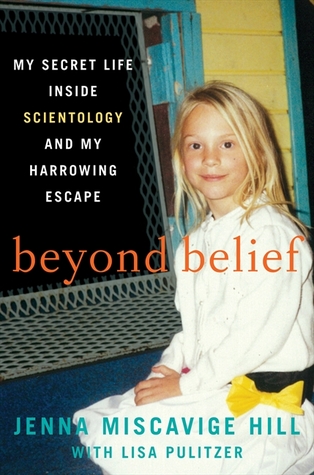
It absolutely breaks my heart to even look at this cover and see this sweet face, and to know that her childhood was completely destroyed by these monsters - her own family being among the perpetrators. Worse still, to know that there are so many who went through and continue to go through the exact same thing she did - the psychological torture, the emotional abuse, even physical abuse. Heartbreaking is the only way to describe it.

Prior to reading this book I had very little knowledge of Scientology. I know it is a super expensive, super secret cult 'religion' that does not believe in pain medication or psychiatry. And it makes Tom Cruise jump around on couches acting like a damn fool. I mean really, would he have done that BEFORE becoming more involved with the cult 'Church'? No. Before that, when he was still married to Nicole, he was normal. There are still many, many things I do not understand (like why are adults called Mr. regardless of gender?) and so I am no expert, but I know what the experience was like for THIS child. I also do not understand why, at the age of seven, Jenna's job at The Ranch was to be the health monitor, keep track of all the illnesses the other children had, and to administer vitamins and help those who were injured. I also do not understand why when books like this come out, these abuses and allegations are not looked into by the authorities. Jenna, however, made a good point after her parents had left the cult 'Church' and didn't talk bad to Jenna about it at all, who was still very much involved. She made the statement that you can't tell a brainwashed person that they are brainwashed, they won't believe it. Perhaps this is why even if any authorities were to look into the allegations, they would come up with nothing, or very uncooperative people who do not see anything wrong with the way they and those around them are treated.

This was a very engaging, horribly heartbreaking story. Ultimately though, Jenna escapes (as the subtitle states, so no spoilers here) and has gone on to speak out against the cult 'Church'. I hope that now that she is free, raising a family of her own, that she can really put her life back together and find peace and happiness that she certainly never would have had if she had remained. Highly recommended.
Here We Are Now: The Lasting Impact of Kurt Cobain

18090210

Rating: 1 Star

Review:

I apologize in advance for the language I may use as this review progresses, or the language of my initial short 'review', a brief sentence or two I posted on Goodreads as soon as I finished the book. But seriously. Eff this guy.

I have always felt that I am not meant for Generation Y, but Gen X. I missed it by only two years and have always had a deep affinity for Nirvana, largely due to my introduction early on by my Uncle Kraig, only roughly a decade older than I. While I listened to New Kids on the Block faithfully, there was something about Kurt's voice that always drew me in. I was 11 when he died and I remember watching MTV's breaking news running on repeat, Kurt Loder telling me time and again that the body of Kurt Cobain had been discovered.


I still recall with great clarity seeing the footage of throngs of fans gathering, in tears, some hysterical; Courtney's voice reading his note out loud to them, all of it. I remember even at that young age knowing what I was witnessing was very important, though at the time I did not yet understand why.

Fast forward 20 years and we have Charles Cross STILL cashing in on Kurt's name and giving Courtney positive attention/publicity. I will read anything and everything about Kurt that continues to be published (except his Journals, which I own but will never read). Yet THIS guy, making a buck off his loose connections to one of the greatest musicians of all time...just, fuck this guy.

Cross addresses several areas of popular culture that still are impacted by the short life of Cobain and the even shorter span of his music career. But it does not take a genius, or this doofus making money, to tell us why Kurt matters. He matters because he was talented, and we were privy to just a tiny of sliver of what he was capable of. He matters because we will never know what could have been. He matters because he was a human being with his own demons and struggles, played out on a very public stage. He matters, period.

In the end, I freely admit that I do not believe Kurt killed himself. I am wary of any book (Heavier than Heaven, which I read) that comes out with Courtney's stamp of approval. I am not typically a conspiracy theorist (except for JFK because come on, no way did Oswald pull that off alone), but there is something there we do not know. And maybe it is not ours to know, the fans who still crave any scrap of information, any rough recording, practice session, anything of Kurt - though I personally have no desire to see the newly developed crime scene photos that somehow sat in evidence for the last twenty years and no one thought it was necessary to take a look.

By the way, Cross also mentioned Adele frequently, who I dig. But for him to say that 21 might be as good as Nevermind (or something to that effect, I was seeing red so I don't recall his exact verbage)? No. Nevermind is not even my favorite Nirvana album (In Utero is) and still, no.

If you are like me and deeply love Nirvana but are suspicious of his death, have at it but be aware of Cross towing the party line about Kurt's 'suicide'. It is a short text and won't take long. You'll roll your eyes at parts. especially the stretches he takes to connect Kurt to current music - namely hip-hop. But please, if you even have the slightest doubt about Kurt's death, do not take what Cross says in this book or parts of Heavier than Heaven as absolute fact.

And just for good measure, I leave you with this:


Sunday, November 8, 2015

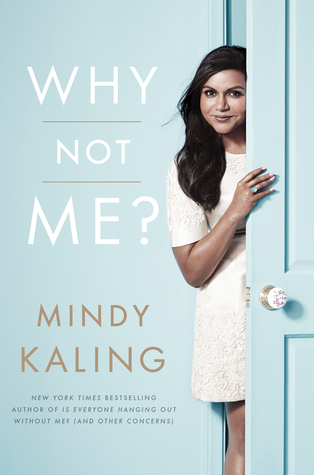
Why Not Me?

22716447

Rating: 5 Stars

Review:

It took weeks for all the bozos ahead of me on the library waiting list to finally finish and return their copies so I could get my hands on this one. Totally worth the wait. And I read it in a matter of hours because I am not embarrassed to say I AM OBSESSED WITH MINDY KALING AND I KNOW WE WOULD BE BEST FRIENDS IF WE EVER MET.

I mean, seriously, who wouldn't want to be best friends with Mindy? If you don't, you are probably boring. Or a terrorist. And really, Kelly Kapoor annoyed the bejeezus out of me a lot of the time, which is a testament to how funny Mindy is, because usually when a character annoys me, I write off the actor or actress as also annoying.

On the surface Mindy may look like just another self-absorbed Hollywood starlet - commentary I have actually read based on the fact that she has now released two books about her life without yet reaching age 40. To those people I say, shut up and just read the books. Then you might see why we need people like Mindy Kaling as an actual role model for young women who are constantly bombarded with this idea of perfection that no normal human being can actually achieve. Mindy comes across as a very real person, with real fears and flaws just like everyone else. She is not that person who whitewashes her life to give the impression that everything is wonderful and unicorns and rainbows all the time - despite the advice of Reese Witherspoon telling her to smile after leaving their lunch. ALWAYS smile!

I pretty much laughed from beginning to end (except the actual end was much more serious because truly, Mindy is pretty damn hard-working and has a lot of really good advice), which was kind of painful because I still have bronchitis so when I laugh, I cough for about ten minutes afterward. Then my eyes tear up and I can't read because I can't see. It's a mess.

Anyway, I was dying laughing from this gem about Nosferatu, "That vampire taught me my number one and number two favorite beauty tricks of all time: avoid the sun at all costs and always try to appear shrouded in shadows." I fully intend to implement every last beauty secret Mindy was kind enough to share with the world, because that is exactly what she intended and was not at all joking about any of it.

While I enjoyed the beauty secrets chapter, by far one of my favorites was about Mindy and B.J. I love B.J. Novak too, but in a much different way. Like, I want to have babies with him. On the other hand, I love him and Mindy together so much, that I want them to get married and have beautiful little caramel colored hilarious genius babies. So, I am a little conflicted in this arena. They really are soup snakes though, even if B.J. falls asleep at Broadway shows and completely embarrasses Mindy, though his argument is sound: "I don't know why you embarrassed of me. The embarrassment should rest squarely on the shoulders of theatre itself. If you put me, a well-educated, curious person, interested in seeing a Broadway show, in a second-row seat at the finest play of the year, and you still can't prevent me from falling asleep, then there is a problem with your medium of communication." Touche, Mr. Novak. Seriously, would you not just want to be a fly on the wall during their conversations??

By the end of the book, Mindy gets serious. And it is because she is so honest about all the ridiculous and crazy things she says and does, that she can be taken seriously as a person who has had enough experiences to give some really good advice. These gems are among my favorites:

"Which is why you need the tiniest bit of bravery. People get scared when you try to do something, especially when it looks like you're succeeding. People do not get scared when you're failing. It calms them. That's why the show 'Intervention' is a hit and everyone loves "worrying about" Amanda Bynes. But when you're winning it makes them feel like they're losing, or, worse yet, that maybe they should've tried to do something too, but now it's too late. And since they didn't, they want to stop you. You can't let them." (page 221-222)

And

"Work hard, know your shit, show your shit, and then feel entitled. Listen to no one except the two smartest and kindest adults you know, and that doesn't always mean your parents. If you do that, you will be fine." (page 223)

Thank you, Mindy. Or should I say, BFF.

Wednesday, November 4, 2015

Mockingbird: A Portrait of Harper Lee AND I Am Scout: The Biography of Harper Lee

114408

1951377

Rating: 4 Stars each

Review:

Given that these two are essentially the same book, I am posting them as one review. I read the YA version, I Am Scout, first. I was just interested to see how the author would write for each audience, what material would be included, and what would be left out.

Anyone who knows me knows that To Kill a Mockingbird is among one of my favorite books of all time. One might even know the story of how I first discovered this incredibly powerful novel - totally by accident. I was spending a lazy afternoon at my grandma and grandpa's house, some time during my 6th grade year. I loved hanging out in the basement, where my youngest uncle had a kind of office area for himself - a giant desk, surrounded by bookshelves crammed with records, cds, and books. I found a worn paperback with a mustard yellow cover, the title standing out in bright, bold red. I settled into my uncle's comfy chair and read To Kill a Mockingbird straight through, within just a couple of hours. At one point my poor grandma nearly had a heart attack when she called down the stairs to ask what I was doing and I told her I had found a book I really liked. Grandma was sure that my mom would be upset that I had read it, given my age and some of the more sensitive aspects of the book.

After reading TKAM, I looked for other books by the author and was greatly disappointed to find she had never written anything else. I made it a mission to find out everything I could about her then, my new idol, but sadly here was not a lot of information to be had and eventually I grew up - though never losing the idea of Ms. Nelle Harper Lee as being the ideal, the author I most wanted to emulate. It gave me hope that she could go three decades of her life writing and writing and writing, but not be published until her early thirties. I might still have a chance to be a published myself, though I know I could never hope to write a novel on par with To Kill a Mockingbird; that in itself is beyond anything most people could ever even dream of.

But on to the books themselves...

Most people seem to have complained about the lack of access to the title subject herself, and how the book was basically about everyone who ever knew her or had some insight into Lee's life. I'm curious in what other way a biography might be written, when there is no access to the person who the book is about. Biographies are written all the time about Washington and Lincoln, but no one is complaining about lack of access to the former presidents. While I realize of course that Ms. Lee is still alive, she is simply not accessible and the author worked well with the material he had in order to create a portrait of her that would be as thorough as possible.

The books naturally had some major differences, given their intended audiences were different. The adult version had a much more detailed description of Ms. Lee's life in NY right off the bat, something altogether left out of the YA version. I am not sure of the purpose for anything but length. In fact, it seemed that the majority of the information left out of the YA version was simply due to length, and not because anything but be unsuitable for younger readers or something might be difficult for a younger audience to understand. The one exception to this to this may be all the information about the Clutter family - the family murdered in Kansas who were the subject of Truman Capote's book In Cold Blood. There were far more facts and insight into the family, and much of what was touched on might have been difficult for younger readers to comprehend.

Speaking of Truman - thanks to these books, I can safely say I will never read any work of his, ever. I can not imagine a more pompous, arrogant, manipulative, whiny little jerk. It baffles me that Ms. Lee was able to tolerate him for so long, despite his repeated jabs and attempts at sabotaging their friendship. Ranging from never really going out of his way o deny the rumors that he wrote To Kill a Mockingbird, to not giving Nelle any credit whatsoever for the long hours of work she put into his book, I can't imagine how she put up with him. He would have done well to remember and recognize that without Nelle, he would have had no book, period. Had it not been for her, her notes, and her ability to speak and connect to people in a way Truman never could, I highly doubt that In Cold Blood would have been half the book it turned out to be.

I found the information relating to the film highly interesting. To imagine Gregory Peck dressed as a person in need and sneaking into town to avoid causing an uproar does cause a chuckle. I was disappointed to learn though that he was the driving force behind a lot of the changes made to the film. To me, the story is fully about Scout and Jem and how they viewed the world around them as these great changes were taking place. The movie became more about Atticus, which never seemed right to me. I must say though, Peck is the only person who really could have played Atticus Finch. He IS Atticus. I could never even picture Spencer Tracy in that role, or anyone else Nelle or the studio had in mind.

All in all, the books were informative and written well in a way that were easy reads and easy to follow. I would certainly recommend Mockingbird to anyone interested in this fascinating and talented writer, and I Am Scout would be a great addition to a class or school library.

Forgive me that this review is not my usual in-depth fare. I am still sick and not on my game 100% but wanted to get something new posted. Thank you!