Showing posts with label Religion. Show all posts

Sunday, November 15, 2020

Book Review | The Last Witch of Langenburg: Murder in a German Village

24659302

Rating ⭐⭐⭐⭐⭐

I highlighted practically the whole book as I read it, and thank goodness because it has been two years! But, I am determined to review the books I especially loved, no matter how long ago I actually read them. You might recall if you have been around a while that I had a particularly stressful teaching position a couple years ago and reading has always been my escape. I all but abandoned reviews completely as I plowed through book after book to help ease my stress and anxiety of having to go into that building every single fucking day. Now here I a on the other side, so, so thankful for my studious notetaking.

I absolutely loved this book. Through the meticulous research of the author, and surprisingly detailed accounts still in existence relating to the trial of Anna Schmieg and her daughter, life in the seventeenth century village of Langenburg is brought to life. I will warn readers straight away, however, that this is a very dense text at times and may not be as enthralling for a casual reader with a passing interest in the subject of witchery trials, German history, or both.

The book opens just ahead of the supposed crime. Shrove Tuesday, 1672, finds Eva Kustner delivering buttery cakes to neighbors made by her mother, Anna Schmieg. Within hours one of the recipients, a young mother named Anna Fessler, is dead.

What follows is one of the last witch hunts of seventeenth century Europe, which ends with neighbors and magistrates convinced that Schmieg, her daughter Eva, and their entire family have been caught in the devil's web and are all guilty of sorcery and witchcraft. But it is also so much more than that. It is a comprehensive look at the after effects of the Thirty Years' War, the movements and machinations of conducting a witch trial, as well as theology and legalities that ruled life in small villages such as this one. we also see some the very earliest stages of crime-solving. Fessler's autopsy is of special interest, given the time period. We learn so much about those connected to every aspect of the case - from Prince Heinrich Friedrich, to religious leaders and judges, as well as medical scholars at the time who were beginning to understand evidence collection and how to use it effectively.

Fessler's untimely death raised suspicions immediately - as had Kustner's delivering of the cakes to neighbors the previous night. Given Anna Schmieg's reputation, and the fact that she was the miller's wife, she and her daughter made the perfect suspects.

To say Anna Schmieg was not well-liked is an understatement. The author describes her at various times throughout the text and her aggressive and stinging personality made her an easy target.

"Hohenlohe women were distrustful and quarrelsome in the best if times, and perhaps the dire circumstances of the Thirty Years' War made them more so. But Anna Schmieg fought differently from other women. Where her neighbors might fight their enemies to a standstill, Anna stunned and overwhelmed them, if not with physical blows then with words so shocking that even seasoned state officers were stung by their violence" (24%).

Due to her husband's position as the village miller, Anna and her family were considered outsiders. Even though villages depended on millers, they were also incredibly distrustful of them. All sorts of rumors and gossip abounded when it came to a miller, and it was no different in Langenburg. Communities suspected them of crimes such as inflating prices and stealing the very grain brought to them to be ground into flour. Anna's husband, Hans Schmieg, was the personal miller of Prince Heinrich Friedrich, so he also occupied a government office, yet another reason he was not to be trusted. The author also points out that communities held onto suspicions so tightly, that millers were often associated with "magic, sorcery, and dark supernatural powers" (26%).

Furthermore, the author states, "They were rogues and thieves. Living at the edge of respectable society, along the river or stream at the edge of the village, millers acted in clannish ways and kept apart from honorable folk. The notion of mills as safe havens and sanctuaries, a holdover from medieval customary law, also fed suspicions that they were dens of criminals, heretics, and gathering places for strangers and other unsavory characters. The secrets of their craft they kept to themselves. At night the devil and demons hid out in the mills. Masking their activities behind the loud clattering and unnerving pounding of the wheels and gears, millers practiced the dark arts of sorcery. Why else did so many accidents occur around mills or along the swift-moving waters of the millrace? (26%).

Even so, despite the superstitious and distrustful nature of the villagers toward millers and their families, up to the point prior to the death of Fessler, Anna had not been recorded in court records as having disputes with any other villagers. This comes as a bit of a surprise according to the author, as he states, "One would expect a miller's wife like Anna Schmieg to have attracted a fair amount of slander and other types of conflict simply because of her husband's occupation...Despite the prominence of her position and for whatever reasons - the court did not meet regularly during the remainder of the Thirty Years' War, and when it did, records were spotty - Anna's name did not appear in any dispute over her honor" (21%).

"Say what one will about her reputation - and she knew what the gossipers said about her - Anna Schmieg had also used her few breaks in life to make her way in a violent and hostile country. Her luck in surviving the war, her connections to the Haffners, her marriage to Hans Schmieg, her position as the miller's wife, their income and resources at the mill, her combative streak and her rich vocabulary of abuse, the ties of patronage that connected her to Count Heinrich Friedrich himself, perhaps even her notorious reputation - all of these helped her to survive, advance herself, build a household, and move into a dominant position in the village. Instead of meeting threats with deference, piety, or silence, she gave in to her rages, threatening vengeance on neighbors and their property, uttering blasphemies, muttering curses under her breath, dissembling, even defying public officials. She did so with a moral compass set as firmly toward the stars that guided other Hohenlohe women as well: honor, blood, and household" (24%).

Anna appears to have had a fearsome reputation, to be sure, and that is why suspicion was upon her immediately. After all, it was her cakes that were consumed by Fessler, so she must have had a reason to want the young mother dead. And yet, the conclusion that can be drawn from all of this is that yes, it is likely that Anna Schmieg poisoned the cakes, but Fessler became the victim of said poison meant for someone else - Eva Kustner.

The author puts forth the scenario in which Eva has defied her parents who were intent on making a match between their daughter and a fellow miller, but that was ruined when Eva took up with her eventual husband, Philip, meeting for secret rendezvouses whenever and wherever they could. There is so much more to this aspect of the story and I still have so much to cover, that I will leave it to any interested to seek out the book themselves and see what they make of this.

Eva stands accused with her mother, but for obvious reasons turns on her and Eva gives evidence against her mother. Their relationship is officially torn asunder and there will be no reconciliation. Eva testifies on various points and affirms they are all true statements, while Anna watches from across the 'courtroom'. When asked what she thinks of the charges against her and the evidence provided by her daughter, it should surprise no one by this point that Anna's response is dripping with disdain and sarcasm. Yet Eva testifies further than "this is not out of enmity, envy or untruthfulness against but my mother but out of obedience to the command of out merciful Lordship to prove my own innocence, so help me God and his holy Gospel" (53%). Anna would get the last word though, just as one might suspect. Staring her daughter in the eye, Anna says, "If you could swear an oath to all this, then you are lost, lost forever" (53%).

It is so important to point out here just how incredible it is that we have these words, these exchanges from the trial. The records were so perfectly preserved for three hundred years, and to read through them is almost like being there. It will surprise no one that throughout the course of the trial, not much actual evidence is presented aside from witness statements, and while the jurists in Strasbourg hearing the case stated that they could not legally prove that Schmieg had poisoned the cakes and was a witch and even when they gave their opinion on the case, Schmieg was still deemed guilty during her trial. The jurists expressed their doubts in their opinion, regardless of their concern over Schmieg's renunciation of God and her family (which to them made her the likliest suspect, but for no other reason). In the opinion, the jurists returned to the points that they found to be most troubling - for example, the fact that someone else could have just as easily poisoned Fessler's food. Additionally, there was no dispute or tension between Schmieg and Fessler that could possibly have brought about the murder. The jurists had to acknowledge the lack of evidence against Schmieg, and would not recommend execution.

There comes a point where Anna Schmieg finally confesses, but only to certain aspects of the crime. She says, "A vagabond gave her a bit of poison for the little cake...She put a bit of poison into the little cake, but it was meant for her daughter and not for Fessler...She poisoned a few cakes (but not many). They were sitting in a bowl. Her daughter may have taken one and taken it to the teamster's wife. The poisoning, Schmieg confessed, came from her 'vengeful heart'. When pressed whether the poison was meant for Eva, Anna freely admitted it" (56%). 

This was all she would admit to though, and Schmieg refused to admit to anything relating to secret meetings with the devil, or of witchcraft of any kind. She also at this point stated that her family - husband Hans, daughter Eva, and son Michel, were all innocent and had nothing to do with what she had done. Even so, her interrogators continued to press her to confess fully. Schmieg would not do so; though she said she was a witch, she would say no more than that. She was tortured once again, repeatedly, and sure enough, a confession finally came. Schmieg then went back on earlier words and said her family knew she had poisoned the cakes, and her son Michel had been there when she had done so. He continued to deny any knowledge. Another meeting with Hans saw Schmieg again claim his innocence, only for her to then accuse him of affairs. She would again later say he had no knowledge of her crime.

Anna's formal confession was approved in early November. She confessed to being a witch and agreed to the charges against her: "...her seduction by the devil when she was fifteen or sixteen, her drowning one of her own children in the millrace, her attempt to murder Eva and her son-in-law with Shrovetide cakes, but killing her neighbor instead, her harm to neighbors and their animals, as well as a life of cursing, drinking, and godless behavior, and a suicide attempt" (58%).

After Anna's execution, Hans and Michel were still held prisoner until February 16th. That night they escaped their cells and fled. The two vanished without a trace, though the villagers feared for months afterwards that they might return at any time to exact their revenge. Gossip spread like wildfire that there had been sightings of the two in the area, though they never did return. Eva was the only remaining member of the family left. She claimed they'd been working at a sawmill in Heidelberg, though the pair had otherwise completely disappeared from history. Anna herself was forced to leave her children behind with her husband and in-laws. She was banished forever from Hohenlohe and all that kept her tied to her former home was her on-going dispute in ensuring that her children received their due - the annuity from the mill. Nothing else is known of her life or fate beyond this.

Whew.

There's so much more to touch on, the politics and religion and other complexities of the time, but all I will say is that I thoroughly enjoyed this read and highly recommend it.

Thursday, August 24, 2017

First Line Friday: Pope Francis Edition


Happy First Line Friday!

This week I am sharing a line from a book that I am really hoping I will love, because I really kind of love the subject of the book A LOT. I am not Catholic, but I absolutely adore Pope Francis. I love his message and his position on so many social issues, and we are so lucky to have him in our world. At my imaginary dinner party, he would be seated between Eleanor of Aquitaine and Bernie Sanders, across from William Marshal and Dan Jones. Can you even begin to imagine these conversations?? It would be the best dinner party ever.

34069436

"Many of us who have an interest IN our families' immigrant pasts have visited the port or THE town where our forebears arrived, lived, and struggled. We try to imagine the day of their arrival, the weather, the smell, the crowds, the anxiety. I have wandered the streets of Boston looking at the same sights my Irish maternal relatives must have seen; I have wondered what they must have felt when they read signs that said 'IRISH NEED NOT APPLY'."

Let me know what you think and/or leave a line of your own. Then, visit my fellow First-Liners to see what they have waiting for you this week.


Happy Reading!

Sarah

Thursday, April 13, 2017

First Line Friday: Jesus Edition!


Happy Friday! As it is Good Friday, I am super excited to share my first line this week. It is a book I have been reading every year for the last three, starting Palm Sunday and continuing through Holy Week to the following Sunday

17914369

What I love so much about it is that it is a day-by-day guide to Holy Week, complete with applicable chapters from all four books for each day, Sunday through Sunday. Everything is arranged in chronological order as best we can know, as well as author commentary and bits of historical context, plus all kinds of charts and maps to aid you. There are also some excellent footnotes that the author includes, which I greatly appreciated. I will continue to read this every year, as long as I am able. It is a wonderful guide. While these are stories many know so well, it is kind of a comfort as much as anything else, to read and reread each year.

I am taking my line - oh who am I kidding, my PARAGRAPH - from the brief section entitled "Early in the Week: The King Comes For His Kingdom: Sunday-Tuesday". It briefly describes Jesus' movements in the week leading up to Palm Sunday.

"The year was AD 33. The excitement in the cool spring air of Jerusalem was palpable. Thousands of Jewish pilgrims had gathered from around the world for the upcoming Passover feast, and word had spread that Jesus - a thirty-something itinerant rabbi, prophet, and healer from Galilee - had raised Lazarus from the dead, had withdrawn from Bethany - a village just a couple miles east of Jerusalem - to a town called Ephraim in the wilderness (John 11:54), and was staying at Bethany during the weekend prior to Passover (John 11:55-12:9-11, 17-18)." 

Leave a comment letting me know what you think of my line, or leave a line of your own to share. Then visit the blogs of my fellow First-Liners and see what they have this week as well.


Rachel - Bookworm Mama


Lauraine - Lauraine's Notes

Andi - Radiant Light


Robin - Robin's Nest


Kathleen - Kathleen Denly


Happy Reading, Happy Friday, Happy Easter!

Sarah

Saturday, November 26, 2016

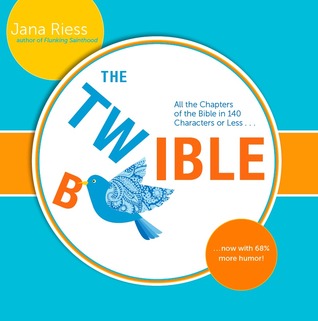
The Twible: All the Chapters of the Bible in 140 Characters or Less

Apologies! For some reason this post has changed itself permanently to the smallest type-setting and no matter how many times I try to edit/resave, etc, it will not change back to normal. Even so, it is a fantastic book and I highly recommend it!

18745200

Rating: 4 Stars

Firstly, I definitely have to get a copy of this for myself. I had my Bible (shout out to King James!) with me for much as I was reading, but then I would get so caught up in Riess' own summaries that I would be laughing all the way through the Old Testament (God will forgive me, right?) But I need my own copy of this one because I found myself wanting to highlight and add my own little notes as I was going. Since this belongs to my wonderful pastors, I figured marking up their copy was probably not a good idea. On the other hand, they are friends with the author so they could probably get a new one pretty easily...

Just kidding, I'll get my own.

In all seriousness, I actually think this is a pretty engaging and humorous way to bring the Bible to those who might shy away from attempting to read it because let's face it, those begats will get ya. I know I am definitely more motivated to start reading the Bible in a more thorough way again, not just jumping around in the New Testament. Maybe not cover to cover, because I don't necessarily feel like the Old Testament especially needs to be read that way - it is not even told in chronological order itself.

Secondly, this book has a lot to offer besides cheeky and sarcastic Tweets of Bible chapters. There are numerous tidbits that really add to the experience as a whole. Each book of the Bible is summarized at the start of its own section, before each summary then of each chapter within that book. There are also a lot of additional sidebars related to specific portions of the text that give further insight/information on events or groups. I found those especially helpful when some Tweets left me thinking, 'wtf?' You'll also find some illustrations throughout, as well as as a section at the end dedicated to clarifying who is who in the Tweets if you were unfamiliar with the abbreviations used. Big surprise, one of my favorites parts was the section entitled "Notes: Or, Where to Find What All the Smart People Said". Here the author includes the numerous other authors she mentioned throughout the book when giving her own commentary. As you can imagine, I have added several more books to me TBR as a result. Thanks, Jana! (This is not sarcastic. I genuinely mean it.)

(Okay, it is a little sarcastic only because my TBR list is nearing 4,000. But I will read all those books, Father Time be damned. Mostly not sarcastic though, because I do love to read.)

Thirdly, the remainder of this review will be some of my most favorite Tweets (or quotes). If you want to see all the ones I made notes of, you can check those out on Goodreads. I am really going to try to include only the best of the best of the best, but early in Genesis I was already wanting to quote almost all of them so...

If these don't convince you to pick up The Twible, nothing will. Even if you are leery of the actual Bible, for whatever reason, I really do think you will enjoy this one. Just a note, I'll list the page number if it is from a sidebar that I am quoting. If it is the Tweet, I will list the Book and Chapter, no page number.

So, here you go. You're welcome.

Genesis 14: Phar pursues Israel across the Red Sea while monologuing. Then G drowns Egyptians, because not enough people have died yet in Exodus.

Page 55: Today, the word "shibboleth" can refer to anything that betrays a person as an outsider to those in the "in" crowd - like, for example, using the word "shibboleth" in conversation when most normal people don't know or care what it means.

I Samuel 4: Israel routed by Philistines! Ark captured! (That's like when someone steals your college mascot, except that folks also tend to die.)

1 Chronicles 11: In this utopian history, Jerusalem falls without a struggle, all 12 Tribes instantly unite behind King David, and unicorns are real.

Page 89: In sum, the moral of Chronicles is that the sun shines out of David's butt. Not that we've ever seen his butt, because he never, ever danced naked before God and everybody.

Page 128: It's worth noting that even though Jesus was not actually abandoned by God, he felt that way at the time, and the words he chose to express that isolation were ones that had been consecrated by centuries of prayer.

(Though this quote is not particularly funny at all, I wanted to include it here when in Psalms, because the author makes a fantastic point in regards to this book and people asking why bad things happened to good people and where is God in those times?)

Isaiah 29: G: because you pay me lip-service while your hearts are far from me, I'll give your Wii to the Syrians and put you in a long time out.

Malachi 4: The OT ends, ushering in 400 years of silence because G is busy having brain surgery to change his violent personality for the NT

Mark 3: A house divided against itself cannot stand. Say, for example, one person roots for Michigan and another for Ohio State. Hypothetically.

(This one is really tough for me because this afternoon Michigan lost to that school down south in double overtime. Ugh.)

Acts 10: During noon prayer Pete has a trippy vision of unclean animals now becoming kosher. That's good news for Christians; bacon is tasty.

The last bit I will touch on is a sidebar on 266-267. It's not actually just a sidebar since it takes up the entirety of two whole pages, but it is important. There is a great explanation here of Paul and "Paul", as the authors refer to them as. She breaks down all the letters that have been attributed to Paul, with some convincing, albeit brief, arguments (and then gives a further reading in the Notes section later). Here the letters of Paul are divided into four categories: those we know for sure were written by Paul, ones possibly written by him, probably not written by him, and definitely not written by him. Of all the books listed in the Notes section, this is one of the ones I am most interested in getting my hands on first.

The whole book is full of gems like the ones I mentioned above, and I read the entire book within a 24 hour period. There's even a quote from Hemant Mehta (the Friendly Athiest) on the back cover: "I wouldn't object if Twibles were in every hotel room."

Can you really argue with that? Highly recommended. 

Saturday, October 1, 2016

Since Nobody's Perfect, How Good is Good Enough?

31943483

Rating: 4 Stars

I snagged this one from church, which I think my pastors will forgive me for, because they know about my obsession with books (I don't mean I stole it, don't worry). It is available for free at our ministry center and I grabbed it for a couple reasons:

1. It is a book.
2. I like books.
3. More seriously, I feel like there is some part of my faith missing, notably because of college. While I grew up attending church, Sunday School, and Confirmation classes, I was not remotely involved in church of any kind all through college or grad school. It was not until almost three years ago that I found a church here that I absolutely LOVE. But I feel like I missed an important part of growing in my faith with that gap in time so I do feel the need to read these more basic texts to help fill in that huge gap.

This little volume is 92 pages and fits in your pocket. It is a super slim book, but covers quite possibly one of the most important questions one could ever ask - what does it take to get to Heaven? It is a pretty intimidating question. I don't feel I have the words to properly convey the author's meaning, so basically this review is going to be some of my most favorite quotes from the book that can help answer the question that the title asks.

Page 80: "In fact, as we will see, Christianity is based on the premise that God laid aside fairness and opted for mercy and grace instead."

Page 82: "The truth is, if you were to sit down and evaluate your divine demands, I think you would conclude, as I have, that you really don't want God to be fair. A truly fair God would give you exactly what you deserve and nothing more. Do you really want God to give you what you deserve?"

Page 83: "Is Christianity fair? Absolutely not. But if you take the Bible seriously, the last thing you would want is for God to be fair. He tried being fair once. Things didn't work out very well."

Page 92: "The word 'gospel' means 'good news'. The good news is that good people don't go to Heaven - forgiven people do. And if you have placed your faith in Jesus Christ as your savior, you are one of those forgiven people."

For those who are confident in their path and have been following it for some time need not pick this one up. It really seems intended, to me, to be for those who are at the beginning. Whether they are completely new, or returning after years away, it is a nice little refresher.

Saturday, August 27, 2016

The Secret Language of Churches & Cathedrals: Decoding the Sacred Symbolism of Christianity's Holy Buildings

9582952

Review: 4 Stars

Wow. These photos alone, just, wow.

I had originally received this as a ARC via NetGalley in exchange for an honest review, but did not feel like I could originally review it at the time because the file was just so screwed up. I felt like I needed a hard copy because the ARC did not justice to the beautiful photographs. There were huge formatting issues, pictures were literally spliced in half and you might not see one half at all, or find it so many pages later. The text was all out of order - seriously screwed up. Then around 31%, the cover, title page, and copy write appear with that table of contents and intro. It was definitely weird, because I have never encountered a file like this from NetGalley before.

I sent a note through NetGalley to the publisher stating why I did not post a review but did not expect to hear back, as for various reasons in the past I have sent similar notes and never received a reply. I was pleasantly surprised then, not too long later, to get an email from Gemma at Watkins Publishing directly, asking if I would like a PDF copy from them to read and review. I accepted and am so glad I did. The book truly is amazing. Even if there were no text at all, and it was simply photographs of the churches and cathedrals, it would be worth it. It is absolutely stunning.

I am completely fascinated by religious buildings and imagery. I love cathedrals especially, and two of my favorites are St Giles Cathedral in Edinburgh (which I did not get to go inside of) and St Colman in Cobh, Ireland (which I was able to go inside of, and never wanted to leave). St Patrick's in Dublin is also beautiful, though again we did not get to go in. I think part of my fascination is because I am kind of obsessed with Catholicism, though I am Lutheran. Maybe obsessed is not quite the right word - more like enthralled? - but I watch in eager anticipation every time the Papal Conclave is deciding who the next pope will be. And I dig Pope Francis. A lot. Like, he is a total badass.

The architecture alone is amazing but the author goes into such detail about so many aspects of the buildings, I honestly do not really even know where to start. Within the specific buildings showcased, we see beautiful ceilings, mosaics, windows, and so on. The section alone on stained-glass windows was especially of interest and the Good Samaritan Window at Chartres Cathedral in France. In just two pages it really breaks down each section of the window and I found myself thinking back to the variety of stained glass windows I have seen at numerous churches and what scenery or message I might have missed because I was too busy looking at the pretty colors to see the big picture.

I believe this book would be of interest to many - those interested in history, art, architecture and/or religion. It is completely captivating and I am so glad I was able to have a second chance to take a look at this one.

Friday, July 22, 2016

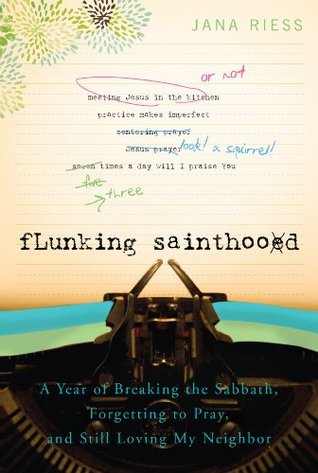
Flunking Sainthood: A Year of Breaking the Sabbath, Forgetting to Pray, and Still Loving My Neighbor

11524633

Rating: 4 Stars

I took so many notes while reading this one, so please be patient with me as I try to succinctly describe why I adored this book.

First, the basic premise of the book is that the author began in the month of January to plan the rest of her year, month-by-month, which religious practice she would look at in-depth and try to complete consistently. As you may have guessed from the title, she fails at nearly every single one, but still learns a lot along the way. I, in turn, learned a lot from her. Additionally, she reads books related to whichever religious practice she is attempting each month. As a major bookworm, I find those additional books as valuable as the text itself. I want my knowledge to grow deeper, and reading is one of the best ways I learn, so, win-win.

When Riess starts February off with fasting, I know personally it is something I am not able to do - at least in the classical sense of abstaining from food for a set amount of time. I appreciate that the author addresses this exact thing, as she mentioned in the book SHE was reading about fasting that that authors notes there are some people who should not participate in food fasting. Among those listed are those who have struggled with an eating disorder. I find that to be crucial because anyone who has, knows just how easy it is to fall back into bad habits. There are certainly other ways to fast and things besides foo to abstain from that can be a legitimate substitute. In fact, social media would be a FANTASTIC example that we all could use a break from. Just sayin'.

I was especially interested in Chapter 4 - April and the practice of lectio divina, which the author describes as "an ancient spiritual practice that prescribes a way of discernment through reading and prayer" (page 39), and she also notes that this kind of prayer that is not praying for things you want or need, but "becoming one with God's will". Talk about intimidating, right? This is also the point in the book where it became abundantly clear that a month is not actually long enough to attempt most of these, or to become comfortable and familiar enough with them. That was my concern from the start, before I started reading the book. Riess addresses this herself around the same time that I started realizing it. She says, "This is where it becomes very clear that, like fasting in February, a month is not long enough to make any real headway with a new spiritual practice" (page 50). What also helped me through this chapter and to have a better understanding of what this practice is, I was getting as much from the tidbits the author including from the books she was reading for that month. I felt like that was as much of a guide at Riess herself and am interested to read some of the books she was also reading.

More than any other practice that the author attempted, June was the most interesting and pertinent month for me. It was in this month/chapter that Riess attempted 'contemplative prayer'. This kind of prayer is not just about praying for things either. Instead, it is the practice of, "being still...I'm in full agreement with the basic goal: that we stop yammering to God about our petty concerns and take the time to listen" (page 67). This is another practice I need a lot of help with. And not just contemplative prayer, but prayer in general even. I feel like I am repetitive, or not saying the right words and making it clear. And I logically know this is silly because God knows what I am trying to say even when I don't. I feel like I ask for too much and don't praise enough, but my praise sounds shallow even though it is sincere. It sounds silly even as I type it out. God knows my heart and my intentions, but I get so wrapped up in how/what I think about it, that I am not listening to Him. Enter, contemplative prayer. I need to just shut up and listen.

As an aside, I like the Jesus Prayer: "Lord Jesus Christ, Son of God, have mercy on me, a sinner". 12 little words doesn't seem like a lot, but man the weight in those words is HUGE. Just saying it throughout the day, especially in times that I am frustrated or impatient or angry has helped immensely - not only to calm those feelings but to feel closer to God. This is, after all, something the author wants for herself, and something I want as well. She made the point earlier in the book that that was her purpose for completing these spiritual practices, that has the need to feel close to God. I have found through this prayer at random times during the day, and in those negative moments, helps me gain that feeling over and over again.

It should be no surprise then that November's practice, praying the hours, is incredibly intriguing to me as well. I love the idea of this, and have always been intrigued by it. As a teacher in a public school though, I don't know how well this would be received. I would assume there is some rule that is this were part of my religion, they have to let me take the time off briefly to pray. I could see how it would make some people upset or be seen as a bother and not something to be taken seriously by some co-workers. It is something I will have to consider carefully.

For the author's December practice, she put into action her plan of 'never saying no' and giving generously to anyone who would ask. She set a monetary goal to reach and in the ensuing chapter the act of tithing came up. This is something that is tough to do for many people, myself included because I am a poor teacher with no money. I do tithe, though I am not up to 10% yet. After a long, long, long conversation with my own pastor, we came up with an idea and plan that I am implementing because this really is so important to me. Something that confused me was the author stating something to the effect of 'imagine what could be accomplished if everyone tithed 10% of their after-tax income' (not a direct quote). I was confused because I thought you were suppose to tithe BEFORE taxes, out of your gross income?

Other things of note:

My pastors are mentioned in this book on page 112! It was neat to see anecdotes of them in print (one of my two pastors ((they're married)) lent me the book to borrow - they are friends with the author).

Monasteries are forever intriguing to me. It is almost embarrassing to admit that it never occurred to me that they might exist in the US. Like, duh Sarah. But I have never really thought about them in the modern sense. Mostly when I hear or read the word monastery, it conjures images of Ol' Henry destroying them in England in the 1500s.

Two quotes I especially liked:

"Sodom and its neighboring town Gomorrah were destroyed not because men were having sex with cows or each other - despite the unfortunate fact that the word Gomorrah sounds like a venereal disease - but because their people tried to kill God's messengers" (page 120). THANK YOU.

"I already know I am a crappy old sinner, even while everybody keeps telling me, in and out of church, that I'm basically a nice person. They're wrong. If I learned anything this year, especially from the Jesus Prayer back in June, it's that I'm a selfish worm" (page 151).

I feel ya, sister.

Tuesday, July 19, 2016

David and the Psalms

28114399

Rating: 4 Stars

I read this one in a matter of just a couple days (Thank you BookBub for the great deal!) and I am so glad I did. I must make a confession that there was a period in my life in college and grad school (roughly 2001-2011), that religion took a backseat. I toyed with agnosticism and even atheism. But they never felt right to me, even when I was rebelling against faith. I was not brought up in a strict religious home, but we did attend church every Sunday, I participated in Sunday School, then Confirmation classes on Wednesdays in high school - but even then I was not reading the Bible closely, and as I got older I was not reading it at all.

Then I had a baby and wow, did that quickly bring the big picture into focus.

I feel so behind in where I should be in my knowledge of God, Jesus, and the Bible. So, I am forever grateful for books like this that help dumbdumbs like me play catch-up. While different branches of Christianity hold very different beliefs (the author is Catholic; I am baptized Lutheran, confirmed Methodist, now a member of a Covenant church), there is still much that can be learned from one another, especially when delving into material such as the Bible, which we all use.

My knowledge of the New Testament is much better than the Old Testament, so when I found this one, I knew I had to read it. I am personally quite fond of the King James Version, which lyrically is beautiful, even if not entirely accurate compared with other versions of the text. The problem then, is that sometimes takes me a few readings to understand the Early Modern English (sorry kids, it's not Old English).

This book is a very easy to read discussion of the life of David. In fact, the first 70% or so is dedicated to his story before even getting into the Psalms. I feel like I have a much better knowledge of David now, aside from the basics that everyone seems to know - son of Solomon, Bathsheba, etc. And perhaps because of my supreme lack of knowledge, the rest of his story seems enlightening to me, and that is kind of embarrassing. But I have to start somewhere, and this is a good place. I feel like those who have a better grasp of David and his life might already know a lot of what is contained here, but it is a good read for this with less knowledge of him, like myself.

Following the analysis of David's life, the author moves into the Psalms themselves that have been attributed to him. The Psalms are analyzed as well, and then there is discussion of what a Psalm actually is.

This was highly informative and an easy read. That is something I consider important for those like me who are new to really studying the Bible in-depth. It is easy to get overwhelmed, and thus give up, in Bible studies. When books to guide are easily accessible, it makes the journey a lot less intimidating. Definitely recommended.

Saturday, May 28, 2016

The Bible: A Biography

520771

Rating: 2 Stars

Man, this book was dull.

Considering the fact that the topic is one of the most important books ever compiled, you'd think the history could be put together in an engaging way. It's not. There is a ton of information in this short volume, but it is so haphazard and random that I don't even recall anything I learned. My total lack of interest could also have to do with the fact that the author needs a thesaurus because she used the word 'exegesis' or a variant on every single page. It was the worst. You could make a drinking game out of how many times she uses it, and you would be hammered after the first third of the book. 

Don't bother with this one.

Sunday, April 24, 2016

The Little Book of Saints

10899242

Rating: 4 Stars

Review:

Perhaps in a past life I was Catholic - maybe even Catherine of Aragon herself, ha! - if I believed in that sort of thing, given the fact that I am actually Lutheran and we don't. But wouldn't that be kind of ironic in itself? Maybe it is precisely because I am Lutheran that saints and relics are all so fascinating to me.

This little gem is one I picked up on BookBub and I am so glad I did. It is a short volume, containing brief - very brief in some cases, when there are not a lot of hard facts to begin with - summaries of the lives of each saint and how they came to be a saint in the first place. I truly know nothing about any of the saints, I don't even know if they are all included in this text, but what I did read was very engaging and made me want to know more about the lives of many of those I read about. The unfortunate side effect is that since so many of these people lived before 1600, finding out any more information than what is contained here is quite unlikely. The search is half the fun though, isn't it?

Overall, this is a simple and sweet little volume that I breezed through quickly in terms of reading. The photos of the cards are equally as interesting, especially the details in how each saint is often depicted - usually with either an item relating to their works, or the way in which they died or were martyred. I only had a copy on my Kindle, so I'd like to have seen a hard copy to have a better look at the plates themselves larger and in color. Definitely recommended.

Wednesday, December 30, 2015

Chosen?: Reading the Bible Amid the Israeli-Palestinian Conflict

26202980

Rating: 3 Stars

Review:

I received this book as an ARC via NetGalley in exchange for an honest review.

I have to be upfront and say that I do not know much at all about the conflict aside from the bare bones of it - Israelis and Palestinians are fighting over the same land and have been for decades. I was hoping in this text to get a little a little more background and specifics but it left me with more questions than answers. It appeared more superficial to me, and this might only be because of my lack of knowledge, but the focus was on what was said in the Bible about the Israelites being the Chosen People who were led to the Holy Land. Time and again the author said the land was given unconditionally, but that did not mean it could be kept unconditionally. It really seemed like he was driving that point home, time and again, so that is the main take-way? I do not know enough of this author's beliefs about the topic to know if that is indicative of his specific beliefs about the current conflict.

At the end of the book the author had a Q&A session, which I felt like should have been incorporated into the text itself, perhaps written as part the conclusion? It seemed strange to me, especially when the text was so slim to begin with. I also find it hard to take non-fiction authors seriously who use a lot of exclamation points. I don't know, that is just a personal thing.

I think the majority of the issues with the text are mine, due to my lack of knowledge. I plan to read further in order to learn more about this topic. I could recommend it though for those better versed in the subject.

Wednesday, December 23, 2015

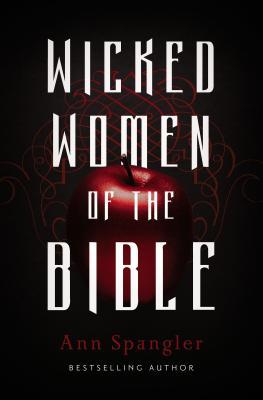
Wicked Women of the Bible

23403783

Rating: 4 Stars

Review:

I received this as an ARC via NetGalley in exchange for an honest review.

I find books like this helpful for two reasons:

1) I don't know the Old Testament very well (except for Sarah's story, of course)

and

2) In general, as someone who has only recently in the last two years been working on recapturing her faith, it is helpful in general to understand how all of these people are connected and how their stories weave from one to the other through the centuries.

(Not-so-secret 3) I love reading books about religion, especially early Judaism and Christianity.)

I really enjoyed this book. Do not let the title fool you, it is not just about those naughty ones, the Jezebels and the Delilahs - though those two OF COURSE make their appearances. Here though we are also able to know more about those wicked GOOD women of the Bible - Esther, Mary, Ruth, etc. All of the women we are introduced to show us how their actions helped to shape Judaism and Christianity in one way or another. Naturally you will find that the women's stories are entwined with the men of their stories, but there really is no way around that. Could you tell Sarah's story without talking about Abraham or Isaac? I mean, really? The women are still the focus, though there is plenty about the men who also shaped these two religions.

Here the author looks at twenty women from the Bible, both Old Testament and New. The chapters are broken up into three parts: the Biblical story, then a brief overview of the time period the story takes place in, and finally self-reflection questions as they pertain to each story.

An issue I do take with this book is the details added to the Biblical stories in order to flesh them out a bit more. I mean, I get it, the only information the author has to work with is the Bible. But conjecture is a bone I always have to pick because it bugs me no matter what I am reading. However, I could look past that a bit with this one.

I found this to be a quick read. It could be a good/fun one for a book club too (which I myself am hoping to start at my church after Christmas break), especially with those discussion questions included in each chapter. Highly recommended.

Sunday, December 13, 2015

Out of the Storm: The Life and Legacy of Martin Luther

2438146

Rating: 4 Stars

Review:

I should start this review off with a couple statements religion as it pertains to my life:

1. I was baptized Lutheran and attended a Lutheran church up until the middle of my freshman year of high school.

2. I started going to the Methodist church and was confirmed there because a pastor at my home church found it appropriate to discuss church financial matters at an Easter service. This was very off-putting to me.

3. I did not attend church for over a decade after high school.

4. Eleanor was baptized at the Covenant church where my grandparents got married and where my mom was baptized.

5. Eleanor and I now attend a wonderful Covenant church and I am so grateful for this place that is allowing me to recapture my faith every single day.

I am not sure what compelled me to share these things, but maybe it will help people understand why I am still kind of stupid in religion-related discussions. I feel like when it comes to the Bible itself, I have a decent grasp. When it comes to the hows and whys of some aspects, I am still unclear at times. I love learning about the history of religion, how it has developed and evolved over thousands of years, and who the prime movers and shakers were that made things happen.

So, that makes Martin Luther kind of an important guy, right? And probably someone who I should already know a lot about, seeing as how he is the inadvertent FOUNDER of my section of Protestantism.

As it turns out, I didn't really know anything, except one day he marched himself up to the cathedral in Wittenberg, nailed his 95 Theses to the door, and set off on a one-man crusade to stop Catholicism in its tracks.

And even THAT is not entirely accurate.

So, I knew even less about Luther than I thought, and despite the somewhat love/hate relationship I seem to be developing with the author, and this biography really opened by eyes to who this man was. I don't know why it took me so long to actually read a biography about Luther; perhaps I thought I knew all I needed to, with the whole theses-nailed-to-the-door thing. As it turns out, there is a question of whether or not events actually played out that way, and early on the Theses didn't even make as big of a splash with religious leaders as has been portrayed. In addition to that, I thought I knew more than I did because I have spent so much of the last few years reading about the Tudors, and of course Henry VIII is especially involved in this time period. I have always read about this from the Tudor perspective and Henry's in particular. I'd always wondered what Luther's responses had been to all of Henry's ridiculousness. Of course it is what you'd expect.

Luther's primary motivation for writing his 95 Theses was due to the selling of Indulgences by the Church and the fact that it appeared to even be sanctioned by the Pope. Imagine how different the course of Christianity might have gone had the Pope agreed and stopped the practice? At least in England, how would Henry have wriggled out of his first marriage? He would not have had the excuse to break with Rome, could not have declared himself the Supreme Head of Church...or maybe he could have, this is Henry we are talking about. But what religion would he have wandered toward?

I found the aspects dealing with Luther's personal life more intriguing even than all the uproar he created after his Theses were published. There were so many things I found interesting, the first being that Luther himself eventually married and had many children. How amazing would it have been to have been a student staying in the Luther home, attending University and learning from him at the same time? I can imagine what lively dinner discussions might have been had in the old cloister, and what hustle and bustle would have constantly been going on with students and family around constantly.

Near the end of the book Wilson brings up the thought-provoking point as follows:

"It embarrassed his friends who realized that their leader was becoming increasingly an eccentric, angry old man at odds with the world. It gave unsympathetic historians the opportunity to concentrate on style rather than on substance. And it actually obscured the finer points of his argument" (page 317). Basically, Wilson surmises that perhaps Luther lived too long and actually may have done damage to the movement, though by then it had outgrown him and taken on a life of its own, and to his own legacy. Due to my own limited knowledge, I can not say I agree or disagree, but he makes an interesting point.

I was pleased to discover the author had included Luther's 95 Theses after his notes. I've not read these since high school, and feel like today I have a much better understanding of what he was saying. I've reread that section several times.

Overall I can say I can recommend this book on the basis of both religion and biography. For those interested in the Reformation from the perspective of those who got it really going, this one is definitely recommended. But also I can recommend it as a biography of a highly important figure in history as well.

Saturday, December 5, 2015

Pope Benedict XVI: Protector of Faith or Opponent of Progress?

25513584

Rating: 3 Stars

Review:

Very brief read about Pope Benedict XVI that I found while perusing BookBub for Kindle deals. Despite being Lutheran, I am oddly a little obsessed with the papacy. Maybe it is because we Lutherans don't have this kind of supreme ruler? I don't know. it helps that the current pope, Pope Francis, is a total BAMF.

I was curious about Benedict because of all the conflicting types of information I have read about him in brief news snippets. In some cases he is a Nazi sympathizer, in others he is the defender of the faith, and I was looking for something that would kind of reconcile how one person can be described in such drastically different ways.

Unfortunately this did not quite help. I do not know the author's background, but suspect he is staunch Catholic, as there was nothing negative about Benedict, and I find it hard to believe that anyone could be that perfect - even a man on his way to the papacy. I do greatly admire Benedict's commitment to academia and learning; that is quality I can admire in almost anyone.

This was a very quick, very positive read and while I did gain a lot of information about Benedict, it is hardly what I would consider an actual biography. I still learned quite a bit, though I knew nothing of his life before becoming pope, so that is not saying a lot. Someone who is Catholic or is interested in the papacy would likely know much of this already. Still, I was interested enough to finish the book, and found it mostly worth the time at least in order to gain a foundation. The writing itself is very much like a college term paper at times, but it made for an easy read in that regard.

Wednesday, November 4, 2015

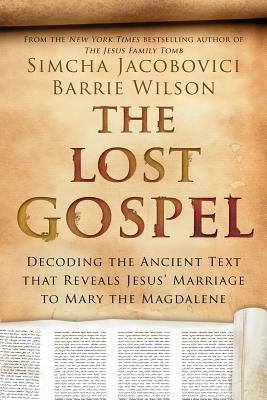
The Lost Gospel: Decoding the Ancient Text that Reveals Jesus' Marriage to Mary the Magdalene

18471553

Rating: 1 Star - did not finish

Review:

Honestly, the subtitle alone is absurd. If you have read my reviews before, you know how I feel about ridiculously long subtitles. If the subtitle needs to be that long, you are doing something wrong. In this case, there is much, much wrong. I contemplated not even bothering with a short review, since I quit this one very early on, but I just could not remain quiet and had to say SOMETHING.

I will start with the positives, because despite what it looks like, I do try to find something good in every book I review. It is tough sometimes, and I REEEEEALLY have to look, but there is always some little nugget of positive that I can show. In this case, it is that the writing itself is actually quite good. I don't mean the content, I will get to that in a moment, but the actual writing. It flows well, and the style is engaging. Any other book or subject and I might be able to make it through the entire thing.

Now, onto the not so good. Pretty much, everything else. I wanted to give this one a try, as I am always interested in these ideas of 'lost gospels'. There is so much we do not know about the early days of Christianity and Jesus, as well as his family and followers. Imagine if manuscripts were discovered that could truly be authenticated and just came right out and said, "Here's the story." Wouldn't that be amazing? Instead, we have things like this, 'hidden gospels' that we have to use a great stretch of the imagination and connect all these dots that don't totally seem to fit, in order to make something kind of make sense if you look at it sideways.

I am not opposed to the idea of Jesus being married, and it does make sense. It is not a new idea by any means, and certainly would not have changed His work or Message. I can also understand the whitewashing of that aspect of His life from the Gospel, if that were to turn out to be the case, as the Apostles were only concerned with the work that Jesus performed and His role as Savior. His possible wife and children did not fit into that mold and thus would not have been something they considered important for future generations to know.

I was ready to give up on page 36 when Gnosticism reared its ugly head - particularly as the author seemed to find a fault in Christianity as we know it today and seemed to scoff at it, while giving favor to Gnosticism. Being objective did not seem to be on the menu. Additionally when the author straight out said Gnosticism was more grounded in history than the Gospel, I knew I may not be able to continue on much longer.

While I found the author's factual history to be interesting, and even enjoyed that aspect of the book early on, I could not abide the constant ending of each chapter with a silly 'cliffhanger'. It was incredibly juvenile and kind of annoying, truth be told. I barely even got into the actual content, the core thesis of the book, in that this obscure manuscript was really he hidden story of Jesus and Mary, and had to quit around page 50. It was simply too absurd to continue.