Showing posts with label German History. Show all posts

Sunday, January 15, 2023

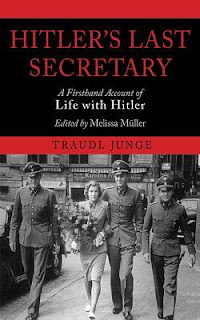
Book Review | Hitler's Last Secretary: A Firsthand Account of Life with Hitler


Rating ⭐⭐

Nope. Nope nope nope.

No on can be that naive. Nope.

I don't give a fuck what Hitler ate for dinner. I give a fuck that millions of men, women, and children were murdered on his orders. I don't care if it was naivety or being caught up in the atmosphere of the world at that time or both. Fuck all the way off.

Monday, January 2, 2023

Book Review | Dracula, Prince of Many Faces: His Life and His Times


Rating ⭐⭐⭐⭐

Really liked this one a lot, which will come as no surprise to those who knows my reading habits. Yeah, fiction is great, but the REAL stories behind those figures is SO much more interesting. Like, Game of Thrones is fine, but the Plantagenets are absolutely batshit bananas and way more fun to read about.

The title is 100% spot-on and the author does a fantastic job presenting evidence of all the faces Vlad showed to the world, and how the world perceived him - and continues to perceive him to this day. He is one of the most intriguing figures of the middle ages.

I appreciated how the author presented warfare at the time. I am not terribly interested in military history, even in medieval times, but that makes up a huge part of who Vlad Dracul was and why he was so loved by his people. The author was able to present that information in context, but did not overload the reader. There is also much about the politics of the time, and if you consider what was going on in eastern Europe and Asia at the time, those politics are incredibly important.

There is no doubt that Vlad Darcul was an absolutely brutal and cruel leader. But so were many other rulers in the middle ages. This period of history is littered with all kinds of atrocities, but for some reason Dracul is identified as being worse than all the others. And okay, yeah, being impaled on a giant wooden pole would be an agonizing and horrible way to die, but there was a plethora of torture going on all over Europe and Asia. Not to mention the world as a whole was filled with endless misery - constant violent warfare and everything associated with moving armies, boughts of plague, and in general for peasants, short lives, often puntuated by starvation, deaths of children, and so on. But the book does not gloss over how the victims died, so consider this your warning.

Vlad Dracul was a product of the time and place he existed in, and needs to be considered in that context.

Much of Vlad's life, and thus the book, revolved around warfare and the reasons for his brutal campaigns. Given the horrific murders of his father and brother at the hands of the Boyers, Vlad doesn't really have a choice but to employ the tactics he does while consolidating power and shoring up support from the people. He also has to contend with the Ottoman Turks banging on the door of medieval Transylvania and specifically Wallachia so to speak. Even though he did not in the end completely repel the Turks, he fought ruthlessly to keep his country free.

In the end the author presents us with three options for how we can view Vlad Dracul: a literal blood-thirty tyrant, a cruel but justified ruler, or a hero who fought for the freedom of his land and people. It is not wrong to believe that all three views can be correct, but you will have to decide for yourself.

Recommended.

Saturday, April 2, 2022

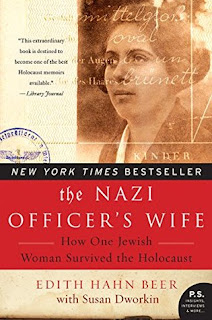
Book Review | The Nazi Officer's Wife: How One Jewish Woman Survived the Holocaust


Rating ⭐⭐⭐⭐

This is a harrowing, beautiful survival story and one I could not put down. I have read more than my fair share of such stories, but they have typically focused on those who survived the death camps, the death marches, all the cruelty Nazi Germany had to offer. That does not mean there was not cruelty in Edith Hahn's life; she was still surrounded by it every single day.

Hahn grew up in Vienna and was forced to live in a ghetto when the Nazis arrived. From there she was sent to a labor camp for many months. Her sisters had escaped the Nazis, but barely. Yet Edith stayed for her mother and her love, Pepi. He insisted it could not really be that bad. Pepi was Jewish, but his mother had him baptized as a Christian. It made no difference in the end, because he was still Jewish and the baptism was not applicable 'retroactively'. He had to hide for most of the war no matter what - as a Jew, he would be deported to a camp; as a gentile, he would be shot on-sight as a deserter from the army. His mother was also awful and hated Edith because she was Jewish and said the most awful things to her all the time, begging her to 'let Pepi go' so he wouldn't be seen with a Jewish person. I am a little disappointed that his mother survived the war, not going to lie.

But I digress.

While Hahn was held in the labor camp in Germany, her mother sent whatever little comforts she could. Hahn remarked that her mother always sent whatever she herself needed - gloves, cakes, etc. While Edith was away, the ghetto was cleared and her mother was sent off to Poland. Hahn always kept the idea in her head and heart that she would find her mother again, and the family would be reunited. It was never to be however, as her mother was murdered within a week of arrival in Poland. Though Hahn does not find this out until after the war has ended. It is absolutely gut-wrenching because logically you know elderly women were not kept alive to work, but you hold out hope nonetheless.

Hahn's survival eventually came to depend on the very monsters who were hunting her people down. After returning from the labor camp, Hahn was supposed to report to a deportation site. She never did, and spent the remaining years of the war under an assumed name of a Christian friend in a plot that would have seen them both tortured and executed on the spot had either been discovered.

Hahn takes the name of her friend in order to get the necessary papers, and lives as Grete Denner. She lived in Munich after she escaped Vienna and eventually meets a man named Werner Vetter. He is a Nazi and pursues her at all costs. He is in the midst of divorcing his wife he later reveals, and in turn Hahn confesses to being Jewish. Despite his inclination to be in the party of mass murderers, Vetter continues to insist they get married. Hahn worries about the identification papers she does not have, those which prove her family's lineage as "pure Aryan", but in the end they are allowed to wed.

Side note: One of my favorite parts of the book occurs when the war is over and Hahn returns to the office where her papers were accepted so she and Vetter could marry. She needed to do so in order to get identification with her real name this time, finally safe from the Nazis. The same officiant is working in the office and he is shocked and angry to find out she lied, that she is actually Jewish. It was a beautiful little snippet.

I can not imagine living in a state of constant, paralyzing fear. Yet Hahn performs in her role so well, never giving in to that fear. She knows what to do in order to survive, and plays the part of the dutiful German wife. For a long time Vetter resisted the idea of having a child, and his terrible temper worried me for Hahn quite a bit, but she eventually becomes pregnant and gives birth to a baby girl. Of course he is pissed because he wanted a boy. Hahn speaks of refusing any pain meds during Angela's birth, out of fear of what she might say when under their influence.

As the war rolls on and Germany's defeat becomes a foregone conclusion, Vetter is drafted. He had previously escaped this due to the fact that he was legally blind in one eye. He is captured by the Russians in battle and a prisoner for ages, though Hahn uses every professional and political connection she has to free him. You see, before the Nazis came to Vienna, Hahn was studying to become a judge. She'd completed all her classes and only had to take the final exam. Yet the day she showed up to do so, she was turned away (with glee, I might add). After the war she was able to fulfill her goal and become a judge.

It was through these connections she was finally able to get Vetter home, though it did not last long. He still went on and on about her Jewish blood infecting their daughter, which confused me. If the Germans were so superior, shouldn't their blood have been "stronger"? GTFO of here, you Nazi scum, is all I have to say about that.

Hahn eventually leaves Germany for good when the Stasi is growing, and she is repeatedly asked to spy on her friends and acquaintances. Under the guise of visiting her sister in England, Hahn escapes for good. The heartbreaking turn of events means she will never practice law, never sit as a judge again. But she survives, as does her daughter.

Hahn was urged by her daughter to tell her story, and for that I am grateful. here we have a complete record of how one woman was able to do the unthinkable - live opening among the very people who hated her and would have wanted her dead had they known her true identity. I worried throughout the book whenever Vetter was angry, that he would turn her in, but that never happened. They divorced eventually when he went back to his first wife. That didn't last long however, and soon he was divorced again. He'd marry four more times before passing away in 2002.

Hahn kept every single piece of paper she was issued over her years in hiding, and when her daughter discovered these, she convinced her mother to give the photos and documents to the world. They are now part of the permanent collection at the Holocaust Museum in DC.

As memoirs from this period often do, this felt like much more of a conversation between Hahn and myself. I was there only to listen to her incredible tale of survival, to be in awe of a courageous woman who kept going, day after day, never knowing if that dreaded knock at the door in the middle of the night would come.

My only slight issue is the title - it is a bit misleading. Vetter worked for most of the war as a supervisor in a paint factory. He was only sent to fight near the end of the war, something he had avoided previously due to his blindness in one eye. But truly, it doesn't even matter all that much, because Hahn's story is so remarkable. She survived.

Highly recommended.

Friday, July 16, 2021

NetGalley ARC | Maiden Voyages: Magnificent Ocean Liners and the Women Who Traveled and Worked Aboard Them

I received a free digital ARC from the publisher via NetGalley in exchange for an honest review.

Rating ⭐⭐⭐

I probably would have given this four stars, or at least three and a half, if I would not have had to read about the journey of the mother of the worst president in the history of the United States.

Aside from that drivel, this was a book packed with tons of interesting anecdotes and gossip and I feel the author did a fantastic job portraying life at sea for these women and how their work evolved over time.

I enjoy this period of travel. I love that the author focuses specifically on women and how they made a living on the massive liners that once ran regularly between the US and Europe.

I appreciate that she focused on a a wide variety of women, from all walks of life. We read of celebrities, artists, and the wealthy travelling for pleasure, migrants and refugees seeking safety and a new life, as well as the women who worked for the great shipping companies, sending their wages back home to help care for parents and siblings.

I found women on the crew to be of the most interest to me. I admire these women who worked these long, hard hours at sea to provide for their families. Violet Jessop is mentioned here and I absolutely recommend her autobiography, which I wrote about HERE. Not only did Violet survive the sinking of Titanic, but not long after she survived the sinking of the Britannic (Titanic's sister ship) as well. Her book is a wonderful look into her life, in which the famous and not-so-famous shipwrecks play but a small part. She had even been aboard the Olympic in 1911 when it collided with the HMS Hawke.

There were times when the narrative was very slow and felt like a slog. This could be a personal thing, as we learn plenty about those who travelled by liner because they had the money to do so, sailing back and forth between the Old World and the New. Still, it did take me a bit to finish this one and some passages and stories were not nearly as interesting as others.

There were times when the book became a bit repetitive as well, especially when stories were similar. Not always, but enough to be noticeable.

I never really thought about until this book, just how critical this work was for women who sought independence and a way to support themselves. To say that it changed countless lives would not be an overstatement. Slowly but surely, as women began travelling more, the need for stewardesses arose to help tend to them aboard the ships. That role of stewardess even evolved over time as some women were able to become conductresses and coordinate activities for the passengers. And then as two world wars came, women were able to stay aboard as nurses and continue to make a life for themselves.

Overall I appreciate the author's work and the research that went into the book. She's given a voice to many women who otherwise might remain unknown to us today.

Saturday, May 29, 2021

NetGalley ARC | The Nine: The True Story of a Band of Women Who Survived the Worst of Nazi Germany


I received a free digital ARC from the publisher via NetGalley in exchange for an honest review.

Rating ⭐⭐⭐⭐⭐

Absolute must-read, right off the bat. I could not put this one down.

The Nine is a book about doing what is right, no matter the cost; about resilience and survival and the bonds of friendship. I would like to think we could all be this brave, but I also hope we never have to find out.

Here the author tells the story of her great aunt Helene's life during World War II and her fellow resistance fighters who would escape the clutches of the Nazis and make an incredibly painful and miraculous journey across Germany and finally return home to Paris.

Prior to their individual captures by the Gestapo, the women did not know one another. All were Resistance fighters who did what needed to be done, because they knew what was happening to the Jewish people was not right. These women did it all - hiding Jewish children, smuggling weapons, sheltering Ally agents who parachuted in behind enemy lines, and more. Anything and everything they could do to fight the Nazis, they did. As they were rounded up and interrogated, tortured, nearly killed, still they did not do anything to endanger the lives of fellow fighters.

After the Gestapo was through with them, the women were sent to various prisons in France where they began to find one another and forge friendships that would ensure their survival - even when things were at their bleakest. The women came to know one another in prison, or in transit from one to another,  then in RavensbrÜck, and finally in Leipzig (a sub-camp of Buchenwald). As the war came to an end and the Nazis were determined to hide their crimes, they marched their prisoners farther into German territory. It would be during that death march that Helene and her friends made their escape.

I could not put this book down. I was captivated from start to finish by this incredible story and the beauty of powerful friendships that came from horrifying events. To not only survive themselves, but to hold one another up at various points when one or another was ready to give up, is astounding. These young women, ranging in ages from 20-29, were determined to make it home and did so due to quick-thinking, courage bordering on insanity at times, and a bit of luck. 

Oh, and it was on foot the entire time.

The author does not shy away from accounts of the torture the women were subjected to and I admit to skimming those parts. However, I don't feel they were gratuitous - I am just a baby with a weak stomach/gag reflex. Yet even within these scenes, the author is careful, treating the subjects with the utmost respect. I think this is important. The farther we get away from The Holocaust, the easier it is for many to put away the images of the horrors that were inflicted on so many.

An aspect of the story from after the war that sparked my interest relates to the idea of the trauma that afflicted the next generation - the children of those who survived. So many survivors remained silent about what they had seen and heard. The author discusses transmission studies done in the 70s on these second-generation survivors and how intergenerational trauma came to be, and how it impacted the children of survivors.. I will definitely be seeking out more information on that topic.

Books like this are so important. There are so many women who took huge risks to do what they knew was right, and we will never know all of their names and faces. While I would love to know more details about their work, that is already all but lost to history. Women especially need to be recognized for all that they did to impact the outcome of the war.

Upon returning to their homes, the women find that France has already moved on. By the time they do make it back across the front, Paris has been liberated for nearly a year. These women become the reminder of something terrible that everyone else would rather forget.

Helene
Zaza
Nicole
Lon
Guigui
Zinka
Josee
Jacky
Mena

We will never forget you.

Highly, highly recommended.

Sunday, February 21, 2021

Publisher Gift (via NetGalley) | Prisoners of War: What Monuments to World War II Tell Us about Our History and Ourselves


I received a free digital ARC from the publisher via NetGalley in exchange for an honest review. (In this case, the publisher contacted me by email, and directed me to NetGalley if I was interested.)

Rating ⭐⭐⭐⭐

The importance of this book cannot be overstated. it is a timely look at our relationship with statues dedicated to history. One only has to look at the arguments made against removing confederate statues from public spaces to see the relevance. (Side note: pull all that bullshit down and stick it in a museum, with context, where it belongs. There are no heroes of the confederacy and not a single one of those men should be honored for their actions. They fought to keep slaves and no amount of supposed 'good' they ever did can make up for that fact. Fuck THAT bullshit narrative.)

Anyway.

Addressing this issue of accepting statues at face-value of being accurate representations of a moment in time in our history of war is done quite well within these pages. The author not only looks at how these monuments are written about, talked about, and viewed in the US, but looks at various monuments to the very same war and how they are viewed in countries around the world. In total he discusses 25 different monuments, from the US, to Italy, to Jerusalem, China, and many in between.

The photographs are stunning and for once I was glad to have received the file for my laptop only instead of my Kindle. Even though I hate sitting at my laptop to read, the photos alone were nearly enough to make it worth it. This truly is a book to have a physical copy of to peruse at your leisure. I don't feel it is a book meant to be read quickly or in just a couple of sittings. It will definitely give anyone pause who has visited these sites, and perhaps grapple with how one originally interpreted the monument, compared to its original and intended purpose.

One of the biggest take-aways from this book is the vast difference in how World War II is memorialized. Here in the US, our statues are to honor the heroes and our triumph over true and despicable evil. Yet around the world, monuments are most often dedicated to the victims - such as Italy's Shrine to the Fallen or The A Bomb Dome in Hiroshima. I think this again confirms the fact that the US often equates winning and patriotism - though it must also be remembered that aside from Pearl Harbor, World War II was not fought here. The monuments to the victims and the fallen are most often literally on the site of the atrocities they represent.

Lowe provides much context for the various events being commemorated by each statue. The research is thorough and he writes in an engaging way. He certainly gives the reader a lot to think about - both regarding those he is writing about, and the specific issue in the US regarding confederate monuments still standing.

When we come upon these monuments, either because we've specifically taken a trip to see them or we stumble upon them by accident, we must not stop asking ourselves to look beyond the scenery as it being another pretty picture for photo ops. We have to consider the original intended purpose of the statue, what aspect of history is being told, and whether or not it is actually accurate in its depiction.

Highly recommended.

Thursday, December 31, 2020

NetGalley ARC | Hermine: An Empress in Exile

I received a free digital ARC from the publisher via NetGalley in exchange for an honest review.

Rating ⭐⭐⭐

The publisher emailed me asking if I would like an ARC and I decided to take a chance on it, as I know surprisingly little about Kaiser Wilhelm II and his family and even less about his second wife, Hermine. I think it is quite possible to still want to know more about a subject without liking them very much and I feel like that is the case here. I never knew the Kaiser even had a second wife, and what we are given in this shorter biography certainly gives us glimpses of an incredibly turbulent life before she became the 'Empress' as he insisted she be called. Unfortunately the early years of her life and her first marriage were not the focus, so there is not as much information there. On the other hand, it could be that the author disclosed all she could, because that is all the information available. I do not know for certain because, as I said before, Hermine is completely new to me.

The Kaiser's children from his first marriage were extremely wary about Hermine and her brood of children from her first marriage and it is easy to see why. Ambition is something Hermine had in spades and to many it looked like her end-game was all about how high she could climb on the social ladder. Being referred to as Empress certainly high up there, but she wanted more. Hermine wanted Wilhelm restored to the throne and for the monarchy to rule again. She tried her very best to cozy up to Hitler in order to make it happen.

It is disturbing that not only did she seek his company for this end, but she seems to have genuinely admired him. This is enough to make anyone who is not a terrible person shudder, and it is one of the things that does make Hermine incredibly unlikable. She an hardly be blamed for wanting to improve her husband's standing, to see his family restored to the throne, but it was never going to happen. Everyone else seemed to realize that except her.

As expected, the aging monarch remained in exile and Hermine stayed with him in the Netherlands for their twenty year marriage. While the Kaiser could not travel far, Hermine could and she made several trips to Germany in that time. When Wilhelm died in 1941, Hermine had no choice but to return to her first husband's lands. The war raged on and after it came to an end, Hermine was arrested. She was placed under the watchful eye of the Red Army, and she died mysteriously, supposedly of a heart attack, at the age of 59.

Hermine had an incredibly interesting life, though she did herself no favors with her attitudes and behaviors, which made people question her motives. Though to be fair, I think the Kaiser's children would have acted the same way toward any new wife of their father and that it was not all specifically about Hermine.

Recommended for those with an interest in Germany's history.

Sunday, November 15, 2020

Book Review | The Last Witch of Langenburg: Murder in a German Village

24659302

Rating ⭐⭐⭐⭐⭐

I highlighted practically the whole book as I read it, and thank goodness because it has been two years! But, I am determined to review the books I especially loved, no matter how long ago I actually read them. You might recall if you have been around a while that I had a particularly stressful teaching position a couple years ago and reading has always been my escape. I all but abandoned reviews completely as I plowed through book after book to help ease my stress and anxiety of having to go into that building every single fucking day. Now here I a on the other side, so, so thankful for my studious notetaking.

I absolutely loved this book. Through the meticulous research of the author, and surprisingly detailed accounts still in existence relating to the trial of Anna Schmieg and her daughter, life in the seventeenth century village of Langenburg is brought to life. I will warn readers straight away, however, that this is a very dense text at times and may not be as enthralling for a casual reader with a passing interest in the subject of witchery trials, German history, or both.

The book opens just ahead of the supposed crime. Shrove Tuesday, 1672, finds Eva Kustner delivering buttery cakes to neighbors made by her mother, Anna Schmieg. Within hours one of the recipients, a young mother named Anna Fessler, is dead.

What follows is one of the last witch hunts of seventeenth century Europe, which ends with neighbors and magistrates convinced that Schmieg, her daughter Eva, and their entire family have been caught in the devil's web and are all guilty of sorcery and witchcraft. But it is also so much more than that. It is a comprehensive look at the after effects of the Thirty Years' War, the movements and machinations of conducting a witch trial, as well as theology and legalities that ruled life in small villages such as this one. we also see some the very earliest stages of crime-solving. Fessler's autopsy is of special interest, given the time period. We learn so much about those connected to every aspect of the case - from Prince Heinrich Friedrich, to religious leaders and judges, as well as medical scholars at the time who were beginning to understand evidence collection and how to use it effectively.

Fessler's untimely death raised suspicions immediately - as had Kustner's delivering of the cakes to neighbors the previous night. Given Anna Schmieg's reputation, and the fact that she was the miller's wife, she and her daughter made the perfect suspects.

To say Anna Schmieg was not well-liked is an understatement. The author describes her at various times throughout the text and her aggressive and stinging personality made her an easy target.

"Hohenlohe women were distrustful and quarrelsome in the best if times, and perhaps the dire circumstances of the Thirty Years' War made them more so. But Anna Schmieg fought differently from other women. Where her neighbors might fight their enemies to a standstill, Anna stunned and overwhelmed them, if not with physical blows then with words so shocking that even seasoned state officers were stung by their violence" (24%).

Due to her husband's position as the village miller, Anna and her family were considered outsiders. Even though villages depended on millers, they were also incredibly distrustful of them. All sorts of rumors and gossip abounded when it came to a miller, and it was no different in Langenburg. Communities suspected them of crimes such as inflating prices and stealing the very grain brought to them to be ground into flour. Anna's husband, Hans Schmieg, was the personal miller of Prince Heinrich Friedrich, so he also occupied a government office, yet another reason he was not to be trusted. The author also points out that communities held onto suspicions so tightly, that millers were often associated with "magic, sorcery, and dark supernatural powers" (26%).

Furthermore, the author states, "They were rogues and thieves. Living at the edge of respectable society, along the river or stream at the edge of the village, millers acted in clannish ways and kept apart from honorable folk. The notion of mills as safe havens and sanctuaries, a holdover from medieval customary law, also fed suspicions that they were dens of criminals, heretics, and gathering places for strangers and other unsavory characters. The secrets of their craft they kept to themselves. At night the devil and demons hid out in the mills. Masking their activities behind the loud clattering and unnerving pounding of the wheels and gears, millers practiced the dark arts of sorcery. Why else did so many accidents occur around mills or along the swift-moving waters of the millrace? (26%).

Even so, despite the superstitious and distrustful nature of the villagers toward millers and their families, up to the point prior to the death of Fessler, Anna had not been recorded in court records as having disputes with any other villagers. This comes as a bit of a surprise according to the author, as he states, "One would expect a miller's wife like Anna Schmieg to have attracted a fair amount of slander and other types of conflict simply because of her husband's occupation...Despite the prominence of her position and for whatever reasons - the court did not meet regularly during the remainder of the Thirty Years' War, and when it did, records were spotty - Anna's name did not appear in any dispute over her honor" (21%).

"Say what one will about her reputation - and she knew what the gossipers said about her - Anna Schmieg had also used her few breaks in life to make her way in a violent and hostile country. Her luck in surviving the war, her connections to the Haffners, her marriage to Hans Schmieg, her position as the miller's wife, their income and resources at the mill, her combative streak and her rich vocabulary of abuse, the ties of patronage that connected her to Count Heinrich Friedrich himself, perhaps even her notorious reputation - all of these helped her to survive, advance herself, build a household, and move into a dominant position in the village. Instead of meeting threats with deference, piety, or silence, she gave in to her rages, threatening vengeance on neighbors and their property, uttering blasphemies, muttering curses under her breath, dissembling, even defying public officials. She did so with a moral compass set as firmly toward the stars that guided other Hohenlohe women as well: honor, blood, and household" (24%).

Anna appears to have had a fearsome reputation, to be sure, and that is why suspicion was upon her immediately. After all, it was her cakes that were consumed by Fessler, so she must have had a reason to want the young mother dead. And yet, the conclusion that can be drawn from all of this is that yes, it is likely that Anna Schmieg poisoned the cakes, but Fessler became the victim of said poison meant for someone else - Eva Kustner.

The author puts forth the scenario in which Eva has defied her parents who were intent on making a match between their daughter and a fellow miller, but that was ruined when Eva took up with her eventual husband, Philip, meeting for secret rendezvouses whenever and wherever they could. There is so much more to this aspect of the story and I still have so much to cover, that I will leave it to any interested to seek out the book themselves and see what they make of this.

Eva stands accused with her mother, but for obvious reasons turns on her and Eva gives evidence against her mother. Their relationship is officially torn asunder and there will be no reconciliation. Eva testifies on various points and affirms they are all true statements, while Anna watches from across the 'courtroom'. When asked what she thinks of the charges against her and the evidence provided by her daughter, it should surprise no one by this point that Anna's response is dripping with disdain and sarcasm. Yet Eva testifies further than "this is not out of enmity, envy or untruthfulness against but my mother but out of obedience to the command of out merciful Lordship to prove my own innocence, so help me God and his holy Gospel" (53%). Anna would get the last word though, just as one might suspect. Staring her daughter in the eye, Anna says, "If you could swear an oath to all this, then you are lost, lost forever" (53%).

It is so important to point out here just how incredible it is that we have these words, these exchanges from the trial. The records were so perfectly preserved for three hundred years, and to read through them is almost like being there. It will surprise no one that throughout the course of the trial, not much actual evidence is presented aside from witness statements, and while the jurists in Strasbourg hearing the case stated that they could not legally prove that Schmieg had poisoned the cakes and was a witch and even when they gave their opinion on the case, Schmieg was still deemed guilty during her trial. The jurists expressed their doubts in their opinion, regardless of their concern over Schmieg's renunciation of God and her family (which to them made her the likliest suspect, but for no other reason). In the opinion, the jurists returned to the points that they found to be most troubling - for example, the fact that someone else could have just as easily poisoned Fessler's food. Additionally, there was no dispute or tension between Schmieg and Fessler that could possibly have brought about the murder. The jurists had to acknowledge the lack of evidence against Schmieg, and would not recommend execution.

There comes a point where Anna Schmieg finally confesses, but only to certain aspects of the crime. She says, "A vagabond gave her a bit of poison for the little cake...She put a bit of poison into the little cake, but it was meant for her daughter and not for Fessler...She poisoned a few cakes (but not many). They were sitting in a bowl. Her daughter may have taken one and taken it to the teamster's wife. The poisoning, Schmieg confessed, came from her 'vengeful heart'. When pressed whether the poison was meant for Eva, Anna freely admitted it" (56%). 

This was all she would admit to though, and Schmieg refused to admit to anything relating to secret meetings with the devil, or of witchcraft of any kind. She also at this point stated that her family - husband Hans, daughter Eva, and son Michel, were all innocent and had nothing to do with what she had done. Even so, her interrogators continued to press her to confess fully. Schmieg would not do so; though she said she was a witch, she would say no more than that. She was tortured once again, repeatedly, and sure enough, a confession finally came. Schmieg then went back on earlier words and said her family knew she had poisoned the cakes, and her son Michel had been there when she had done so. He continued to deny any knowledge. Another meeting with Hans saw Schmieg again claim his innocence, only for her to then accuse him of affairs. She would again later say he had no knowledge of her crime.

Anna's formal confession was approved in early November. She confessed to being a witch and agreed to the charges against her: "...her seduction by the devil when she was fifteen or sixteen, her drowning one of her own children in the millrace, her attempt to murder Eva and her son-in-law with Shrovetide cakes, but killing her neighbor instead, her harm to neighbors and their animals, as well as a life of cursing, drinking, and godless behavior, and a suicide attempt" (58%).

After Anna's execution, Hans and Michel were still held prisoner until February 16th. That night they escaped their cells and fled. The two vanished without a trace, though the villagers feared for months afterwards that they might return at any time to exact their revenge. Gossip spread like wildfire that there had been sightings of the two in the area, though they never did return. Eva was the only remaining member of the family left. She claimed they'd been working at a sawmill in Heidelberg, though the pair had otherwise completely disappeared from history. Anna herself was forced to leave her children behind with her husband and in-laws. She was banished forever from Hohenlohe and all that kept her tied to her former home was her on-going dispute in ensuring that her children received their due - the annuity from the mill. Nothing else is known of her life or fate beyond this.

Whew.

There's so much more to touch on, the politics and religion and other complexities of the time, but all I will say is that I thoroughly enjoyed this read and highly recommend it.
Thursday, April 9, 2020

Book Review | Not So Happily Ever After: The Tale of King Ludwig II

42290745. sy475

Rating: ⭐⭐

When! You! Use! Lots! Of! Exclamation! Points! You! Lose! Credibility! As! A! Historian!

Okay, so they were not that bad, but they were there. A lot.

Look, I love exclamation points as much as the next person and am guilty of using them a lot. Even in work emails, where I always make sure to use the same number or less of exclamation points as the person I am responding to. But the thing about non-fiction, and a story like this in particular, is that the facts speak for themselves. There was plenty of astonishing information contained here, that the exclamation points were not needed to highlight how crucial the info was. It became a silly distraction for a story that deserves to be analyzed and discussed.

I remember hearing of "Mad" King Ludwig in German classes a bit (I took four years in high school and was even German Honor Society President for the last part of senior year. Can't speak a lick of it, except basic phrases. Yet, I can still read some of it decently. Funny how our brains respond to foreign languages) but of course the purpose of said classes were mainly to learn the language. Still, I was always hypnotized by the poster of Neuschwanstein Castle and it remains on my bucket list to this day. I mean seriously, look at it. How can anyone not be drawn in by its breathtaking beauty, both the castle and the surroundings?


Turns out, Ludwig II commissioned the castle, and a slew of others, and got himself into debt over it. He used his own money, but when that ran out he borrowed from his own government against future income coming to him from properties and as you can imagine, that did not go well.

After ruling over twenty years, doctors who never examined Ludwig personally declared him unfit to rule on the grounds that he was crazy (based on notes, letters, and testimonies some from servants), and he was eventually placed under house arrest after a coup by a jerk who wanted the power for himself and had been the de facto ruler of Bavaria for years with Ludwig distancing himself more and more from government life.

Truthfully, Ludwig was eccentric. There is no denying that and we have seen over the course of hundreds of years what marrying your cousin means for the children you produce. Everyone ends up deformed, crazy, or both, to some degree. Some just hide it better than others. Still, based on what I have read here and other research I did as I was reading, I don't think Ludwig was crazy. I do think being a product of hundreds' of years of inbreeding played its part, as did having parents who were purposely hard on their oldest child in order to 'toughen him up' for the day he would eventually rule. I think Ludwig's life might have gone quite differently had he not been the heir. He might have been left to his imagination, the operas he loved so much, and the stories he created in his head. He comes across as a sensitive child and yeah I know child-rearing was a bit different back then, but the impact of treating extra sensitive kids in harsh ways to "toughen them up" rarely goes well.

After Ludwig's house arrest was in place, he would regularly take walks with one of the doctors who had declared him insane. One night in particular the two men would leave the grounds and never return. This is where the story really gets interesting, as no one knows what happened that night that lead to both men being found dead in the lake which they were often seen strolling around. Conspiracies abound, and I do love a good intrigue (if you can guess the movie that line comes from, you get a cookie. It's a great movie!) The men were found in roughly four feet of water, so drowning is not considered a cause of death for Ludwig, as he was a strong swimmer and swam in the lake many times as a youth. An interesting fact observed was that the men's watches had stopped nearly an hour apart, which makes this all the mysterious - especially considering that Ludwig's watch was the one that had stopped first.

So, what happened?

Most people think Ludwig was trying to escape (I think so too, based on facts that would come out in the years following his death). Others think he was assassinated to prevent him from ever returning to power again (those in rural Bavaria especially loved Ludwig and to them he was a hero, a Fairy Tale King who brought them gifts when stopping by their homes to seek shelter on one of his many midnight sleigh rides. Like I said, dude was eccentric). There are reports that several boats were on the lake that night manned by those loyal to the deposed king. Earlier in the day, Ludwig has often been observed looking out the window at the lake, even using a telescope. He'd previously gotten a message to his beloved cousin Sisi, and many think they had hatched an escape plan. This makes sense when it was revealed that Sisi had actually been at the lake with a carriage for several house. While she had made a quick getaway at some point, carriage tracks were discovered near where she was staying. Now, here's where I am unsure about things, because decades later it  claims were made by various people that Ludwig had been shot. At one point a family member claimed the coat they had in their possession was the very coat Ludwig wore the night he died, and there were two bullet holes in it. This family member and her husband later died when their home burned down and they were killed in the fire. The coat, and the watches of the two men for that matter, had long-since disappeared.

One would think, surely the autopsy and investigation would reveal some answers. Except, there was no investigation. Imagine that. Whether he was assassinated, or shot by guards who saw him trying to escape, I do believe he had been shot. But this still does not account for how Dr Gudden would not have died for another hour, when his watch stopped. The theory has been proposed that he had simply forgotten to wind the watch and it stopped at 8 AM. Those close to the doctor did not believe that would have ever happened, as he was always punctual and never forgot a task such as that. The punctuality is what caused the search for Ludwig and the doctor to begin with, as Dr. Gudden had a train to catch that night, but was not back in time to board. 

Another interesting note is that Dr. Gudden had always taught his students that one should never be alone with a "crazy person". Orderlies had always joined the men for their walks, but from a distance. Yet this night in particular, Gudden waved them off, and he set off with Ludwig alone. I don't know what this means, if it was an unfortunate coincidence, or what. He was one of the doctor's who helped secure the "diagnosis" for Ludwig, so why would he potentially be helping him escape? Unless it was an assassination and the doctor was accidentally killed? But again, then how do the time differences make sense?

Basically, it is an endlessly intriguing event and a sad end to a life that was not meant to be lived as a king. But Ludwig had ruled for 22 years as such, and I think he was determined to get his throne back.

If you are new to Ludwig's story, as I still am, I don't think I would recommend this book to start with. It was just kind of silly sometimes. I made tones of notes as I was reading but when I went back to goodreads to look at them, so many were "truncated due to consecutive passage length restrictions". Does any one else have this problem? I try so hard to highlight things shortly, even dividing important paragraphs up into small chunks of two sentences just to avoid this damn truncation and no matter what I do it does not help. However, I was able to salvage a couple quotes to show what I mean about the exclamation points and in general the not-serious tone of the book.

"But wait! This is a book about King Ludwig, not King Otto. That's right. But the fact is, King Ludwig II spent the first few days of his life named Otto" (2%).

"One relative even married her own nephew! With such a heritage, what did the future hold for Ludwig? No doubt his parents were curious" (3%). What is even the purpose of this part? And WHY the exclamation points?!!!!!!!

"A typical day in Ludwig's childhood involved waking at 5:30 and spending an hour on homework before breakfast" (7%). Pretty sure it was not called homework.

"He had very little sense of humor and took life seriously. No joking around for Ludwig!" (8%) WHYYYYYYY THE EXCLAMATION POINTS?!!!!!!!!!!

"Handsome, dark, moody, and brooding, Ludwig had a lot in common with Mr. Rochester (you'll have to read Jane Eyre to understand)" (29%). These asides are as dumb as all the exclamation points!!!!!!!!!!!!!!

"...favorite activity involved Ludwig using a map to calculate the distance to a specific destination he wanted to visit (not an easy task in the days before the Internet)" (47%) You mean GPS? Or are you referring to the largely unnecessary (now) MapQuest?!!!!!!!

"Every fairly tale needs a villain, whether it is a witch, an evil stepmother, or perhaps a big bad wolf. Johann Lutz plays the role of the big bad wolf in our story" (69%). This tone is annoying!!!!!!!

"This meant that he had the royal family's tacit approval for taking action against the king!" (69%). OMG STOP!!!!!!!

"This was his worst nightmare come true. He felt buried alive!" (84%). I can't even anymore!!!!

And that is where I will end with the examples because honestly, this review is much longer than I anticipated and enough is enough. When I first picked it up I didn't not pay attention to any categories it was in (I grabbed it for free from Kindle Unlimited). But I quickly assumed by all that nonsense mentioned above that maybe this was geared toward middle/high school? But to me that is also kind of disrespectful of those age groups, almost like talking down to them? I don't know. I checked goodreads first and none of the categories indicated middle grade or high school. On Amazon however, and it does says grades 6-12.

Even knowing the age level as I was reading did not stop these things from annoying me. They just felt so out of place in a non-fiction text. I will definitely be looking for other books on the life and death of Ludwig II and I would encourage you to do the same.

I will also leave you with a final quote to sum up my feelings on the subject and his questionable mental state:

"Cousin Sisi was probably closest to the truth when she declared, 'He is not mad enough to be locked up, but too abnormal to manage comfortably in the world with reasonable people'" (64%).

Wednesday, December 30, 2015

100 Documents That Changed the World: From the Magna Carta to WikiLeaks

26236825

Rating: 3.5 Stars

Review:

I really love books like this, the '50 Objects..." or "12 Maps..." that 'changed the world' type books. This book is no exception, as it covered several documents that truly did change the world, for better or worse. While I disagree somewhat with some of the items included ('War and Peace' and '1984' - I do not consider books to be documents per se), the majority really do help the book live up to its name. How can you go wrong when writing about Magna Carta, the Emancipation Proclamation, the Apollo 11 Flight Plan, and Anne Frank's diary in one volume?

Turns out, you can. Or, at least not 'go wrong', but you can be lacking in detail and description at times. I understand this is not meant to be exhaustive, seeing as how it is quite slim to begin with, so I will get my complaints out of the way before I delve further in to discuss some of the specific documents addressed that I felt were among the most important. There is only one actual page of textual information devoted to each document, though that page often included a small picture of those who signed, witnessed, wrote, etc. the document. The opposite page was usually a picture of the document itself. Additionally, for a good portion of the beginning, nearly all of the documents were from Western Europe. Not all, but a good majority. Surely there were other important documents that could have been included from around the world and not just those few.

Now, to the documents I found most fascinating - it is also kind of embarrassing to admit that I did not know some of the facts I learned from this text. In my defense perhaps we were not taught those aspects in school? So many of these documents today exist now in the National Archives and I wish desperately to see them - namely the Fort Sumter Telegram announcing they were surrendering, and the Emancipation Proclamation. These were two hugely important documents that exist as a testament to the resolve of our young country - we were willing to go to war with ourselves to achieve the ends we wanted. The telegram began the war and the proclamation set us on the road to ending it. As an aside, I never knew that the E.P. ONLY freed slaves who were living in the states that had succeeded from the Union - AND applied only to those held by the Confederacy. So, apparently it was a shrug and a 'sorry' to the slaves living in areas recaptured by the Union, or the nearly 500,000 living in those border states who had not succeeded.

I am curious about the exclusion of the Gettysburg Address as an important document and thought perhaps it was excluded due to the inclusion of the Emancipation Proclamation. But both Martin Luther's 95 Theses were included, followed directly by the Edict of Worms. Those documents were separated by only four years, but concerned the same topic, so not sure why Lincoln's famous speech was not considered important enough?

Fun Fact: Apparently our Founding Fathers were not terribly responsible. The original copy of the Constitution had vanished at some point after its signing and no one knew where it was until 1846! Also, it has only been on display since 1952; I didn't realize it was such a short amount of time when I visited in 8th grade on a class trip.

A little dirty laundry gets aired here in the form of which states ratified the 19th Amendment and when - you keep it classy Mississippi, not ratifying until 1984. I am not surprised that many southern states were among the last to ratify it.

The 15 year old girl in me who will forever love Titanic could not help but be wistfully glad to see the inclusion of Titanic telegrams included as important documents that changed the world. Movie references aside, it really was a wake-up call to these shipping companies that safety measures needed to change and improve to avoid another tragedy on such a scale.

There were several documents relating to World War I and II, which should come as no surprise. The Treaty of Versailles is always troubling to me, as it basically assured that there would be another war - how could there not be? Germany was forced to take all the responsible for the Great War, only for the fact that they were the last ones standing when the war came to an end. It should shock no one that the Nazis were able to rise and grab power so swiftly; the treaty was crushing and the reparations were impossible.

When I think of a document, I think of something of the non-fiction, factual variety. This is why I struggle with the inclusion of books - manuscripts - in this text. However, I feel that Anne Frank's diary certainly deserves its place. The importance of this diary can not be overstated and if you do not believe me, try standing in the Annex and imagining living in this cramped space with seven other people, the majority of whom you struggle regularly to even get along with. It is one of the most humbling experiences I have ever had in my life and could not imagine spending two years in that place. Anne's diary gave a voice to the millions who had theirs cruelly and violently taken away. I did NOT like, however, that Miep Gies was simply referred to as the 'family friend' who later saved Anne's diary after the family had been taken away. Even with the focus being on the document itself, surely Miep deserves much more credit than that.

There were so many documents that I found interesting, I could keep writing for a while. I will finish this up with reference to a certain CIA document, dated August 6th, 2001, that stated very clearly an attack on the US by bin Laden was imminent. Unfortunately, this memo was handed to one of the most incompetent presidents in the history of our country, while he was staying at his ranch in Texas. You know, one of his 406 vacation days taken in his presidency, or some absurd number that the GOP conveniently likes to forget whenever they complain about Obama playing a round of golf. As a follow-up, the Iraq War Resolution was included but I couldn't even bother to read such garbage.

So, overall, this really is 3.5 stars. There were so many documents that belonged here, but at times their importance almost felt diminished simply because often only the bare facts were included. It is by no means a be-all, end-all for any of these documents and while I can recommend reading this one, I would also suggest further reading on any of the documents that interest you.

Sunday, December 13, 2015

Out of the Storm: The Life and Legacy of Martin Luther

2438146

Rating: 4 Stars

Review:

I should start this review off with a couple statements religion as it pertains to my life:

1. I was baptized Lutheran and attended a Lutheran church up until the middle of my freshman year of high school.

2. I started going to the Methodist church and was confirmed there because a pastor at my home church found it appropriate to discuss church financial matters at an Easter service. This was very off-putting to me.

3. I did not attend church for over a decade after high school.

4. Eleanor was baptized at the Covenant church where my grandparents got married and where my mom was baptized.

5. Eleanor and I now attend a wonderful Covenant church and I am so grateful for this place that is allowing me to recapture my faith every single day.

I am not sure what compelled me to share these things, but maybe it will help people understand why I am still kind of stupid in religion-related discussions. I feel like when it comes to the Bible itself, I have a decent grasp. When it comes to the hows and whys of some aspects, I am still unclear at times. I love learning about the history of religion, how it has developed and evolved over thousands of years, and who the prime movers and shakers were that made things happen.

So, that makes Martin Luther kind of an important guy, right? And probably someone who I should already know a lot about, seeing as how he is the inadvertent FOUNDER of my section of Protestantism.

As it turns out, I didn't really know anything, except one day he marched himself up to the cathedral in Wittenberg, nailed his 95 Theses to the door, and set off on a one-man crusade to stop Catholicism in its tracks.

And even THAT is not entirely accurate.

So, I knew even less about Luther than I thought, and despite the somewhat love/hate relationship I seem to be developing with the author, and this biography really opened by eyes to who this man was. I don't know why it took me so long to actually read a biography about Luther; perhaps I thought I knew all I needed to, with the whole theses-nailed-to-the-door thing. As it turns out, there is a question of whether or not events actually played out that way, and early on the Theses didn't even make as big of a splash with religious leaders as has been portrayed. In addition to that, I thought I knew more than I did because I have spent so much of the last few years reading about the Tudors, and of course Henry VIII is especially involved in this time period. I have always read about this from the Tudor perspective and Henry's in particular. I'd always wondered what Luther's responses had been to all of Henry's ridiculousness. Of course it is what you'd expect.

Luther's primary motivation for writing his 95 Theses was due to the selling of Indulgences by the Church and the fact that it appeared to even be sanctioned by the Pope. Imagine how different the course of Christianity might have gone had the Pope agreed and stopped the practice? At least in England, how would Henry have wriggled out of his first marriage? He would not have had the excuse to break with Rome, could not have declared himself the Supreme Head of Church...or maybe he could have, this is Henry we are talking about. But what religion would he have wandered toward?

I found the aspects dealing with Luther's personal life more intriguing even than all the uproar he created after his Theses were published. There were so many things I found interesting, the first being that Luther himself eventually married and had many children. How amazing would it have been to have been a student staying in the Luther home, attending University and learning from him at the same time? I can imagine what lively dinner discussions might have been had in the old cloister, and what hustle and bustle would have constantly been going on with students and family around constantly.

Near the end of the book Wilson brings up the thought-provoking point as follows:

"It embarrassed his friends who realized that their leader was becoming increasingly an eccentric, angry old man at odds with the world. It gave unsympathetic historians the opportunity to concentrate on style rather than on substance. And it actually obscured the finer points of his argument" (page 317). Basically, Wilson surmises that perhaps Luther lived too long and actually may have done damage to the movement, though by then it had outgrown him and taken on a life of its own, and to his own legacy. Due to my own limited knowledge, I can not say I agree or disagree, but he makes an interesting point.

I was pleased to discover the author had included Luther's 95 Theses after his notes. I've not read these since high school, and feel like today I have a much better understanding of what he was saying. I've reread that section several times.

Overall I can say I can recommend this book on the basis of both religion and biography. For those interested in the Reformation from the perspective of those who got it really going, this one is definitely recommended. But also I can recommend it as a biography of a highly important figure in history as well.