Showing posts with label US Presidents. Show all posts

Monday, July 8, 2019

Book Review | The Assassin's Accomplice: Mary Surratt and the Plot to Kill Abraham Lincoln

2834673

Rating: ⭐⭐⭐⭐

I've long known that the plan to assassinate President Lincoln was not the act of a deranged loner, but a wider conspiracy involving many accomplices and the highest ranking government officials. However, John Wilkes Booth is the sole name most often attached to the murder, for a variety of reasons; he was a famous actor, he was handsome, he escaped, he was hunted down, he in turn was shot against direct orders, and so on and so on. I also knew that one woman was convicted in the conspiracy plot and also executed, but I knew nothing else of her until now - except that she was supposedly quite innocent of the charges and only had the terrible misfortune of lending rooms to terrible men plotting terrible deeds.

The author had my attention quite early on. She admitted in the introduction that she began in an attempt to clear Surratt's name, so to speak. Though during the trial, Surratt was treated terribly by the public, there was a huge backlash after her death sentence was carried out and she became the first woman ever executed by the US government. What she found instead, was a surprise even to her, in that Surratt was perhaps even more deeply involved in the plot to kill the president than had ever been supposed before. She used a variety of sources - court testimony from witnesses on both sides, the confessions of other conspirators, and even long-lost interviews conducted before and after the trial.

As the subtitle states, this is about Surratt's role in the conspiracy. If you are looking for a full biography of her, this will not satisfy you, as that is not the focus. We do get a brief overview of her early life but the story really picks up when Surratt is widowed, running her boardinghouse and hosting friends she should have sent packing early on. Yet it is pretty clear that Surratt would not have shied away from such a plot as this, or Booth's earlier plan to kidnap Lincoln and ransom him for Confederate prisoners. Surratt's son (a slimy weasel, more on that in a minute) was good friends with Booth, and was only saved from hanging alongside his mother due to the fact that he was on one of his many spy missions for the Confederates and he stayed far away, in Canada, while his mother was imprisoned, tried by a military court, and executed. See, slimy. He could have saved his mother, though it would have mean his own death in return. But seriously, how do you just do nothing? It's not as though the trial last one day and the sentence carried out the next. He had plenty of time to even drop a letter in the mail that said, "Oh by the way, leave Mum out of this, it was all me. Try and find me, suckers". Okay, so it probably would not have said that, but he could have saved her. He did nothing. I wonder what his relationship was like with his sister after that, if she forgave him. Interesting to think about.

As is true of any book on someone whom we do not know a great deal about because they are famous for one specific action or moment in time, we sometimes get a broader picture of the war, the plot and other conspirators, all in order to give some more context. I found that background information to be relevant, because it all served to help me try and understand why someone would risk everything for what would surely turn out to be a very foolish and costly mistake. There is frustratingly little information at times, even regarding Mary and her role. She refused to answer questions or aid her attorneys in her defense, though she repeatedly stated that she was innocent. So, it is not for the author's lack of trying that we are left with so little information at times. When there is sparse information on Mary during the trial, there is plenty to discuss in regarding the other defendants tried with her.

I think the evidence presented against Surratt is strong, and the author did well in this regard. I don't see anything circumstantial regarding help in hiding the weapons at the tavern, and letting Lloyd know when to have the guns ready for use later on. Nor do I think it is circumstantial that Surratt has long and numerous private conversations with the men involved - especially Booth. Whether or not Surratt had any romantic feelings for Booth doesn't matter and if anything, it would have been considered far more inappropriate for her to meet with him privately if she did. If she was merely renting rooms to him and other friends of her son, there would hardly have been the need for such clandestine meetings anyway, and strange comings and goings all the time.

A issue that was highly controversial at the time was the trial itself. Though we of course can not change the venue today, this is still debated as well - and it was hotly contested by Surratt's lead attorney, who was suspiciously absent after the first week of the trial. He railed against the idea of a military tribunal trying the case both in that first week, then in his closing statement which was delivered in absentia from a document read by one of Surratt's two highly inexperienced younger attorneys who were in way over their heads. I can see the argument being made either way. The plot was motivated by the fact that all were Southern sympathizers (or like Surratt's son, actually working for the Confederate government as a courier and spy) who hoped to rally their cause. It was a military matter because even though the war was declared over, skirmishes continued well into the summer. On the other hand, they were all civilians, so was the military tribunal actually correct? In that period of time, I lean toward yes. Would the trial happen this same in the 21st century? Not a chance.

There is little speculation here once the trial gets going. The author presents the facts that are known and does not try to steer the reader one way or another. The key area where this stands out the most for me is in which Surratt's lead attorney all but disappears from the court room. He attends for the first week, then leaves behind a rather inexperienced and rather clumsy pair who do their client no service. Larson does not tell us why she thinks this happens, but offers the facts and leaves it at that for the reader to come to their own conclusions.

A strength of the book also lay in the choice of photographs. Instead of one section lumped all together on glossy paper in the middle, photographs are dispersed throughout. The most haunting to me took my completely by surprise. In a series of photographs, we see the convicted lead to the gallows that had been constructed, tied up, and eventually dead, after they were left hanging for twenty minutes to ensure they were in fact dead. I was taken by surprise by that last photo, in all honesty. I guess I simply did not expect for photographs to be taken, or printed, of the four with their heads covered by hoods, arms and legs bound. It really got to me, seeing it there in black and white.

Overall, I feel like this is great read that is necessary to understanding the role of Surratt in a crime for which she has long been paraded around as wholly innocent of and separate from. Clearly, that is not actually the case. Highly recommended.

Monday, December 31, 2018

Last Book Review of 2018!

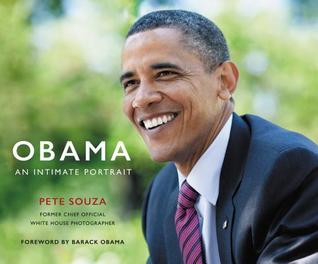
34848819

Rating: 5 Stars

This book is both wonderful and deeply saddening, but I am glad that I ended the year with this one. I loved looking at so many photos of a president who, not without flaws of his own, always tried to do the best for everyone - not only those who supported him. President Obama and his family are a perfect picture of the American Dream, what you can accomplish if you work hard enough and go after what you want. Through the highs and lows of his presidency, Obama was working for everyone.

I was happy to see some of my favorite photos included, and some that I had never seen before. Souza is a fantastic photographer, and we are very lucky to have such thorough documentation of a historic presidency.

Highlights:
  • Moments Before the Inauguration (page 13)
  • Hair Like Mine (pages 38-39).
  • Playing in the snow with Malia and Sasha during the snow storms that shut down Washington (pages 78-79)
  • Working to get the Affordable Care Act passed (pages 82-83)
  • Meeting an Army Ranger - Again (pages 86-87)
  • Coaching one of Sasha's basketball games (pages 118-119)
  • The Osama Bin Laden Raid (pages 130-135)
  • The Worst Day of His Presidency - the mass shooting at Sandy Hook Elementary School (pages 200-203)
  • President and First Lady crossing the Edmund Pettus Bridge on March 7th, 2015 on the 50th anniversary of Bloody Sunday in Selma (page 254)
  • The White House lit up in colors of the rainbow to celebrate the Supreme Court's decision on same-sex marriage. It took longer than I would have liked for him to come around to fully supporting it, but we got it! (page 269)
  • Dream Big Dreams (page 298-299)

The Final Days section was the hardest to get through, because it was the end of something great and beautiful and hopeful. Even then, Souza captured so many compelling images that made me sad and hopeful at the same time. Photos in this section included President Obama awarding the Presidential Medal of Freedom to his BFF Joe Biden (page 338), President Obama leaving the Oval Office for the last time as president on the morning of January 20th, 2017, then the final image of President Obama on Executive One, flying away from the White House after the inauguration (pages 346-347).

This is an absolutely stunning piece of work by Pete Souza and a beautiful testament to a president who did what he could, with what he was given to work with - all while maintaining the dignity both of himself and the office, compassion, and his composure. Highly recommended.

Thursday, December 20, 2018

A Higher Loyalty: Truth, Lies, and Leadership

35108805

Rating: 4 Stars.

FYI, this is not really a review, it is a short rant because I am just TIRED of it all. I have the luxury of choice when it comes to whether I pay attention to politics or not because my race and socio-economic status allow me said luxury. Yet I know that I MUST pay attention and #Resist, and do all I can for those who do not have a voice. I am especially fired up today because of everything that has gone down so far.

When I heard Comey on NPR talking about his book, and he had the audacity to say, when asked about whether or not his memo impacted the outcome of the election, "I hope not"...BOY, BYE! Regardless of his own perception, he HAD to know how the memo releases would be perceived by the public at large. Come on bruh, you KNOW they did, no matter what the FBI's intentions were. Even so, I must begrudgingly say that Comey did the best he could with what he had to work with. I couldn't stand either candidate, but at least I knew that Clinton would not complete tear our country to shreds. She didn't "deserve" to be the nominee, it wasn't "her turn" after "letting" Obama go first. Comey certainly gives his well-thought-out argument for why he did what he did, and when, but it does not make it any easier to handle. I am to the point that I can not even see that douchebag's face anymore without wanting to vomit. His voice grates on my ears. And today, as he is once again propelling us toward a scary future with Mattis resigning, no plan to stop a government shutdown (because of a stupid fucking wall that isn't even going to work), and him insisting that pulling out of Syria is a great idea (great of course, for Russia. And ISIS), we once again see why that 25th Amendment is a pretty good idea.

But I digress. That was a tangent that has nothing reeeeeally to do with the book, except that I abhor trumplethinskin and look forward to the day when his ugly face is out of the White House for good and we can get this ship righted.

There are some interesting stories I had not yet heard before, and Comey is actually a good writer, even if it is a little - I don't want to say pompous, because that is not quite right, almost like he is trying to be too humble and it comes off as not humble at all, does that even make sense? - sometimes.

A few quotes I thought were #OnPoint:

"I did not know Priebus well. He often seemed both confused and irritated, and it was not hard to imagine why. Running the (trumplethinskin) White House would be a difficult job for even an experienced manager, which Priebus wasn't" (page 246).

"(trumplethinskin)'s presidency threatens much of what is good in this nation. We all bear responsibility for the deeply flawed choices" (not me, I caucused for Bernie) "put before voters during the 2016 election, and our country is paying a high price: this president is unethical, and untethered to truth and institutional values...His leadership is transactional, ego driven, and about personal loyalty. We are fortunate some ethical leaders have chosen to serve and to stay at senior levels of government, but they cannot prevent all of the damage from the forest fire that is the (trumplethinskin) presidency. Their task is to try to contain it" (page 275).

Except, there is no containing it now. We are literally going headfirst into a complete clusterfuck and no one seems to know how to stop it - and the GOP doesn't care to, so...

Friday, December 14, 2018

Obama: An Oral History

38889377

Warning: Some of this review is also venting about certain fucking idiots within our current government. I might drop a few f-bombs. #SorryI'mNotSorry.


Rating: 5 Stars

*Sigh*

I really miss having an adult in the White House.

Right up front, I am not debating politics with anyone over this review. I really like President Obama, though I did not agree with him on everything. Personally, I feel like he took way too long to come around on issues related to the LGBTQIA+ community. That aside, if you are trumplethinskin supporter who has stumbled here by mistake, kindly see yourself right on over to the next blog and be gone.

I love books likes this, especially when they are about a person or event that is important to me. I feel like these oral histories really get this raw reaction to events that one does not necessarily feel as strongly when written in narrative form. But having knowledge of several people interviewed, their voices, mannerisms, and habits, it was easy to picture myself sitting down for a conversation with them as they talked of Obama's campaigns and terms, and finally of him leaving in January of 2016. One of my most favorite photos, and also the photo that makes me the most sad, is mentioned toward the end, as the helicopter circles around and the photographer catches Obama looking down at the White House one last time before leaving the residence for good. Ugh. Just about brings me to tears every time.

I want to talk about trumplethinskin as little as possible in this review, because he doesn't deserve the attention. However, there is some necessary discussion, particularly pertaining to certain policies, as well as comparing and contrasting certain things related to each person's time in office, and naturally covering those final months when Obama was faced with the realization that everything he did and the legacy he left was going to be trampled by a giant man-baby who might truly believe that Sarah Palin can see Russia from her house. I mean, really. He is THAT stupid. More than trumplethinskin though, this will be a scathing look at what a fucking douchbag Yertle the Turtle McConnell is, and why he deserves all the mockery we can give him. Seriously, fuck that guy. Unsure why I have so much vitriol for McConnell? Because he is an absolute garbage human who went out of his way multiple times to say that his number one goal was blocking or halting anything Obama wanted to do while in office. Well gee, that's just great. Way to completely not care about your country or the people who elected you, you fucktard. Take a long walk, eh? But, we will get back to him in a bit. There will also be talk of Bernie's campaign, and some of the jerkwads supporting Clinton, who apparently think that she deserved the nomination 'just because', and dismiss the fact that Sanders mobilized so many young people to get involved and make their voices heard, even if in the end he was ultimately unsuccessful in becoming the nominee. It's not like the DNC was biased in favor of Clinton. Oh, wait...

Here is something I found extremely interesting, considering all the trumplethinskin supporters who raved about him legitimizing a dictator's regime on the national stage:

"One was this YouTube-sponsored debate in South Carolina in which he got a question about whether he would sit down with hostile leaders - Castro, Ahmadinejad, and so on - and he said he would, to advance America's agenda. His opponents jumped on him for being naive, for coddling dictators, and so on..." (6%, I accidentally cut off who the quote was from, ugh!) Isn't that INTERESTING, HMMMM? So the GOP wants to have a fit about Obama considering meeting with hostile leaders, but it's okay for trumplethinskin to actually go out and do it? Riiiiiight.

A few facts that made me both proud and sad at the same time:

"November 4 was a night the world had long awaited, to witness the US break a racial barrier and rid itself of the the stench from the Bush era" (10%). And now I would gladly take a third term of Bush if it meant getting you-know-who out of the White House. (Though we must remember that even though we are remembering W a little more fondly than we should, we have to keep in mind constantly that he supported Kavanaugh for the Supreme Court so...gross.) I was so proud to be an American, to see a black man voted in, earning the job and overcoming so much. The sad fact is, President Obama's election brought out the ugly side of our country too, a side I think too many of us thought was long gone. The disgusting rhetoric and horrifying threats he and his family endured for eight years - and still endure, it is all absolutely abhorrent. We have not advanced as a society nearly as far as we thought in terms of race relations, and outright racist assholes popping up and hanging effigies of Obama from trees. But, now we know these people still exist; the cockroaches can't scurry back into the dark, we see them and know who they are.

Fun/Sad Fact: "Approximately 130 million Americans showed up to the polls - more than any other presidential election in the nation's history" (10%). I love that so many more people were motivated to vote, especially in the wake of destruction that W left behind. But it pains me that still, so many people do not vote. And little by little, and in big leaps, the GOP is gerrymandering away, making voting harder and harder in communities already disenfranchised. This is unacceptable and we must fight this.

Now, back to Mitch McConnell and why he is a giant douchenozzle.

John Tanner: Mitch McConnell said his umber-one priority in the United States wasn't trying to do something about the wars in Iraq and Afghanistan. He said "the single most important thing (we want to achieve)" was to "deny Obama a second term. I'd never seen that (36%).

Barbara Boxer: Mitch McConnell basically said, "My mission is to defeat the president." The only thing I would say, I was able to get a lot done at times, but because it mattered to their states, whether it was a highway bill, a water bill, after-school care - it had nothing to do with the president. It had to do with self-interests and self-preservation...I did have colleagues to work with on specific issues, but they never disassociated themselves with what Mitch said, which was disappointing (36%).

There were numerous times throughout Obama's presidency that I was proud to have voted for him (twice). But perhaps one of the proudest moments I personally had as a citizen was seeing his response to the devastating mass shooting at Sandy Hook Elementary School on December 14th, 2012. On that day 26 people were murdered, the majority of whom were just babies still - 1st graders who must have been absolutely terrified in those last moments, not understanding what was going on. President Obama acted like a president that day, but more importantly he acted like a father in the days to come. He met with each family privately, he wept with them, and it was easy to see the genuine impact this horrific event had on him.

Pete Souza: He was riding high. He'd just won reelection, and a month later, about a week away from his annual Christmas vacation, was the worst day of his presidency...I think John had come up to the Oval like three different times, updating the president. I'm pretty sure this particular photo was when John confirmed to the president that twenty of the people killed were six or seven years old, first graders. Shit, I'm going to start crying as I think about this, because, you know, he's obviously being told this as a president, but I think he was reacting as a parent. He's putting himself in the shoes of every one of those parents. You send your kids off to school in the morning, and you never see them again because some madman just shot them to death (54%).

Cody Keenan: The president said that was his worst day in the White House. That was true for everybody...I got to work on the statement, and Favs and I took it up to the Oval Office to show the president, and he said, "This is right," except he took out one paragraph. I remember exactly what was in it. He just crossed out one paragraph and said, "I won't be able to get through this. It's too raw" (54%).

Danielle Crutchfield: I'd never seen the president look like that (54%).

I remember watching President Obama when he gave his statement. It was absolutely heartbreaking. I had found out just a month before that I was pregnant with Eleanor, and I usually had CNN on during my plan time while I worked. I didn't get a single thing done in that fifty minutes, I could not take my eyes off the television screen. Same goes for my lunch break that day. It was awful. I just kept thinking about all of those parents waiting to meet their children at that fire house, and finally it is down to just a few dozen people, and how do you handle that? How do you handle that your baby isn't coming home? I was a wreck, thinking about my own baby and how I could keep her safe, because this was the new "normal". I will never forgive the members of Congress who continue even now, how many mass shootings later, to accept blood money from the NRA. They riled up their members, talking about how Obama was "coming for their guns!" Really? Did he? Did President Obama himself kick down your door and seize all your weapons? Oh, that's right, he didn't. Fucking morons.

The day we as a society accepted the deaths of 20 first graders, is the day we lost our soul and our humanity. I have been disgusted ever since.

Cody Keenan: ...him thinking about his own girls in their classrooms, what it would be like if he got that all, what it would take to stop him from running in that school as fast as he could, how he wouldn't be able to breathe until he knew his own children were safe. He took all hat out and changed it to, "I know there is not a parent in America who doesn't feel the same overwhelming grief that I do"...Everybody kept saying how remarkable it was that members of Congress would tear up, and I remember people mocking the president for crying that day. Gimme a break (54%).

Pete Souza: He started crying from the podium. He, like me, would always get emotional thinking about that (54%).

Danielle Crutchfield: He's actually phenomenal in those instances, because before anything, he's a parent. He spent hours with the families (54%).

If you are from outside the US, and can not fathom for one moment how shit like this continues to happen, it is all about the money from the NRA (National Rifle Association).

Bill Dauster: It was a continuing frustration to us. Republicans were the problem. In contrast to the days of the assault-weapons ban a decade before, Republican senators came to view, it seemed, the NRA as part of the wing of the Republican Party, an important enough ally that they'd obtained greater cohesion with them than what was sensible for them (55%).

Carolyn Maloney: After Sandy Hook, when we had twenty children murdered, I really though that we would pas gun-safety laws. it's sort of like, how outrageous could it get before you did something? (55%).

And that is the million dollar question. So many mass shootings have happened since Sandy Hook, and nothing has changed. And no one should be surprised that this then comes back around to Mitch McConnell and his vow to completely block anything President Obama tried to do. McConnell and the Republican Party are two of the many reasons these shootings continue to happen. Don't even get me started on comprehensive mental health care.

Arne Duncan: In terms of actually getting any basic legislation done to keep kids and parents safe? W got an F. we absolutely failed. There is no other way to put it. The fact that we, as a nation, allowed the sheer quantity of deaths each year, it's a choice we made (55%).

Bill Dauster: The McConnell years were a study in ratcheting up dysfunction and obstruction from Republicans...It was remarkable to us that Senator McConnell was able to push his caucus to be even more obstructionist (55%). Exactly. THIS, right here. I've said it before and I will say it again: Fuck McConnell.

There are several more examples throughout that show just how difficult his terms in office were, due to McConnell and his posse of idiots. People then wanted to freak out over the number of Executive Orders issued by Obama, but what choice did he have? He was stuck with McConnell leading the way to literally block everything he attempted to do. I take comfort in the fact that despite this, I believe that Barack Obama will be remembered as one of our greatest presidents.

As the book starts winding down, we are brought by various conversations to the campaign season for the 2016 election. I am a loud and proud Bernie supporter, who wanted Sanders to get the nomination SO BADLY. We had a candidate there who actual meant what he said, who was not part of the establishment, who would follow through on what he said. I feel like Obama did a really great job staying out of the primary season, and he did not favor one candidate over the other, though he would later endorse Clinton. What struck me in this section of the book, was just how whiny Clinton and her camp were, and how they could never accept responsibility for their actions, which lead to the election of trumplethinskin. There were quite a few statements from Joel Benenson about how Sanders did this-and-this and said this-and-that, blaming Sanders for Clinton's loss. Well, here's a thought: maybe blame Clinton fr Clinton's loss. Novel idea, right? Time and again her people were told how unlikable she was perceived to be, how she was part of the same system that so many saw as broken. Clinton had to earn the presidency, it was not going to just be handed to her. In the end it wasn't, and good Lord our country is a hot fucking mess right now, but she and her team need to share the responsibility for the fact that the DNC was behind Clinton all along and the deck was rigged in favor of her. Had there been any semblance of an unbiased DNC, a Clinton vote would have been much easier to cast for those who decided to stay home on election day. Blame Clinton, not Sanders' supporters because the truth we all know is this: No one who truly supported Bernie and believed in his message could ever have fathomed turning and voting for trumplethinskin just because they were both 'outside candidates'. It simply could not happen. When I cast my vote for Clinton, it was not to elect her as president but to stop trump from getting the nod. I so wish Obama would have thrown his weight behind Bernie, but not-so-deep-down, I knew it was not going to happen. I will say that I 100% unequivocally believe that had the head-to-head been Sanders vs trumplethinskin, we would have a President Sanders right now, no question. There were some really interesting thoughts thrown around in this section, far too many for me to quote here, as I have already quoted so much. But I do appreciate these conversations being included, and those of the days following the election as well.

Kori Schulman: It was like a funeral. My eyes were full of tears (73%).

Rob O'Donnell: Everyone just wanted to get through their mornings before having any real conversations with anyone. Then, sometimes later, they held a meeting with the entire comms team in Josh Earnest's office. Josh and Psaki led it off, and then they opened the floor for people to talk...At first, fifteen people streamed in. He was like, "How many more people are there?" And if you look at the Pete Souza photo, it's a lot. Half of them are crying. And then he made a joke: "Well, I would have let you guys continue your communications meeting, but that didn't look like it was going particularly well" (73%).

Thanks to all of these people being so willing to share their time and memories, we have a beautifully comprehensive account of President Obama's time in office. It pains me that his legacy is being systematically dismantled right now. I can only hope that in 2020, we will once again be able to look to our president as someone worthy of respect, who is working for ALL, not just the ones who look like him, that gave him the most money. Highly recommended.

Saturday, October 20, 2018

NetGalley ARC: George Washington's Washington


36739995

I received a free digital ARC from the publisher via NetGalley in exchange for an honest review.

Rating: 3.5 Stars

I was super excited to be approved for this one, because it had been on my NetGalley Wish List for ages, and I have never gotten a 'Wish Granted' before. Unfortunately, I did not enjoy it nearly as much as I was expecting/hoping to. I don't know what my deal has been lately with the Revolutionary War and its aftermath, but I have struggled with a lot of books on this and related subjects for a few months. It has always been a period that has interested me, but maybe I have just read too many in too short amount of time. Back to Medieval England I go.

I don't want to say that the book was boring, because that is not the right word. There are PLENTY of shenanigans to keep one's head spinning, but perhaps that is exactly what I was frustrated about. Frustrating is a far better word, and much more accurate. I was not frustrated by the author and his writing, but the content itself and all these guys who could not get their acts together. There was this grand plan for a beautiful and functional capital city to properly represent our fledgling country...and all the garbage one would expect when it came to implementing such a grand vision as the one that Washington had for the city that would be named for him. There were several stumbling blocks, the main one being the new government itself, which will come as no surprise to any American who is constantly asking themselves wtf is going on in our country today. During Washington's administration, then followed up by Adams', they had little money to work with to even get the plans implemented, nor did it seem that anyone was actually sure of just how much authority the administrations had to do literally anything. It was almost comical at times, until one remembers that this actually happened and is not just some made up stories about a bunch of guys who fought for the freedom from the tyrannical rule of George III, only to find they did not know what to do with the freedom when they actually had it. Harnessing the energy of the revolution was a tricky thing to do, especially when the competing parties that Washington warned everyone about started, well, competing. Jefferson and his posse managed to withhold funds that would have gone toward supporting any project that was not related to the government itself. It would take another decade to pass before the politicians really began working together in order to make our capital one that our young nation deserved.

Recommended for those who enjoy US history and politics, and biographies of cities.

Sunday, September 23, 2018

We Were Eight Years in Power: An American Tragedy

35265200

I received a free digital ARC from the publisher via NetGalley in exchange for an honest review.

Rating: 4 Stars

I cannot think of a for fitting subtitle than the one for this book. An American Tragedy, indeed, well-deserving all caps, even. This collection of Coates' articles written during President Obama's years in office are a sobering and heart-wrenching look back at a groundbreaking presidency, only to be followed by such a ginormous shit-show that it is hard to believe we are talking about the same America. Sadly, we are.

Prior to this read, I was familiar with Coates' work and had enjoyed several of his articles for The Atlantic, though some of these were still new to me. And truthfully, I am having a very difficult time putting into words all the emotions I felt while reading this one. As a result, this might actually be one of the worst reviews I have ever written because no matter how I try, the words I write don't properly convey how important this book is. I might as well just stand on an actual soapbox on a street corner, banging a drum and shouting at passers-by that they MUST read this book. What I CAN say is that if you are looking for the voice of this generation in regards to writing, speaking, thinking about race, you can stop now; Coates is that voice, that writer, that thinker. Not only are the articles fantastic, but it is the in-between stuff that really pops. Coates prefaces each article with further writing, discussing his frame of mind at the time, what was going on when he penned that particular articles, and his reflections on it now that President Obama's time in office is receding further and further in the rear-view mirror. It is interesting to read of how his writing and thinking evolved over the course of Obama's two terms, and how that impacted him as a whole. You can certainly locate each individual article online, but please trust me when I say your time and money spent on the book would be well worth it. In fact, I wish this would become required reading in high school and beyond - especially two of the most powerful essays in a strong collection of work: "My President Was Black" and "The Case for Reparations". The latter is especially eye-opening, even for those who think they already have a solid grasp on how deeply racism is embedded into every day life in America, even in 2018. ESPECIALLY in 2018

In the final essay, the epilogue really to eight years of President Obama, comes Coates' final thoughts entitled, "The First White President". The title alone really makes one stop and think, with Coates providing his thoughts on why the statement is so infuriatingly accurate, and I thoroughly agree with his argument - that trumplethinskin's "entire political existence hinges on" a black president coming before him. he truly won for no other reason than being a white male, it really is that simple. This grossly unqualified candidate lead the way on the birtherism 'movement', and has demanded multiple times to see President Obama's transcripts, because OF COURSE a black man could not really be intelligent enough to attend an Ivy League school (sometimes when I type, I roll my eyes so hard I am worried they will roll right out of my head). If this line of thinking from trump makes you uncomfortable, good. It should. His thoughts, words, and actions are so normalized at this point, I fear we may never recover. 2020 can not come fast enough, and we must do all we can in the Midterm elections to right this ship before we reach the point of no return.

In addition to the aforementioned articles, Coates touches on a number of other topics as well in his selection of work from each year of the Obama presidency. One of my other favorites was a piece on Michelle Obama, her upbringing, and message sent in conjunction with that of her husband's. Also addressed at length is the epidemic of mass incarcerations and the impact that has on Black families - another fantastic piece that is timely and horrifying.

Basically what I am trying to say here is that the collection is superb. Even those articles from the earliest years of the Obama Administration are just as important now as they were then. We are also lucky enough to be able to go back to those articles now, with the knowledge we have gained in the time since they were first written. This brings another dimension to Coates' writing that we should be thankful for. In these articles, as well as the prefaces he has included for each of them, Coates writes in such a persuasive way, yet still allows himself to be completely open and vulnerable. He does not have all the answers, nor does he claim to. But to understand one another and work toward building a better, more inclusive future, his words provide a wonderful starting point - if everyone is will to take those steps and begin that journey.

I highly recommend this book to pretty much any and everyone. The unfortunate part is that those who might need it the most in all likelihood will never pick it up. Therein lies the problem. But the rest of us can and must pick up the slack and keep moving forward.

Saturday, July 14, 2018

Six Months at the White House with Abraham Lincoln

7946737

I received a digital ARC free from Endeavour Press via NetGalley in exchange for a honest review.

Rating: 4 Stars

This is the account of artist Francis Bicknell Carpenter's time in the White House, as he painted 'The First Reading of the Emancipation Proclamation'. It is a reprint of the original 1866 account and a valuable asset to any Lincoln Library. Carpenter includes some truly great details about life in Lincoln's White House. He makes several keen observations of Lincoln during his time in painting the famous work of art, and also included some contemporary documents to add to the time and place. He also included conversations and thoughts of others who he spoke to during that period. Through it all, Lincoln's character comes through vividly, both highly intelligent and incredibly humble.

I feel this is certainly an important book, as it gives such a clear picture of who Lincoln was. He is so idolized, almost to the point that his true self doesn't even exist anymore, nor do any accounts of him., because he is this larger than life character. The writing itself slowed me down at times because lets be honest, prose from 1866 is a bit different from prose of 2018. Still, a worthy read.

Monday, May 28, 2018

First Ladies of the Republic: Martha Washington, Abigail Adams, Dolley Madison, and the Creation of an Iconic American Role

38621317

I received a free ARC from the publisher via NetGalley in exchange for an honest review

Rating: 2.5 Stars

The book is best summed up in this way: Martha didn't want to be First Lady, Abigail was mad at everyone who didn't like her husband, and Dolley liked to party.

I wanted to like this one. I was stoked when I saw it on NetGalley, because I am just as interested in the First Ladies as I am in reading a biography of every president. Unfortunately this one fell short for me and was disappointing. The main issue I have is that it became so repetitive once we moved into the sections about Abigail and Dolley. This was especially problematic because Abigail was given the most coverage. Each woman was not showcased on her own, and their stories did entwine throughout but there is a point when enough is enough. I felt like we are constantly being told about Dolley being social. We get it, she was social. SHE WAS SOCIAL.

Now, I did only read an ARC and not the final copy. I know the book has been published now, but perhaps in a future edition the repetitiveness can be curbed so we can have a clear picture of the women in their time. On a positive note, the use of primary sources was fantastic and helped to really flesh out the women to help us understand how they fit into their roles and supported their husband and his politics. 

Sunday, May 27, 2018

Lincoln's Last Trial: The Murder Case That Propelled Him to the Presidency

36743867

I received a a free ARC from the publisher via NetGalley in exchange for an honest review.

Rating: 5 Stars

I went into this one not quite sure what to expect. I mean, Dan Abrams is kind of dramatic. At least, he is on Live PD. I have seen a couple episodes randomly and it is not boring, that's for sure.

Despite my own personal goal of reading books about all the presidents besides Lincoln/Washington/Kennedy, I could not pass this one up. I have read so many books about Lincoln (hence the goal that I set for myself last year), but as our 16th president. I've read very little about his life before DC, before the Civil War, before he became the Great Emancipator. This book seemed perfect to remedy that, and though the title is a little misleading (this was not his last trial, though it was certainly the last of his major trials. And while it may not have 'propelled' him to the presidency, it surely could have hurt his chances had he lost the case). In in the end though, it was exactly what I wanted. In fact, in looking back over my notes on Goodreads, I discovered that I did not actually take any notes. This is both good and bad. It bodes well for the book usually, meaning that I was so into the book that I could not bother to stop to take notes. On the other hand, it becomes tricky when time comes to write the review, and I have ti flip back and forth through the book itself for exact quotes and anecdotes. Ah well, such is the life of a book dragon.

To say that Lincoln has had the most books dedicated to his life is not any stretch, by far. I saw some stats recently on this very subject and wish I could find the article again to share here. Something like over 100,000 books about him. Washington was in second place with around 80k and Kennedy around 60k. Again, see the need for my presidential reading goal? Yep, I am part of the problem. EDIT: After doing A LOT more searching into this, I discovered that these numbers are hugely inflated, as they were counting EVERYTHING written about him, not just actual books. The more accurate estimates are as follows - Lincoln = 16,000, Washington = 900, and Kennedy = 40,000. As you can see, other information I have located appears to say that far more books have been written about Kennedy than Lincoln.

Anyway. Given the fact that there are SO MANY books about Lincoln, it is hard to find a fresh angle to approach his life story. And do we really need a fresh angle? Haven't we possibly said all there is to say? Well, in general I suppose that answer is a resounding yes. Unless long-lost diaries and documents are discovered, I think it is safe to say that Lincoln's life has been well-covered.

Specific incidents in his life though, that is another story entirely. It is THIS story, in fact. A high-profile case that became his final murder trial before moving on to run for the highest office in the land. Instead of the story coming to us from Lincoln's perspective, we are given the facts from Robert Hitt, a stenographer whom Lincoln had met while debating Douglas, and who was on-hand to record the trial. Hitt had been hired by the Illinois State Journal to transcribe the case for the paper's readers and thank goodness for that, because what a wealth of information they provide. This was not a common practice in the 1850s, unlike today where this is not even given  second thought, because OF COURSE there will be court transcripts. Several pieces of the transcripts were used and I found it utterly fascinating - and to think, these documents had been lost until their discovery in 1989. We are "seeing Lincoln in action" so to speak, in a way so different from his words we have from his presidency. It is like another door has opened into his life and we are getting a new glimpse of him. An unfortunate side note to consider though - throughout the book Lincoln's ability to deliver a closing argument is referred to more than once. Yet you will not find those words transcribed, which was a disappointment. Closing arguments were not considered part of the trial testimony and thus, they are lost to us.

The book is fairly straight-forward, following the events from the feud between the victim and the defendant up to the end of the trial and Lincoln's victory. The lives of so many of the principal players were intricately entwined, as one would expect in a small town. The young man who died, Greek Crafton, had worked as a clerk in Lincoln's law office. Crafton's grandfather, Dixon Cartwright, makes several appearances - he and Lincoln were certainly not on the most friendly of terms, often butting heads in the political arena, though Cartwright was a preacher. The defendant was a young man named Quinn "Peachy" Harrison, who claimed to have stabbed Crafton in self defense. Lincoln knew Harrison well also, and was good friends with Harrison's father. I could not help but notice a parallel in this case to what Lincoln would deal with as our 16th president. Perhaps I am reading too much into it, or perhaps this is what Abrams intended, but hear me out. Springfield was a small town - around 10,000 at the time. Many people knew these young men and their families well. Lincoln had an unenviable role, his ultimate task was to try to bring closure to a painful episode for the community. Isn't that ultimately what he had to do during the Civil War? He had difficult decisions to make as our country tore itself apart, turning family members and friends against one another. The feud between the two men had been simmering for a while and ended in death for one of them. The raging debates over slavery had also been waged, simmering and eventually boiling over. I don't know, maybe I am looking too deeply, but that is the connection I made.

Despite my personal five star rating, the book is not without some flaws. There were certain aspects of the writing, such as conversations, thoughts, and feelings projected onto the men involved that we simply can't know for sure if they are accurate. There is a bit of conjecture, things Lincoln might have said based on what is known of his previous trials that would have been applicable here, and I am never a fan of that practice. However, so much of the book is based on Hitt's records, that it is a little bit easier to handle this conjecture than in other books that might be lacking contemporary sources and direct quotes. It is sometimes easy to get caught up in the narrative and forget, so just keep that in mind.

Overall, I enjoyed this book quite a bit. To see Lincoln the Lawyer instead of Lincoln the President was something I really liked. Lincoln clearly excelled in his profession and I wonder what his life, and our nation, would have been like had he remained a successful attorney and not sought the presidency. It is an interesting thought to ponder. A readable and engaging look into his life, highly recommended.

Saturday, January 6, 2018

Father Lincoln: The Untold Story of Abraham Lincoln and His Boys - Robert, Eddy, Willie, and Tad

30350105

I received this as an ARC via NetGalley in exchange for an honest review.

Rating: 4 Stars

One of the reasons I set this president goal for myself last year was because I have read extensively about Washington, Lincoln, and Kennedy, but few others. I thought I knew as much as there was to know about Lincoln. After all, he is arguably the most written-about president in US history. I was very happy then to see this book on NetGalley and requested it immediately (over a year ago of course, because in 2017 I got sidetracked by other projects and so many galleys lingered in limbo on my Kindle). I only knew vaguely of the supposed overindulgence that Lincoln engaged in with his young sons, but not much else. This book gives a completely new layer to the man known as the Great Emancipator. We see him in his most important role, that of a father to four boys. I feel like this book helps us to truly complete the picture of Lincoln as a whole man. He was 100% dedicated to providing for his family, which caused him to be away from Mary, Robert, and Eddy so often in those early years and he had to find a balance between his law practice and home life. This was a bit easier for him to do once in the White House, as his family was always with him - much to the irritation of some of his cabinet members.

There is a significant amount of research here. In my copy as an ARC, the text itself ended at 66% and the notes ran from 67%-90%. Following that, the primary and secondary sources ran 90%-96%. While I am still a bit skeptical on this idea that the author regularly asserts - that basically fathers in the 19th century were becoming more involved in the raising of their children, that does seem to be the case here for Lincoln in what we can interpret from letters, etc. This does not mean that fathers had nothing to do with raising their children ever until the 21st century, just that it almost came across at times as though the author was trying to assert that fathers wanted to also be in the caregiver role and I do not think that was the case. It is not a major flaw, as it is clear that Lincoln enjoyed spending time with his children, but I think it is a blanket statement that does not apply to all fathers of the period.

Before we are introduced the the relationships that Lincoln had with his own sons, we see the foundation of it being built in Lincoln's relationship with his own father. In previous books this has been a highly contentious relationship and Thomas has often been viewed as abusive and distant and overbearing. While those things may well be true, here Manning at least presents Thomas Lincoln in the context of his time period. Men in his generation did not think of saving for the future, they worked the land to survive. Thomas and Abraham could not have been more different and I do think that could be why later Lincoln was so indulgent with his own sons. They got away with everything because Lincoln had gotten away with nothing. Thomas physically disciplined young Abe, Lincoln could not have been more opposite. The entire tenure of the family's stay in DC is punctuated by the pranks and disruptions of the younger boys, Willie and Tad. And it seemed the boys knew their father would not discipline them, given memories recorded by observers to such activities. Nothing they did seemed to bother Lincoln, from their tendencies to ring all the bells in the White House to panic the clerks and messengers, to eating all the strawberries being grown for a state dinner. He did not ignore everything though, and even when he went about sorting out problems between the boys, he did so in a loving way. In one instance when the boys traded each other - a new knife for a few pieces of candy - and it was not fair, Lincoln put the questions to the boys whether it was fair and they fixed it themselves.

The majority of the book seemed to focus on Lincoln's relationship between the two younger boys, Willie and Tad. When Robert and Eddy were young, Lincoln was away in other towns, trying cases for those places that had no lawyers. He did so in order to build up his practice, and put in motion the wheels that would eventually carry him to the White House. As a result, Lincoln was not as close to Robert. The author spent a lot of time trying to explain this away as though Robert was trying to keep his family life private after his father's assassination. It very well could be a mix of the two, and to me this is not something that necessarily needs to be explained away. It makes sense that they would not be as close, given Lincoln's absences during Robert's formative years. However, there are references to correspondences throughout Robert's life, from his youth to his time at college. Perhaps the gap was not as wide as previous historians have assumed. Unfortunately Eddy passed away at a young age, before the other two were born. In the wake of Eddy's death we see Lincoln openly mourning his son and grieving the loss. Perhaps it was this loss that made Lincoln realize that he needed to be home more often, and the younger boys certainly benefited from that. We see that grief rear its head again when Willie - Lincoln's favorite son - dies at age 12.

One thing I appreciated greatly about this text was the fact that lived up to its name and focused on the side of Lincoln as a father. It does not become political and only discusses those major events in Lincoln's career from the viewpoint of him as a father and how/if anything impacted the boys. We are not given yet another history of the famed Lincoln-Douglas debates, his presidential campaigns, or much involving the Civil War. For the most part, the war is only dealt with in how it impacted Robert, who was of age to become a soldier and wanted desperately to do so - and his parents terrified of him doing so. In that instance we do see Lincoln and Mary as President and First Lady, but a father and mother afraid of losing yet another son too soon. Perhaps somewhat ironically, Robert would be their only son to live to adulthood. Tad died at seventeen, thought this was after his father's assassination. Only Mary would see the loss of yet another son.

All in all, this was a very enlightening book about a side of Lincoln I did not really know. I knew him as the politician and this book does well to present him as a loving father who loved his sons deeply. Highly recommended.

Thursday, January 4, 2018

John Quincy Adams and the Politics of Slavery: Selections from the Diary


33415086

I received this ARC for free via NetGalley from Oxford University Press in exchange for an honest review.

Rating: 4 Stars

I have to confess my complete lack of knowledge about some of the earliest presidents after Washington. I vaguely thought both John Adams and John Quincy Adams were the only two among the first ten or so who never owned slaves and were staunchly against slavery. I could've sworn I read that previously. But as I started this one, I quickly found that was not the case at all and early on his career, JQA was actually a supporter of this cancerous practice that still impacts our country today. In fact, at around 49%, the books states "The Adamses rented slaves during their years in Washington DC...". This is quite a different picture painted of a man who, in the last years of his life, was so well-known for his opposition to slavery. He was even called by one of his political rivals, Henry Wise, "the acutest, the astutest, the archest enemy of southern slavery that ever existed." This is quite a contrast to how JQA even viewed himself, as he often criticized the abolitionists who didn't think he was going far enough to denounce slavery.

The editors did an excellent job with this volume, first introducing the journal, their purpose for choosing the entries they did, as well as their process for doing so. Throughout the text they also gave summaries and their own insights into many of the entries, explaining the larger politics of the time and events going on while JQA wrote what he did. They also provided commentary in comparing what he was writing in his diary versus what he was saying publicly on the issue of slavery. JQA left the most extensive collection of personal writings than any other statesman in the history of the US. These diaries give us one of the most complete pictures of any of these early politicians and the complexity of evolving views on a myriad of issues surrounding the young nation, slavery being at the forefront.

While I read this as a ARC on my Kindle, I definitely think it would best be read in a physical format. Throughout the text the editors reference other entries which are similar and it is just a bit more difficult going back and forth between them. There were also tons and tons and tons of footnotes. One must also be prepared for the mental exercise needed in reading a text like this. It will take some time, as sometimes reading what those who lived 200 years ago can be consuming. To quote one of my fave movies, National Treasure, "People don't really talk that way anymore." And it's true. I must also make note of the huge undertaking it was for the authors/editors to tackle such a project. JQA left behind 51 volumes to peruse, not a project that can be done in a few weeks. And if you care to browse any of the 51 volumes for yourself, you can find them online for here.

JQA is a certainly an early politician worth getting to know better. He was deeply involved in those early decades of our nation - and how could he not have been, given the fact that his father was a Founding Father. JQA was not only a president, but he later served in the House of Representatives for Massachusetts. Time and again, he filled important roles within the government, also serving as a diplomat and Secretary of State. He literally gave his life serving his country, suffering a stroke on the House Floor after voting during a debate. Adams was a contradiction though, because while he opposed slavery later in life, he was also not keen to discuss it all that much either. He never identified with abolitionists though because he thought their demands were too extreme. So many proposals were put forth in how to handle ending slavery and what would become of all the freed men and women. Adams wrestled with this constantly, all the while worried that as the divide between the north and south grew, it would only lead to war and the potential destruction of the fledgling country.

The book is very involved. There were times I did not know if I would finish it, but it is worth the time. Definitely recommended for those who have an interest in the time period, as well as politics.

Monday, August 7, 2017

The Obamas

FYI: I'm not going to debate anyone about my opinions on President Obama. Don't bother with that nonsense around here. If you want to talk about the book, cool. I'm not doing political debates on my book review blog.

12054659

Rating: 1 Star

So I wonder if, in an attempt to appear unbiased, the author realizes just how far she went out of her way to make the Obamas nearly unlikable. I absolute love the Obamas, and if Barack could have run for a third term, I'd have voted for him. Michelle is one of the top five people on my list for best shopping buddies. But if I did not know anything about them, and I had only this book for knowledge, I would think Michelle was angry all the time, super controlling and unwavering in her opinions, never one to compromise with anyone. And Barack - a pompous introvert? Really? The author's little play with his supposed 'I told you so" looks was ridiculous. I have never seen two people more in love, more electric, more everything. 

I guess the author thought she was being so sly with her 'sources' but ultimately this is poor writing at its best, or worst, however you want to look at it. The author tries the, "look at me with all the insider knowledge" garbage, and it comes off as abrasive and condescending. Do not bother with this one.

Friday, March 31, 2017

Rough Riders: Theodore Roosevelt, His Cowboy Regiment, and the Immortal Charge Up San Juan Hill

26156427

Rating: 4 Stars

I do not typically read anything involving military history, tactical planning, etc.; it really is not that interesting to me. But I found this one while wandering the library a month or so ago and thought it would be a great addition for my 2017 President Challenge, where I am attempting to read at least one book about each of our former presidents. Needless to say, once I started writing my own book, this goal kind of got buried.

But FINALLY I have finished this one and it was worth diving into. The day I picked it up from the library, it occurred to me that while I knew who the Rough Riders were, I really had NO IDEA what battle they took part in besides knowing the phrase 'San Juan Hill'. As far as wars go, this one kind of got ignored in history class, what with all the murder and mayhem caused by the Nazis during WWII.

As I recently wrote on the Challenge page, due to time constraints, the books I read for this challenge may not have the typical review I would give, were I not involved in my own work at this time. Basically, I won't be spending nearly the time I usually do on writing reviews.

Despite my aversion to books about military history, I was not bored by this one. So many puzzle pieces fell into place for me as I was reading and finally figuring out what this war was all about and why 'charge up San Juan Hill' was so important. Especially in our time with all the weapons and technology now available, even war seemed so much simpler then, if war can ever be simple. I also greatly appreciated the use of contemporary sources. There are tons of photographs of the men, as well as references to telegrams, letters home, orders, etc. 

Here are a few lines I enjoyed, or struck a chord, or amused me:

The first quote comes from the very first page, from a Medal of Honor ceremony in 1906 during Roosevelt's presidency. He was the first to insist on a ceremony, where the medal was given by the president to the recipient. It is crazy to me to think that the medals were ever sent by mail.

"This is the first time a Medal of Honor ceremony has taken place in the White House, the first time since the nation's highest military honor was created during the Civil War that a president of the United States has personally presented. In all previous years, Medals of Honor simply came in the mail" (page 1).

Not-So-Fun Fact: Roosevelt felt he deserved this very medal for his part in the battle. While he would not receive it in his own lifetime, it would be posthumously awarded to him by President Clinton in 2001 and received by his great-grandson, Tweed Roosevelt.

On Roosevelt's character:

"Roosevelt made no effort to hide his inexperience as a cavalry officer. He was often seen in camp holding the thick cavalry drill manual and loudly practicing various commands, completely oblivious to the troopers just steps away. His boyish enthusiasm for any task was contagious, and he talked down to no man - unless he deserved it" (page 39).

After San Juan:

"Some Rough Riders apparently thought the law didn't stand a chance, either, and when they got on the wrong side of it, they seldom failed to call on the influential colonel. An exasperated Edith Roosevelt felt "as if we were the parents of a thousand very large and very bad children" (page 257).

The very last lines of the book:

"But Roosevelt did much more than leave a legacy to his children. He and his men authored one of the iconic moments in American history. The Rough Riders forever charge up San Juan Hill, and Roosevelt forever leads them. In that way, they are immortal. And it is all because Theodore Roosevelt craved something "worth doing" " (page 278).

Definitely recommended.

Sunday, January 15, 2017

The Roaring Twenties

26816813

Rating: 3 Stars

Because of my fascination with this decade and the drastic change in lifestyles after WWI, I jumped on this one when it came up on BookBub. As sometimes happens though, I have a tendency to use that stupid "buy now with 1-click" option without thoroughly examining a book. The book ended up being far shorter than I anticipated - roughly 100-some pages on my Kindle. I wish I had paid more attention, because this one ended up feeling like an overview. The does not make it a bad book necessarily, but it was certainly not an in-depth look at a complicated period in history. The majority of the book seemed to relate to the actions of the presidents and only a small percentage covered the culture and economy that made the decade roar. Kind of disappointing for what my expectations were, but this would be perfect for someone just looking for an overview.

Monday, January 2, 2017

First Women: The Grace and Power of America's Modern First Ladies

25817804

Rating: 3 Stars

I finished this book back in July right before the Democratic National Convention began, and that much is obvious as I look back over my notes and my grumblings about Hillary Clinton at various points. This book and I were off to a rocky start immediately, when the introduction opened with a quote from Clinton, then went into a meeting between Jackie Kennedy and Hillary.

However, as the book went on, I was able to put some of that aside as the author relayed some very interesting stories about this exclusive club. In fact, she used an analogy that I feel is quite spot-on, saying that presidents are part of a lifelong club in the most selective fraternity in the world. As a result, First Ladies are members of the world's most elite sorority (And thus, it makes me want to vomit that Melania will get that membership. Gross.)

I was pleasantly surprised to find that even though I might have had a less than stellar impression of their husbands, many of the First Ladies seem like women I would love to have lunch with. The author looks at all the First Ladies, from Jackie through Michelle and I feel like I know them so much better as a result. Though I was no fan of W for his eight long, horrible years in the White House, I really like Laura Bush. Is that weird? Kind of, I think. I have always like Michelle Obama and would love to go shopping with her, but her quote in regards to being a mother made me admire her even more: "I'm only as good as my most sad child" (page 20).

Jackie's story of her beginnings in the White House would not have been complete without a look at how Mamie Eisenhower introduced her to the place. Before her tour of the White House, Jackie had recently been released from the hospital after giving birth to JFK Jr via c-section. Jackie had requested a wheelchair, but Mamie wanted to give her the tour alone and also did not want to be seen pushing Jackie around the house, so she ordered the wheelchair be available, but out of sight and to let Jackie use it only if she asked about it. Of course Jackie did not ask, when she did not see one readily available, and so she was left in quite a tremendous amount of pain when the tour was over. It is no wonder that our country is in its current state, given the pettiness of some.

Even though this book was about ALL the First Ladies from Jackie on, I myself have a special place in my heart for the Kennedys, though the more I read about JFK/LBJ, the more my opinion on them men is shifting. I really was happy to see that Jackie and Lady Bird Johnson got along so much better than Jack and LBJ. It seems like she really cared about the Kennedy children, and Jackie too. I really feel sorry for Lady Bird, more than anyone else. She seemed to really admire Jackie and was hesitant to do anything that might give the impression that she didn't. I feel bad for her, because I do not think the Kennedys treated the Johnsons very well. That then makes me question how much truth there is to the things that JFK and Bobby said in regards to LBJ, how they did not like him, didn't want him on the ticket for JFK's second term, etc. I feel like as a result of the Kennedy Machine building up JFK's legacy, it was at the expense of LBJ's reputation. He was by no means perfect, and definitely had flaws, but some of the things going on were completely out of his control, and there are many good things that he did which are overlooked today. I'd love to know why Bobby hated hated LBJ so much, but I do not know enough about the politics at the time, and obviously a book about the First Ladies is not going to shed much light on the subject.

One bone I have to pick was the repeated use of John-John to refer to JFK Jr. I thought it was already cleared up that this was NOT his family nickname and a reporter mistakenly thought JFK was calling him that one day. Isn't that what happened? That's the story I remember anyway.

Though I have only touched on a couple of the women discussed in the book, I found this to be interesting and valuable. The book is not told in a linear fashion, as it more so examines the relationships between the First Ladies; it does not simply tell of their accomplishments in chronological order as their husbands governed. I liked that way of telling their stories, though some might be bothered by it. This book would be a good place to start if you know very little about the First Ladies.

Sunday, December 4, 2016

Founding Feuds: The Rivalries, Clashes, and Conflicts That Forged a Nation

27173064

Rating: 4 Stars

I received a digital ARC of this book via NetGalley in exchange for an honest review.

Wow, I am so hopelessly behind on my reviews - I read this in July!

But anyway...

This was a highly entertaining introduction to so many feuds that I didn't know had even existed. Some of these men REALLY hated one another, and in reading about some of their battles with one another, it is somewhat a surprise that our little fledgling nation survived at all.

The text is divided into chapters by feuds, and while I know that those who formed our early government did not always see eye to eye (understatement of the year), I had no idea that there were so many feuds - sometimes multiple going on at once! As I have been trying to read more books about ALL our former presidents, instead of just my favorites, I am also starting to learn more about the very men I had previously held in high esteem. I've mentioned this in previous posts about Washington-related books. It is kind of glossed over in history classes that Washington, Jefferson, etc all owned slaves. This is something that can not be forgotten as we idolize these founders. Washington especially has been hard for me, as he was a slave owner. He owned many throughout his life and fought hard to get them back after the war. That is something that has to be taken into account, though his view did evolve and he freed them at his death. That does not change the fact that he was a slave owner though, and we must remember to look at the big picture instead of completely glorifying them and believing they were perfect (the ridiculous slogan 'Make America Great Again' comes to mind with this. Which 'great' are we going back to? Segregation and Jim Crow? Women not having the right to vote? Slavery?) Please do not think I am only picking on Washington. I lost a lot of respect I might havehad for Jefferson, given his views on Africans and African-Americans as described in this book. His thoughts were truly disgusting and that too can not be overlooked when we look back on this time in history.

I think Hamilton and Jefferson were among my favorites to read about and their feuds bordered sometimes on hilarious. They were like little old ladies picking at one another and "When Hamilton caught Yellow Fever, Jefferson accused him of hypochondria" (3%). Little things like that racked me up throughout the book and yes we can laugh a bit now, because our nation survived the squabbles, and more serious arguments. The chapter on these two occurs at 20% and it did not disappoint. Books like these do wonders to helps us see that a country did not magically come together overnight to declare its independence. I even learned that New York abstained altogether from the vote, and Pennsylvania and Georgia only voted at the last minute when their delegates finally arrived. All these men we consider to be so great were still very human with their own beliefs, biases, and issues with one another.

Similarly, I was looking forward to the chapter on Jefferson and Adams as well, and their myriad of arguments. The difference here of course, is that at one time the two were friends before they began heading in very different directions with their ideas on government. The end of their story is one that always seems so poetic. The two men, who did patch up their friendship in later years, died within hours of one another on July 4th, 1826 - the 50th anniversary of Congress adopting the Declaration of Independence.

Another intriguing feud was that between Thomas Paine and George Washington. Again, Washington has always been held up as this kind of ideal, perfect ruler. It is hard to imagine then anyone disagreeing with him or clashing with him on certain ideas or topics. He had no one running against him in his unanimous election, and yet Paine was no fan. Another good example is that of Jefferson and his thoughts on Washington at times: "Jefferson complained to James Madison that the president 'is fortunate to get off just as the bubble is bursting, leaving others to hold the bag' and that Washington 'will have his usual good fortune of reaping credit from the good acts of others, and leaving them that of his errors. But Jefferson's mutterings to Madison were strictly private. Washington was, as historian Joseph Ellis put it, 'the Foundingest Father of them all', and amid all their feuds, no leading founder dared attack Washington publicly. Except Thomas Paine" (34%).

I was interested in the chapter on Aaron Burr and Alexander Hamilton as well. I am kind of embarrassed to admit that, though I now that Burr shot Hamilton in a duel, I don't actually recall what specifically they were dueling about in the first place. I feel like I probably learned about it at some point in school; it is, after all, kind of a big deal that our Founding Fathers were going about shooting at one another, but the reason escaped me until I read and relearned. I won't spoil it for you if you do not remember either - get this book and find out!

The book is not just limited to the males involved in the founding of our country, however, which I was pleasantly surprised to find. We are shown that some of these men feuded with women who were vocal about their opinions of the direction our country should go, and we see this manifest in the feuds first between Jefferson and Phyllis Wheatley and then John Adams vs. Mercy Otis Warren. I was really happy to see women included, as their role in the fight for independence and subsequent founding of our country is often overlooked.

The text ended at roughly 76%. The rest of the book was devoted to thorough notes, extended reading titles and miscellaneous information about the author, publisher, and this being an ARC. The notes section is extensive and there were many books listed as sources which I intend to add to my to-read list (or them listed already. It is always a nice kind of confirmation in choice of reading material when a book I enjoy cites books I want to read within a bibliography).

I highly recommend this one and leave you with this quote, which I think is especially fitting in this time of great upheaval in our country. We can survive this and we will, because there is no other choice:

"The founders could be petty, their feuds very personal...yet there was more to the founders and their feuds than that. The founders fought with each other, too, because they understood that at stake was the future of the nation, indeed the future of their great Republican experiment...Politicians ought not to follow in the footsteps of Aaron Burr and Alexander Hamilton and start shooting at each other. But Americans ought also not to yearn for a time when everyone agreed about everything. That time never existed." (72%).