Showing posts with label Picture Books. Show all posts

Tuesday, November 3, 2020

BookSirens ARC: Sometimes When I'm Sad


I received a free digital ARC via BookSirens in exchange for an honest review.

Rating ⭐⭐⭐⭐⭐

This book is absolutely stunning, incredibly beautiful, and exactly what our little ones need when they know/feel something is 'wrong', but they don't have the words yet to explain it.

I really hate when people say, "Don't worry, kids are resilient." While this is most often true, they shouldn't HAVE to be. Kids should not have to overcome trauma and bounce back from horrible events and circumstances. But they do, and far too often. So, unfortunately, we need books like this to help them cope.

Mental illness is very real, even among our youngest in our population. This book will do wonders in the right hands, letting children know their feelings are valid, whatever those feelings may be. Kids need strategies to deal with big emotions in a time when adults are needing the same things. If we can't cope, and overcome, we can not grow and move forward.

The book provides wonderful tools for adults as well, in how to help our children, to understand the difference between being sad and depression, and what we can do to make sure our children know we are here for them. Adults are given an overview of signs to look for when it might be something more than sadness. I feel like this is a must-have for any adults who work with children, especially psychologists, school counselors, and teachers. I will definitely be buying a copy for Eleanor, so she always knows that she can rest in whatever emotion she is feeling, feel it all the way through to the end, and then put it away once it has been dealt with properly.

What I really love about the book is exactly just what I envision and hope for for Eleanor. Sadness is a common, complex emotion. Telling kids to just smile and be happy is just about the worst thing one can do. Children internalize that, wonder what is wrong with them because they don't feel happy even when it looks like everyone else is, and those feelings of insecurity grow.

Sadness is completely embraced here, and given its space to just be. We need to learn how to also just sit and be with that sadness, or any other emotion. It is a hard skill to teach children, but is so critical for their emotional and mental health.

In the story, a young boy is dealing with some feelings and he doesn't yet know how to express those feelings in constructive ways. He hides often hides, or throws his toys. Treats and gifts do not help him deal with the emotions he is feeling. He then meets a counselor who gives the child different ways to help manage his sadness/depression and cope with this big, overwhelming feelings. He uses these throughout the remainder of the story. He says at the end that he still cries sometimes, but not for long because now he knows ways to help himself feel better. He is shown creative ways to create outlets for himself, and these are simple things that can be used by everyone, not just children - confiding in someone we know cares deeply for us, knowing they will not judge us or dismiss our feelings, is so so important for children especially.

Monday, September 28, 2020

Book Review | How Mamas Love Their Babies

34381235. sx318


Rating ⭐⭐⭐⭐⭐

This book and what it attempts to do are both beautiful. Throughout the pages with simple text and captivating illustrations, we see the many ways that Mamas love their babies. Mamas love their babies by taking care of them physically, and working to support them. It also makes the message loud and clear: Mamas can have jobs that society looks down on (manual labor) or has hissy fits over (sex industry), and those Mamas love their babies just as much as Mamas in more 'normalized' job fields.

There are a few problematic things and I want to address them first. This book is beautifully diverse, but I question the choice to include the white mother and child with the 'We shall overcome' sign. I have taken Eleanor to a women's #BlackLivesMatter protest, but I would never have her holding a sign such as that. We are allies, there to support and uplift our Black and African-American Sisters, not to make it about us.

My other issue that I felt could have been explored is the idea of motherhood itself. The book starts off with describing how some mothers care for their babies inside their own bodies...and never comes back around to mothers who become mothers in other ways. Or who have children and are physically female, but do not identify as she/her. And honestly, that may have gone way over the heads of the age-range for this one, but everything else was made simple, and this could have been too.

Now, onto all the other reasons this one is still five stars even with my issues listed above.

Mamas do whatever they have to in order to make sure their babies survive and thrive. This book is a celebration of all kinds of jobs that mothers do in order to make that happen. Not only are a variety of jobs depicted, but so are a variety of women. Mothers of all races, ages, and body types are found within these pages and I think that is truly amazing. There are young mamas, obese mamas, and YES, breastfeeding mamas. As a mama who could not breastfeed for long no matter how hard she tried, I love this inclusion and I am pretty much fed up with all y'all who think women need to cover up in public. Boobs are not for you, they are for nourishing babies, so stop staring like a moron. And if you don't like seeing them, don't look. Not too difficult.

All families deserve to feel validated and I have said time and time again that representation matters. Kids need to see themselves reflected back in the books they read. Can you imagine how far this would go in making families feel valued, especially those families where mama works a job or two that is not considered 'normal'? And I am not just talking about the mama who is a sex worker. I am talking about the mamas who work in fields all day, the mamas who clean homes and office buildings, poor mamas just trying to make ends meet, mamas who work just as hard as any other mama to provide for her children. We see mamas who stay home, mamas who are pilots, artists, office workers, and so much more.

I do want to specifically address the sex worker mama depicted here. She is included in the pages where it talks about the kind of uniforms that mamas can wear while working, and how some mamas 'wear special shoes'. Mamas deserve to be celebrated for being mamas, for working hard to provide for their families. I absolutely want this book in my school library, because even if the children do not know what their mama does for a living, imagine how she would feel seeing herself reflected in a book that her child has brought home from school? Sex worker mamas are mamas and if you have a problem with that, well, you are the problem.

The illustrations did take some getting used to for me, mainly because I think the 70s were weird and awkward so that vibe was not my most favorite. However, after reading through it a few times, I liked how it all flowed together. They are real photographs depicting mamas and their children, along with the effect of crayons over some of the photos.

This is a wonderful book and deserves a place in every library - whether public, school, or home. Kids need to see themselves in the stories they read and we need to include all families in those depictions as well.

Highly recommended.

Saturday, August 15, 2020

Book Review | Enough! 20 Protesters Who Changed America

41946103. sx318

Rating ⭐⭐⭐⭐

I am pretty torn on this one and keep going back and forth between four and five stars. I ultimately settled on four because they are some exclusions that I simply can not abide.

First, the positives. Each protester/s are given a full two page color spread with a statement about how they protested. For example, Kaep's page says, "Colin took a knee" and that is what his illustration shows. I think keeping that simple for very young readers is very important. There are a couple pages at the back that g into greater details (more on those later) but I feel like this simple text is great for creating curiosity in the child's mind for why that person did what they did, and how that means they were protesting.

The illustrations are gorgeous and fit well with the text.

Eleanor had tons of great questions about so many of the people and groups featured in this book and we looked up more information about many of them on kid/age-appropriate websites that would explain in a way she would best understand.

I appreciated that the author showed different kinds of protests - sitting down on a bus, going to school, raising a fist, singing, and so. Teaching children active and passive resistance and protesting is so crucial.

I appreciate that the author chose a variety of people and issues that have been at the heart of so many protests since the founding of our country. I do want to note that in some cases, those featured are not all necessarily protesters. There is a deep sense of activism and action across the entire book, but not all would be what we consider traditional protests. I think it is important to make that distinction for kiddos to help them better understand these complex issues. I also like that

With that in mind, while there is great representation of many races, not all are presented and that part is problematic for me. There is no inclusion of Indigenous people. The DAPL protests would have been perfect for this, but were no where to be found. Neither were there depictions of those who protest and rally for the untold numbers of missing Indigenous women. Given that so little attention is paid to these women in the media, this would have been a great platform and that is definitely a missed opportunity.

Aside from the absence of Indigenous protests/activism, Black Lives Matter itself was excluded. Now, with Kaep's protest actions being included, I can see why because the protests are largely the same in their end-goal. However, the protesting itself comes in many different and I think those distinctions are important to show.

Another reason for four stars instead of five is related to the addition material at the end of the book. I thought that would be a great resource, but found some of the information inaccurate or misleading. Parents will definitely want to look elsewhere to get further information about some of those featured in the book.

Even with the issues I have with the text, I still would recommend it as a great starting-off point for kiddos. It is simple for young readers, and older readers like Eleanor (age seven) will likely have plenty of questions to keep the conversations going long after the book is finished.

Sunday, June 21, 2020

Book Review | If You're Going to a March

38243969

Rating ⭐⭐1/2

I had high hopes for this one, but ended up being disappointed. It is a very white perspective on what protests look like. It does not address what marches and protests often look like when People of Color are the ones on the front lines. One only needs to look at the obvious differences between what happened when a bunch of backwater hicks stormed into state capitol buildings around the country with their weapons out, threatening governors and attempting to get into Chambers. No officers in riot gear and gas masks there as these white men got in their faces, yelling and screaming. Only face masks to protect from COVID. Yet, one can imagine how very different those scenes would have played out had it been POC, or Black men in particular, doing the exact same thing. In fact, you don't have to imagine it. You can see it by looking at videos and images of the protests and marches that have been going on since George Floyd was murdered by four men on a street in Minneapolis. Protesting and marching does not look the same for People of Color as it does for white people, and unfortunately this book does not address that.

I do appreciate that the illustrator did show a great amount of diversity within the pages. We see families of all colors, in all shapes and sizes, preparing to attend a march. We see families arriving by all modes of transportation, people of all ages and cultures. This diversity continues page after page as the march moves through the streets.

Another major issue I have with the book is how it addresses both the presence of the police and the media also at the march.

"There will be police officers at the march. Their job is to keep people safe."

This line nearly made me want to throw the book across the room. We can argue day and night about good officers vs bad officers but here is the reality: If you have five bad officers who do bad things, and you have five supposedly good officers who look the other way though they themselves do not DO bad things, then you have ten bad officers. That is a fact. And if you read my account of the protests I have attended in recent weeks, it will be glaringly obvious that I had zero fear of my fellow protesters. But I made damn sure I always knew where the officers in our area were, because rubber bullets were constantly shot and people got hit with strays all the time. I feared the officers, NOT my fellow protesters.

"There will be reporters, too. Their job is to tell the truth. If you want to answer their questions, speak in a loud, clear voice."

This is also not true. One must only look to Faux News to see how their coverage of the protests is so blatantly skewed, they are telling out-right lies. I think this statement is far more true on a local level, usually. For the protest I mentioned that I took Eleanor to, along with a good friend and her children, this statement was 100% true. The reporter and her camera crew asked to interview the girls, and it was beautiful to see Eleanor and her BFF holding hands. They are truly a symbol that hate is something that is taught, not something you are born with, because these girls have loved each other since they first met in dance class four years ago. They've known each other more of their life now than not, and it has never once occurred to either of them that they are any different from one another just based on their skin. So many people around us were in tears listening to the girls talk, and it made me feel such pride.

I would obviously not have taken Eleanor to the first protest I attended a few weeks ago, given that the protest the night before had turned very violent with tons of rubber bullets, water bottles, and tear gas flying. I would not have trusted that I could have kept her safe from the tear gas or flash bangs or rubber bullets, because in truth it was the officers who were so unpredictable. Protests and marches can be chaotic though, without the violence, and the author really pushed the narrative of the peaceful protest. While I agree that is a good message to send to kids, I also think it is unreasonable to expect peace at this point looking at it through the lens of the protests for George Floyd and Rayshard Brooks. People of Color HAVE protested peacefully, and nothing has changed. We are still right back here again, the same place we were when Michael Brown was murdered and left in the street for hours.

I recognize that perhaps my own outlook is also still too narrowly focused at this time to appreciate this book in full. There are many things to protest in addition to the murder of Black men by police officers. But that is where the attention is right now, and when I was searching for picture books to add to my #BlackLivesMatter Reading List, this is one that came up over and over.

I appreciated the 'how-to' parts of the book, preparing kiddos for what they will need to bring with them, how to get to and from the march, and also how to conduct themselves around those who disagree with why they are marching. The book never actually says what the protest march is for, but the kids carry signed that say "Speak Up" in rainbow letters, "Do the Math (and Science", "Peace begins with me" and "Hate Has No Home Here". As the protesters march, at one point we see barricades have been put up on a sidewalk and a couple people with frowning faces watching the march go back. Of this the narrators says, "If you see people who disagree, be polite." I think that is also important, but also not always realistic - again especially when thinking about the current protests and marches happening here and around the world in response to the murders of Floyd and Brooks.

I will still read this one to Eleanor, but I will also address each point that I have mentioned above as things that bothered me while reading. I do not want to scare Eleanor away from her budding activism but I also want to be realistic. We have discussed many times what happened to George Floyd and how we are protesting to stop other Black men from being hurt or killed by officers who are supposed to protect the entire community. We've talked about how we see each person, color and all, for who they are as whole people. (Side note: Let's stop with this colorblind bullshit, okay? When you say you don't see another person's color, you are denying seeing part of who they are. Stop it.) We talk about how all colors of skin are beautiful, all cultures have great things to offer our world, and that we will remain on the right side of history, fighting, marching, protesting for justice that has too long been denied.

Friday, June 19, 2020

Book Review | Stonewall: A Building. An Uprising. A Revolution.

31247034. sx318

Rating: ⭐⭐⭐⭐⭐

I found this book entirely by accident but am glad I did. I was searching for more books about Stonewall to read and use for my June podcast and this one came up so I requested it from the library, not really paying attention to the fact it was actually a children's book. Turns out, it is exactly what I was looking for without even knowing it at the time.

I love the fact that the story of Stonewall is told from the point of view of the building itself. The story begins in Greenwich Village of the 1840s, where men in top hats and horse-drawn wagons grace the pages. The building we know today was once two buildings, built for the affluent citizens of NYC to board their horses. Slowly Greenwich Village changed, and we see wealthier residents move away. The Village becomes a place for immigrants to settle, who had made long and tiring trips, from all over the world. Into the twentieth century the Village continues to evolve as cars take over as the new mode of transportation. Art galleries, theatres, bakeries, restaurants all find a home there and in 1930 those two long-ago stables have become one building that housed a restaurant named Bonnie's Stone Wall.

At this point in the story, long before Stonewall became Stonewall, the theme has not changed. Greenwich Village remains a place the Inn describes as being welcoming to all. By the time the building becomes a restaurant, the Inn tells us, "Celebrities, artisans, tourists, and local residents lunched at our tables, shoulder to shoulder" and "Greenwich Village was a place where you could be yourself, and where being different was welcomes and respected."

The Stonewall brings us into the 50s next, telling the reader of the Jazz musicians, poets, artists. Also, however, the Stonewall makes a point to say, "Leading up to the 60s, our neighborhood welcomed gays and lesbians - men who loved men, and women who loved women. We were a home for people who were told that they didn't fit in or belong."

Finally we arrive in 1967, when the Stonewall Inn opened its doors as a gay bar/dance club and welcomed people from all walks of life. I especially appreciate the illustrations on these two pages, and the diversity shown specifically here, which is definitely lacking on other pages (which I will address further in a moment). It can never be overstated how critical POC, especially trans POC, were to the uprising itself, so to see that diversity if crucial. "Women and men, young and old, teenagers, transgender people, drag queens, veterans, businesspeople, students, people of different colors, religions, and cultures, gathered, chatted, laughed, and danced under our roof."

The book does not shy away from the ugliness directed at those who frequented the bar, but it does clean it up a bit for the intended audience and I think this is important also. For many children this may be their first time learning about Stonewall, or the LGBTQIA+ community in general, and I think the author handles this in an age-appropriate way, saying that there were people who were not accepting of the community, stating that you could be arrested, fired, and/or kicked out of your home. The Stonewall goes on to talk about the constant police raids, showing citizens in an arrest wagon. Even so, says the Inn, the doors were kept open night after night for the community to return to.

Then suddenly here we are, at that fateful night, June 28th, 1969. Officers storm into the bar, demanding IDs and lining up club-goers, detaining and arresting whoever they wanted to. Unlike earlier raids, however, this time those who were let go did not actually leave. They did not fade away into the night but stood defiantly outside, pent-up anger seething through the crowd. It was unleashed when a woman being arrested yelled to the crowd, "Why don't you do something?"

So the crowd did. The Stonewall describes how the crowd unleashed that rage, yelling and screaming, moving back toward the bar. With this, the police barricaded themselves inside the very building they had just raided, calling for help in the form of the riot police. Windows were shattered, fires were lit, but still the rage swept through the crowd. For several days and nights, the Stonewall tells us, the uprising continued.

The following year what will become known as the first Pride Parade happens on the anniversary of the Stonewall Uprising. First there were hundreds who marched, but then all of those people AND their friends and families joined. The parade wove its way through the streets of NYC. They were not going to hide anymore.

Then the Stonewall Inn  brings us to the present day, and seems to shine so brightly, proclaiming that some things have changed since that night, and the laws of this country have changed as well. It makes reference to June being Pride month, and that there is still a long way to go toward full equality. The story ends with, "It all began one night here at the Stonewall Inn, when two old horse stables became part of history."

So, first, I loved this book. It is not perfect, but it is not problematic when you look at the whole picture. The illustrations are beautiful in that they are well-done and there truly is some great diversity on the pages. However, this was not consistent. Too often the crowds were very white, and as I mentioned above, POCs CAN NOT be overlooked in this movement. That is my only real issue with the book, because even when the pictures were lacking, the text was definitely inclusive in at least stating that people of all colors, religions, and cultures were welcome. This is actually stated twice, in the quote I gave earlier, then again when describing the first anniversary celebration. The illustrations are absolutely gorgeous, so that is what makes the whitewashing all the more troubling. White dudes did not run everything, so let's please have visual representations of everyone.

The illustrations were strong, however, in their ability to evoke a variety of emotions. It was easy to feel the emotions of that night especially, the anger and fear that people felt as they decided this would be the night where they said no more to acquiescing and disappearing into the darkness. The same is true throughout the entire book, however, and the illustrator's play with dark and light colors really captured each feeling splendidly.

When looking over other reviews, I noticed quite a few people were frustrated by the language used, mainly referring to the club-goers as gay or lesbian. Transgender was used, but was not defined until the glossary section. I think it is important to remember that in the late 60s there was not have this massive list of acronyms that we have today that more accurately describe the LGBTQIA+ Community. That's why at the time it was called the 'Gay Rights Movement', which the book refers to, with an asterisk stating it is now referred to as the 'LGBTQ+ Rights Movement'. I think it makes sense that gay and lesbian were the primary words used within the text, as that gave it more historical accuracy. Using terms that are common today in a book describing an event and movement in the 1960s would feel out of place.

I appreciate the fact that the night of June 28th itself was described in an age-appropriate way. While people do need to understand the violence that took place, that is not necessarily true for the age group, which to me feels like K-2nd grade. (I might be off with this though, considering I have an upcoming second grader who has been reading at a 4th/5th grade reading level for a while.) I don't feel like this was sanitizing or cleaning anything up to make it pretty, because again I come back to illustrations and how well they evoke the same emotions one would feel if the author had described in more graphic terms some of the events that night.

At the end of the story, there are some helpful extras included. First there is a black and white photo of the exterior of the Stonewall Inn that year, accompanied by a brief history. It is here that the author mentions the use of the word transgender and how it is much more common today than it was in the 60s. He adds, "...transgender individuals were instrumental in the Uprising, with some historians saying that trans women of color led it." That's pretty accurate and it would have been helpful if this would have been reflected more clearly in the artwork. The two pages following include more black and white photos of that night and the ensuing years. I was glad to see a photo of Marsha P. Johnson and Sylvia Ray Rivera included. Still beyond that there is a brief interview with Martin Boyce, and LGBTQ+ activist who was at the Stonewall Inn that night. Finally there is a glossary and websites and books listed for further reading, as well as the Making Gay History podcast.

Overall, I loved this book and think it is a great introduction to learning about this rights movement. I plan to read it to Eleanor to give her a better understanding as well. We have had conversations in the past, how anyone can love anyone else they choose (thought I admit I have so far stuck to binary language because she is six; a gender spectrum will be hard to grasp at her age), and it is not something out of the ordinary for her to see two men or two women holding hands. I have also begun discussing what transgender means and wouldn't you know, when I explained the meaning her reaction was, "Huh, okay." If kids can get there that easily, it should would be nice if more adults followed suit.

Highly recommended.

Monday, February 10, 2020

NetGalley ARC | You Be You!: The Kid’s Guide to Gender, Sexuality, and Family

52955624. sx318 sy475

I received a free copy of this ARC from the publisher via NetGalley in exchange for an honest review.

Rating: ⭐⭐⭐⭐

From Goodreads:

This is an illustrated children's book for ages 7-11 that makes gender identity, sexual orientation, and family diversity easy to explain to children.

Throughout the book kids learn that there are many kinds of people in the world and that diversity is something to be celebrated. It covers gender, romantic orientation, discrimination, intersectionality, privilege, and how to stand up for what's right. With charming illustrations, clear explanations, and short sections that can be dipped in and out of, this book helps children think about how to create a kinder, more tolerant world.

++++++++++

I LOVED this book and am so happy I found it. It is such a well-thought out guide to help children understand very complex topics. I love that it not only handled the topics of gender, sex, and orientation, but also intersectionality, privilege, being an ally, and discrimination. In fact, each of the latter have a chapter dedicated to them, just as the obvious topics did before them.

I really loved the illustrations, which are more or less anatomically correct. I also loved the fact that in addition to the gender, sex, and orientation diversity, there was a slew of ethnic and racial diversity too. So much about this book truly was perfect, that I will definitely be reading it to Eleanor in the future either from the library or our own copy. We have had conversations in the past, starting around age four or so, about how a person can love whoever they want - this came from a time when she saw two young men holding hands. Without overloading her brain at the time, I explained that boys can marry boys, or girls; girls can marry girls, or boys. As she gets older I will start addressing the gender spectrum and will definitely use this book to do so. The explanations and examples are so clear, it will do a much better job than I alone could.

NetGalley and Goodreads indicate the book is geared toward the 5-10 range and I would agree with that to an extent, but it runs about 80 pages. There's not a ton of text on each page, sometimes a paragraph or two, and illustrations abound, but it might still be hard for a five year old to listen for that long if you plan to read straight-through. I agree a lot with the blurb, stating it can be a book you 'dip in and out of', and maybe you read a chapter at a time. That is likely what I would do with Eleanor, because these definitely are complicated issues and I also want her to ask questions and not be overwhelmed with information and her own questions at the same time. And honestly, there are plenty of adults who stand to benefit from the overall message even if the content makes them uncomfortable: 

You be you! And help others be themselves.

It is literally the last line of the book, and one of the best. if we are trying to raise up the next generation to be kinder and gentler, I can't think of a better message. You are you, how you feel is okay, how you see yourself is okay, and no one has the right to make you feel ashamed or scared. If we want to truly support and understand one another, we have to be willing to open our minds and hearts and accept that the world is a big, diverse place, and that diversity in ALL its forms is a good thing. Regardless of any of the things that make us different, respect and kindness are key.

Highly recommended.

Saturday, March 9, 2019

NetGalley ARC: You Are Your Strong

40820588

I received a free digital ARC from the publisher via NetGalley in exchange for an honest review


Rating: 4 Stars

This book is absolutely beautiful - and not just the illustrations. The whole book, the theme, the words, the pictures, it is all exactly what you want a book about emotions to be for the children who need it. And by need, I don't just mean the ones who need it at that moment, but for all children, who will at some point or another have to deal with emotions that are bigger than they are. As much as we want to, we can't shield them from everything and big emotions are part of growing up. We need to prepare children to handle them in a positive, productive way and this book does wonders for that.

Both the words and illustrations are simple and calm, yet powerful - even magical. Even in its simplicity, the author does a wonderful job of showing children how to regulate their emotions, and how to deal with them, feel them, and not get stuck feeling one kind of way. The author moves through a wide range of emotions, giving children positive ways to overcome the negative thoughts and feelings. I feel like this was well-done, and did not imply that feeling those emotions were bad. I think too often kids feel like they can't or shouldn't be angry or sad. I teach in a self-contained behavior skills classroom; time and again myself and our paraprofessionals explains to our students that emotions are normal and healthy, but we don't want to get stuck on them, and we want to show those emotions and how we feel in a way that is still appropriate and won't hurt anyone, including the person feeling the emotion.

In the beginning we see adults showing the children in the book how to overcome these powerful and sometimes scary emotions. That scaffolding piece is so important, because we have to show children how to regulate these emotions on their own, so they do not become dependent on adults to talk them through it every time. The message that each child has their own Strong, that they can draw on that inner strength to overcome the big, negative feelings, in invaluable. This doesn't mean that we should always expect every child to 'figure it out for themselves', but we must give them the tools and strategies they need to handle overwhelming emotions.

I will definitely be purchasing this book when it comes out, to be able to read with my five year old daughter. I will also be using it in my classroom. Highly recommended!

Buffy the Vampire Slayer

39072401

Rating: 5 Stars

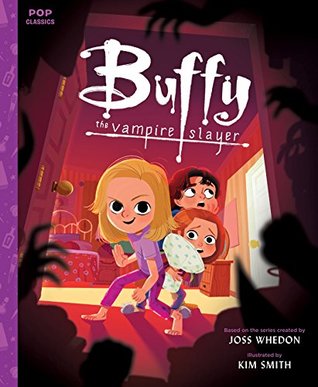
If you know me but at all, you probably have surmised at some point that I kinda dig Buffy the Vampire Slayer. Not Buffy herself, because she got kind of self-righteous at times in later seasons, but the overall show itself. And yes, she is still a kick-ass heroine. And since I love the show and the world that Joss created SO MUCH, you can probably imagine my trepidation at the sight of this book. Not because it is a picture book, but that Buffy, Willow, and Xander are very obviously children. CHILDREN!

How can that be?! In canon, Buffy arrives in Sunnydale as a sophomore! She knew NO ONE! She was trying to ESCAPE HER DESTINY! (Let's set aside the movie, seeing as how Joss did that too when reworking his idea for television.)

That stuff is all true, and much like the movie, all of that will also have to be set aside too for the moment.

This book is absolutely perfect as an introduction to the world of Buffy. Given my own obsession as a teenager (and as a 30-something), I wanted a way to show my own little lady the non-scary parts of that world. Eleanor so badly wants to watch the show, though I keep telling her she has to wait until she is a little older. I don't now how much longer I will be able to hold off, but she is five, so I need to have some self-control. But...season one wouldn't be all that bad, right? RIGHT?? RIGHT!! The show is just so well-done, and she knows it is my favorite, thus increasing her interest.

Anyway. Back to the book.

In the book we meet Buffy as what can best be interpreted as a high school student, in my opinion anyway. As Buffy introduces herself, she is sitting in her room at her home, 1630 Revello Drive (The address isn't actually important to the book. I honestly just typed it without thinking. Because I still know details like that. After 20 years.) In this illustration with Buffy sitting on her bed, there are many items fans will recognize from throughout the series. Her outfit is reminiscent of what she wore to fight Faith at the end of season three. We see her weapons chest, Mr Pointy under her bed, a flyer for The Bronze. Ad on her nightstand we see Mr Gordo, and the cross Angel gave her, and the umbrella she received at Prom for being voted Class Protector. The only thing bugging me about this illustration is the lampshade. On the show Buffy had a small lamp on her nightstand and the shade was upside down. This lampshade is right-side up. It is bothering more than I care to admit.

Anyway, again.

Buffy says that she wasn't always tough, and that she used to be afraid of the dark. Instead of being transported back to L.A., Buffy becomes a young child in the same bedroom and it totally makes sense why. A) This is a picture book for kids and B) Buffy would literally be the only recognizable character if she was suddenly back in LA. The story would simply not work.

So, eight-year-old Buffy is afraid of the dark and hears weird noises coming from her closet. She invites her friends Willow and Xander to sleep over (very reminiscent of Killed By Death, what I feel is a vastly underrated episode from season 2). We even get a glimpse of Joyce peeking around the corner when Xan and Will arrive. So the friends have fun playing games, eating snacks and being kids. Until it is lights-out. We also see more nods to the series, as a Dorothy Hamill poster hangs on the wall in mini Buffy's room. And if you look closely at Buffy's mirror, you see what is meant to be the photo of Buffy, Xander, and Willow that was shown many times throughout the series - such as in season 3's Dead Man's Party, where Buffy has finally returned home and finds the picture on a shelf in the basement.

So, lights out, and the kids hear the same noises that Buffy heard the night before. They all get scared and Buffy wants to open the door, but Xan and Will are having none of it. The next day at school they talk to their librarian, Giles - who is holding the Vampyre book which he gave to Buffy the first time they meet in the series premier. Here Giles also tells Buffy she is a slayer and that would start training when she was older. he also tells her for now, Buffy just needs to act brave, open the door, and the monsters in her closet will be terrified.

Leaving their elementary school, the three decide to have another sleepover, and at this point I was wondering just what would be on the other side. Truly, I was hoping it would be a villain Buffy had faced at some point in the series. I was most pleasantly surprised to see not one, but several villains. I won't spoil which ones were there, it's a nice variety from throughout the series (I lied, spoiler alert - The Gentlemen are included and not scary at all),  but I do have to say I was glad Angelus was not among them. That would have been weird. In fact, none of the Big Bads (The Master, Angelus, Mayor Wilkins, Adam, Glory, Dark Willow, or The First) were shown and that definitely makes sense to me. Those villains are all connected to the very darkest, bleakest moments for Buffy and the Scoobies, and did not have a place in this particular story.

First, Buffy scares the monsters and they all start crying. Then she, Willow, and Xander invite the monsters to the slumber party where they watch movies, play cards (OF COURSE Clem was playing, but no kittens to be seen anywhere), and build pillow forts. There's even a child-sized werewolf playing a guitar who Willow is dancing with. (Never mind that Oz didn't actually become a werewolf until his little cousin Jordy bit his finger during season two when he was a senior in high school!)

Okay, slight digs aside, I truly did love this book and I love that Eleanor loved it too. She gets to see that it is okay to be afraid, and even when you are afraid you can still be mighty and brave. She also keeps asking to watch the show and seriously, I don't know how much longer I can keep saying no. She is five though...

Highly recommended!

Wednesday, July 25, 2018

Saved By The Boats: The Heroic Sea Evacuation of September 11

29002386

Rating: 5 Stars

Wow. Just, wow.

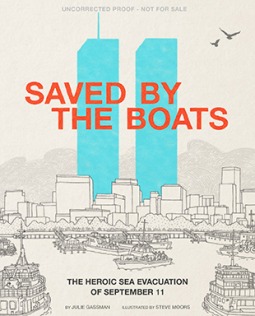
I saw this at the library the other day when my now-five year old and I were completing one of the scavenger hunts for musical instruments in the hopes of scoring symphony tickets this upcoming season. I was struck by the simplicity of the cover, and those towers, and the fact that this is a story of 9/11 that I did not actually know about.

If you have read other reviews I've done of books on 9/11, you know this is a particularly emotional thing for me, despite the fact that I was halfway across the country. I was about three weeks into my freshman year of college, a six-hour drive from home; it was both terrifying and exhilarating. That beautiful morning as I was getting ready for an 8 AM class, I briefly saw something on the news about an airplane hitting the North Tower. I was in shock, but still thought like so many others that it was a tragic accident. As I trekked across campus and arrived for class, it was obvious it was no accident, when the second plan struck the South Tower. There I was, an 18 year old kid far from home, already dealing with the major changes of navigating the beginning of the end of life as a dependent human being, and our nation was under attack.

Like with so many others, through the pain and trauma, the hero stories became the thing that helped us cope. The First Responders running into the towers while everyone else was running out. The stories of men and women who helped their colleagues to safety, risking their own lives in the process and ultimately sacrificing themselves so others might have a chance.

That is exactly what this book is about, the heroes. I never realized how many evacuations were actually made by water. So often when I have read books about that day, so many survivors recounted trekking miles and miles to safety. There was nothing to do but walk, and walk, and walk. I never realized so many of them ended up walking to the harbors, seeking safety there.

One of the reason I chose this book was so I could read it with Eleanor, but also to learn a bit more for myself. One might think this is a heavy topic for a five year old, and you would be exactly right. It is a heavy topic. Every so often I will let Eleanor go through her Amazon cart and pick some books out (free shipping over $25, woohoo!). She really likes that What Is/Who Is/Where Is series and one of the books she chose a while back is What Were the Twin Towers. I looked through it when we received it and knew right away that it would just be too much for a four year old, even one with the intelligence and maturity that Eleanor has. She has asked about it a few times, and I have explained that some bad men wanted to hurt our country, so they took some airplanes and crashed them, and many people died because of the bad men. Once I saw this book and flipped through it, I knew that it could do a much better job of explaining the horrors of 9/11, and I was right.


"While more than one million people searched for escape, hundreds of boat captains sailed into the destruction. They felt a call to action, a desire to help, a realization that they could provide a safe harbor. They were ordinary people who became heroes on a day when greatness was desperately needed.

A day when the unthinkable happened."
(page 3)

The drawings, as much as the words, truly convey the feelings of the day. They are all done in black and a tannish off-white. But the sky is a brilliant crisp, clear blue, just as it has been described time and again. Only the smoke from the towers is a charcoal black, flowing across the pages. The choice of the tannish off-white works so well because to me it really captured the fact that these survivors, struggling to escape, were covered from head to toe with ash. The diversity is still there if you take the time to look, a woman in a hijab holding her child close, shoppers with bags, students with backpacks, young men with afros, men in baseball caps, women and men in suits with their briefcases. The message is unmistakable: that day, covered with ash, they were all the same. They were all Americans, trying to reach safety, pushed to the edge of the island in a desperate attempt to escape Lower Manhattan.

As I was reading to Eleanor, she stopped once, and told me it was so sad that so many people got hurt and she did not want to read anymore because she did not want to be sad. I pulled her onto my lap and explained that she was right, it was a sad story. But if we kept reading, we would find out about all the brave captains and crews who went into the danger even though they did not have to, because they wanted to help. She thought about it for a minute, and then we continued reading. So many times I had a lump in my throat, and that kind of funny feeling that starts in your stomach and rises up as you speak, that kind of pride knowing that on September 11th, we were all in this together. The text included direct quotes from captains, firefighters, and engineers who witnessed it, as boats of all kinds came to the rescue, responding to the Coast Guard's call between 11 and 11:30 that morning: "All available boats! This is the United States Coast Guard aboard the pilot boat New York. Anyone wanting to help with the evacuation of Lower Manhattan, report to Governor's Island" (page 14). And help, they did. Boats from all over arrived, even private boats. Tugboats, ferries, and party boats came with captains and crews, ready and willing to haul as many passengers as possible to safety.

Tom Sullivan was a firefighter aboard a fireboat in the harbor as thousands of people ran toward the Hudson when the Towers first came down, before the Coast Guard call went out. Thousands became hundreds of thousands, with people climbing over railings when necessary and boarding boats already there. Sullivan recounted how, "People were just diving onto the boat...Mothers and nannies with infants in their arms were dropping the children down to us. And then we helped the mothers and nannies down" (page 13).

Boats sailed back and forth from Manhattan, taking the weary survivors to New Jersey, then heading back to the island with rescue workers and supplies. The author notes (having been one of the evacuees herself, which she explains in an author's note) how police officers warned the thousands and thousands of people queuing up for boats that it could be several hours before they could get going, due to the massive numbers of people lined up. In the end, it took nine hours to ferry nearly 500,000 people across to Jersey. 500,000. That number is insane to me, but it is a testament to just how many hundreds of boats responded to the call, helmed by captains and crews who were under no obligation to do so.


"It was the largest sea evacuation in history.
It was an answer to a call for help.
It was a light on the city's darkest day"
(page 29)

I had tears in my eyes by the end. Eleanor asked if I was sad. I told her I was proud that, even on such a terrible day, people found the courage to do what most will never have the opportunity to: risk their lives for another human being with little thought for their own safety. That is one of the lasting legacies of that horrible day and amid the trauma, something we can be proud of.

Sunday, April 22, 2018

My Heart is a House


39857777

Rating: 5 Stars

Before I start off, I must disclose the fact that I know Stacey and Monterio very well. Stacey started off as a co-worker and became a close friend and the godmother to my daughter. Eleanor and Monterio call each other brother and sister. That being said, this friendship has not impacted my review in any way, as Stacey and I have never been anything but 100% honest with each other.

So, now that's out of the way.

I love this book. Stacey is exactly the kind of faith-filled mother I want to be. The way she makes it all look so effortless in passing that faith on to Monterio is amazing and I am slowly but surely getting there. (That is also one of the reasons why she was the only real choice for godmother. Her faith is strong, and real, and always there.) That's why it does not surprise me one bit with how this book came about. It started as a conversation between Stacey and Monterio, with him asking Stacey one day what color her heart is, because his is blue - his favorite color. Stacey was curious, not sure where he was going with this, and Monterio replied that because Jesus lives in our hearts, our hearts are like houses for Him. And thus, this story as born. This concept stands out for me in a big way because I KNOW them. I know this is an authentic and genuine conversation they would have. I am quite sure that further books may very well follow, based on similar, Christ-centered conversations.

The story itself is simple: a little boy and his momma talking about how to prepare their hearts to be houses for Jesus. The momma helps her son prepare his heart by making room for Love and Truth, and keeping his heart clean by being mindful of the things he experiences through all five senses. She reminds him to be careful with those he invites into his heart besides Jesus, and to remember Virtue. Living water and fruits of the spirit are musts as well in preparing his (and all of ours) heart, as well as forgiveness and wisdom. There is ALWAYS room for more wisdom.

In addition to helping little ones understand what it means to ask Jesus into their hearts, and how they go about doing so, Stacey has included several scriptures that attach to a corresponding page. You will also find a few pictures of Stacey and Monterio, on their journey together to follow Jesus.

HERE you can find Stacey and Monterio's Facebook page for their book, and even watch a short video featuring Monterio showing off the book.

Happy Reading!
Sarah

Monday, April 2, 2018

The Legend of Rock Paper Scissors


31215005

Rating: 5 Stars

Y'all, seriously.

This book is legit one of my fave kid lit reads of the year. My daughter (almost 5) really liked Daywalt's The Day the Crayons Quit and the moment I saw this at the check-out counter in Lakeshore, there was no question it would be going home with us. My daughter is really getting into playing Rock Paper Scissors now and this was a perfect 'origin story', so to speak. She also gets upset with me when I take a page from the Friends' playbook and add fire or water, which are totally valid options, I feel.


Anyway, back to the book.

The whole idea of how Rock, Paper, and Scissors came to know one another and become locked in an epic battle for eternity is hilarious. There are some zingers and one-liners that are just as funny for adults (if not more so) as they are for the kids. These warriors take on all kinds of assorted foes, who are not worthy of their time, as they defeat each and every one, until they come to know one another. Before they meet one another, they fight various other opponents such as an apricot, a tape dispenser, and dinosaur-shaped chicken nuggets, among others. It's truly a clever, intelligent book that would be a valuable edition to a home library. There are also random pop culture references adults will enjoy, such as when Rock called the apricot a fuzzy butt. I could not stop laughing as I was reading it out loud (because yes, it does look like the emoji. We all know that peach is really a butt.) He also had another line when he shouted after one battle, "ARE YOU NOT ENTERTAINED?!", as he channeled his inner Russell Crowe.

All in all I highly recommend this fitting tribute to three mighty warriors.

Sunday, February 18, 2018

Firebird

20821347

Rating: 5 Stars

I must start out by saying that Misty Copeland is amazing. Watching her dance, to see her perform Firebird live, is one of the greatest things I have ever witnessed in my life time and I was so lucky to be able to experience that with my four and a half year old daughter, who also loves to spin and twirl and be a ballerina. This past week Misty and ABT, along with the St Louis Symphony, were at the University of Nebraska. On Tuesday Misty spoke at the EN Thompson Forum on World Issues, discussing her career and the lack of diversity within classical ballet. It was there that I picked up this copy of Firebird for my little ballerina and we have read it so many times since that night - and we have not even owned it for a whole week!

While Misty's own story is incredible - she did not start ballet until she was 13. She is the first African-American woman in history to become a principal dancer in the 75 year history with ABT. This is a HUGE accomplishment in an art form that is by and large very, very white. Even keeping in mind Copeland's own experiences, this book is for ALL who have a goal or a dream, regardless of race.

The story is of a young girl who is discouraged, unsure of herself but almost certain she can not follow in Copeland's footsteps. But Copeland herself tells snippets of her own journey in text that is both lyrical and meandering, leaping off the page. Yes, I went there. And she shows how, by working hard, the girl can become Firebird as well.

Besides the fact that Copeland is one of my favorite ballet dancers ever, I loved the fact that while the direct message in the book is geared toward those who love dance, the overall theme is the fact that no matter what your goal is, what your dream is, you will have to work hard and dedicate yourself to reaching whatever it is that you want. It is written in such a way that will appeal to younger and older readers alike. Though it is getting a bit easier to find diverse picture books than it was even ten or twenty years ago, this is a wonderful addition to that growing collection of books that tell stories from the perspective of someone who is not white. As a white teacher in a school predominantly attended by African-American children, you can see why this book is so important on so many levels. My students need to have hope, just like the girl in this book, just like all children do. This is a great start to showing them they can achieve great things if they are committed to it.

The only issue I really had with the book was the illustrations. It's not even that they were poorly done (and obviously they were not, seeing as how the book won the Coretta Scott King Award for Illustrator in 2015), but this medium is just not my favorite. It does give the illustrations a wonderful, textured look, but some were just too unbalanced for me. I don't think I would have minded so much had the body proportions not been so strange sometimes.

In the end, I can unequivocally recommend this book to a variety of people - parents of aspiring dancers, parents/teachers/librarians looking for books with African-American characters, and pretty much anyone who enjoys beautiful, brilliant, yet simple work. Very well-done.

Thursday, May 18, 2017

First Line Friday - Picture Book Edition


Happy First Line Friday. I am so very excited for the book I am sharing this week, because though it is not about Eleanor of Aquitaine, it is about another Mighty Girl who I absolutely adore.

28210996

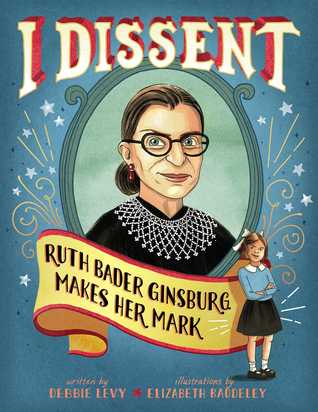
Not only do I adore Ruth Bader Ginsburg - or Notorious RBG, as I like to call her - but here is a book that I can use to introduce her to my own Mighty Girl. Here is the first line(S):

"You could say that Ruth Bader Ginsburg's life has been one disagreement after another...Disagreement with creaky old ideas. With unfairness. With inequality. Ruth has disagreed, disapproved, and differed. She has objected. She has resisted. She has dissented. Disagreeable? No. Determined? Yes. This is how Ruth Bader Ginsburg changed her life - and ours."


Notorious RBG, please live forever.

Let me know what you think of this line, and/or leave a line of your own. Then, visit my fellow First-Liners to see what they have this week.


Rachel - Bookworm Mama


Lauraine - Lauraine's Notes

Andi - Radiant Light


Robin - Robin's Nest


Kathleen - Kathleen Denly


Jeanette - CJaneReads


Molly - Molly's Cafinated Reads (Disclaimer: purposeful misspelling)

Happy Reading!
Sarah