Showing posts with label Stewarts. Show all posts

Friday, July 12, 2024

NetGalley ARC | Royal Mysteries of the Tudor Period


I received a free digital ARC from the publisher via NetGalley in exchange for an honest review.

Rating ⭐⭐⭐⭐

This would be a fantastic starting point for those not as familiar with the Tudor dynasty as I am, or these events in particular. Even so, I found it to be an enjoyable read about some of my favorite mysteries from the time period. It's obvious that Dr. Venning knows the period well and the research is thorough. He covers the following people and the mystery surrounding them:
  • the Pretenders, Simnel Lambert and Perkin Warbeck
  • the fall of Anne Boleyn
  • the death of Amy Robsart
  • the death of Lord Darnley
  • Mary's possible involvement in plots against Elizabeth
While discussing each of these, there is obvious overlap as the era moves from its beginning with Henry VII to its conclusion under Elizabeth I. There is plenty of additional information that provides a background for those unfamiliar with the key places and figures of the time.

First we have the Pretenders. The drastic differences in their treatment perhaps shows Henry VII's view of them as legitimate threats - not because either really was either of the Princes in the Tower, but because enough people at least believed or were intrigued by Warbeck. Given the fact that Warwick was already locked in the Tower, no one had any reason to believe Simnel's claims. It didn't help that Warbeck was still trying to claim he was the lost Plantagenet heir as he was locked in the Tower. And there could be no other end for him than execution. Henry needed to stabilize his country quickly and that was the only way for him to do it. Warbeck had been given too many chances. Warwick's execution is much harder for me to stomach however, as he was in no way a threat. He'd been a prisoner for over half his life and had little knowledge of the outside world.

I've got little to say about Anne Boleyn that I haven't already in past reviews. She is my least favorite queen, I can't stand her. She is not a feminist icon and had no inkling of what that would even mean, to be. She was gleeful in her torment of Mary and had no problem replacing the rightful queen despite very much not belonging on the throne. I don't think there is much of a mystery here though, as anyone with even miniscule knowledge of Henry VIII's mindset and behavior can attest. The charges against her were all clearly made up in order for Henry to get rid of her and I don't think anyone would argue otherwise. Despite my disdain for Anne, Henry is the real villain. After all, he requested the executioner before Anne was even found guilty, given travel distance. Once Anne fell from favor, she stood no chance. She's absolutely a victim of the regime, none of the charges were true (you'd think Cromwell would have at least made the fabricated evidence look realistic; for the majority of the locations she was said to be in when conducting the affairs, she was either pregnant or in another location, verified by court documentation of travel itineraries), but I still have little sympathy beyond this for her.

The death of Amy Robsart is perhaps the most intriguing to me. Robsart was the wife of Robert Dudley, Elizabeth's most favorite of all her favorites. Dudley was all too happy to abandon his wife for his queen. The day Robsart died she had sent all the servants away to the fair and was supposedly alone in the house. When everyone returned, she was dead at the bottom of the stairs. Dudley's enemies immediately accused him of murder and if there had ever been plans for him to divorce his wife and marry Elizabeth, it could never happen. However, it is highly unlikely Elizabeth would've ever married Dudley, no matter the circumstances. She truly was her father's daughter in every literal and figurative sense. I personally don't think she was ever 'scared' of marriage as has been suggested. I think she was a Tudor who knew the power of good PR and remained married to her country because that is what she wanted most. As for Robsart, there are plenty of theories, but again we will never know the truth. Some say she committed suicide because she was so destraught over her husband and the queen. I personally think there are far easier ways to committ suicide than by flinging oneself down the stairs and hoping for the best. Others have suggested she was ill (cancer or otherwise), and in her weakened condition she fell. Still others say Dudley hired someone, or killed her himself. This is one I would truly love an answer too. Amy Robsart deserves that much, considering her life and death were overshadowed by Elizabeth.

Mary, Queen of Scots, remains one of the most tragic figures in Stewart/Stuart and Tudor history. As a child she was sent to France, out of reach of Henry VIII. She was raised in a French court hostile to England and treated as a queen from a young age, long before actually becoming queen in 1559. She was a pawn that the French used to taunt the English. After her first husband's death, she had no choice but to return to Scotland, and it was all downhill from there. Mary had no true allies, though she did not know this. Her half brother, the Earl of Moray, played at supporting her, but this was all for show. Mary was truly alone, even after marrying Darnley. Personally I think Bothwell was as ruthless as Moray. I don't know that Mary knew of the plot to kill Darnley, but I would imagine she had to have some inkling that something was going on. As for Bothwell and that disastrous marriage, I don't believe she entered into it willingly. Perhaps she had once been enamored by Bothwell, but seeing his true face after Darnley's murder, I don't know that she would have chosen him.

As for Mary's participation in plots against Elizabeth once she was in captivity...honestly, what did she have to lose by that point? She'd been held for so long without cause. Elizabeth had no right in imprison a fellow monarch. This event alone is one that makes me absolutely abhor Elizabeth because she was such a baby about it. She talked so much of the grief and turmoil she felt in signing Mary's death warrant, but PLEASE save your fake tears and at least OWN IT. Cecil had been begging to execute Mary for YEARS. She knew that before the ink was even dry, after she had just barely finished signing it, that it would be delivered straight to him. Ugh.

One thing I absolutely hated about this book was that the author called Empress Matilda arrogant and usurper. Um, excuse me, but her Father Henry I named her as his heir. And yes, it was unlikely she could have followed him without a fight, and a fight is certainly what Stephen got. But Stephen was the usurper, NOT Matilda.

Whatever your opinion of these events, I think you will find great value in this text. Even if you already know quite a bit, having a refresher is nice. I love returning to books about the Tudors, no matter how many I have read. It's like greeting old friends, just that some of them might want to execute you for treason.

Recommended.

Sunday, January 14, 2024

NetGalley ARC | The Tudors in Love: Passion and Politics in the Age of England's Most Famous Dynasty


I received a free digital ARC from the publisher via NetGalley in exchange for an honest review.

Review ⭐⭐

I am truly not sure why this one did not work for me, I have enjoyed so many other of Gristwood's books. It could be that I knew a lot of the info it contained, though I can appreciate the direct lens she looks at said info with. The author examines how the concept of courtly love impacted the Tudor dynasty both at home and abroad.

The legend of King Arthur, his queen, and his knights, was enthralling to many of England's rulers, but no one believed he embodied those chivalric qualities the way Henry VIII believed he did. The Tudors were excellent at claiming lineage from King Arthur himself, to further validate their very tenuous claim to the throne. But there was no propoganda machine like the Tudor Propaganda Machine, and so court life was infused with the games of courtly love.

Gristwood does an incredibly thorough job with her research and is clear in laying out how those legends shaped Henry's life and marriages.

To do this, Gristwood begins with the legends themselves, as well as looking at how previous monarchs also looked to the legends. This includes my girl Eleanor of Aquitaine, who I always like to read about. Gristwood then moves on to the Houses who combined under the rule of the first Tudor king, the Yorks and Lancasters.

Gristwood does an excellent job exploring the relationships of the Tudor monarchs and their courtiers, who were also invested in the game of courtly love. However, some background knowledge is helpful, as there are a lot of names thrown around.

Again, I am not sure why this one didn't work for me as well as the author's previous books, She's written four others and I enjoyed them all. I love non-fiction and read it almost exclusively, so that is not the issue.

I would still recommend this one to others who enjoy this period, as the issue in the case seems to be me.

Tuesday, January 3, 2023

Book Review | Heroines of the Medieval World


Rating ⭐⭐⭐⭐⭐

Another essential read from the author on one of the most extraordinary periods in history, showcasing  a wide variety of women who were just as extraodinary. Connolly introduces many women both famous and obscure and shares their stories. Despite the fact that it was supposedly men who ruled the world, these women prove time and again that they were not merely subservient to the men in their lives. The choices these women make not only alter their own paths, but the wider world around them, some even changing so far as to change the course of history.

Connolly has organized the women by theme and I really liked this approach. I like that this lead to some overlap sometimes, because it shows how so many were connected. Themes include Heroines in Religion, the Medieval Mistress, Scandalous Heroines, Women Who Ruled, Captove Heroines, and the Survivors. There are others as well that I will leave you discover, just as I will let you discover these heroines and who Connolly chose to include. There were many women I was unfamiliar with, or only knew of in passing where they fit into someone else's larger story. As a result there are many more women I will seek out further books about.

Connolly is incredibly knowledgeable of the women and their world. This is a well-researched text with notes and references to back up her work. Despite not being organized by woman, there is still so much depth here that we get to know the women very well. She brings the women to life and does so in an informative but still accessible way.

I enjoyed this one quite a bit. It's a fantastic read and I hope that Connolly at some point produces a second volume because there are so many more women who also deserve their moment in the spotlight.

Highly recommended.

Tuesday, December 28, 2021

NetGalley ARC | Castles of England

I received a free digital ARC from the publisher via NetGalley in exchange for an honest review.

Rating ⭐⭐⭐1/2

I love a good ghost story, but that is not what I was expecting here so it kind of threw me off. I was expecting a book about the history of castles in England, from their beginnings up to present day. We get that here, but we also gets tons of stories of mysteries - unsolved murders, deaths of prisoners, executions, and so on.

I was anticipating much more in regards to physical histories and family histories, and there really was so much more that was paranormal. You might think it is weird that I am so hung up on that part, but it's just not what I was looking for from this book, so I think that's why I was honestly kind of annoyed.

The origin of the castle, or castellum in Latin, is so deeply imbedded in the history of England. You can't discuss the country's history without an in-depth focus on these structures. Castles are part of the landscape, and have been for 1,000 years. To not see one is far more strange.

Luckily there are so many to choose from, and whether you prefer crumbling ruins or castles that transport you back to the middle ages into a still-functioning relic of the period, everyone will find some castles of interest here.

Even this review is hard to write and I am struggling with it. The book just wasn't what I expected, and had such a heavy focus on the myths and legends, usually paranormal. I wanted to know more about architecture, builders, etc. I would have also loved more photographs.

Sunday, April 2, 2017

Game of Queens: The Women Who Made Sixteenth-Century Europe

29502371

Rating: 4 Stars

It pains me so very deeply that I have to return this one to the library without being able to give it a proper, in-depth review as I normally would for books about this period in England's history. Unfortunately, it's already had to be returned and honestly, I don't really have that many notes to go off of because I was so into the book that I rarely stopped long enough to jot anything down to mention in said review. Really, the only time I did make any notes is when it came to Mary vs. Elizabeth because this moment in time is forever infuriating to me, so in most books I HAVE to stop a bit when I get too rage-y.

I was happy to see Margaret Tudor given some page-time, and her story being incorporated into the queens of the age. Henry's sisters often get pushed to the side to make room for their larger-than-life brother, and so it was nice to see the focus specifically on women of the age. And not only the typical queens, such as Henry's wives and children, but those of other countries. And really, beyond Catherine and Anne, none of his other wives had any power or control over anything, and none but Catherine (please correct me if I am wrong) ever ruled as regent when he was off at war. Then of course come the next generation of Tudor women, Mary and Elizabeth, and finally their cousin Mary, Queen of Scots. But here we see so many other powerful women at work in the arena of politics: Isabella of Castile, Catherine de Medici, Margaret of Austria, Louise of Savoy. I knew very little about most of these women, and the others also touched on, so that was a fresh change of pace. However, I still remain most interested in the Tudor women and really breezed through those chapters so much more quickly because they were already so familiar to me.

My irritation usually stems from Mary's reign into Elizabeth's, so this will just be repetition for anyone who has read previous reviews of mine on similar books. I think Mary has been judged unfairly through the ages since her short reign, and I don't think the nickname 'Bloody Mary' is so terribly accurate. While it does not excuse the fact that she had many Protestants put to death, I think the trauma of her early teens into young adulthood truly shaped who she would become as an adult. Her mother's treatment by her father, their forced separation even in illness and finally Catherine's death, all of that formed who she was and how she would rule. She never had a chance.

I feel similarly about another Mary - Queen of Scots, that is. She too made some very poor decisions in her reign, the first she can hardly be faulted for though - she expected to be able to trust her half-brother James, Earl of Moray. She had the potential to be a good ruler, but the Protestant faction working against her, combined with her disastrous marriage to Darnley, were her undoing. And don't EVEN get me started on her captivity in England or her unjust execution. Elizabeth could cry all the big stupid crocodile tears she wanted and I will never believe for one moment she was sorry to have signed the death warrant. She knew damn well it would be carried out immediately; Cecil had been clamoring for Mary's death from the moment she set foot in England.

This is rapidly just turning into a rant about the last of the Tudor dynasty, so let me bring attention back to the book. I do have one teeny tiny bone to pick with the text, and perhaps it was unintentional but given my love for the Plantagenets, it jumped out at me right away. On page 213 (hardcover edition) the author states that Matilda had attempted to succeed her father (Henry I) and it started a civil war with her cousin Stephen. Technically yes that is accurate but to me that seems to imply that Matilda was the usurper, when in fact it was Stephen with that title in this scenario. After Matilda's brother William died when the White Ship sank, she was the last legitimate child of Henry I. He'd had his barons swear allegiance to Matilda before he died, and Stephen was among those who swore to uphold the transition from father to daughter. But as soon as Henry I was dead, Stephen swooped in and took the crown for himself. HE is the one who caused the civil war. I know that a female ruler was super scary to these dudes, but Matilda was claiming her rightful inheritance. I guess it all worked out in the end though, because though Matilda would never rule England her son, Henry II would upon Stephen's death. Helloooooo Eleanor!

Again, I do apologize for this not being much of a review, because this book certainly deserves it. Unfortunately time has simply not allowed that to happen here. What I can quickly say is that this is an utterly fantastic look at the powerful women of the 16th century, some names we know so well and others we might not be as familiar with. These women, some as much as any king at the time, helped shaped Europe. The book is so exhaustively research and well-written, it is certainly worth a read. Highly recommended.

Friday, July 8, 2016

England: A History

25972972

Rating: 2 Stars

Ugh. This was a tough one to get through. The history of England is complicated to begin with. England as we know it didn't really exist until Athelstan, grandson of my buddy Alfred the Great. And even then, it wasn't exactly England yet. It kind of starts with the Norman Conquest of Anglo-Saxon England and then glosses over all the best parts of the island's history that I care about. There was no mention whatsoever of Eleanor of Aquitaine, a mere paragraph about Richard I, and a total whitewashing of John. While I am not a huge fan of ALL Plantagenets, they are highly intriguing and they did rule England for 300 years. Yet, by 40% of the book, we are already at the dawn of Stuart rule by James VI/I. This might seem like a lot at first being devoted to the Plantagenets and Tudors, but you must also consider the fact that the book ends after World War II. That's something else I can't understand but, whatever. It is hardly even worth delving into.

As an aside, it has never been lost on me that the Tudors are in fact, and always have been, Welsh - not English. yet the English seem to overlook this now? And then at the same time looked down on the Welsh? Another thing that has never made any sense to me. 

This quote I did appreciate, in regards to the execution of Mary, Queen of Scots: "...Elizabeth managed to look the other way until the deed was done, and like a true daughter of her house, she saw to it that her secretary, William Davison, took the blame for the execution of Mary's death warrant" (30%). Yep, exactly. Elizabeth is the WORST. The author did not justice to Mary Tudor either, but he seems to approve a bit more of Elizabeth. Either way, nothing he says is particularly positive about any of them.

Where he really lost me: at 48% he called Cromwell the 'greatest Englishman of his century'. Um. No.

Around 55%, the only things keeping me going were: 1) it was written so generally that it was still an incredibly breezy read. It was not terribly specific, and not very detailed either. 2) At the time I was also operating under the assumption that eventually we'd get to the House of Windsor, William, and Harry. Especially Harry. You can imagine my disappointment then when, as I mentioned earlier, the books ends after WWII.

89%: Blah Blah British Imperialism, snooooze.

So, I guess have at it but I can't say I really recommend this one. The history of England is far too vast and complicated for this slim a volume - even one that ends after WWII. Don't take this one too seriously if you do give it a shot.

Monday, February 1, 2016

Kings & Queens of England, a Dark History: 1066 to Present Day

4953656

Rating: 1.5 Stars

Review:

I will keep this short and not so sweet because this book was not good. I try not to, but I sometimes can not help but take offense when I see historical figures I love so dearly and/or highly respect either much-maligned or simply presented wholly inaccurately by an author who could not bother to do five seconds of research. I like the 'Dark History' series in general, though it is nothing spectacular and you will find no new information contained in them. But what I found here was worse. This book was gossipy and sensationalized. it was poorly written and riddled with inaccuracies. There is nothing 'dark' about this history that is flat out wrong in many places. She refers to Catherine Parr as Henry VIII's "Finally, an enduring love" as one heading, which is laughable, considering she wanted to marry Seymour all along. Anne of Cleves was apparently "ugly, skinny and loud-mouthed" - news to me since I did not know you could be a loud-mouth in a country where you did not even speak the language. She is especially nasty to two Scots in particular, Mary and then her son James VI. First, Mary is described as being an, "ignorant, foolish, indiscreet airhead" who "managed to do almost everything wrong and was certainly not the queen 16th century Scotland needed." This could not be more wrong. Without a doubt, Mary made some very stupid decisions. But by all accounts in the short years she did rule, she worked to maintain a balance between her Protestant-turning country and herself. Much has been written about Mary not enjoying her studies but that does not make her an airhead and she was still well-spoken and educated. Her son James does not fair much better. The author refers to him as "creepy", with "spindly legs" a tongue "too big for his mouth...He drooled. He did not wash very often...He looked scruffy because he dressed so badly." It has been documented time and again that James looked oddly in his dress due to the many layers he wore to protect against an assassin. Yes, apparently his tongue was awkward and he was awkward but come on. All this book amounts to is a trashy gossip magazine in hardcover form. PASS!

Thursday, January 21, 2016

The English and Their History

25893691

Rating: 3 Stars

Rating:

This book is exhausting. So exhausting, in fact, that I am not even sure I can review it properly. I have read more than my fair share of books. One might say reading is my 'thing'. I am especially fond of that little island now called England and its amazing history, going way back to the Iron Age people, through Roman Britain, the Anglo-Saxons, the Normans, the Plantagenets, and the Tudors. Beyond that, my interest starts to wane. In the past with books about the history of England, I have always given up a bit after James VI/I. Sometimes I make it through the execution of his son, Charles I, but rarely. I vowed this time, with this one, to make it through. And so I did. Barely.

So, this one began in what is typically still referred to as the Dark Ages, despite our knowledge of the time growing more clear all the time with new discoveries. The Anglo-Saxons and Alfred are possibly my most favorite of the eras in England's history, so it is always nice to see him given his due. Alfred is, after all, the only king in the country's history to be called 'the Great'.

My concerns with the book come very early on though, as I feel there were many aspects of England's history that were glossed over or not mentioned at all from those early years, in favor of much more material covering the last two hundred years. For example, while we see Edgar Aetheling mentioned, there is almost zilch about his grandfather Edmund Ironside and his brief co-reign with Cnut - it is generally thought that Edmund was murdered by or on Cnut's orders so he could assume complete power. Subsequently there is nothing about Ironside's sons who were spirited out of the country and Cnut's reach. That in itself is a fascinating story and deserved a place. The course of history might look very different for England had someone aside from William I become king. There were many other times that this lack of detail jumped out at me - perhaps because these are among the time periods I know best. The author calls the circumstances of William II's (William Rufus) death 'mysterious', but does not fully elaborate. It is considered mysterious for a number of reasons, considering he was shot in the chest with an arrow and the culprit left the scene immediately - while Henry I (his younger brother, the youngest son) headed straight for the treasury to secure it and the crown, effectively stealing it from Robert who was next in line. Further more, it was strange to me that the author considered Matilda (Henry I's daughter) the antagonist in the civil war between her and her cousin Stephen. When Matilda's brother Henry died on the White Ship, she became the only legitimate heir. At least twice Henry I made his nobles swear an oath to support Matilda's claim as queen, but given the fact that there had never been a queen who ruled in her own right, as soon as Henry I was dead they naturally (for the time period) looked elsewhere. Stephen was the usurper, the antagonist, though Matilda certainly did herself no favors by alienating some who she needed support from. In the end, Stephen agreed for Matilda's son to become king as Henry II, despite Stephen having a son of his own. So began the 300 year rule of the Plantagenets.

There was very little attention given to another of my favorites - Eleanor of Aquitaine. She is hardly mentioned, and only as Henry II's wife. We get a glimpse but that is it and no where does it say that without her gathering the ransom, her son Richard I would likely never have been released from prison. While Richard cared very little for England and preferred his lands in Aquitaine, or the Holy Land on Crusade, him being overthrown by John even earlier could have caused even more destruction.

By the time we get to Elizabeth, all of my favorite periods were covered. This amount to roughly 200 pages out of nearly 900 (1,000 if you count the end notes, index, etc). For the rest of the time it was pretty rough going for me, because it just does not hold my interest the way early England does. I truly don't even understand it myself, how I can be totally enthralled by the first 1,600 years and not care one iota about the last 400. But I was determined to slog on through. As a result, it took me a while and I frequently set it aside for something else. I have to be quite honest and admit I skimmed the Industrial Revolution. Glad it happened and all, but it is a terrible snooze to read about.

I found the Victorian era more interesting to read about this time around, so perhaps there is hope for that in the future. World War I and World War II were great reads from the English perspective, as anything I have read about them in the past have been strictly from an American viewpoint. Throughout the book there were tons of maps to aid the reader with the text, which I have always found especially helpful when discussing battles and troop movements. My only real complaint about WWI material involves the omission of Gavrilo Princip. You may not recognize the name, as so often he is simply referred to as 'the assassin of Archduke Franz Ferdinand'. I feel like it is a disservice to history that his name is routinely ignored. Like it or not, for better or worse, hi actions set of a chain of events that culminated in The Great War, which in turn lead directly to WWII.

I can't speak for the accuracy of the rest of the text due to my limited knowledge of those eras, but I at least found them somewhat engaging - enough to continue reading anyway. This is certainly not a book I would consider as my first if I knew nothing about England's history. It is quite the endeavor and not one to enter into lightly if you are looking for a quick read. On the other hand, if you are more interested in the time periods after the Tudors that are less interesting to me, then this may just be the book for you, as that is the bulk of the material.

Sunday, December 13, 2015

The Tower: The Tumultuous History of the Tower of London from 1078

1861167

Rating: 3 Stars - Did Not Finish

Review:

I had to keep reminding myself that this edition was published in 1979. It was not easy and I often found myself frustrated with some of the things Wilson wrote as fact. On the other hand, he also puts forth some of those same sentiments in more recent books, so, there's that to deal with as well (he is NOT a fan of Mary Tudor). As a result, I waver back and forth between two and three stars. The reason I did not finish this one is not due to the dryness of the writing, but to lack of interest in the periods following the reign of James VI/I. I did give it a go, but decided there are too many other books waiting for me.

The text was good, not great. Much of that is owed to the fact that it was written so long ago and the way we look at these eras is quite different, even from the way historians viewed them 40 years ago. I feel like this text would be much stronger if it was updated - not only to reflect more accurate facts as we know them now about those early periods, but so the Tower can be presented now up to it current status and function. As an aside, it still pains me that when Mom and I were in London as part of our UK Extravaganza, we had such short time in London itself that we were not able to see the Tower. This is, without a doubt, #2 on my list of attractions to visit (#1 encompassing any and every place still in existence connected to Eleanor of Aquitaine, of course.)

The many factual inaccuracies were distracting, despite my own attempt to remember it was 40 years old. For example, Wilson refers to de Burgh as being the man who held the most authority in Henry III's reign, due to him being an experienced soldier and administrator. To that I had to say, "Um, helloooo, ever heard of this man by the name of WILLIAM MARSHAL?!" I do have quite a soft spot in my heart for that ol' soldier and always like to see him get his due.

Moving on to the Tudor reign, there were a few issues I took with statements Wilson made as well. Now, I have never made it a secret that have no good feelings about Anne Boleyn. Catherine will always be the rightful and true queen to me, as Mary was always the rightful heir. That does mean that I support everything Mary did during her reign, but I do think everything that happened to her during her childhood once Henry initiated the divorce need to be weighed greatly in understanding how that impacted her. No one can really be surprised in how tightly she clung to her faith and viewed Catholicism as the only religion, given its treatment in her lifetime as a means to an end for Henry to get what he wanted. I know this is not a popular opinion among some and that is fine, but Wilson's assessment of Mary's reign as an "appalling blunder" by the English when they supported Mary instead of her cousin Lady Jane Grey is inaccurate in my eyes. Given a closer and less biased look, there were many aspects of Mary's reign that actually proved quite successful. While that is another debate for another post and I won't go into detail here, I might recommend The First Queen of England: The Myth of Bloody Mary for anyone interested in what I am suggesting. Continuing along this path, I was confused when Wilson states that Catherine Parr died in childbirth "or probably before". Everything I have read thus far indicates she died after giving birth to a daughter, who also did not live long - perhaps a year or two. I am curious as to where Wilson got this idea and if that was accepted as fact in the 1970s, where new information came from since then to change what we know now. He also cites tuberculosis as the cause of death for Edward, which gave way to Mary's reign. While it is certainly one of the theories, there have been others put forth as well. Again I wonder if this could be that TB was accepted in the 1970s and only with new information coming to light have we changed our thinking?

There are positives to the book, do not get me wrong. I found the illustrations included to be useful. Another reason I would like to see a new edition to the book would be to see new photographs of the Tower added in comparison. It would be very interesting to see drawings of the original structure, compared to how it looks now.

I realize that the issues I have touched on had more to do with the people connected to the Tower than the Tower itself. All in all, this is because this book was as much about the people who inhabited the the fortress as the buildings themselves. This I can appreciate, as it covered all of the periods in England's history that are among my most favorite (and more - if you have been reading my reviews for a while, you know I don't have much interest beyond the reign of James VI/I). I wish there would be an update, though if you can keep in mind the age, then I can recommend with some hesitancy. It is very dry at times after all and that could be very off-putting for those who are less interested in the times.

Friday, November 27, 2015

Queen of Scots: The True Life of Mary Stuart

653127

Rating: 5 Stars

Review:

While I would not consider Mary a heroine of mine, I can certainly say that she is an unjustly maligned figure who deserves a lot more respect than she has received in the 400+ years since her death. It is no secret that Mary made some very poor choices later in her reign, but prior to that she ruled her country well, with tolerance for religion and an aim to work together with her council to govern Scotland as an independent nation free of England's interference.

Here with Guy's biography of Mary, we are given a beautifully written, exhaustively researched play-by-play of Mary's life. That is not to say the work is perfect, it does have its flaws, just as Mary did, but it is far less biased than some of the other texts available out there. I can say this with certainty, as it even paints Elizabeth in a decent light (which I don't care for) and Cecil (rightfully so) shoulders much of the blame in Mary's downfall.

From the very beginning of her life, Mary was a queen and raised as such. When her father James V died within a week of her birth, the crown became Mary's and perhaps her fate was sealed then. Scotland has never had great luck with minor rulers, yet due to Henry VIII and his 'rough wooing' of Mary as a bride for Edward, Mary was promptly sent to France before she was even old enough to understand her place and her mother Mary of Guise became regent.

Due to the research and facts presented here, no one can really be surprised that Mary acted as she did. Her entire early life, she was the darling of the French court - already Scotland's queen and being prepared to become France's as well. People speak and write of her as though she was just this dumb, vain little girl. While she could certainly exhibit those qualities, it is certainly not all there was to Mary. It is also no surprise that she was so trusting. Family was so important to Mary, from her time in France with her Guise uncles, to her half-brother Moray. Mary never really stood a chance with all these greedy and manipulative men aligned against her for their own self-interests. Her uncles did her no favors for her future, by styling her as Queen of England while she was in France; they set up the struggle that would come to define Mary's life after her execution. Moray's constant undermining and later treachery was beyond awful. Mary trusted her half brother time and again, because family was important to her. To call her stupid for wanting to trust her family is to do a great disservice to Mary.

While over all I have a favorable opinion of this biography, it is not without its flaws. The author speaks of some things as facts when there is little evidence to actually confirm. The first time this arises is actually in reference to Elizabeth and Dudley, whom the author says had a 'fling lasting 18 months'. This is incorrect on many levels, primarily being the fact that it was certainly no fling and likely lasted longer than 18 months, despite Dudley's multiple marriages - and to think, Elizabeth thought Mary would actually jump at the chance to Mary Dudley. What a joke. It actually saddens me that so much of Mary's story involves those two.

A second issue I take with the author's version of events is that he refers to Rizzio once being Darnley's lover. This is a huge point of contention and several authors have repeatedly addressed it. Again, no proof. I did learn that at one point Rizzio was apparently part of Darnley's circle, and there were stories that they had at various times shared a bed, but this was not uncommon in this time period, so I am confused as to how sharing a bed equals being lovers.

As always seems to be the case, one can not discuss Mary without addressing Elizabeth. While the author does put a positive light on Elizabeth, her major flaws shine even brighter. For example, Elizabeth felt like she had the power to veto any attempt at marriage Mary might make. It doesn't surprise me, given the fact that Elizabeth was selfish and manipulative, but Mary was the queen of an independent nation and equal to Elizabeth in every way. Elizabeth had no rights or power of the Queen of Scots, but she never could seem to remember that fact. The bigger problem than Elizabeth though, was Cecil, always Cecil. He infuriated me with every turn of the page. He was constantly undermining Mary at every opportunity. It is almost certain that he knew of both the plots against both Rizzio and Darnley, yet he did nothing. He wanted Mary out of Elizabeth's way and he knew that these two incidents would ensure that. Cecil is repeatedly painted by Guy as the bad guy and while I have no love for the guy, the constant reference to his will being done over Elizabeth's in regards to Mary means one of two things: 1) Elizabeth wasn't as strong of a ruler as everyone believes she supposedly was, or 2) Cecil is merely a scapegoat to present Elizabeth as a better person than she actually was in regards to Mary. I have no doubt in my mind that Mary's execution was always his goal once her personal life began to fall apart - he certainly saw the opportunity. But this is problematic in regards to Elizabeth. It makes Elizabeth look weak and as though she has no control over her counselors. I'm fine either way, because I am no fan of Elizabeth, but still.

While Mary is often depicted as a queen who never ruled well, who was weak and easily swayed by her counselors, Guy shows us in fact, that is not the case. Especially in regards to Darnley, and keeping him close to her when necessary, Mary showed great strength and resolve. "When Darnley arrived at the gates of Holyroodhouse a week later, insisting that her counselors must be evicted before he would deign enter, he was personally hauled inside by his wife" (page 261). Mary was no fool. Guy's work is refreshing to read as an in-depth look at her role as queen. Time and again Mary is shown as an active queen, working with her counselors and using her method of divide and conquer so to speak, to make sure her government continued to run. Had things gone differently and Mary been able to hold onto her throne, Mary might today be recognized as the greatest ruler on that little island, not Elizabeth.

My only other gripe beyond the questionable things presented as fact was the issue of photographs. It would have been nice if at least some of them had been in color. And call me crazy, but there is something to be said for photos being printed on photo paper instead of the same paper as the text,

Especially beautiful quotes:

"For all these years, perhaps ever since the death of her first husband, she had been in someone else's way" (page 484). What a tragically beautiful truth, Mary had been surrounded her whole life by ruthlessly ambitious men who did not value her right as queen to rule.

"Mary herself was a mass of contradictions, but some qualities abided. She was glamorous, intelligent, gregarious, vivacious, kind, generous, loyal to her supporters and friends, and devoted to her Guise relations. whether or not they returned her love. She could be ingenious and courageous with the razor sharp wit, and never more animated and exuberant than when riding her horse at the head of her army wearing her steel cap.


But she had deep emotional needs. She expected love and needed to be loved. And to a large extent she got what she demanded: from her Guise family as a child, from her Maries as an adult, from her domestic servants and, until she married Bothwell, from her people, who were spellbound by her youth, beauty, and glamour. Maitland came closest to the marl when he predicted that the ordinary people of Scotland would be captivated by her merest smiles or frowns. But as queen she lacked the love of a partner, an equal, who could have bolstered her in her anxieties and tempered her impulsiveness. And this hunger for a partner, a husband, a king, led her to her most grotesque and uncharacteristic miscalculations.


Although her rank meant that she was never alone, loneliness must often have consumed her, and it was a sign of her emotional isolation during her later years that her pets became everything to her. Her final reckless throw of the dice in 1586, endorsing a madcap plot in which not even the motives of the principals were clear, is a reflection of her desperation" (pages 496-497).


And this one sums up my thoughts best:


"But to let the end of her life overshadow the whole is an injustice. The odds were stacked against her from the beginning" (page 499).


Truly, Mary never stood a chance against all of these forces who continued to put their interests ahead of her own, even as she was the sovereign ruler of Scotland. She was their queen and they did everything they could to bring her down. Though, there is some solace in this:


"Her victory was more conclusive than even she might have dared hope, because every subsequent British ruler has been descended from her, and all derive their claim to the throne from her and not Elizabeth" (page 489). 
So there, Elizabeth!


All in all, this is an amazing biography. John Guy has done a wonderful job dispelling all the abhorrent myths and rumors that have run wild in the last 400 years. It is definitely not for the casual reader who has no background knowledge of Mary or her turbulent world, as it runs 500 pages, not including the notes. Still, if you have the interest, by all means, go for it. Highly recommended.

Wednesday, October 7, 2015

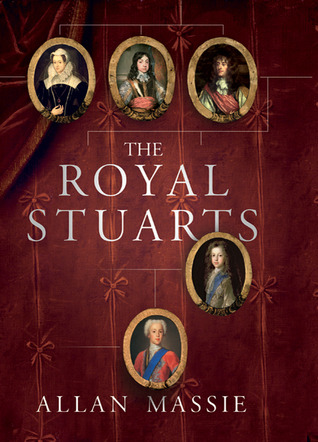
The Royal Stuarts: A History of the Family That Shaped Britain

11217378

Rating: 3.5 Stars

Review:

I keep trying to get beyond James VI/I, but I fear I never will. I picked this one up because I thought maybe if I read about the Stuart family, instead of just Great Britain AFTER James, it might make a difference. Sadly, it does not. James is really the last one who is interesting to me, I think because I kind of feel bad for him because he gets such crap for being 'undignified' for a king - I guess he was allowed to be a tipsy whenever he felt like it, because he felt the being king was a God-given right for him. The difference between James and his son Charles, who was never supposed to be king to begin with, is that while James felt that way he did not shove it in the faces of all his subjects and counselors. Charles and his father could not have been more opposite and unfortunately in the end, it cost Charles both his crown and his life. But don't even get me started on Cromwell. Ugh.

So, the good, the bad, and the ugly...

The Good: I like that a chapter was devoted to each member of the family, starting before the first Stewart king and explaining both the history and legend of the family - the name deriving from the title of Steward, someone in service of the king (The spelling would later be changed to Stuart with Mary, Queen of Scots, who spent the majority of her childhood and young adulthood in France. She used the French spelling, often signing her name Marie Stuart). I also liked that it was divided in such a way that helped me keep track of who was doing what in Scotland, to mirror my knowledge of what was going on in England at the same time. While English kings make their appearances (Hey, Hammer of the Scots!), I appreciate Scotland getting their due turn in the spotlight. If only they could be their independent nation again. But that is another story.

The Bad: Super gossipy sometimes. The author goes so far at one point as to suggest that Maximilian had fallen in love with Perkin Warbeck, the pretender to the thrown of England who claimed he was the younger of the twp Princes in the Tower (Richard, Duke of York). Really, he was in love with him? I think not, as nothing else I have ever read about Perkin Warbeck or ol' Max would ever suggest that. Also, not very creative with describing the somewhat unsuccessful reigns of Robert II and Robert III. We get it, they were older when taking the throne, and weren't great leaders. But gosh darn it, they were nice people. That's kind of how it comes across, and that's not very scholarly. Be more objective.

The Ugly: The author's extreme obsession with obscenely long sentences, broken, up, by, several, commas. Not kidding. Example (page 140): "Elizabeth, who disliked bloodshed, except when alarmed, might be, despite everything, well disposed towards her 'cousin and sister', but the men around her were Mary's enemies." SERIOUSLY? So unnecessary.

Interesting quotes:

(page 34) "Later Stewarts might fall into melancholy and depression, but Margaret is the only one recorded as dying of boredom."

(page 85) "It seems to have been a matter of no great moment to him (Henry VIII), and the coffin was left at Sheen in a storeroom. It disappeared when that monastery was dissolved more than twenty years later, and no one knows where the bones of Scotland's Renaissance King found their last resting place." Isn't that depressing?! There is no record of where James IV is buried, and Henry was, no surprise, being a jerk about giving a fellow king and appropriate burial.

It should come as no surprise that my biggest gripes come in regards to dear Mary, who for all her flaws and incredibly poor decision-making, is never given a proper look. She was not this wicked queen, she was just someone who had unfortunately not been prepared for anything but queenship, so she did not know how to be anything else once she was in captivity. The author makes some assumptions that I don't agree with, and seems to be presenting them as fact. One example, on page 114, he talks about Mary's half brother the Earl of Moray being loyal to her especially in the beginning because their interests were similar. That's completely untrue. The only reason he did not turn on her from the start, or even try to gain the throne himself while she was still in France, was because he knew he would not be successful without greater support. He waited until the right time, then showed his true colors. He was never loyal to Mary. Mary, on the other hand, certainly deserves credit for how she handled the situation after her secretary Riccio was murdered. She feigned conciliation with the murderers to continue to keep the government going and it served her well for the time being, until Darnley's untimely but not unwelcome end. I can though, appreciate the author's conclusion that Mary was not an active conspirator in Darnley's death. I think it is pretty certain that Bothwell murdered him, with help, and then forced Mary into marriage after raping her - something she herself says happened. I don't think she felt she had any choice at that point, as in the past he had always bee on her side. Unfortunately for Mary, it was because he too wanted power, hated Moray, and saw Mary as a way to accomplish both seizing control and getting rid of Moray. Luckily, Bothwell ended up dying in Denmark after being locked away and going mad. Good riddance. And thus, unfortunately again, his actions had long-reaching consequences for Mary.

I won't touch any more on what I think of Elizabeth and her false imprisonment of a fellow sovereign. Anyone who has read any other review I have written about that childish, manipulative shrew knows what I think of her and her rubbish about not meaning to sign the death warrant. Of course she meant to. Ugh.

Anyway. So, certainly recommended for anyone interested in the time period or the family. You'll have to wade through some nonsense, and if you have a background already related to the Stuarts there will be some facts you'll call bluff on. But it is an easy read, and an interesting one -  for me just through James anyway!

Saturday, September 12, 2015

The Age of Shakespeare

934999
By Frank Kermode

Rating: 3 Stars

Review:

Quite a bit of information packed into such a short text. I was expecting more of an overview/introduction into England at the time of Shakespeare. While it did give that certainly, the text also mainly focused on the plays themselves, and how they related to life in England at the time, under both Elizabeth and James. It's broken up into different stages in Shakespeare's life and looks at the culture and climate of (mainly) London at the time. An interesting little read and for once even though it was not what I expected, it still held my attention.

Monday, August 3, 2015

Citadels of Power: The Castle in History and Archeology

13456531

Rating: 5 Stars

Review:

So, I love castles. I love looking at pictures of them, watching documentaries about them, reading books about them and, above all, seeing them in person. I've been lucky enough to see a handful so far in the UK and Ireland, and can not wait to visit more in the future.

Naturally then, when I see what I think is a book about castles, I have to give it a read. I found this in the library catalog and reserved it immediately, not paying attention to the 'audio' label until later. No biggie, I figured, I can do a book on cd - then Eleanor can learn too! So, imagine my surprise to find it was not actually a book on cd, but a lecture series by Professor Finan. So, I guess technically I should not be reviewing it here because it is not a book, but it was wonderful!

Now, it was not perfect by any means, and there were portions that were somewhat repetitive, but I still enjoyed this very much. The lecture covered a variety of topics, ranging from the different kinds of castles, their place in society and the landscape, as well as castles specific to England, Wales, Ireland, Scotland, and castles built in the Holy Land by various Crusaders. I found that I knew many facts presented already, though was not nearly as familiar with the earthen and timber castles as presented in the second lecture.

Additionally, Professor Finan clearly cares very deeply about the subjects he is presenting, and even says that the last lecture pertaining to the end of castle-building is his least favorite because he loves the topic so much. While he is not necessarily the most exciting lecturer to listen to, it is worthwhile to hear the material he presents.

There is also a study guide included that has summaries, questions, suggested readings, other books of interest, and suggested websites for each of the 14 lectures. These are available through the company that produces the lecture series (free, but with a shipping charge of course), and I am considering ordering one.

Overall, highly recommended. Very interesting series and I am curious to see what other lectures are offered by The Modern Scholar.

As always, here are MY favorite castles (all photos taken by me in 2009/2010)...

Inside the gate of Stirling Castle (Scotland, 2009)

Edinburgh Castle (Scotland, 2009)

At Windsor Castle (England, 2009)

Blarney Castle (Ireland, 2010)

Malahide Castle (Ireland, 2010)

Bunratty Castle (Ireland, 2010)

(The remains of) Dublin Castle (Ireland, 2010)

Saturday, August 1, 2015

London: A History

Author: Francis Sheppard

Rating: 3.5 Stars

Review:

Naturally I found the early sections of the book far more interesting, as they pertained to the periods in England's history that I know and love so well. Unfortunately those sections as a whole only made up the first roughly third of the book, so it took a little more willpower to continue after saying goodbye to my beloved Anglo-Saxons, Plantagenets, and Tudors in regards to their relationships with London. I generally enjoy city biographies but I think what made this one so different for me is that I am also highly interested in very specific time periods in England, so later chapters (mainly from the Stuarts after James I and beyond) felt much heavier and slower to me, despite of course the writing style changing not at all.

It is interesting to me to watch cities slowly evolve into the places we know them as today. Having been to London myself, albeit an incredibly short venture due to a long delay out of Edinburgh, I can't even imagine it being anything than the bustling city it is today. I can't wait to go back and spend the time there that the city deserves, to see all the places still standing where so many of these great and terrible leaders stood, worked, slept, etc.

While the Victorian and Edwardian eras were more than a bit sluggish for me, my interest was piqued at the transformation of the city during the German air raids of WWII. So much of my past study of WWII focused on Germany, I truly had no idea the devastation and loss of life inflicted on London. It amazes me that so many palaces and castles survived, while countless citizens were left homeless. I can't even imagine sleeping in a bunk bed in the subway. Like many, I might have just taken the risk of sleeping at home.

Overall, this is a highly researched, thus very academic, work. At times even the periods of most interest to me were dry. Still, it's very informative and I can say I do recommend it.

Saturday, July 4, 2015

The Ring and the Crown: A History of Royal Weddings 1066-2011

10375773

Rating: 4 Stars

Review:

While I have said in the past I am not terribly interested in the monarchy much beyond James I (and even that is shaky at best), I LOVE weddings. Maybe I should have been a wedding planner?

Anyway, I thoroughly enjoyed this book the whole way through, though of course the section devoted to my most favorite time period was considerably shorter, as they all lived and wedded 500 years ago or more.

Each author contributes a chapter, following events in chronological order - I even made it through those Hanover weddings. I must say though, I am becoming more interested in Queen Victoria (but don't worry Queen Eleanor, you'll always be my favorite!) This book is interesting on many levels, not just the marriages themselves, but how fashion has changed from the time William and Matilda wed, until now.

The last chapter details weddings from 1961-2011, ending with the engagement of William and Kate. There is of course ample space devoted to William's parents and it is almost impossible to look at the photos of their wedding day and not feel so terribly for Diana. I never knew until reading this book that the night before their wedding, Charles told Diana he did not love her. I can't even imagine how difficult it is for William and Harry to not only know these things about their parents' marriage themselves, but then to know that the whole world knows these private matters as well. I do not envy them in that department at all (I do, however, envy the fact that they live in England, have access to all these amazing historical places).

This is an easy read, I finished in just a couple hours. I would certainly recommend it to anyone who is interested in the history of the monarchy and especially in the weddings of course.

Great Britain's Royal Tombs: A Guide to the Lives & Burial Places of British Monarchs

15353219

Rating: 3 Stars

Review:

I must admit I have a fascination with tombs, particularly the effigies and ornate designs dating back from the time of the Tudors and earlier. I was intrigues by this book and was certainly not disappointed by the photographs of these splendid monuments to the kings and queens I have read so much about. While revolutions can be a good thing, I curse those who destroyed the tombs and scattered the remains of so many! (I mean, I get it, freedom, but was disturbing the dead necessary? I even get dismantling some of the most elaborate ones as symbol of power of the monarchy, they could be rebuilt I guess ((still not cool though, jerks)), but scattering the bones of Eleanor of Aquitaine?! Seriously, it pisses me off, for lack of wanting to be more polite about it. Although, I did find the fact interesting when the author mentioned it is a widely held belief that the location of Eleanor's, Richard's, and Henry's remains are actually known. He cited fear in a drop in tourism as the reason for excavations not being carried out. Yet, if the excavations were done, couldn't the remains be placed properly back at Fontevraud? This is Eleanor we are talking about! (Warning, the website is in French and the translation is awful. Just look at the pretty pictures). You'd think tourism would INCREASE if the remains were restored to their proper burial place (regardless, Eleanor and I will be visiting some day when she is old enough to understand and appreciate the history behind her name. Hopefully by that time France will have righted this grievous wrong).

While the tombs and effigies displayed in the photographs are themselves beautiful, the text leaves something to be desired. I understand this is more about the pictures than the text, but for someone who is new to this history, they would not be able to recognize incorrect information, spelling (Marshall instead of Marshal, as in William Marshal, the greatest knight in the history of England. Seriously, come on), dates (citing something happening in a later year for the queen's 'demise' two years prior - um, what), and so on. They would, however, likely also be distracted by the assortment of things the editor missed - a comma in the middle of a year instead of after, awkward wording in many places (stating how it took three days for Queen Elizabeth to order the flag at Windsor be 'raised to half staff'. Either the author meant 'lowered', or flags in England fly at the bottom of the flagpole. I looked back my photos from when Mom and I visited Windsor and there is no flag at all on the flagpole that day.

(Taken by me at Windsor Castle; November, 2009)

(Taken by me at Windsor Castle; November, 2009)

I am not sure why, as large portions of the castle were closed to tourist, since Queen Elizabeth was busy knighting people that day. I'd think the flag would be flying with her there, but am not sure why it was not. Now, any Google of Windsor will show a flag flying normally as one would expect, so...?)

Anyway. There are still interesting tidbits to be learned, and of course the main focus of the book is the tombs themselves, though the author does give an introduction to each House, beginning with the House of Normandy, right up to the House of Windsor. I was curious that there was no photo of Edward VI's tomb, perhaps he was not afford an elaborate one due to his age and shortened rule? I just thought that as the long-sought male heir of Henry VIII, there would be something. I also learned that, while it has long been assumed that the bones discovered in the 1600s buried under a staircase in the Tower were those of Edward V and his younger brother Richard, Duke of York, coffins of two unidentified children were discovered in a previously unknown crypt that was connected to the vault where Edward IV and Elizabeth Woodville were interred. Much like the French in regards to Eleanor, Henry, and Richard, nothing had been done, there was no inspection, and the tomb was simply resealed. If those coffins, in fact, hold the bodies of the princes, then who the heck were the other two children buried under the stairs?

Overall, the photographs were the best part, and the focus. It is worth it to brave the distractions of the spelling/editing/factual errors presented in the text to see some of the most magnificent burial places of these great kings and queens. And for history nerds like myself, I can not wait to some day see them in person.

Saturday, June 20, 2015

The Stewart Dynasty

1032827
Rating: 3 Stars

Review:

So, up until the last line of the book, literally the last line, I wasn't sure if Ross actually LIKED any of the Stewarts he wrote about. Seriously. He spent 305 pages taking potshots at them throughout history. But then he gives us this, the very, very last line:

"Irrepressible in life, long after their mortal remains have crumbled to dust the remarkable family lives on in the imaginations of all who are fascinated by the extraordinary piece of work that is man."

So, at least he called the family remarkable?

Even so, he also called many ineffectual, even stupid. And can't forget sexual. Apparently pretty much almost all of them were quite, shall we say, amorous. Unfortunately however, the last generations proved to be far less so than their ancestors, and thus the Stewart line came to a quiet end in 1807.

I have felt a deep affinity for Scotland for a long time, yet have known relatively little of the kings who came before Mary Queen of Scots - herself a tragic and maligned figure who can't be solely blamed for her shortcomings as queen. She was, after all the darling of the French court and was doted upon for years before being basically exiled back to her country of birth thanks to her formidable former mother in law, Catherine de Medici. I found this to overall be a decent work of the Stewart family, though I can't say for certain how accurate it all is, as it is the first real study of the Stewarts I have done (besides of Mary herself so far). And there were certainly facts about Mary and her son James VI/I that are no longer considered correct - this text having been published in 1993. Certainly whole books can and have been devoted to individual monarchs of the House of Stewart, so I would consider this an introduction and not an in-depth look. It is, of course, difficult to provide EVERY DETAIL of 600+ years of a dynasty in 300 pages, but this is an interesting attempt to introduce them to new readers.

One detail I can't help but notice, though, one glaring omission: any mention of the King James Version of the Bible. Perhaps I am mistaken, perhaps I somehow missed it among all the milieu of James' court, but I do not recall it being mentioned. Kind of a strange thing, considering it is without a doubt one of the most important books ever published. 

Monday, June 15, 2015

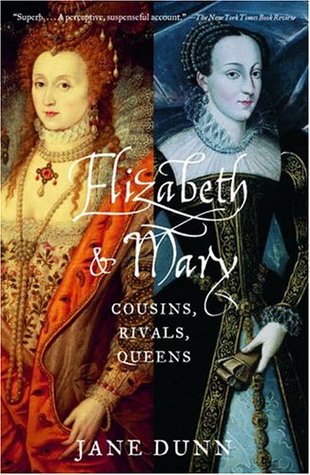
Elizabeth and Mary: Cousins, Rivals, Queens

381713

Rating: 2.5 Stars

Review:

Well, well, well, yet another book slanted completely toward Elizabeth. I had such high hopes for this one, but was sorely disappointed. And not just because of the dichotomy of how the author chose to (mis)represent her subjects.

First, I must be clear that Mary is certainly a flawed heroine. She made one poor decision after another upon returning to Scotland and pursuing the Darnley match. But she can hardly be faulted for the way she was raised - a Scottish queen from her first days, a French princess for nearly two decades, she was pampered and raised in such a way that she was always well aware of her status. But she was also often deprived of those she loved and who loved her the most - her mother, father in law, and husband all in short order. Family was important to Mary, so she naturally sought the guidance and protection of her self-serving half brother, Moray. She couldn't have know, but should have expected his treachery. And in further regards to family, one can only imagine her heartbreak at being all but abandoned by her only child, her beloved son. He too chose to protect his own ambition for the English crown, and had little motivation to help his wrongfully imprisoned mother.

As for Elizabeth, I'm not sure I even have the energy to deconstruct some of this utter nonsense. As I've maintained in other books about this topic, Elizabeth was an insecure, selfish, self-absorbed, manipulative, spoiled brat who knew full well the execution warrant would be served as fast as humanly possible; her counselors could not wait to get rid of Mary. Boo/hiss to Elizabeth. That's all the attention I care to give her.

As for the book itself, there are many issues. It jumps around for the majority of the first half or so and there's no consistency in the telling of events. This seemed to stop when Mary arrived in England. It is also beyond repetitive - this is not a complaint, it is a fact. If one needs that much information repeated time and time again, then perhaps something a little simpler to start with on the topic of these two would have been better.

Overall, highly disappointing. I'm wavering back and forth between two and three stars, how I wish goodreads allowed half stars! It had such potential but I just can't get beyond the obvious favoring of Elizabeth.

I can't say I recommend this one whole-heartedly. Perhaps for those who already have a good knowledge of the two queens and can see through the nonsense and bias in favor of Elizabeth.

Additionally:

I don't feel I have done as well with this review as others I have done on Mary before. I know there are many aspects of the relationship that I left out, the 'rivalry' so to speak, but it is just frustrating - and 400+ years later, what are we to do about it? I have so much sympathy for Elizabeth a child, but can not stomach her absurdity as queen. As much as Mary, Elizabeth is a victim of her own childhood. But this does not excuse the fact that she repeatedly looked for ways to 'be rid of' Mary, she signed the death warrant, then she laid the blame at everyone else's feet. Talk about hypocritical. She wanted Mary to be badgered into submission, promising a pardon if Mary would just admit she was guilty. But why would Mary? She had been held unjustly for YEARS. How many times was there talk of a face to face meeting, of help, and so on? Those actions never materialized and Mary had no reason to ever believe she would be free again. So, she embraced her death sentence and became a martyr. It is a tragic and unnecessary end for a queen who desired her freedom and was cruelly denied it by a government that had no right to hold her in the first place. Imagine if they had presented a united front together? How different history might have been.