Monday, August 1, 2016

Monday Meme!

#INTJ: Haha! But..... seriously though.....:

Okay, so this is not exactly a meme so much a floor plan to the most perfect house ever. Notice how there is no marks indicating entrance/exit? Lock me up with my books and I a am good! If you must visit, we can speak through an open window, ha!

Summer Reading Program

Another summer of reading is in the books!

The contest officially ends today for OPL, and I was able to surpass my goal of 50 books by reading 64. I probably could not have done it without that stupid Pretty Little Liars series, but I still passed my goal which is better than I was expecting. I also ended up at level 41 for my reading hours badge. The requirement for OPL was 10 hours to earn the badge. You then leveled up for every additional 10 hours you read. So...yes I ended up with 417 hours (out of a possible 1,872 hours, from May 15th to August 1st.). I know it seems insane that I read for what amounts to 17 days, but you have to consider all the times E was with her dad, all the time I read while she was napping, and before she woke up and after she went to sleep. I literally utilized every minute I had to read. AND you can't leave out all the time Eleanor and I read stories together, that added up to some serious minutes (actually, hours!) Some might say I am too competitive. I am not inclined to disagree.

Happy Reading!
Sarah

Wednesday, July 27, 2016

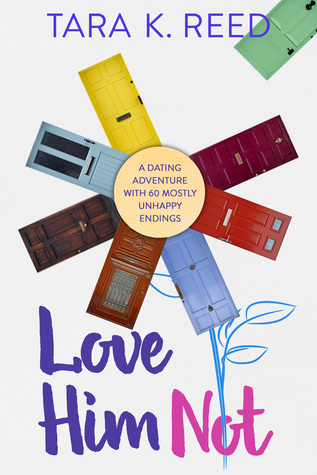
Love Him Not

27457537

Rating: 4 Stars

Full Disclosure: The author, Tara Reed, and I became friends on Goodreads a few months ago when discussing our mutual interest in history, Eleanor of Aquitaine, Mary Queen of Scots and Elizabeth I. I did not realize that this book which was on my to-read list was hers at first and last week she sent me a message saying it was free on Amazon for a short time, so I grabbed it all quick-like, because I love free books. It's even better when they are GOOD free books! This did not impact my review in any way.

So onto 'Love Him Not'.

When I was a kid I LOOOOOOVED the Choose Your Own Adventure books. I read through them like crazy and read some of my favorites over and over. What kid didn't love exploring volcanoes or inadvertently becoming a Russian spy?

So, this is like that...well, in no way. You don't get to be a spy or anything like that, but you get to become the main character, Elle Masters (like L Masters? like Love Masters? Or am I just the one weirdo who reads too much into names and sounds and how they fit together?) Anyway. You are Elle and you get to navigate a brand new relationship with a charming (sometimes) and handsome (always) man named Nick Wright (Right?! Mr. Right?!) who you meet on a night out with your gal pals.

As the cover shows, there are sixty possible endings for your relationship. When the author says they are mostly unhappy endings, she is not joking. 58 of the 60 are unhappy, monsoon-of-tears worthy, infuriating endings. Some are blind-siding (like the cheating ones, him not you) and some are totally justified. I had a lot of fun meandering my way through the messes that I got myself into, as well as finding the two happy endings fairly early on, after I'd only gone through about half of the not-so-happy ones. I won't spoil what those endings are or how you get there, but trust me, they exist!

I contemplated putting the book down after that, because all those unhappy endings prior were not so much fun - especially when you invest a lot of time, the story keeps moving along, you think you are heading toward marriage and then BOOM, you break up. But I really wanted to see how the rest of the endings went so I plugged on and found most of them. After I did find the two happy endings, I went back to the beginning and started just making the worst decision in each instance - in those times, the relationship ends REALLY quickly.

I liked the concept of navigating a relationship in this way because it is realistic. You will recognize yourself or your friends in the main character, as well as in her two friends who both help and hinder your relationship with Nick. It is safe to say that most, if not all, of these situations have presented themselves to you or someone you know at some point in your dating life. You have had to decide if you will be the calm, level-headed, logical person, or the psycho who freaks out all the time. We've all been there. It was fun to be able to make those ridiculous choices without it having any real-world impact - like snooping through his email.

The only complaint I have here is the format; reading it on my Kindle was tough sometimes - not impossible, but tough. You might get yourself into a situation that ends in a big flaming ball of fire as your relationship crashes an burns, and want to back up to make a different choice. But you might have forgotten which section you previously came from, and end up in completely in the wrong spot. To aid with this, the author offers a little cheat sheet on her website that you can print off to check the sections as you go, so you know where you have been. I would recommend that.

Overall this was a fun, light-hearted read - as much as it can be for a book that is mostly about breaking up!

July Podcast!

This month over at Depth Xpressions I discussed why I love the Bowery Boys Adventures in Old New York. It was such a fun read - I did post a written review earlier in the month as well. It is one of my favorite books of 2016 and a must if you love history, NYC, and/or both! It is a fun read and makes you want to plan a trip to the Big Apple asap. It is podcast #6 (so you have to scroll down on the player to see it), take a listen and tell me what you think!

Monday, July 25, 2016

Monday Meme!

always:

I will be honest and say I am not much of a Harry Potter fan (perhaps I am the only person in the world who can say this?), but Hermione and I think a lot alike.

I love the library!

Saturday, July 23, 2016

How to Teach Your Children Shakespeare

21532117

Rating: 5 Stars

Loved this book. Loved, loved, loved it. I breezed through the book in a matter of hour one morning - obviously meaning that I did not yet memorize the passages yet for myself. I was interested in the explanations first, and will go back through when my daughter is a little bit older for the big passages. That is kind of a gimme, seeing as how she is yet a toddler. Though, she does have one phrase memorized already, because we say it together before bedtime every night: "And though she be but little, she is fierce" (A Midsummer Night's Dream) and we shout 'fierce' together, because she is.

I was a bit skeptical (as a teacher) about the method the author uses of just rote memorization. But as I read, and realized the author was also explaining what the passages meant in accompanying t-charts, this method makes perfect sense. The author does not just list a bunch of passages, tell you to memorize them, and move on. He begins little by little, first with shorter couplets and such, before moving on to the massive soliloquies. 

This book has so much to offer besides the memorization of certain passages. The author also explains what they mean, gives background of Shakespeare's life and work. The book is just filled with so much Shakespeare-y goodness, I really don't know where to start. I would definitely recommend it to those who find Shakespeare intimidating or *gasp* boring (do I really know people like that? I might, but given that I am not quiet a out my adoration of Shakespeare, perhaps these people in my life have chosen to remain quiet?) Either way, I do believe there is something for everyone here - very obviously including children.

Ludwig states that he started teaching his daughter Shakespeare when she was six years old. I think that is fantastic. Shakespeare is, without question, the single greatest writer in the history of the world. There's no argument, he invented so many words and phrases, most of which we still use today. I guarantee you (and me too, even) use phrases or variations every day that we have no idea started with Shakespeare. His contributions can never be overstated and that is why I wanted this book - I want my daughter to know and love his words as I do.

I did notice some reviews from parents who did not like some of the author's choice of passages - mainly those with sexual overtones. My suggestion: don't teach your child those if you feel they are so inappropriate. Is that really hard? You'd think this would be common sense. There's nothing saying you MUST TEACH YOUR CHILD ALL THE PASSAGES IN THIS BOOK. It would be easy enough to apply the method he uses to ANY Shakespeare passage that you love or enjoy and teach your child in that way. I mean seriously, come on.

I absolutely, positively, 100% recommend this book for anyone wanting to learn more about Shakespeare and his words, to memorize and know his works, not just children. Fantastic read. Go get it!

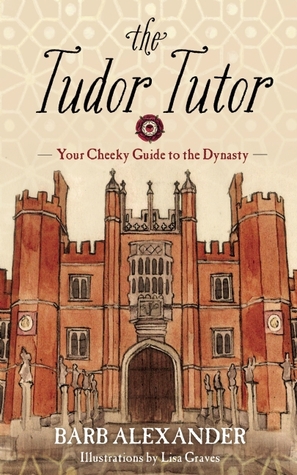
The Tudor Tutor: Your Cheeky Guide to the Dynasty

25159268

Rating: 2 Stars

The saying "you get what you pay for" is definitely true here. $.99 thanks to BookBub, this is definitely not for anyone who even knows a little bit about the Tudors. I've never read the author's blog, so I don't know for sure but this is basically an extended blog post that was published as a book.

Maybe because this is among my most favorite topics, I did not find anything 'cheeky' or cute about the book? It is absolutely the barest of bones. The Tudor timeline offered at 82% is well-done, so I can give some praise there. It really helps even those like me, who do know a lot about the period, to have the dates laid out so clearly in a timeline. The illustrations were also neat, but without captions it was sometimes difficult to determine who the picture was of, if you have never seen the actual portraits the illustrations were based on. That would be frustrating for those new to the topic.

Overall, I can't really recommend it. People who have a good knowledge base already will be wasting their time, since they know everything already covered. People who don't might like it, and it is a very quick read, but not one with a lot of meat to it. Pass.

The Devil in Massachusetts: A Modern Enquiry Into the Salem Witch Trials

The Devil in Massachusetts: A Modern Enquiry into the Salem Witch Trails

Rating: 3 Stars

It utterly baffles me that these events ever even occurred. And not just in Salem, but across the Massachusetts colony, at the time, and even across Europe as well at various times (James VI/I was kind of obsessed with witches). The text does show its age, particularly through the word choice of the author, but I still enjoyed the read for the most part. It is not without its flaws of course, and the prose could be quite irritating at times, but it was still interesting and provided a solid overview of the events as they occurred,

Reading the events clearly laid out by Starkey will help any reader navigate the supposed complexity of the situation. Myself personally, I don't see it as being terribly complex - these nasty, bored little girls found being the center of attention quite exhilarating and over time were basically addicted to it. But of course, I am applying by own 21st century analysis to a 17th century problem. This is one of the main flaws with the book, as the back cover states the author, "...takes dialogue from actual trial records but applies modern psychiatric knowledge to the witchcraft hysteria." As I mentioned above, the text 'shows its age', as it was published in 1949. So, basically, I am reading a book in 2016, through the lens of a 1949 writer, about events that occurred in 1692. It is easy to see there will be some disconnect. As I said in another recent review of Henry VIII and his supposed Kell Positive/McLeod's diagnosis, it is all but impossible to give a modern diagnosis to a historical person/people/event, and all it fact. While Starkey does not go so far as to actually call it fact, the application is there for the reader to decide if it makes sense. To me, it does not - at least not completely. The author mentions on more than one occasion something to the effect that many of these girls were of marry-able ages, but were not yet married and thus had no real purpose in life yet. The basic connection she seems to be making eventually seems is that these girls accused older women in their village because they were jealous that they themselves were not yet married and having sex. Perhaps I am misreading? Or reading too much into it? But that is how it comes across and to me that is entirely absurd to assume. It is almost impossible to apply modern thinking to historical events as I have said, and yet that seems to happen frequently.

Despite what I perceive as a flaw, the book is not without merit. As for providing a solid foundation for the events that occurred, the book does a wonderful job. One must just keep in mind the publishing date. The author made fantastic use of the sources available to her (there seems to be some confusion from some readers whether the author is male or female - Marion Lena Starkey was female. The back of the book even uses 'her' when referring to the author, so why the confusion?) There is a decent section about notes afterward and a selected biography, which in itself still used a fair number of sources. I always seem to have a problem judging a book by its notes and sources and I am really trying not to do so, but it is important to know where information has come from. I want to know that the author is not just making up random nonsense and trying to pass it off as fact. I especially approve of the use of sources contemporary to to the person or event being discussed, and you can't get much better than verbatim copies of the Salem Witchcraft papers, available at various archives, historical societies and libraries in Boston and NYC.

In reading, time and again it was frustrating to me that the magistrates could not see how absurd this whole debacle was. These girls were the reason so many innocent lives were lost. I say 'innocent' as a reference to the crime of which they are accused - witchcraft. That does not necessarily mean that all of the people found guilty were perfect, wonderful people (though by all accounts most were decent folks), but whatever undesirable characteristics they may have possessed certainly did not qualify them for hanging.

I learned a bit as well that I did not know before. One such example - I did not realize that it took so long for the trials to actually begin, from the time that the first person was accused of being a witch. I suppose it should not seem strange, given the state of the judicial system today, but one would have thought the trials would have moved along more quickly, given the perceived severity of what was going on. I also learned there was a lone 'afflicted boy' who was part of this mess but he rarely testified. It was interesting that "the detection of witches was apparently women's work" (page 195).

Overall I would recommend this one for anyone interested in the trials, but be aware of the age of the book.

Friday, July 22, 2016

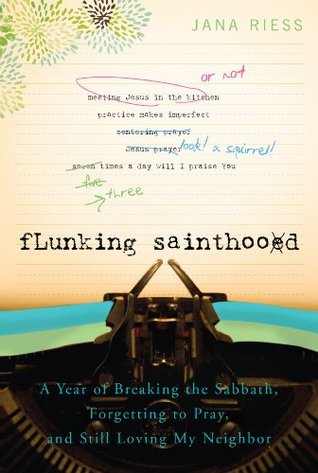
Flunking Sainthood: A Year of Breaking the Sabbath, Forgetting to Pray, and Still Loving My Neighbor

11524633

Rating: 4 Stars

I took so many notes while reading this one, so please be patient with me as I try to succinctly describe why I adored this book.

First, the basic premise of the book is that the author began in the month of January to plan the rest of her year, month-by-month, which religious practice she would look at in-depth and try to complete consistently. As you may have guessed from the title, she fails at nearly every single one, but still learns a lot along the way. I, in turn, learned a lot from her. Additionally, she reads books related to whichever religious practice she is attempting each month. As a major bookworm, I find those additional books as valuable as the text itself. I want my knowledge to grow deeper, and reading is one of the best ways I learn, so, win-win.

When Riess starts February off with fasting, I know personally it is something I am not able to do - at least in the classical sense of abstaining from food for a set amount of time. I appreciate that the author addresses this exact thing, as she mentioned in the book SHE was reading about fasting that that authors notes there are some people who should not participate in food fasting. Among those listed are those who have struggled with an eating disorder. I find that to be crucial because anyone who has, knows just how easy it is to fall back into bad habits. There are certainly other ways to fast and things besides foo to abstain from that can be a legitimate substitute. In fact, social media would be a FANTASTIC example that we all could use a break from. Just sayin'.

I was especially interested in Chapter 4 - April and the practice of lectio divina, which the author describes as "an ancient spiritual practice that prescribes a way of discernment through reading and prayer" (page 39), and she also notes that this kind of prayer that is not praying for things you want or need, but "becoming one with God's will". Talk about intimidating, right? This is also the point in the book where it became abundantly clear that a month is not actually long enough to attempt most of these, or to become comfortable and familiar enough with them. That was my concern from the start, before I started reading the book. Riess addresses this herself around the same time that I started realizing it. She says, "This is where it becomes very clear that, like fasting in February, a month is not long enough to make any real headway with a new spiritual practice" (page 50). What also helped me through this chapter and to have a better understanding of what this practice is, I was getting as much from the tidbits the author including from the books she was reading for that month. I felt like that was as much of a guide at Riess herself and am interested to read some of the books she was also reading.

More than any other practice that the author attempted, June was the most interesting and pertinent month for me. It was in this month/chapter that Riess attempted 'contemplative prayer'. This kind of prayer is not just about praying for things either. Instead, it is the practice of, "being still...I'm in full agreement with the basic goal: that we stop yammering to God about our petty concerns and take the time to listen" (page 67). This is another practice I need a lot of help with. And not just contemplative prayer, but prayer in general even. I feel like I am repetitive, or not saying the right words and making it clear. And I logically know this is silly because God knows what I am trying to say even when I don't. I feel like I ask for too much and don't praise enough, but my praise sounds shallow even though it is sincere. It sounds silly even as I type it out. God knows my heart and my intentions, but I get so wrapped up in how/what I think about it, that I am not listening to Him. Enter, contemplative prayer. I need to just shut up and listen.

As an aside, I like the Jesus Prayer: "Lord Jesus Christ, Son of God, have mercy on me, a sinner". 12 little words doesn't seem like a lot, but man the weight in those words is HUGE. Just saying it throughout the day, especially in times that I am frustrated or impatient or angry has helped immensely - not only to calm those feelings but to feel closer to God. This is, after all, something the author wants for herself, and something I want as well. She made the point earlier in the book that that was her purpose for completing these spiritual practices, that has the need to feel close to God. I have found through this prayer at random times during the day, and in those negative moments, helps me gain that feeling over and over again.

It should be no surprise then that November's practice, praying the hours, is incredibly intriguing to me as well. I love the idea of this, and have always been intrigued by it. As a teacher in a public school though, I don't know how well this would be received. I would assume there is some rule that is this were part of my religion, they have to let me take the time off briefly to pray. I could see how it would make some people upset or be seen as a bother and not something to be taken seriously by some co-workers. It is something I will have to consider carefully.

For the author's December practice, she put into action her plan of 'never saying no' and giving generously to anyone who would ask. She set a monetary goal to reach and in the ensuing chapter the act of tithing came up. This is something that is tough to do for many people, myself included because I am a poor teacher with no money. I do tithe, though I am not up to 10% yet. After a long, long, long conversation with my own pastor, we came up with an idea and plan that I am implementing because this really is so important to me. Something that confused me was the author stating something to the effect of 'imagine what could be accomplished if everyone tithed 10% of their after-tax income' (not a direct quote). I was confused because I thought you were suppose to tithe BEFORE taxes, out of your gross income?

Other things of note:

My pastors are mentioned in this book on page 112! It was neat to see anecdotes of them in print (one of my two pastors ((they're married)) lent me the book to borrow - they are friends with the author).

Monasteries are forever intriguing to me. It is almost embarrassing to admit that it never occurred to me that they might exist in the US. Like, duh Sarah. But I have never really thought about them in the modern sense. Mostly when I hear or read the word monastery, it conjures images of Ol' Henry destroying them in England in the 1500s.

Two quotes I especially liked:

"Sodom and its neighboring town Gomorrah were destroyed not because men were having sex with cows or each other - despite the unfortunate fact that the word Gomorrah sounds like a venereal disease - but because their people tried to kill God's messengers" (page 120). THANK YOU.

"I already know I am a crappy old sinner, even while everybody keeps telling me, in and out of church, that I'm basically a nice person. They're wrong. If I learned anything this year, especially from the Jesus Prayer back in June, it's that I'm a selfish worm" (page 151).

I feel ya, sister.

Tuesday, July 19, 2016

David and the Psalms

28114399

Rating: 4 Stars

I read this one in a matter of just a couple days (Thank you BookBub for the great deal!) and I am so glad I did. I must make a confession that there was a period in my life in college and grad school (roughly 2001-2011), that religion took a backseat. I toyed with agnosticism and even atheism. But they never felt right to me, even when I was rebelling against faith. I was not brought up in a strict religious home, but we did attend church every Sunday, I participated in Sunday School, then Confirmation classes on Wednesdays in high school - but even then I was not reading the Bible closely, and as I got older I was not reading it at all.

Then I had a baby and wow, did that quickly bring the big picture into focus.

I feel so behind in where I should be in my knowledge of God, Jesus, and the Bible. So, I am forever grateful for books like this that help dumbdumbs like me play catch-up. While different branches of Christianity hold very different beliefs (the author is Catholic; I am baptized Lutheran, confirmed Methodist, now a member of a Covenant church), there is still much that can be learned from one another, especially when delving into material such as the Bible, which we all use.

My knowledge of the New Testament is much better than the Old Testament, so when I found this one, I knew I had to read it. I am personally quite fond of the King James Version, which lyrically is beautiful, even if not entirely accurate compared with other versions of the text. The problem then, is that sometimes takes me a few readings to understand the Early Modern English (sorry kids, it's not Old English).

This book is a very easy to read discussion of the life of David. In fact, the first 70% or so is dedicated to his story before even getting into the Psalms. I feel like I have a much better knowledge of David now, aside from the basics that everyone seems to know - son of Solomon, Bathsheba, etc. And perhaps because of my supreme lack of knowledge, the rest of his story seems enlightening to me, and that is kind of embarrassing. But I have to start somewhere, and this is a good place. I feel like those who have a better grasp of David and his life might already know a lot of what is contained here, but it is a good read for this with less knowledge of him, like myself.

Following the analysis of David's life, the author moves into the Psalms themselves that have been attributed to him. The Psalms are analyzed as well, and then there is discussion of what a Psalm actually is.

This was highly informative and an easy read. That is something I consider important for those like me who are new to really studying the Bible in-depth. It is easy to get overwhelmed, and thus give up, in Bible studies. When books to guide are easily accessible, it makes the journey a lot less intimidating. Definitely recommended.