Sunday, August 28, 2016

The Edge of the Empire: A Journey to Britannia: From the Heart of Rome to Hadrian's Wall

29341703

Rating: 4 Stars

I received this book via NetGalley in exchange for an honest review.

I. Loved. This. Book.

Right off the bat I appreciated the use of maps with this book. I am a visual person so I am fond of books that do make good use of maps and photographs. As you begin your journey in Rome and meander your way toward Hadrian's Wall, there are maps along the way to help you trace your journey. I was frustrated by the lack of photos, but naturally as you made your way farther and farther from Rome, there is less that survived elsewhere - especially in Britain of course - to mark all the places the empire expanded to and flourished.

One thing I noticed right away was how well-researched this book is. I like that it is written in the present-tense, as if you, the reader, are making this journey yourself. There were tons of tidbits along the way, things I had never given any thought to, really, despite my deep interest in Roman times and Roman Britain in particular. For example, it would be interesting for us to really know why emperors restricted which kinds of foods could be sold at bars or cook shops along the way. The author suggests that it was because kitchens were such fire hazards, as they were often located in the center of town and it would be kind of a big effing deal if a fire broke out. Another possibility was that the fumes were too nasty or there was simply too much smoke.

Throughout this journey, you travel both by land and by sea. I found the sea portion of the travels just as interesting as that by land - though I was disgusted on many levels to learn that travelers would use tombs as bathrooms. Seriously. Yuck. And so disrespectful. But, back to the sea travel. I thought it was interesting that the ships leaving Roman ports did not actually have accommodations for passengers. I wasn't expecting the Titanic or anything, but basically passengers had to find space on deck or below to sleep. For all the advances ancient Rome made, they couldn't figure out how to build a ship with cabins or some sleeping areas? Seriously?

I find learning about the whole Roman Empire kind of daunting. I mean, it was this vast, sprawling empire and there is so much history, even I almost get bored just because there is SO MUCH to learn. I think this is why I focus more on Roman Britain (plus, Bouddica. Duh...And literally as I typed her name, I realize I spell it differently almost every time. Looking up how I have it labeled for my blog posts, I spelled it 'Boudicca'. Oops. But I have seen it spelled so many different ways and no one can even agree if she was actually real, let alone how to spell her name).

Anyway.

My purpose for mentioning my intimidation by the Roman Empire was to illustrate how little I know about the actual governing and politics. As you are, so to speak, traveling to the edge of the Roman empire to take up your governorship at Hadrian's Wall, it was interesting to learn some detail about the job itself. Imperial Governors had no set term limits. They would be assigned to their post for as long or as short a time as the Emperor chooses. Once the governor has arrived at his post, he must stay until his tour is over. He is not allowed to leave the boundaries of his province for any time. Even if he were conducting official business, referred to as "the fulfilling of a vow", he is not allowed to spend a single night away from his province.

Once we were on the road to Londinium, I was especially interested in this section and beyond because, of course, I love all things related to Britain before 1603. I mean, I don't love Elizabeth I, but that is neither here nor there in relation to this text. This was by far my favorite section, though I really enjoyed the book as a whole. As we enter Londinium, I decided I want my own Transport Officer because I still don't know where most of the stuff in Omaha is after living here for a number of years. To be fair though, I do not actually live in Omaha-proper, nor do I even really care about Omaha, because I hate living here, so there's that. Maybe I don't need a Transport Officer after all.

I loved the section dedicated to Boudicca, the fierce Iceni queen. I'm not keen on the wholesale slaughter of innocent people that she spearheaded, but I understand her need for revenge. I so desperately want her to have been a real person and it just kills me that we will never really know for sure. Despite Tacitus writing of her, there are some historians who doubt her existence. I choose to ignore them and focus on the fact that there is literally a layer of earth below London referred to as the 'Boudiccan Destruction Layer', which is described as a thick layer of red burnt debris which has been found to cover pottery  that dates to before 60 AD in what was then Londinium. Roman skulls were also found a few years ago that were possibly Boudicca's victims. She was real, I know it. She has to be.

Aside from the trip through Londinium, I was just as excited about the jaunt through Bath, perhaps my favorite city in England (though to be fair, I did not get to spend a ton of time in London, which I am sure I would love just as much). There was a whole chapter dedicated to Bath and as the author was describing the great bath, I could picture it in my mind exactly and I was right back there, as I had been physically a few years ago. it's a very calming place, even now with tourists traipsing through. I'd love to be there when it's quiet, but even when it's not, you get this very cool, peaceful feeling. Plus dusk was settling as our time there was ending, and it was very surreal, very cool. I'd like to go back in the future and experience it without my camera so I can just BE there. Also, the curses discovered at Bath are hilarious.

There were many little things throughout the book that really made it for me. Throughout the trek from Rome to Hadrian's Wall as Julius Severus would have done, the author includes the modern name in parentheses after the Roman name. Additionally, with a lot of the quotes the author uses, she then puts its translation into Latin after giving the English version.

Seeing Hadrian's Wall, walking some it, is high on my bucket list. But the author brings up a great point about the families who were displaced by the building of this marvel. These families may have been on that land for hundreds of years, but their homes were demolished after having to be abandoned because the wall was built. That bums me out because those Romans were just kind of jerks all around and didn't care who they displaced in order to try to bring order to the ends of their empire.

The final chapter of the book actually ends at 48%. A post-script follows that is entitled 'Beyond 130 AD: People, Politics, and Places." We kind of find out what happened to Julius Severus after he was recalled to Rome. The politics section goes over what happened to Rome and the 'Places of Note' section gives a bit more information about all the places mentioned or visited in the text. I also appreciated this section because it then gave a little info about what those places are like today.

Before the bibliography at 54%, the author also included a list of the Latin place names and their English counterparts. I found this extremely helpful, as was the bibliography section itself. It reiterated just how well-researched the book is, so even though the actual text was only 48% of the file, it was definitely worth the read.

The only complaint I really have about this one is that due to the asterisks throughout the chapters corresponding with notes at the end of each chapter, a hard copy would have been easier to go back and forth between. There were points where I would get to the notes section at the end of a chapter and sometimes forget what I had especially wanted to know more about. Otherwise, this was a really fantastic read that I enjoyed. Highly recommended.

Saturday, August 27, 2016

New Badge!

I earned a new badge on NetGalley! I have now reviewed 50 books on the site and got the nifty new badge you can see to the right. Woohoo!

Addendum: I've actually submitted feedback on 72 titles that I have received via NetGalley. The majority were reviews. A small less-than-handful were messages to publishers about why I chose to not finish a book but did not feel comfortable rating/reviewing what I had read of a particular book.

The Secret Language of Churches & Cathedrals: Decoding the Sacred Symbolism of Christianity's Holy Buildings

9582952

Review: 4 Stars

Wow. These photos alone, just, wow.

I had originally received this as a ARC via NetGalley in exchange for an honest review, but did not feel like I could originally review it at the time because the file was just so screwed up. I felt like I needed a hard copy because the ARC did not justice to the beautiful photographs. There were huge formatting issues, pictures were literally spliced in half and you might not see one half at all, or find it so many pages later. The text was all out of order - seriously screwed up. Then around 31%, the cover, title page, and copy write appear with that table of contents and intro. It was definitely weird, because I have never encountered a file like this from NetGalley before.

I sent a note through NetGalley to the publisher stating why I did not post a review but did not expect to hear back, as for various reasons in the past I have sent similar notes and never received a reply. I was pleasantly surprised then, not too long later, to get an email from Gemma at Watkins Publishing directly, asking if I would like a PDF copy from them to read and review. I accepted and am so glad I did. The book truly is amazing. Even if there were no text at all, and it was simply photographs of the churches and cathedrals, it would be worth it. It is absolutely stunning.

I am completely fascinated by religious buildings and imagery. I love cathedrals especially, and two of my favorites are St Giles Cathedral in Edinburgh (which I did not get to go inside of) and St Colman in Cobh, Ireland (which I was able to go inside of, and never wanted to leave). St Patrick's in Dublin is also beautiful, though again we did not get to go in. I think part of my fascination is because I am kind of obsessed with Catholicism, though I am Lutheran. Maybe obsessed is not quite the right word - more like enthralled? - but I watch in eager anticipation every time the Papal Conclave is deciding who the next pope will be. And I dig Pope Francis. A lot. Like, he is a total badass.

The architecture alone is amazing but the author goes into such detail about so many aspects of the buildings, I honestly do not really even know where to start. Within the specific buildings showcased, we see beautiful ceilings, mosaics, windows, and so on. The section alone on stained-glass windows was especially of interest and the Good Samaritan Window at Chartres Cathedral in France. In just two pages it really breaks down each section of the window and I found myself thinking back to the variety of stained glass windows I have seen at numerous churches and what scenery or message I might have missed because I was too busy looking at the pretty colors to see the big picture.

I believe this book would be of interest to many - those interested in history, art, architecture and/or religion. It is completely captivating and I am so glad I was able to have a second chance to take a look at this one.

Women in the Middle Ages


487339

Rating: 4 Stars

I have read several books by this husband and wife team and enjoyed them all. This one is no exception. Though it was written in 1978 and comes across at some points as dated now, it is a thoroughly researched and well-written look at the lives of women in what we refer to as the Middle Ages, roughly 600 AD to 1600 AD. Of course there is always debate as to when the actual Middle Ages occurred - some dismiss the term 'Dark Ages' completely now, others say this time period begins with Alfred the Great and ends with Richard III's defeat at Bosworth. A strict start and end date is of little consequence to this book, as the authors look at seven women who lived in the centuries from roughly 1000 through 1400. And, though Eleanor of Aquitaine is not one of the women profiled in the book (sad face), she does make an appearance and I quite enjoyed that she is given brief but proper due in the chapter dedicated to Blanche of Castile (her granddaughter): "Heading the party was John's mother, and the princesses grandmother, Eleanor of Aquitaine, an almost fabulous queen who had astounded her contemporaries 50 years earlier by coolly deserting one king (Louis VII of France) to marry another (Henry II of England and Anjou), and who, at the age of 80, still played an active role in politics" (page 97). Page 99 then shows a photograph of Eleanor's effigy at Fontevraud Abbey, next to her favorite son, Richard. As an aside, I am forever amused that she was laid to rest next to her son, instead of Henry II, who was also entombed there. Whether this was purposeful planning or not, one would assume she would not want to spend eternity next to the husband who imprisoned her for years due to her habit of helping their sons rebel against him. While Henry was a great king, he was not a great husband (as viewed from our century, at least, though it would have been of little matter in the 12th century).

Now, back to the book...

Question: Even in the Middle Ages, people knew the world was not flat. And this fact was about them knowing this was known in 1978. So why the heck were we still taught in the 90s that people in that time thought the world was flat? It makes no sense.

I like that the authors use the first section of the book to give background and general information, not only about women in the Middle Ages, but in history as well. For readers who do not know much about this time period, this is valuable to give some insight into life for women in a time so different from our own - or even those in 1978 when this was first published.

The second section is devoted to seven specific women, spanning the centuries of the Middle Ages. I loved that the authors profiled women from all over Europe, not just England (though I do love England quite a bit). Here we meet Hildegarde a German nun who lived in the 1100s; Blanche of Castile (Eleanor's granddaughter), who became queen of France; Eleanor de Montfort, youngest daughter of King John (and another granddaughter to Eleanor of Aquitaine - are you picking up on her importance yet?);Agnes li Patiniere, a textile worker who lived in Flanders in the 1200s; Alice Beynet, who lived in England; Margherita Dantini, an Italian woman whose home, built by her husband (an Italian merchant) still stands today - or least did so at the time of publication; and finally, Margaret Paston, of whom we know so much about because of the multitudes of correspondences between her and her husband and sons that survived the Wars of the Roses.

These women are so fascinating because of the varied lives they lived. From peasant women, to the granddaughters of queens. The authors present these women as they deserve. They are made real, not just distant figures in time, as people who might have existed. There are existing documents that prove as much. It was great to see these women stand on their own and not be defined by the men in their lives, whether that be their fathers or brothers or husbands. This is important, because when we think of that time period, we don't think of women being successful in their own right in a very male-dominated society.

The only thing that bothered me was the photos. They're all black and white, and directly on the page with the text - no fancy glossy paper stuck in the middle of the book here. I would have loved to see some of these paintings in color, they would have been beautiful On page 35 there was also a chart of consanguinity from the 13th century which I would love to see in a more clear photo. You can't read the writing at all, so it would have been helpful to have not only the full photo, but then a close-up of the writing so it would actually be legible.

Otherwise, I have no real complaints. Frances and Joseph Gies were fantastic and thoughtful researchers who were thorough in their work. Both have passed away now, but have left many books behind to introduce the new readers to the world in the Middle Ages. Highly recommended.

Tuesday, August 23, 2016

Top Ten Tuesday!


This week's Top Ten Tuesday, courtesy of The Broke and the Bookish, is:

August 23rd: Ten Books That Have Been On Your Shelf (Or TBR) From Before You Started Blogging That You STILL Haven't Read Yet.

Oi, this could easily be more than ten books, because my TBR list has been out of control for a long time. I have had a couple blogs throughout the last ten years or so, but have specifically been blogging about books since February of 2015. I have been using Goodreads since May of 2012, so this could be tricky. But, let's give it a try, shall we? As always, these are in no particular order, but simply books that I really want to read, that for many reasons (mainly that my library doesn't carry them) I have not gotten around to reading yet.


75639

1. I love Feinstein's books. He is a fantastic sports writer and I have read nearly all his books - except this one. it is the only one my library system does not carry. I have this strange fascination with Bobby Knight because he is such an amazing coach but he is totally insane. I think he is an interesting study, especially because I love Duke and Mike Krzyzewski, so how Coach K ever played for Bobby at West Point, and became a totally opposite coach, is amazing.


767171

2. This is widely considered to be the first and last word in the history of the Third Reich. Throughout middle school and high school, I could not consume enough information about WWII and how Nazism spread so quickly and wildly. Part of the fascination came from my heritage (my last name is super German, albeit Americanized now, and so this period in time was especially poignant for me). I have found though that once I became a mother, I could not longer stomach reading about these horrors. Not to mention this book is a bazillion pages long. My library system allows us to check out books up to four times, for three weeks at a time. The problem with ever finishing this one is that it is always being requested, so I get three weeks with it and then it is back to the library for someone else. I may never finish this one.

49851

3. I mean, it is pirates. Why haven't I read this one yet? Because I have added fifty million books SINCE this one, that's why.

2338000

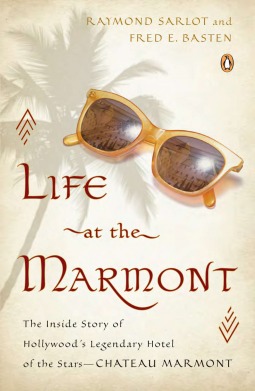
4. I love everything pop culture and Hollywoodland. The Marmont is endlessly intriguing and I would love to be able to stay there some day and bask in the glamour of this place.

10104

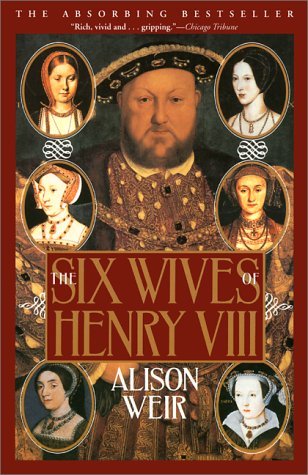
5. If you have been reading my blog for a while, you might know that the Tudors are one of my two most favorite families in the history of the world (the Plantagenets being the other). I have no good reason as to why I have not read it yet, as I have read so many other books by Alison Weir (of the non-fiction variety of course). Again, I can only say that it was added very early on and has been buried under an avalanche of other books.

3873

6. I love religious history. And I would love to see how these three faiths really connect and intertwine. And while I know Karen Armstrong is well-versed in the subject matter, a previous book I read of hers was so sinfully boring - and should not have been. I am hesitant because I do not want another dud that puts me to sleep. That cover though...

11857098

7. Ismay still has the unfortunate legacy of making a decision which both saved his life and destroyed it. Quite the conundrum. I am as obsessed with Titanic now as I was at 15 (my heart WILL go on), and have no legit excuse as to why this remains unread.

1438551

8. I've actually had this one in-hand from the library. But for some reason I did not feel like reading it at the time. I can't explain why. This might sound crazy, but I do think on a deep level books speak to our souls and for whatever reason, it was not the time for me to read it and instead move on to something else. Someday, though.

39020

9. I am not typically interested in pre-Columbus North and South America. I don't know why. I do have some interest in the Incas, Mayans, and Aztecs, but I just can not get into a more general history of these lands before 1492. I do find the myth of Columbus extremely interesting though, and this one has been on my shelf for ages.


26297945986818    770556    10348265

10. Okay, so I am totally cheating, but it is my list and that is allowed sometimes. If you have read my blog before, you know that I hold Eleanor of Aquitaine in high regard. So high, in fact, that my daughter is named Eleanor. Her life is endlessly intriguing, partially because there is so much we do not know and can only guess at. Perhaps we do not even know what she looks like, save the effigy that has survived the French Revolution and nearly 1000 years (though her bones were scattered in a field during said revolution and never recovered; a very shameful act that infuriates me to no end). That being said, there is no reason I have not yet read these. In fact, I own all four of them! I have made it a priority to collect every non-fiction book I can find about Eleanor, to be able to give to my daughter when she is older - but of course I want to read them myself as well. Maybe it is because I know that I own them, and I keep requesting from NetGalley and and buying via BookBub, and checking out books from the library. It is a sickness, really. But the good kind. I am also cheating a little bit more, in that I added April Queen in May of 2015, a couple months after I started my book blog. But it is part of the quartet so I feel it warrants a mention.

Leave a comment and let me know what books fill your list!

Monday, August 22, 2016

Monday Meme!


It also helps if your last name is Timberlake, but this is definitely true too!

Monday, August 15, 2016

Monday Meme!


I'd be more decorated than Michael Phelps! ...which is an insane thought, because he's
A-MAAAAAAY-ZING.

Happy Reading!

Thursday, August 11, 2016

Update!

It's that time of year again...the dreaded teacher meetings week. While I will not be as active during the day as I am over the summer, I will continuing posting my reviews, memes, TTTs, etc., so keep checking back and watching on Twitter for new posts!

Happy Reading!
Sarah


Tuesday, August 9, 2016

Top Ten Tuesday!

I am super excited to get to participate for a second week in a row, for The Broke and The Bookish Top Ten Tuesday.

This week's prompt: August 9: Top Ten Tuesday REWIND -- go back and do a topic you missed over the years or recently or a topic you really want to revisit.

So I went back through and found one that was perfect for me, because I love beautiful covers and it is totally possible for non-fiction books to have A-MAY-ZING covers. This is the prompt from 3-6-12, titled "Top Ten Favorite Covers". Here you go, behold the stunning visual displays of some of my most favorite, in no particular order.

24611571

1. So simple, but so beautiful. I love everything about this one (except John himself, because he was a terrible king and nearly ruined the Plantagenet empire), but the lettering, the seal, it is all wonderful.

25622226

2. I know, I know. I used this book last week also, but can you really blame me?

25810724

3. I am kid of a sucker for books having to do with the White House. I really like this one because it incorporates the gardens too and that shot of the house, beautiful.

18453221

4. This one is hauntingly beautiful, especially if you know the story of Huguette Clark and her life - especially because it is one of the few photos of her and perhaps one of the last ever taken.

Making Monte Carlo: A History of Speculation and Spectacle

6. Love this shot of old-time Monte Carlo, the black and white photo that gives way to that bright blue sky; it really pops.

10447607

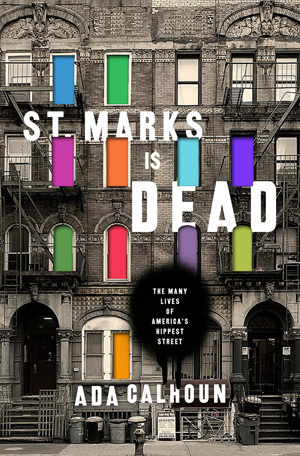
7. I did mention in my last Top Ten Tuesday post that I love NYC and this should further solidify that. I am really a fan of the black and white covers with a splash of color, something this book and St Marks is Dead both do really well.

25317189

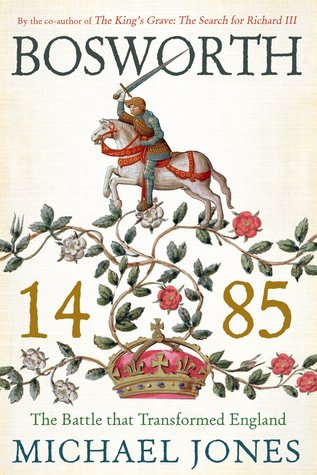
8. Love this one for the entwining of the red and white roses, symbolizing the houses Lancaster and York. The Battle of Bosworth, and Henry Tudor's win and marriage to Elizabeth of York, would bring the houses together and finally end the Wars of the Roses

23403783

9. Another simple but very effective cover. 

13047143

10. I utterly adore Scotland. I can't wait to go back again and again. I purchased this book, among many others, when Mom and I went in 2009 and whenever I especially miss it, I pull out books like this and look at the beautiful photos of this beautiful country.

So, fellow readers, what topic did you choose for the Top Ten Tuesday Rewind this week?? Leave a link to your blog with your comment so I can check yours out too!

Happy Reading!
Sarah

Monday, August 8, 2016