Showing posts with label Crime But Not True Crime. Show all posts

Sunday, July 20, 2025

Publisher Gift via NetGalley | Whack Job


I received a free digital ARC from the pubisher via NetGalley in exchange for an honest review.

Rating | ⭐⭐...barely. EDIT: ⭐ only

This is not a history of axe murder. How can you write a book about axe murder and not write about any axe murders as we traditionally think of them - with the exception of Lizzie Borden? Where was the Axeman of New Orleans? Or Villisca? And to top it off, Lizzie doesn't even show up until chapter nine. NINE! Out of something like twelve chapters, hers and the chapter on the murders at Taliesin are the only ones that are actually axe murders.

Instead we also get stories of a possible 'first axe murder' half a million years ago, we look at the axe as it was used in war, and then take a look at Henry VIII and his love of chopping off heads of people who looked at him sideways.

Had I realized the author is the same one who wrote so flippantly with her father about axe murder victims in the book The Man from the Train, I would not have bothered with this one. Her casual approach to some of the deaths was honestly offensive. She's at times dismissive and bordering on straight disrespectful. I assume her aim was cheeky or funny, but she is neither. I hope she stops writing about this topic.

I honestly got more annoyed by this book as I wrote up the review and am knocking it down to one star.

To sum it up, this is a history of the the axe as a tool to build and how it was also used as a tool of death. But it is definitely NOT about axe murders.

Not recommended.

Thursday, July 17, 2025

NetGalley ARC | Murder in the Dollhouse


I received a free digital ARC from the publisher via NetGalley in exchange for an honest review.

Rating | ⭐⭐⭐

Jennifer Dulos dropped her kids off at school one morning, and was never seen again. She came from incredible familial wealth - and Liz Claiborne was her aunt. Jennifer was in the middle of an incredibly nasty divorce from her scumbag of a husband, with whom she shared five children. They'd met back at Brown University and at one time appeared to live a charmed, happy life. After Jennifer's disappearance, her husband and his girlfriend were arrested. He killed himself the day he was suppose to report to court, she was convicted of conspiracy to commit murder.

Unrelated: my grandma worked for Liz Claiborne when I was a kid and I loved back-to-school shopping there. In third grade I got this cute shorts/shirt set I loved, and one day for gym we went out to the playground. Mrs. Ewan asked us all to sit down on the blacktop and I moved to the back of the group to stand. She asked me to sit down and I deadass looked a grown woman in the eye and said, "Oh I can't sit down, these are Liz Claiborne shorts." She didn't say anything for a moment, then moved on with the lesson.

This isn't really a true crime book because the majority of the text is devoted to Jennifer's life. I appreciate this because I would much prefer books celebrate victims rather than perps.

That being said, there was so much more detail about her life than what we probably even needed, in order to understand who she was and how she ended up married to such an awful person. Jennifer led a very sheltered life due to her father and I think that is part of what set her up to get stuck in a situation like this. It seemed like she felt she was supposed to get married and have kids, and that was the only course after college. But she was also very selective about who she dated, and then as the years passed maybe she panicked a bit, ending up with Fotis who was an absolute narcissist. Well over half the book, maybe even closer to 70% is devoted to her life before her marriage, divorce proceedings, and disappearance.

The author really got to know his subject, and seems to care deeply about what happened to Jennifer. Which is why it was super weird to get a vibe that the author thought had Jennifer not fought Fotis so hard for custody of their children during the divorce proceedings, maybe she would not have been killed. I really hope I am wrong, because that's disgusting, but it was the impression I got. She had every right to fight for her children.

This is such a sad, senseless crime. While Fotis and his girlfriend are 100% responsible for their actions, I place some blame on the court and attorneys who continued to drag out the proceedings, just so everyone could keep making money. All that did was create more room for both parties to get angrier and angrier at one another, really dig their heels in, and ultimately Jennifer lost her life.

I hate that he evaded justice and that his side piece/almost future ex-wife only got fourteen years. She can still do the right thing and tell the children where their mother is so they can give her a proper buriel. But she won't and it is heart-breaking.

Recommended. Mostly. That vibe really bothers me.

Tuesday, July 15, 2025

Book Review | Damnation Island: Poor, Sick, Mad, and Criminal in 19th-Century New York


Rating | ⭐⭐⭐⭐

This book was absolutely horrifying and engrossing at the same time. I could not put it down.

In 1928 NYC purchased an island in the East River and called it Blackwell's Island. For the next hundred years the complex of buildings were supposedly a safe-ish place for the insane, poor, sick, and criminal. The author shows us what daily life was like for those living on the island, as well as those who worked there. We hear from the people trapped there, city officials who sent them away, reformers who knew it was not the solution, and journalists trying to shed light on the abusive and inhumane practices. We also are taken on a deep dive of the politics surrounding the on-going use of the island, how 'charity' was put into practice, and all of the horrific 'therapies' patients were subjected to.

Different facilities were built to care for each of the groups mentioned above. Great in theory, but not entirely accurate in practice. Due to funding (or lack of), staffing (or lack of), food (or lack of), and/or medication/supplies (or lack of), these populations often mixed together and the results are as awful as you would expect. With massive overcrowding, sometimes inmates were assigned to a different facility than was appropriate. And as a cost-saving measure, convicts were assigned jobs as attendants in one of the other buildings. It went as well as you would expect.

That was not the vision the city had for this project when it first began. Originally the plans were, naturally, to find humane ways to care for these populations with the highest needs. The initial plan was for a facility to house up to 200 people. There was no intention of mixing any of the populations, especially not those in the penitentiary with the mentally ill, One can see right away why that would be a receipe for disaster, a situation ripe for further abuse of those least able to defend themselves. When the building was nearly at capacity in the first few weeks, the city realized they had a much bigger problem on their hands. The asylum had to be enlarged repeatedly, and still there was never enough room for everyone. And for the doctors and nurses truly trying to do good and help those in their care, it must have been overwhelming to know that there was never enough of anything to truly help - not enough money, not enough staff, not enough supplies and food and medications. Of course, you also had those who did not care about treating patients humanely, which made an already-unbearable situation infinitely worse.

We might think we are doing so much better today, but let's be realistic. The mentally ill and the criminal are still housed together, only now it's in jails and prisons, where those with metal illness get zero treatment and they are subject to abuse again at the hands of fellow inmates. While treatments in psychiatric facilities are better now, prisons are not. Prisons are the new asylums for those who do not have access to treatments and medications and money/insurance to pay for these things that the psych facilities can provide.

The author did a fantastic job showcasing each facility on the island and how they operated. As we all know, people (mainly women) could be committed for pretty much anything, and that's exactly how Blackwell Island found itself at capacity so soon after opening. For a century, people sent to the island were subjected to absolutely disgusting living conditions. Food was often spoiled and rotting, and there was much physical abuse. It will also surprise no one that racism was also at work, and while conditions were terrible for everyone, it was usually even worse for Black patients and inmates. Plus we all know how well-liked the Irish were at this time, so their treatment was also as awful as you would expect.

This is a very well-researched and interesting read. The author had access to surviving documents and really brought to life individuals who lived and died on the island. It is a difficult read, but an important one. The complete disregard for human life over the decades of operations is heartbreaking and something that stayed with me long after I finished this one. There were certainly bright spots in the story, reformers who saw what was happening and tried to stop it, but were met with resistance at nearly every turn.

The author ends with a look at Rikers Island now, and asks if we are really doing much better today. You can probably draw your own conclusion.

Highly recommended.

Monday, July 14, 2025

Mini Reviews | Books About Books


Rating | ⭐⭐⭐⭐

Agatha Christie is the greatest crime fiction writer in history. I love her clever use of poison in so many of her novels. It adds another level of mystery; there are so many ways and kinds, the possibilities seemingly endless. Christie carefully selected each poison, practically making it a character itself.

I absolutely loved this book. Harkup has written several books like this, looking at the science behind some of our most beloved characters or authors. There's one on Dracula, Frankenstein, and Shakespeare. That one is my most favorite and you can find the review HERE.

Harkup looks at a variety of poison, over a dozen altogether. Each chapter follows the same template, but given how many different types she discusses, it did not feel repetitive or like it was dragging.

First, the author gives a summary of the book she is using to showcase Christie's skill with the specific poison. Then she begins discussing the poison itself. She gives a history of how it developed, the chemical make-up and science of how it works within the body, symptoms of poisoning, how it's detected, and if there are antidotes.

I definitely would recommend this for Christie fans, and also crime fiction fans in general. Such a fun read!

++++++++++++++++++++++++++++++++++

Rating | ⭐⭐⭐⭐

Full disclosure, Frankenstein is not my favorite. I read it once, years ago. But because I really enjoy this author's work, I gave this one a try and was pleasantly surprised.

While the likelihood of Shelley's methods working in 1818 were non-existent, Harkup looks at the science of the time and the scientists working to make all kinds of discoveries and break-throughs in various fields. Luckily, we are still quite a ways off from being able to do so in our time, as well. Even so, the author explores all the yucky goodness you would expect from a book about a monster put together by dead body parts - the stories of body snatchers, tests to determine rate of decay, etc.

In addition to exploring the scientific advancements at the time, Harkup also writes a significant biography of Shelley as well. I do not know much about her but the basics, and had no idea she was so young when she wrote the book, nor the circumstances surrounding it. I knew a bit more about her mother, but enjoyed learning about her as much as the science of the most famous monster in history.

The author also provides quite a biography of the novel as well. She recounts the writing challenge proposed at Villa Diodati, to write stories to scare one another on that dark and stormy night, then how the book fared when it was first published in 1818, and again when it was revised and reissued in 1831.

Despite no more than a passing interest in Mary Shelley and Frankenstein, this was a fantastic read and I really enjoyed it. I think this is a must-read for fans, and those with an interest in the science of the time period.

Monday, July 7, 2025

Book Review | The Secret Poisoner: A Century of Murder


Rating | ⭐⭐⭐⭐

I went back and forth on this one, debating 3 or 4 stars because it did get repetitive at times, but in the end the amount of research the book contains won out.

The Victorians loved a good murder, and this book is a social history on one particular kind of murder - poison. The nineteenth century was peak-time for poison, though it had obviously been available many centuries earlier. The author addresses the class and gender issues of those most likely to use which poisons and why.

1800s England was a time when the poisoner reigned supreme, going head-to-head with authorities to commit their crimes for various reasons. Authorities had quite the uphill battle. Testing for poisons was in its infancy, with the first textbook on these toxins and their effects being published in 1814. But the field took off rapidly and by mid-1800s work was being conducted at hospitals and universities to study various poisons, how to detect them, and possible antitdotes.

The author takes care to look at the evolution of issues which many times led to these crimes - to get rid of spouses, parents, or children - sometimes to collect the insurance money. There are also cases of employees taking revenge on their employers. She also focuses on scientific developments of detecting poisons and how these crimes were prosecuted.

For a long time aresenic was the most common poison used and this one is the main focus. It was the easiest to get a hold of, as it was used to kill rats and no one batted an eye when a woman purchased large amounts. Thus, it was also the poison most commonly used by women to commit their crimes because they had easy access to it.

This was a time when science and law were starting to work together, sort of. As doctors and scientists developed methods for detecting poisons, egos inflated big time. No longer would prosecution have to rely only on reports of the victim's symptoms prior to death and hope it was enough to (sometimes wrongfully) convict. Instead, these doctors and scientists became "expert witnesses" for both prosecutors and defense teams, as we are familiar with today. Issues arose quickly, however, with the men most often trying to one-up each other with their knowledge, overwhelming juries with scientific explanations that they didn't wholly understand, and frustrating the public when a verdict was given that was clearly incorrect.

The repitition that bothered me comes in the format of the book. Each chapter begins with a specific case. We learn about the victim and killer, the course of events that led to the victim becoming ill, whether or not they died, and exhumations when necessary if poison was not considered a possibility immediately following the death. Then the trial, and executions of the convicted.

After the specifics on the importance of said case, the author discusses how this case contributed to the development of detecting poisons or the laws necessary to keep poisons out of the hands of the public. We are introduced to the men involved in either aspect and their work.

While all of this is necessary, it did make for a slog to read sometimes. I would sometimes skim the cases to see the gist of what happened, then focus on the developments in science and law as a result.

Even so, I would still recommend this one to anyone with an interest in this fascinating period.

Thursday, July 3, 2025

Book Review | The Lady in the Cellar: Murder, Scandal and Insanity in Victorian Bloomsbury


Rating | ⭐⭐⭐⭐

Not having the answer is sometimes a fact of life. There's something about Victorian-era murders that are deeply fascinating to me. Maybe because the Victorians were super obsessed with murder themselves and it's interesting to be obsessed with people who are obsessed with murder.

Living in a boarding house in the Victorian era was not uncommon, and naturally there were varying degress of respectability associated with various homes. Some were well-kept, fully-staffed, and catered to this with a bit more money. Others, not so much.

Number 4 Euston Square in Bloomsbury was definitely the former. The home provided comfort and hospitality to many tenants over the years it was in operation, though one disappeared without a trace and what followed was an absolute chaotic series of events.

While tenants paid rent, something not included was coal to heat one's room. When a new resident was moving in, space needed to be cleared in the cellar to accompany the coal the gentleman brought for his stay. In that space was discovered the badly decomposed body of a former tenant, Matilda Hacker. She'd not been seen in two years, yet she'd never left the property. Clearly someone in the home had killed her, but who? One of the owners? An employee, or fellow resident? Yet even now, there is still no clear-cut answer. Given the clotheslines tied tightly around her neck, all that is certain is that she was murdered.

Matilda Hacker's life was as puzzling as her death. The wealthy heiress had never married and was in her sixties at the time of her death. She preferred to dress as a young girl desite her age (which is not a big deal now, but then it was seen as absolutely ridiculous). There is some conflicting information about her final years regarding her behavior and it is likely that some kind of mental illness was the root cause of either or both scenario being true. Matilda often used aliases and moved constantly around the city and country despite owning property, convinced that she was being stalked. She also was avoiding paying taxes on her land, so the aliases came in handy for avoiding the law as well as the supposed stalkers.

The shear amount of research that went into this book makes it worth the read. The author uncovered heaps of information about all of those involved, from those trying to solve the case to those who desperately wanted their roles to remain hidden. You will not be surprised by the policework in 1879, no dount if you are interested in this corner of the Victorian era, you've read plenty about Jack and what the constables were up against in trying to solve those murders. But the author details their work in such a way that you see their hard work and so badly want them to get their man (or woman).

The story is well-written and I feel like it really presented life as it was in the late 1870s. Readers are completely immersed in the Victorian world brought vividly to life, while attempting to figure out what happened to cause the death of Matilda Hacker.

Highly recommended.

Wednesday, March 19, 2025

NetGalley ARC | Nothing but the Night: Leopold & Loeb and the Truth Behind the Murder that Rocked 1920s America


I received a free digital ARC from the publisher via NetGalley in exchange for an honest review.

Rating | ⭐⭐⭐⭐

Most people know at least the bare bones of the original "Crime of the Century" - two super rich white teenagers who thought they were so massively intelligent that they could get away with the perfect crime. It's true they were all of those things - Loeb graduated from the University of Michigan at 17 and had chosen the University of Chicago for graduate school. Leopold had just graduated at 18 from the University of Chicago, and would soon be off to Harvard Law. But they were also incredibly arrogant, as a result of all of these things, and there's no way they would ever going to actually get away with it.

Their victim, Bobby Franks, was fourteen years old when he was brutally murdered - all because Leopold and (Bobby's distant cousin) Loeb, wanted the thrill of out-smarting everyone.

Add to the mix Clarence Darrow as their defense attorney and you also have the "Trial of the Century".

The story has always been that Loeb was the mastermind, a pure psychopath who had Leopold on a leash and could get him to do anything because Leopold was so madly in love with Loeb. While the latter part is true, this examination of the evidence paints a bit of a different picture. Make no mistake, they were both guilty and deserved the death penalty, but Darrow's supposed "greatest defense summation of all time" won them life in prison instead of the death.

I feel it is always dangerous to try and diagnose historical figures. I have read so many books positing what made Henry VIII turn into such a raving psychopath, the reason all of Catherine's babies died except Mary, etc. However, I think it is marginally more possible for those like Leopold and Loeb, who lived and died in the 20th century. There's far more evidence and documentation that has been carefully preserved for us to examine - photographs, witness statements, everything possible to "solve" a case that hs been already solved.

Because that's the draw of cases like this, isn't it? We know they did it. They confessed, they had no remorse, everyone and everything was beneath them. But we want to know WHY. Why did these two eighteen year olds, the world at their fingertips, brilliant young men who could have done anything, decide that a thrill kill was the thing they wanted most?

Sadistic and psychopath sum it up, basically.

The authors spend a fair amount of time examining the relationship between the two young men and the power dynamic between them. All previous discussion has indicated, as I said before, that Loeb was the mastermind and Leopold his faithful follower. Something to keep in mind though, is that Loeb was dead by 1930, having been murdered in prison. That left decades for Leopold to rehab his image and lay the blame all at Loeb's feet - which he promptly did. Though both men had confessed to taking part in the murder upon being arrested, neither would admit to being the one who delivered the blows that ultimately killed Franks. Yet in examining the evidence left behind, the authors paint a different picture - one with Leopold the actual leader.

Leopold's obsession with Loeb is clear from the start. The fact that the young men were in a secret sexual relationship was something that added to the sensationalism of the crime, trial, and aftermath. Yet most sources from the time show that Leopold was the more sexually aggressive of the two and Loeb wasn't necessarily quite as into that aspect of the relationship all the time. Both young men were deeply troubled and existed in their own violent and dangerous little world and neither should be absolved for their roles in the murder. Something that did not quite sit well with me is the authors attempt to somehow make Loeb the lesser of two evils? I don't know if that was their intention, but that is how it came across at times.

The book is incredibly in-depth, digging into the lives of Leopold and Loeb before murdering Franks. How they met and the activities they participated in as any other 18 year old college students would - it was strange to see them doing such normal things, all the while trying to plan the perfect crime.

Recommended for anyone with an interest in this case specifically or true crime in general.

Monday, February 17, 2025

NetGalley ARC | American Demon: Eliot Ness and the Hunt for America's Jack the Ripper


I received a free digital ARC from the publisher via NetGalley in exchange for an honest review.

Rating ⭐⭐⭐⭐⭐

The Untouchables is one of my all-time favorite movies - even with the inaccuracies. Yet I never knew what hapened to Eliot Ness or his career after the case against Capone was closed. I knew vague things about him becoming an alcoholic and maybe some kind of non-glorious retirement, but that was it.

This read is about the Mad Butcher of Kingsbury Road, but it is just as much about Ness and his career after Capone. He was appointed the Director of Public Safety (thus overseeing the police, fire, and sanitation departments) in Cleveland, a post he would hold until 1942. Initially his focus was cleaning up a very corrupt Cleveland police departent. We also geta detailed picture of Cleveland at the time, a city devastated by the Depression, as well as corruption in politics. It would not be wrong to say that this issue of said corruption is the main reason the case was never officially solved. By the end, Ness felt like he knew who the killer was, yet his hands were tied. The evidence was circumstantial and Ness knew he would not be able to get a convicton - in part due to one of the two lead suspects being the first cousin of Ness's own political rivals.

There are generally believed to be thirteen victims in Cleveland between 1934 and 1938. Only two of the thirteen were ever positively identified - a third has a possible id but could not be confirmed for sure due to the length of time between her murder and discovery. However, Pittsburgh is only about 130 miles away, and also had a spate of nearly identical killings between 1921 and 1942.

The murders themselves were horrific. Body parts were literally scattered across the city once the killer moved beyond the confines of Kingsbury Run. They'd been expertly dismembered and completely drained of blood. Torsos were usually severed at the waist and all were decapitated - some beheaded and/or dismembered while they were still alive. The majority of male victims were castrated as well. Given that most of the heads were never found, it is easy to understand why so many went to their graves unknown. If there is anything positive to find here, it's that victims started being exhumed in August of 2024 in an attempt to identify them through genetic genology. Despite the fact that any immediate family members are long gone, these men and women deserve the dignity of their names.

Cleveland's mayor turned to Ness to try to track down the monster stalking the streets of Cleveland, preying on the poorest citizens who lived in shantytowns and were the most vulnerable. Ultimately, Ness would not be successful despite his best, albeit some misguided, efforts. Given the fact that the term serial killer wasn't even coined until the '70s, and forensics were very much in their infancy, Ness and his team were fighting a losing battle from the start.

This kind of crime was something Ness could not have prepared for, so different from what had made him a hero in Chicago. He excelled at finding and rooting out corruption, cleaning up the police force. But this was different, and would ultimately lead to his disgrace. The city seemed to turn on him when the killer was never caught, and he resigned from his post in 1942 after getting into a car accident while drinking.

That term of hero in regards to Ness is also addressed, as we know that the tv show and movie were not completely accurate. Some consider him a fraud, that his heroism was made up entirely by the media. I think both things can be true. Ultimately, yes Al Capone was not taken down for the dozens and dozens of murders, but for tax evasion. But Ness lead the team that was able to put the case together, and as leader, it makes sense that he is the most identifiable. No one has ever suggested that he worked alone, we know that isn't true. And that's just how history works sometimes - there's one face to the story as a whole, Ness vs. Capone.

This is an incredibly well-researched and well-written book. The focus is not solely on the murders however, so if that is your main interest, you may have to look elsewhere. Instead, the author weaves together a tale of a city and a man doing the best he can to protect it. Unfortunately, sometimes the bad guys win.

Highly recommended.

Thursday, July 18, 2024

NetGalley ARC | I Know Who You Are


I received a free digital ARC from the publisher via NetGalley in exchange for an honest review.

Rating | ⭐⭐⭐

I asbolutely loved I'll be Gone in the Dark by Michelle McNamara. Her dedication to solving the case was admirable and I wish she could have lived to see the results. For four decades the identity of the Golden State Killer was a mystery but thanks to so many who worked hours on leads and clues, he was finally unmasked as Joseph DeAngelo. He was responsible for dozens of rapes, murders, and robberies and terrorized the cities in which he lived.

I was interested to read this one, then, because the whole investigation fascinates me. Many people had crucial roles in finally figuring out that DeAngelo was responsible for so much trauma and terror.

The author is billed as an amateur but that is a bit misleading. She may have started out by researching her own family history, but that evolved into her becoming one of the top investigators of genetic geneology in the country.

While the title indicates one case, we are actually shown several that the author has worked on over the years. Some have happy endings for families but many do not. GSK is also not her only cold case, and I feel that her work is so important to help bring closure to families.

On the other hand though, we have to consider the expectation of privacy through these geneology sites where so many have submitted samples to. The work the author does is absolutely not covered in the terms of agreement on these sites, which leads to complex arguments about the pros and cons of using them as an investigative tool. It is not nearly as simple as the author makes it out to be and we have to tread very carefully here.

We see the process the author uses for each case as she discusses at length all that goes into it. First there is the need for a usable DNA sample. With that, she also has to search for all kinds of documents such as birth/death/marriage records, obituaries, and more. She works with teams of law enforcement agencies and attorneys to provide as much information as possible.

Given all of this, I should have loved this book. But I didn't and it took me ages to read, hence only three stars. The jumping around in time was frustrating and I think the cases would have been better served by keeping one case per chapter. I get that the GSK case was something bigger than some of the others she worked on, but the writing just felt so chaotic with the jumping around. She weaves around from topic to topic, back and forth in time, and gives plenty of unrelated anecdotes and things from her personal life. These things were distractions and unnecessary.

I also think the issue of privacy needed to be explored more thoroughly. At times it felt like the author was quite dismissive of this expectation if it was for the greater good of crimes being solved. But what about those who have nothing to do with the crimes that don't wish to be found? Her focus is solely solving these cases, which is important work, but for those not wanting to be involved, it is unfair to force them to be.

Overall this would be of interest for those who are captivated by the technology and seeing how it is used in a variety of cases. If you are looking only for more info on the Golden State Killer case and his crimes, you will be underwhelmed.

Sunday, July 14, 2024

NetGalley ARC | The Criminal Classes: Who Does Society Fear and Why?


I received a free digital ARC from the publisher via NetGalley in exchange for an honest review.

Rating ⭐⭐⭐

This one is hard for me to review and I am not sure why. I liked the chapters dealing with earlier periods much better than more modern times. That will surprise no one, because history is my favorite thing and I chose this one for that aspect as much as the psychological/sociological/social aspects. Even so, it took me a bit longe to read than it should have, because I struggled to keep going through the more modern periods.

The authors begin with those Victorians who pretended to hate the sensationalism but really loved all the sordid details so much. The book then moves through the decades up to the modern drug trade and the violence that comes with it. The authors explore reactions to these crimes, laws enacted to deter them - yet how effective are they, really? They also examine the role of media in crime, the part I found most interesting. The media does an excellent job telling us who we should be afraid of, even if they are completely wrong. The authors also discuss various groups who have been labeled as those 'criminal classes' and it will suprise no one that those targeted are typially young and/or ethnic/racial minorities, because this world sucks.

One strength the book has its use of historical artefacts. I am always partial to books that use the material and show it off in some way. The authors chose well, especially with court records/testimonies, newspaper coverage of the times, etc. Another strength is that it took opportunities to compare real live criminals with their fictional counterparts. I was familiar with some, but not all.

The purpose though, is not simply to list some crimes committed in the last 150-ish years and their punishments. The authors look specifically at who these so-called 'criminal classes' are and why we fear them so much. They also look at how said punishment as evolved, and whether or not these consequences are all that effective in stopping crime.

Recommended.

Tuesday, January 2, 2024

Book Review | Down the Hill: My Descent into the Double Murder in Delphi


Rating ⭐

Books like this absolutely INFURIATE me. Everything you need to know about the author is right there in that first word of the subtitle: My. I hate when authors put themselves into the story, especially one like this where families and communities have been traumatized by horrible events.

The story of what happened to Abby Williams and Libby German had my attention from the start. Best friends spending a day exploring a place they already knew well, not far from their homes, murdered in seemingly broad daylight and no one knows what really happened.

The thing is, we STILL don't know what happened, yet here's the book to make some money quick for the author. A man has been arrested for the murders, committed in 2017, but this is far from over and I absolutely can not stand books like this.

I can't decide if it is better or worse that the author has developed a relationship with the families over the years.  On one hand the author genuinely seems to care about them and doesn't give me the icklike she's only using them for her career. On the other hand, with the case nowhere near over, she will be part of the cycle that keeps the families reliving the worst days of their lives over and over again.

The major problem is that the book isn't REALLY about the girls, their families,or justice. It's about the author's experience covering the case, and all other sorts of random stuff that doesn't matter to the subject at hand.

Hendricks is a broadcast journalist and that shows through her writing. The bottom line is, it's just not that well-written. This is not a knock on broadcast journalists, but one must acknolwedge the differences between writing pieces for short news broadcasts vs. print journalism vs. authors. This also shows especially in the latter half of the book, where there is clearly not enough material to justify writing this yet. It's not a cold case, so writing a book before its resolved makes no sense. Another way to make moe money I suppose - releasing updated editions as the years go on, perhaps?

Basically, I could have done without all of the personal nonsense the author also included about herself, another example of not having enough material on the actual subject. I completely bypassed anything involving the author's personal life and any of her anecdotes. The interviews with Paul Holes and Dr. Burgess were also unnecessary. It was all just filler, there is nothing new here and there won't be for quite some time.

Abby, Libby, and their families deserve so much better than this.

Sunday, January 1, 2023

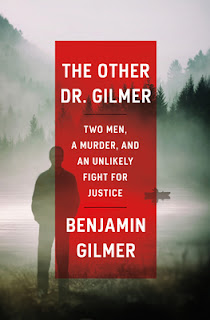
NetGalley ARC | The Other Dr. Gilmer: Two Men, a Murder, and an Unlikely Fight for Justice


I received a digital ARC from the publisher via NetGalley in exchange for an honest review

Rating ⭐⭐⭐⭐⭐

It seems an improbable coinsidence, but this is the story of Dr. Benjamin Gilmer, who begins practicing in Cane Creek, North Carolina, essentially taking over for Dr. Vince Gilmer - no relation. The men are not related, but their lives will become entwined in ways that the former never could have imagined. This is due to the fact that the latter shocked his rural community by committing a terrible crime - murdering his father.

Prior to the crime, Dr. Vince was deeply loved by his patients and community. He went out of his way to provide exceptional care, going above and beyond what would be expected. Dr. Benjamin repeatedly hears from these patients, who are now his, how they could not believe Dr. Vince was capable of something so terrible, and this serves as the basis to draw him into the case and as Dr. Benjamin looked into it more and more, that something was not right.

These facts are not in dispute: In 2004 Dr. Vince picked up his father from the assisted living facility where he stayed. He then strangled his father, cut off his fingertips, and dumped the body. On top of all that, Dr. Vince then went about his daily life, showing up to his clinic the next morning for another day with patients.

So ten years later, Dr. Benjamin arrives in Cane Creek and as he learns more, he is determined to find out what really happened. He can't reconcile the portrait painted of Dr. Vince by his former patients with the convicted murderer who was sentences to life in prison for the brutal crime.

When Dr. Benjamin finally works up the courage to visit Dr. Vince in prison, he is shocked as to who he finds sitting across from him. Dr. Vince is suffering from a combination of disabilities that could have contributed to his committing murder. The disabilites are both mental and physical, and to Dr. Benjamin it is clear that Dr. Vince is mentally unwell. Yet others dismiss this as him attempting to wiggle his way out of his lengthy prison sentence.

Yet Dr. Vince is receiving no medical care in any way, shape or form. The book is as much as an indictment of our incredibly shitty treatment of those with mental illnesses who are trapped in the endless cycle of being in and out of the prison system.

Dr. Benjamin uncovers several things that could have contributed to Dr. Vince "snapping". As a child Dr. Vince was sexually abused by his father and as a result had PTSD. On top of that he had recently suffered a traumatic brain injury. We also find out that shortly before Dr. Vince murdered his father, he stopped taking Lexapro cold turkey, which I understand is a terrible thing to do. I take Lexapro to help combat my a-typical anxiety/stress-induced migraines (they're awful, like, SERIOUSLY. They're in the same spot and when one comes on, it feels like the whole right side of my face is melting). My doctor made it very clear that missing a dose would not be good, and starting it I only took half a pill before working up to the full one. And when I went in for a med check the following year, we agreed coming off the Lexapro in the beginning of a global pandemic would not be a good idea.

The whole point of my sharing this is to show how powerful drugs like Lexapro are. Dr. Vince talked repeatedly about feeling like there was something wrong with his brain prior to him stopping the meds, and the murder. In fact, Dr. Vince chose to represent himself at his trial - something that should have also been a major red flag that something was not right in his head. Instead people just assumed that he was using it as a way to get out of a guilty verdict.

Dr. Vince uses the term SSRI brain as his defense. This was something I looked into more in-depth outside the book and it basically means the brain is attempting to withdraw from the med that it no longer has access to.

Dr. Benjamin visits Dr. Vince several times as he comes to believe that Dr. Vince has some pretty severe brain damage. At one point he brings a colleague he agrees that something is not right. He notes several symptoms - tics and tremors, difficulty walking - that could indicate Huntington's. Add to this the statements Dr. Vince made about his brain "not working", and it makes sense.

It will probably not surprise you to find that after finally securing the genetic testing needed to get a diagnosis, that Dr. Vince does in fact have Huntington's. If you are unfamiliar with this degenerative disease, it is devastating. Huntington's causes a breakdown of nerve cells in the brain. This in turn impacts a person's whole ability to live, from physical movement to cognitive functioning. It is a disease for which there is no cure, only treatments that can make the patient as comfortable as possible until dying a horrific, painful death.

Dr. Benjamin spent the next several years working tirelessly to advocate for Dr. Vince to get the treatment he needed, in an appropriate placement; prison was clearly not the right place.

In the end, this is a deeply fascinating and moving story that demands attention. Highly recommended.

Saturday, May 15, 2021

NetGalley ARC | Taking Down Backpage: Fighting the World's Largest Sex Trafficker


I received a free digital copy from NYU Press via NetGalley in exchange for an honest review.

Rating ⭐⭐⭐⭐

After reading this one, I have been seriously pondering going to law school. I want to do the work the Krell is doing, to take down the monsters who profit from the trauma and assault of others. It is absolutely disgusting and I would gladly hunt down every last one and bring them to justice.

Unfortunately, as illustrated in this book, it is all too easy for said monsters to continue profiting from sex trafficking in the digital age.

Prior to this book, I do not recall ever hearing about Backpage except in a few other books I have read that cover the subjects of commercial sex workers who used the site and Craig's List to find clients. Perhaps I have simply been existing in my own little bubble, though I am not sure how I have missed such an incredibly important subject, but I am so glad to have read this book.

As it turns out, Backpage.com was at one time the world's largest sex trafficker. Untold numbers of victims were bought and sold on the site for ten years, forced into dangerous and violent situations where they were raped, sometimes multiple times, sometimes by multiple people. While we often think of young women and girls as the most common victims, it is important to note that transgender youth, and younger boys were bought and sold as well. Repeatedly. The site's reach was world-wide and operated in 800 cities internationally. The owners of the site could feign ignorance of what was happening, because they claimed to not be responsible for the content that others created to post on their site. Luckily some sleuthing found that the employees of Backpage were, in fact, creating content from the ads posted to Backpage. The content they created was posted to their shell sites in order to drive more business to Backpage.

I suppose if you are a disgusting excuse for a human being, it would be easy to sleep at night claiming this ignorance as you grew richer and richer by the day.

Enter Maggy Krell, and your days as such are numbered.

I could not put this book down. I became so invested in the stories of the young women and girls who had been trafficked at various times, and worried so much for them as they worked through their trauma and had to decide whether or not they could relieve it all again at trial. My heart broke for those, especially the girls as young as 12, who Krell was never able to find, despite the fact that their photos were still being used in ads on the website.

Krell writes like an attorney because that is who she is, yet the narrative was not bogged down by legal terms and boring procedure. In fact, the procedures were anything but boring, because I wanted to know what would happen and how the owners of Backpage, as well as the stree-level pimps, would finally face their day of reckoning. I had to stop myself from Googling the owners' names so many times just to know what would happen.

One aspect of the case that I found interesting is the fact that for so long, the FBI knew exactly what was happening. Ads would be found on the site for girls and boys under 18 and the FBI would request those ads be removed. Backpage was all too eager to assist in this way, to try and show how cooperative they were. What a fucking joke.

I found fascinating the legal workings of such a massive case like this, and one so delicate. The amount of coordination that had to occur among various agencies in different states is staggering and that it all went off without a hitch was something I honestly was not sure would happen.

I appreciate the fact that Krell does not shy away from any of the horror and trauma inflicted on those who were trafficked multiple times per day. I think we all agree that human trafficker in general and sex trafficking in particular are heinous crimes that we must put an end to. However, when it does not directly impact your life, the way to help can seem rather abstract. Personally for Eleanor and I, we live practically smack-dab in the middle of the US, at the convergence of two major interstates that run across the country. We are a major hub for human-trafficking and it is especially bad during the College World Series each year. I do not take Eleanor anywhere near downtown for those couple of weeks specifically for this reason. There have been so many arrests in recent years and that gives me hope that this is something we can defeat, but the realist in me knows that it is simply not possible.

Shutting down Backpage was a massive moment in this fight, but it is certainly not the only one. Sex traffickers have simply moved elsewhere online and we must continue to pursue them as Krell and her team did in order to bring the perps to justice and help victims and survivor get out and start to heal.

Highly highly highly recommended.

Monday, March 22, 2021

Book Review | Murder by the Book: The Crime that Shocked Dickens' London


Rating ⭐⭐⭐

I am strangely drawn to the Victorian era for one very specific reason: their weird obsession with death and murder - by poison in particular. The way murder and death was written about in that time period is so scandalous and salacious, which seems to be a direct conflict with the 'values' and 'morals' of the era. You may have noticed I have reviewed a lot of these books lately, and there are a couple more coming.

The murder of Lord William Russell is little-known today, but in 1840 it was a HUGE story, not only because of the viciousness of the attack, but because of how it shook the very foundation of the literary circle of London.

The well-known member of parliament was found dead, a massive wound to his throat/neck/head from an ax left at the scene. It was a brutal murder and his valet was immediately suspected, though there was little physical evidence. Small items such as coins and a watch are missing, and before his murder Lord Russell had reported that the locket containing his deceased wife's picture had gone missing also. Eventually, in an unlikely turn, it is discovered Courvoisier (the valet) had done quite a bit of reading in the couple years before the murder. At a time when the publishing industry began to boom, with books being made quickly and cheaply, it wasn't hard to find true-crime stories - which no one will be surprised about because Victorians loved the lurid tales of murder.

The valet finally claims in what feels like his fifty-third confession that he was influenced by the book Jack Sheppard, written by William Harrison Ainsworth. The story tells of a criminal who manages to escape justice time and again. He actually used this as a defense, but the idea was solid enough in that time to get the likes of Dickens, Thackeray, and even Queen Victoria talking about it.

Though this was a fairly quick read, it ended up being a bit of a disappointment. I thought the literary aspect would be a lot more interesting than it was.  It is still a decent look at a horrible crime, but the connection to Jack Sheppard is tenuous at best. The parallel commentary about the works of Ainsworth and Dickens, among others, and how the criminal element of their novels is interesting at times but also felt kind of forced. It is interesting to note that the arguments being made about violent music and video games in our lifetime were made back then about books.

Recommended for those with an interest in Victorian true crime.

Sunday, March 21, 2021

Book Review | The Invention of Murder: How the Victorians Revelled in Death and Detection and Created Modern Crime


Rating ⭐⭐⭐

I had such high hopes for this one, but it ended up being somewhat of a disappointment.

The premise was fantastic. The author set out to explore some of the most sensational attention-grabbing murder cases of Victorian England. I feel like the title and subtitle were misleading because we know the Victorians did not invent murder. They did, however, invent making it salacious. Sensational newspaper accounts shouted grisly details (often inaccurate, but who cares? It's murder!) and people actually went sight-seeing to the locations of the crimes. So gross.

Side Note #1: It reminded me of the Villisca Axe Murders in Villisca, Iowa in 1912. A family of six and two girls who were friends with the children were horrifically murdered with an axe and the killers never captures. People from all over the town traipsed through the house when the murders were discovered, even HANDLING THE MURDER WEAPON. So gross, on so many levels. No respect for the dead.

Side Note #2: Okay, so I have been to the Villisca Axe Murder house on a tour given by owner Darwin Linn, who has sadly passed away since then. But we were on a tour of the restored house, not the bloody crime scene, so it is not the same.

Murder became entertainment and the author recounts all the ways in which this entertainment was produced - ballads, operas, novels, broadsides, and more. It is easy to see how this fascination with gruesome deaths paved the way for novelization of these crimes to develop - Sherlock Holmes is a product of this age.

Overall it was not a terrible book, but it became a repetitive one. The chapters were long, and followed the same format: the murder or group of murders were discussed with a good amount of detail, and then we are told how the crimes were depicted and in what medium. I skimmed at times only because the latter was indeed repetitive.

The author has researched and explains the ones you would expect of the era: Burke and Hare, Sweeney Todd, and Jack the Ripper, but also delves into some cases that are lesser-known today, but were huge when they occurred. I appreciate the variety, as many kinds of crimes were explored, though murders were always the most sensational and best-selling.

Side Note #3: When my mom and I were in Edinburgh, we went on a Burke and Hare night tour. It was November, so it ended up just being the two of us and our tour guide, Dougal. He was lovely and quite pleasant to follow around the city. We saw all the places associated with the body-snatchers and their crimes. This is kind of morbid too I suppose, but again, at least we didn't make a day of visiting a crime scene to look at dead bodies and having a picnic lunch with the kids!

I did find it distracting and unnecessary that the author would randomly insert herself in the story to make some quick little quip about the research she conducted. I really hate when authors do this.

Recommended for those with an interest in the shenanigans of Victorians  who were obsessed with murder.

Sunday, March 14, 2021

Book Review | Conan Doyle for the Defense: A Sensational British Murder, the Quest for Justice, and the World's Greatest Detective Writer

Rating ⭐⭐⭐⭐

In 1908 Marion Cilchrist was murdered in her home; a rather unlikable woman but white, Christian, wealthy, and elderly, so the crime must be solved with the utmost speed - accuracy be damned.

With very little investigating actually going on, the police set their sights on Oscar Slater. Slater was an immigrant and Jewish, so naturally the prime suspect. The book is really commentary on the bigotry of the times (which we know still exists today), and there are many layers to the story on top of it being an excellent historical true crime drama. Slater was the perfect suspect - he made a living as a gambler who lived with a prostitute and may himself run some sort of brothel (which he denied). The one piece of evidence the police had against him was  a pawn ticket for a brooch that somewhat matched the description of one stolen from Gilchrist's home during her murder. Slight problem - the pawn ticket was written up a few weeks before the murder. But never mind actual facts; the police continued on their way, railroading Slater by coaching witnesses to identify him, despite the fact he did not remotely fit the descriptions given of the man seen lingering around Gilchrist's home. Even though Slater was clearly innocent, he was found guilty and sentenced to death. A stay of execution was granted and instead Slater found himself on his way to Peterhead Prison for a life of hard labor.

Arthur Conan Doyle took great interest in the case, unsurprisingly but did not actually become involved in solving it until he received a smuggled message from Slater in 1925 - by then Slater had been in prison for nearly twenty years. Still, Conan Doyle saw the gross miscarriage of justice and got to work right away, using the very same methods as his famous protagonist to attempt to solve the murder - and if not solve it, then at least prove Slater's innocence. Conan Doyle was relentless in his pursuit, pouring over every last bit of documentation he could get his hands on - trial transcripts, witness statements, even newspaper accounts. He worked tirelessly to note all the inconsistencies he found, and there were plenty. In the end, he was finally able to win Slater his freedom and the man was released in 1927.

The social commentary here is just a crucial as the crime and trial, because they are wholly intertwined. Slater was a German immigrant and Jewish, so he was someone to be feared. No matter that he was well-traveled and spoke English well, he was still of a lower class and thus had to be a criminal. Even Slater's champion had a rather low opinion of him to start with, referring to him as a blackguard at one point. Even so, Conan Doyle was also a champion of justice reform and his work is the only reason Slater saw freedom once again. Unfortunately Slater did not seem terribly grateful to Conan Doyle and a very public spat made him all the more unsympathetic, even to those who recognized he was innocent, after Conan Doyle's hard work in getting Slater's sentence overturned.

This is an engaging read that I could not put down. Highly recommended.