Showing posts with label Eleanor of Aquitaine. Show all posts

Tuesday, January 3, 2023

Book Review | Heroines of the Medieval World


Rating ⭐⭐⭐⭐⭐

Another essential read from the author on one of the most extraordinary periods in history, showcasing  a wide variety of women who were just as extraodinary. Connolly introduces many women both famous and obscure and shares their stories. Despite the fact that it was supposedly men who ruled the world, these women prove time and again that they were not merely subservient to the men in their lives. The choices these women make not only alter their own paths, but the wider world around them, some even changing so far as to change the course of history.

Connolly has organized the women by theme and I really liked this approach. I like that this lead to some overlap sometimes, because it shows how so many were connected. Themes include Heroines in Religion, the Medieval Mistress, Scandalous Heroines, Women Who Ruled, Captove Heroines, and the Survivors. There are others as well that I will leave you discover, just as I will let you discover these heroines and who Connolly chose to include. There were many women I was unfamiliar with, or only knew of in passing where they fit into someone else's larger story. As a result there are many more women I will seek out further books about.

Connolly is incredibly knowledgeable of the women and their world. This is a well-researched text with notes and references to back up her work. Despite not being organized by woman, there is still so much depth here that we get to know the women very well. She brings the women to life and does so in an informative but still accessible way.

I enjoyed this one quite a bit. It's a fantastic read and I hope that Connolly at some point produces a second volume because there are so many more women who also deserve their moment in the spotlight.

Highly recommended.

Friday, June 18, 2021

NetGalley ARC | Plantagenet Princes: The Sons of Eleanor of Aquitaine and Henry II


I received a free digital ARC from the publisher via NetGalley in exchange for an honest review.

Rating ⭐⭐⭐

So this is less about Henry, Richard, Geoffrey and John than it is about the male line of the Plantagenets. It actually goes all the way up through Richard II. Less than half the book is actually devoted to the demon spawn of Eleanor and Henry. Nor does the book even start with these four, but goes back a couple generations before them.

Okay, that last part is in jest because they're not actually demon spawns but these guys pretty much gave no fucks and would fight any and everyone, each other and their father included. Such were the times though so, whatevs.

I feel like the subtitle needs to be axed, given that the book is about several Plantagenet princes and not just my girl Eleanor's four sons. Then, the title works. Otherwise, all the extra material needs to be axed to focus on those four that the subtitle refers to. The material is not all-encompassing and there is plenty to say about each son. All have full-length biographies devoted to them, often more than one (and I own several), so content is not the issue.

Except, now that I think about it, maybe Geoffrey doesn't? Or maybe I have just not found one yet? Or bothered to look.

As a whole, the research is thorough and accurate. Boyd hits the main points one should know about many of those in the male line.

For those who have an in-depth knowledge of the Plantagenets, you can skip this one. You will find nothing new here. In that regard the book could easily be a four star read.

As someone well-versed in all the tomfoolery of those four boys especially, and their parents as well, it was not what I expected given the subtitle. Those of you in the same boat as me can skip this one, unless you need a quick refresher.

Recommended for those with limited Plantagenet knowledge looking to learn more.

Saturday, September 26, 2020

Your Annual Reminder that it's Possible to be a Majorly Ridiculous Nonfiction Fangirl And Not Be Sorry One Bit

Every year I like to remind people that not only did I get to meet Dan Jones and he signed all of my books, but that we had a whole conversation about Eleanor of Aquitaine. He even gave me advice for my own book on about Eleanor and it definitely helped me refocus my attention and energy for that project.

Jones was on his book tour for The Templars and the closest he came to Omaha was STL on September 26th, 2017. Mom, Eleanor, and I drove eight hours down and met my BFF Roxy who drove from Chicago with her husband and daughter.


He's published a few more books since then, so I guess he has to come back to the US to sign some more. Plus there are some UK editions I have now which also require a signature...

If you are interested in medieval history, I would suggest starting with The Plantagenets: The Warrior Kings and Queens Who Made England. It is fantastic. This is the book in which I met Eleanor of Aquitaine for the first time. As a result, one might say that Dan Jones named my baby because there is no other name that would so perfectly fit my own mighty girl 😆

Happy Reading!
Sarah

Thursday, December 19, 2019

Book Review | Crusaders: The Epic History of the Wars for the Holy Lands

43899574


Rating: ⭐⭐⭐⭐⭐

Obviously, right?

And no, I do not give all of Dan's (we are still BFFs, after all) books five stars just because he is my fave. I give them five stars because they are worth it, because he is a historian who does not act and think like the historians of old, who safeguarded their knowledge so that only the elite could access it. Jones does not do that, and I have said before - and will say again in the future for the next book and the next book and the next book - he writes in a way that is fully engaging without dumbing anything down.

I have read my share of history books on a huge range of topics. In fact, I have probably read a lot of peoples' shares of history books. It takes a lot to bore me, but also takes a lot to wow me, and Jones manages to do that with each new offering. It began with my reading of The Plantagenets: The Warrior Kings and Queens Who made England (where I met my girl Eleanor of Aquitaine for the first time, and subsequently gave that name to my baby girl who was born about a month or so later). From that for introduction aboard the White Ship, I was hooked. Jones weaves together stunning and spellbinding stories and soon you've read your way through the entire book in a few hours, wondering how that just happened.

I will admit, I mainly wanted to read this one first and foremost to see what thoughts Jones would put forth about Eleanor's time on Crusade with her first husband, Louis. This will neither surprise nor offend Dan. He knows I am obsessed with her. Here is a picture of us discussing Eleanor in St. Louis in 2017:


I was happy with the attention she received, but when those sections were over, I was never tempted to put the book down, because I was still interested in the content. I truly thought this one would probably be the hardest for me to maintain an interest in, ONLY because I struggle in general with military history of any kind. I do not care to read about it, regardless of the war, or who is involved.

Given the fact that we're talking a couple centuries' worth of fighting and bloodshed over the Holy Lands, it was a tall order for Jones to deliver on in less than 500 pages. In the hands of a lesser author, this would have been a clusterfuck. So many names and dates to remember, yet the text is not overwhelming because Jones has a tendency to know just what would be most captivating to readers, while remaining highly important to the narrative, and what he can spend less time on. We get all the information we need, know the names and dates we need to know, and still come away feeling as though we had a conversation about a subject we are interested in, not a subject we were lectured at about for hours.

As you might have guessed from the title, this book is not about the Crusades. It is not a detailed blow-by-blow account of every single battle that took place, nor is it confined to those battles only taking place in the Holy Lands. Instead, Jones focuses on the people, the Crusaders - those who were, for better or worse, the reasons the Crusades happened, succeeded, or failed (all subjective terms of course, depending on your viewpoint). After Eleanor of Aquitaine (of course) I was most interested in what I learned of Anna Komnene. Hers is a name I was familiar with, having read other books about the various crusades, and her family's empire, but here Jones gives her the attention she deserves. She is best known for her written work on the life of her father, Alexios, and it is from this record that we get so much information about the events in her lifetime, and in her father's. She is definitely another medieval figure who I am greatly interested in learning more about.

Presenting the history in this way, by focusing in on various individuals within their larger roles as leaders, rulers, pilgrims, soldiers, makes this such an important offering. The centuries in which the Crusades occurred were tumultuous, dangerous, chaotic, and complicated. It would be easy to get tangled up in the web that connects all of these people, places, and events together and that is why this approach works so well. You still learn about the various Crusades, but the people Jones presents make it all the more real.

I am kind of embarrassed to admit that there were some Crusades that I knew nothing about - those that had nothing to do with Jerusalem, Antioch, Acre, and the like. I learned so much more about the time in Egypt, but those that were spread out across much of the known world - Sicily, Spain, the Baltic, and so on.

I don't think it will surprise anyone that I highly recommend this latest from Dan Jones. He writes in an engaging style and there is always that well-timed dash of humor he uses so well. Jones has proven once again why he is one of the best historians writing today, given his extensive knowledge and commitment to doing the research necessary in order to take on such a complex span of time.

Sunday, May 6, 2018

It's a Beautiful Day to Spend With My Fave Dysfunctional Family


Sometimes all those Post-it notes look a little overwhelming, though slowly but surely I am making progress and I am so excited to see how this project turns out. I hope I can do this mighty queen justice, and tell her story the way she deserves it to be told.

Tuesday, April 24, 2018

My Tuesday Night...


My usual Tuesday night when my daughter is at her father's home. My goal is to have the first draft done by August 1st. I fear I won't make it. I started this project in February of 2017. I wrote and wrote and wrote, then discovered more and more sources - especially from the chroniclers of the time. So, now I am adding to what I wrote before, as well as completing chapters that were not yet done before the new sources. Someday, I will be able to do this for a living and it will be glorious.

Happy Reading!
Sarah

Sunday, April 1, 2018

Death of a Queen


Image result for eleanor of aquitaine

Today is a particularly important day to me, in addition to the celebration of Easter and the defeat of death by Jesus as He rose from the grave.

Today is the day that Eleanor of Aquitaine lived her last, as she died at Fontevraud Abbey in 1204. She was 80 years old and had lived a more full life than many of her male counterparts, really coming into her own upon the death of her second husband, Henry II and serving as regent for her beloved son Richard once he was crowned - and he promptly left for the Holy Land.

I have felt drawn to Eleanor's story for many years now. I have touched briefly on how I came to know her story. I was pregnant with my daughter and living in a new city where I knew no one. So, I spent my weekends at the various libraries I discovered around here, and first 'met' Eleanor thanks to my BFF Dan Jones and his fantastic book, The Plantagenets: The Warrior Kings and Queens Who Made England. And just because I never pass up the opportunity to share these...


Eleanor fascinated me from the start and after reading Jones' book I read every other text I could find on her. Some were great, some were terrible, but all were valuable in shaping the image I have of her in my head - one that I am now trying to convey to the world through my own book. I never dreamed in a million years that I would have the opportunity to write about my heroine and yet here I am.

So on this day, I remember this Mighty Girl, who forged a path that earned her nothing but trouble for many years, and yet she persisted. Sometimes life was easy for her, most times it was not. She came into a political marriage at age 13 to Louis VII of France, then spent much of that time at odds with those around her, all vying for Louis' ear. She went on Crusade at the head of a large contingent of women, at Louis' side. But nothing went right and the Crusade was an abysmal failure - and at this time the great cracks in the marriage were becoming irreparable. Once back in France, divorce seemed inevitable and finally Louis could see that by Eleanor, he would have no male heir - a pretty obvious conclusion when she refused to sleep with him any longer. Within a short time Eleanor was free of Louis and had another marriage in mind, one that would provide her the protection she needed as a newly single woman - a marriage to the future Henry II of England. Despite him being nearly a decade younger, they were married quickly, much to Louis' surprise and fury. Eleanor did for Henry in five years what she had not done for Louis in fifteen: provided him with four sons and a daughter. They would go on to have at least three more children, one of whom was yet another boy. But like numerous royal marriages of the time, there was a husband, and a wife, and a slew of mistresses. As Eleanor reached the end of her child-bearing years, she returned home to her familial lands of Aquitaine, at Poitiers. There she was content, raising her favorite son Richard to take over as duke when he came of age. But Eleanor's involvement in the upbringing of their oldest boys lead to a rebellion when Henry II could not relinquish enough power to keep their sons happy. In the end the rebellion was crushed, the boys forgiven, and Eleanor kept as Henry's prisoner for the ensuing fifteen years, rarely allowed at Court unless it was necessary. But, as soon as Henry was gone, one of Richard's first acts was to finally free his mother from her imprisonment. She went to work right away, finally exercising the power that was rightfully hers, as skilled as any king - and often more so. She held the Angevin Empire together while Richard was off fighting Saladin, traversing the length and width of their lands to ensure loyalty and in the end, outlived eight of her ten children. It is kind of fitting that the only daughter to outlive Eleanor was the daughter named for her (and dastardly John, but never mind that).

There are many myths and legends swirling around Eleanor even now, over 800 years later. Some of the nastiest rumors began circulating before she had passed away and many more started making the rounds long after she was around to defend herself. I admit on the surface that some of them could easily be true. But one has to consider the attitude towards women at the time, expectations by the Church of women, and what the chroniclers did and did not say. While I do not believe Eleanor was a saint, there are many stories still in circulation which are simply not true. Embellishments at best and outright lies at worst.

I look forward to sharing my book with you in the near future.

Happy Reading!
Sarah

Thursday, September 28, 2017

Here's What Happens When You Meet Someone You Admire...

...you fangirl REAL hard.

And by 'you', I of course mean 'me'.

Some of you might recall my affinity for a certain British historian with heaps of knowledge about my favorite dysfunctional dynasty and access to all the chronicles and texts I can only dream of.

That's right, ladies and gents. I met Dan Jones. Bonus, he was not terrified of me and my fangirlish ways. He has been on a book tour in the US to coincide with the release of his fifth book, The Templars: The Rise and Fall of God's Holy Warriors.


Dan (I am going to assume from here on out we are on a first-name basis) spoke for nearly an hour, first explaining why he chose to write about the Templars, then delving into each section as he explored their rise and fall. He took a few questions from the audience, and THEN it was time for the book signing. My friend Roxy and I waited to be the very last people to have our books signed and I do mean BOOKS. He was gracious enough to sign all five of mine - including personalizing the Templars proof. I jokingly asked if he told the publisher to pick me in the hopes that I would not bring my crazy to St. Louis but he said no, he'd had nothing to do with it. I said something about the Plantagenets and Eleanor and kind of blurted out that I was writing a book about her; he did not seem at all surprised, considering the fact that I told him I named my daughter after her. THEN he asked what I thought of her and I completely froze because, HELLO! this historian who knows more about the period and people than I could even hope to was asking ME what I thought of Eleanor of Aquitaine! We ended up talking for a bit and it was incredible.

I got to talk to Dan Jones about Eleanor of Aquitaine!

I seriously still can not believe this actually happened.

Pretty fantastic night and here is the smile to prove it:


Thursday, May 4, 2017

First Line Friday: Eleanor Edition VI


There is no cover this week, because what I am reading is not a book. Instead, it is a collection of letters. Thanks to this amazing website from Columbia University, Epistolae: Medieval Women's Latin Letters, I now have a treasure trove of goodies - the surviving letters to and from Eleanor in both English AND Latin.

This week's line then comes from one of the many letters Eleanor dictated to the public, dated May 4th, 1199. Almost to the day, this is a letter written 818 years ago, and (for the most part) are the words of a woman I admire greatly:

"Eleanor, by the grace of God, queen of the Angles, duchess of Normandy and Aquitaine, countess of Anjou, to the archbishops, bishops, counts, viscounts, barons, justiciaries, provosts, and all her bailiffs and faithful, and to all the sons, present and future, of the holy mother Church, greetings."

Quite the intro, no?

Let me know what you think of this line, and/or leave a line of your own. Then, visit my fellow First-Liners to see what they have this week for you.


Happy Reading!
Sarah

Thursday, April 27, 2017

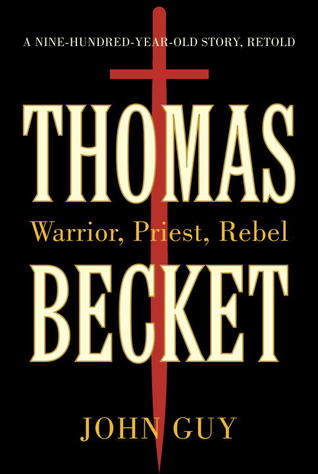
First Line Friday: Thomas Becket Edition


Okay, so sue me, in a not-so-roundabout way this post is ALSO an 'Eleanor Edition'. While I am still in the early chapters of my own book, concerning Eleanor's early life and journey to Paris, Thomas Becket would be a key figure in her life later on.

This week my first line is from this gem:

13152216

And I highly recommend the book. It is FANTASTIC.

"Archbishop Thomas Becket, who for four centuries after his gruesome murder in Canterbury Cathedral would be nicknamed 'lux Londoniarum' (the light of the Londoners), was the only surviving son of Gilbert and Matilda Becket, born very probably when the wreck of the White Ship was still the hottest news in town."

For those unfamiliar with the White Ship and the havoc it played on England in the ensuing years, a recap: Henry I (son of William the Bastard/Conqueror) lost his heir Prince William when the White Ship sank on November 25th, 1120. Only one man survived of an estimated 350 (crew and passengers). William likely would have survived, as he was launched out onto the water in a dinghy, but he returned to the wrecked ship to save a half-sister. That very decision, one that cost William his life as the dinghy was swamped, put Henry II - and Eleanor of Aquitaine - on the throne in 1154.

With William gone, Henry I had only one surviving, legitimate child, Matilda. Before his death, he repeatedly made his barons swear an oath of fealty to Matilda and protect her claim as rightful heir. One who swore that oath was Matilda's cousin Stephen, who might be an even worse king than Henry I's great grandson John. Naturally, Stephen stole the throne for himself with Matilda out of the country when her father died. A long, chaotic, brutal civil war followed and was finally put to an end when Stephen agreed for Matilda's son, Henry, to inherit the throne even over his own son Eustace. And thus, the Plantagenet dynasty was born.

Now, you might be wondering what all of that has to do with Thomas Becket. For that I say, please do read the book.

Leave me a comment on your own line this week, or your thoughts about some of my most and least favorite people in history. Then head over to the blogs of my fellow First Liners and see what they have waiting for you this week.


Rachel - Bookworm Mama


Lauraine - Lauraine's Notes

Andi - Radiant Light


Robin - Robin's Nest


Kathleen - Kathleen Denly


Jessica - A Baker's Perspective

And a very happy welcome to the newest participant Trisha at Joy of Reading!

Happy Reading!
Sarah

Thursday, March 16, 2017

First Line Friday: Eleanor Edition V


It's already Friday, which on one hand is soul-crushing because it means Spring Break is almost over. On the other hand it's neat because I get to share another line about my favorite queen and rebel for First Line Friday.

1890910

This week my line comes from the afore-pictured book, one that is so expensive, I had to use InterLibrary Loan just to get my hands on. Shout out to Western Michigan University for sending it so promptly. No joke, the least expensive copy I have found so far is going for $116 on Amazon, last I checked. I have searched other sites as well, such as the Book Depository, AbeBooks, etc. If you know of another site I could try, please let me know! I have tried so hard to be responsible and not purchase the most expensive of the books, but this one is just so, SO GOOD. I need it for the collection I've created for my daughter. It is already a must-have and I am not entirely done reading it yet. Perhaps I can start a GoFundMe?

I took this week's line straight from the introduction:

"Fixed in many French imaginations as a reverse image of Joan of Arc, Eleanor of Aquitaine still fascinates and puzzles historians of today, who, for many reasons which this book will try to clarify, still seek to penetrate the mystery surrounding her."

I am very tempted to include the whole paragraph following this sentence, but I am REALLY trying to stick to the FIRST LINE thing.

Leave a comment about mine, or share a first line of your own, then head over to the blogs of my fellow First-Liners to see what they have this week:


Rachel - Bookworm Mama


Lauraine - Lauraine's Notes


Robin - Robin's Nest


Kathleen - Kathleen Denly


Happy Reading!
Sarah

Thursday, March 2, 2017

First Line Friday: Eleanor Edition IV


This week my First Line comes from one of my favorite books on medieval queens - partly because Eleanor is given a lot of attention, and also because I do not personally care much for Elizabeth I and like to see other women who ruled before her, even as consort, given their proper attention.

8474660

I am cheating a bit again, as I am taking my first line from section III, which is where Eleanor's story begins:

"A casual observer at Henry II's court in September 1166 might have been forgiven for thinking that Eleanor of Aquitaine was the most conventional of queens."

I don't know how anyone could have thought that for a moment - especially her contemporaries!

After you leave your first line below, check out what my fellow First Liners have waiting for you this week. If you want to play too, contact Carrie from Reading is my SuperPower.


Rachel - Bookworm Mama


Lauraine - Lauraine's Notes

Andi - Radiant Light


Robin - Robin's Nest


Kathleen - Kathleen Denly


Happy Reading!
Sarah

Thursday, February 23, 2017

First Line Friday: Eleanor Edition III


It's Friday already and here I have yet another line from one of my Eleanor books to share. Okay, I am lying a bit - it is actually a paragraph. But, you'll have to excuse the stretching of the boundaries for First Line Friday because it is Eleanor and she is too cool to confine to one little line.


654901

"Beneath the dome of the church at Fontevraud - in the twelfth century, one of the largest and most prestigious abbeys for women in France - one sees today four recumbent statues, the remains of old funerary monuments, Three of them are carved from soft limestone: that of Henry Plantagenet, count of Anjou and Maine through his father, duke of Normandy and king of England through his mother; that of his son and successor, Richard Coeur de Lion; and that of Isabella of Angouleme, second wife of John Lackland, Richard's brother, who became king in his turn in 1199. The fourth effigy, of painted wood, represents Eleanor, heiress to the duchy of Aquitaine, wife of Henry and mother of Richard and John; she died at Fontevraud, where she had finally taken the veil, on 31 March 1204."

And just for your viewing pleasure, here is a photo from the abbey and what the effigies look like today. Unfortunately the monuments were disturbed long ago, during the French Revolution. It pains me to no end in knowing that Eleanor's bones were lost or purposely destroyed, as well as those of Henry, Richard, and Isabella. This was a sacred burial place and their graves, and others, were needlessly desecrated. I am at least glad that the effigies survived. Without those, we wouldn't even have an idealized version of Eleanor. That's my girl, holding a book.

Image result for eleanor of aquitaine effigy
(Photo from Wikimedia)

After you leave your first line below, check out what my fellow First Liners have waiting for you this week. If you want to play too, contact Carrie from Reading is my SuperPower.


Rachel - Bookworm Mama


Lauraine - Lauraine's Notes


Robin - Robin's Nest


Kathleen - Kathleen Denly


Happy Reading!
Sarah

Thursday, February 16, 2017

First Line Friday: Eleanor Edition II


Hello lovelies! I am still elbow-deep in research and I wouldn't have it any other way. One of the books I was most looking forward to finally arrived within the last week and it is one I am hoping will be most beneficial in really weeding out fact vs fiction in regards to Eleanor.

17684947

"Eleanor of Aquitaine is one of the most famous women in medieval history, yet also one of the most inaccessible."

Now, I am still inclined to lean toward the 'exceptional', though I know that train of thought is going to be challenged a lot by this book. I'm cool with that, so long as my girl still gets her due respect. I mean, seriously, she was hauling ass all over England in her twilight years to collect Richard's ransom, which she HAND-DELIVERED HERSELF. And when her beloved Richard was dying, who stopped at nothing to be there with him when he died? Oh, right, HIS MOMMA!

After you've left your First Line below, stop by the blogs of my fellow First-Liners to see what they have waiting for you this week!


Rachel - Bookworm Mama


Lauraine - Lauraine's Notes


Robin - Robin's Nest


Kathleen - Kathleen Denly

Happy Reading!
Sarah

Thursday, February 9, 2017

First Line Friday: Eleanor Edition I


As you might have surmised by now given my posts here, on Twitter, and Facebook, I am in the process of writing a book about Eleanor of Aquitaine. I am supremely excited about this, because Eleanor is quite possibly my numero uno when it comes to favorite historical figures. I mean, come on, I named my daughter after her (Boudicca would've been a second choice, perhaps). I had a decent collection of non-fiction books regarding the original Eleanor started for my own little queen, but have now added multiple volumes as I read and research. So, as I will be immersed in the 12th century for the foreseeable future, I present my first of many First Lines about one of the most bad-ass women in history: Eleanor, Queen of England, Duchess of Aquitaine.

654897

"When Eleanor of Aquitaine died in 1204 her long career had been the most colorful and the stormiest of any English queen consort before or since."

Ain't that the truth!

After dropping me a line, check out what my fellow First Liners have for you this week.


Rachel - Bookworm Mama


Robin - Robin's Nest


Kathleen - Kathleen Denly

Happy Reading!
Sarah

Sunday, February 5, 2017

Update!

No automatic alt text available.

"From the heated loins of Henry Plantagenet and Eleanor of Aquitaine had sprung a genetic order of fighting royal monsters" (pg 38).

I'm not sure this could've been said any better.

#AmWriting

Happy Sunday!

Friday, February 3, 2017

Update!

While perusing It Ended Badly: Thirteen of the Worst Break-Ups in History, by Jennifer Wright...

This one is too pop culture-y for me to take seriously, but I enjoyed this line:

"Eleanor never responded because she had blocked Henry's number. Besides, she'd already overruled the pope in her last marriage. No one could expect her to take an archbishop
seriously" (page 41).


Sunday, January 29, 2017

Update!

Okay, so there has been a little less activity here lately, especially noticeable last Friday, for First Line Friday. The reason for that is I suddenly have a new book project to work on that kind of came out of no where. I am still reading and reviewing, but now I am also working on something really special that I am super excited for. I may not have as many reviews up in the next couple weeks, because even though I know my subject very well, there is always more to learn. Wish me luck!

#AmWriting


Happy Reading!
Sarah

Saturday, June 4, 2016

1215: The Year of Magna Carta

3252574

Rating: 4 Stars

I really enjoyed Danzinger's book 'The Year 1000', so I had high hopes for this one for a number of reasons. First, I like his writing style. it is conversation without being condescending about academics. Secondly, I was hopeful (and correct) that Eleanor of Aquitaine would play a role in the text. Some historians are dismissive of her, in saying she was not that important. I beg to differ - how else would Richard have been freed from Leopold, how might John have further ruined England had he usurped the throne with Richard locked up? She was badass and I dare anyone to say it to my face that she wasn't. (I mean, it's not like I would punch you if you said it to my face, but be prepared for a verbal tongue-lashing. And a zillion facts for why you are WRONG.) Anyway, also bonus points for references to William Marshal, arguably the greatest knight to ever live. Without he and Eleanor working behind the scenes (and sometimes quite visibly) it can be alarming to think of what other havoc John might have wrecked.

But, on to the book.

I believe that some readers did not read the title fully. I know this happens, as it is something I do all the time. I focus on a word or two in the title and then get all upset when the book is not what I think it is going to be or supposed to be. The book is not about Magna Carta. it is about the year 1215 (and surrounding years, actually), the year this fascinating and incredibly important document was signed. Now, realistically, Magna Carta was not important in the way we think it should have been - John certainly did not take it seriously and almost immediately broke the agreement. It was rewritten and reissued several times, but did not fully function as it was intended, mostly because John was a weasel. I guess it is not entirely his fault, he was the baby of the bunch, called 'Lackland' because he had no inheritance to speak of while his older brothers lived, and was forever in the shadow of Richard. Still, he was a weasel for whatever reason and that comes through in the text.

Unlike Danzinger's previous book I mentioned that was broken up by each month in the year 1000, this one is divided into topics pertaining to the year 1215 and the early part of the century, really. We are introduced (or revisiting, if you are like me and already familiar with the era). The author presents information about life in towns, the countryside, schools, the Church, tournaments and battles, and so on. There is also a chapter devoted entirely to John, then the charter itself 'The Great Charter'. Something I found to be interesting was that at the beginning of each chapter, a quote relating to said topic was pulled directly from Magna Carta. It's a good way to get an understanding and become familiar with the document before actually diving in to the bulk of it.

As always, I am big fan of authors using contemporary resources. This book makes use of many of such documents, besides Magna Carta. There are clerk records, letters, diaries, purchase records, and more. I love this, because I love reading original material in the language of the time. It is not always easy, and sometimes I might have to read it a couple times to understand, but it is worth the time. Then, of course, the author includes the whole of Magna Carta, every single last clause that makes up this world-changing document.

As an aside, I was really happy to see the full text included here. In 2009, my mom and I visited Scotland and (very briefly) England (mostly just to see Wicked on Mom's birthday, the bulk of the trip was Scotland because it was Mom's dream vacation). For the one full day we were in England, I had booked a day trip that included visits to Bath, Stonehenge, and Salisbury Cathedral. But when we arrived for check-in, we were informed Salisbury had been closed for the day and we would not be able to see Magna Carta. I was so bummed. Windsor Castle was substituted, which would have been great - Henry VIII is buried there! Except...Queen Elizabeth II was knighting people that day so many parts of Windsor were also closed. It was some bad luck, but the perfect excuse to go back. And believe me, that trip will definitely happen.

Overall, I highly recommend this little volume. it is a small book, and a short book, but one well worth the read.

Saturday, May 14, 2016

She-Wolves: The Women Who Ruled England Before Elizabeth

8474660

Rating: 4 Stars

I am almost embarrassed by how short this review is going to be. Typically as I read, I update my progress on Goodreads and make notes of things I want to be sure to mention when I review a particular book. There are some books that are so inaccurate or terrible that I am constantly stopping to make a note of this or that. There are some books that bore me so much, I end up just turning pages without REALLY reading just to be done.

And then there are books like this, stories that I am so familiar and comfortable with, I breeze through and am done with the book in no time. Sadly still though, without hardly a note to speak of.

If you have been reading my blog for a while, or know me at all, you might recall that Eleanor of Aquitaine is a heroine of mine. She is the first reason I picked up this book. The second reason is that it is always refreshing to me to see strong female rulers BESIDES Elizabeth getting the credit and spotlight they deserve. Despite the fact that save for one, Mary I, none of the women ruled on their own, they still wielded great power and contributed to the making of England.

I must first point out, the title is not something I care for. Perhaps this is because I associate the term 'she-wolf' with Isabella, wife of Edward II. She has been referred to through the centuries as Isabella, She-Wolf of France, and not always in a very nice way. Now to be fair, she and her lover Roger Mortimer did have Edward deposed and murdered so it is kind of fitting, but thus it is not how I want Eleanor of Aquitaine referred to as well. Eleanor might have incited her sons into rebellion against their father. More than once. But she did not have him murdered. Okay, so he basically died because Richard all but hounded him to death, but it is not exactly the same. It's not.

Anyway.

It might surprise some readers then that the book begins, not with any of these she-wolves, but with a fifteen year old boy. Edward VI is dying, slowly and painfully. The Tudor dynasty that Henry VIII literally killed for is on the verge of collapse because it just can not be accepted that a woman might be able to rule the country. At least, not an independent, adult woman. Readers are introduced to the whole background, how Mary and Elizabeth were excluded from the succession in Edward's last days, how Jane would be proclaimed queen, and the country saved from a return to the old faith. And yet, despite the fact that these men surrounding Edward feared what might happen were a woman to rule, we then step back in time to see that this did, in fact, happen already and in some cases, quite successfully.

First there is Matilda, daughter of Henry I who lost her brother when the White Ship sank and Henry found himself without a legitimate male heir. Despite demanding loyalty be sworn to Matilda as next in line, the moment Henry had passed those loyalties quickly shifted and suddenly Stephen, Henry's nephew was proclaimed king. The result was a bloody and violent civil war that raged for years and all but tore England apart. It only ended when Stephen agreed that Matilda's son Henry would succeed him in place of his own son. It helped that his own son passed away and would therefore been unable to rule, on account of the being dead and all.

As with other books of similar content, it took too long to get to the section about Eleanor, and even as I was reading it flew by too quickly. But that is a personal thing, as anyone else who might be far less invested in Eleanor's story will not think so. We follow Eleanor from her days in Aquitaine, to the court of France where she first became a queen, then back to Aquitaine after her annulment and quickly on to England where she arrives as queen of England to Henry II. There is a reason her chapter is titled, "An Incomparable Woman". In fact, there are many. But you'll have to find those reasons for yourself, as her story is so remarkable that justice is not done to it when hearing only the summary.

After Eleanor comes Isabella, as mentioned above. Her story is an interesting one to be sure, another I know well. One can hardly fault her for eventually resorting to the violence that she (likely) ordered. From the start, Isabella was treated as though she were in the way in her own marriage. Edward II was nothing like his father Edward I. He spent his time with hobbies deemed below his station - I mean, he was the king, shouldn't he be allowed to do whatever he wants? But no, everyone was up in a huge tizzy because he enjoyed what were referred to as 'rustic pursuits'. Things like swimming, rowing, digging ditches, thatching houses, etc. The digging ditches thing always confused me, I mean what did he do, just go around the castle grounds digging random ditches? This part is never really explained in any book I have read of them thus far, but come on. Let the king do what he wants, as long as his mind is also on the keeping the realm safe. The problem was, Edward II was not really interested in battles and military; he preferred hanging out with his favorites and this left little room in his life for Isabella, who suffered great indignities at times for the sake of these male courtiers.

The last she-wolf we meet before Mary I is Margaret of Anjou, who was in the unenviable position of being married to King Henry VI. He'd not have been such a terrible king had he been mentally stronger than he was. But during the periods of time when he lapsed into a king of trance and didn't emerge for months, it was easy for usurpers to claw their way toward the throne. Their collective story remains one of the saddest for me in the whole of England's history. In those times that Henry VI was basically a vegetable, Margaret had to work twice as hard to hold the kingdom and her son's inheritance together. Then Henry would become lucid again, but never exhibited the strong characteristics needed in such turbulent times. Eventually Margaret would lose both her husband (likely murdered on Edward IV's orders) and her son (battle) and end her days living in Anjou once again without anything to show for having once been Queen of England.

The text then ends where it began, with the death of of Edward VI. The discussion turns to Mary, the challenges she faced both before and during her rule, and finally her death and a brief look at Elizabeth's rule. If you are interested in further reading specifically about Mary - which I highly suggest, as she has gotten the short end of the stick for the last 450 years - check out the books I have reviewed about her located under the Tudor tag here, or on my Goodreads Tudor shelf. She deserves a second look, for certain.

Additional material that I find especially helpful were the family trees located just before each section. Even someone with a lot of background knowledge of the rulers in each period still might find it easy to mix up siblings and cousins and such. New readers will also find it helpful to see how these women were all related to one another either by marriage or blood, down through the centuries. It really is amazing how much we are able to know about so many people who lived so many centuries ago. Almost 1,000 years separates us from Matilda and Eleanor. While there are many things we will likely never know, there are still documents and decrees and such that find their way to the light for eager amateur and professional historians alike. We are also given maps of each period, in order to show how England's claim to continental lands grew and shrank over the centuries. Again, a very helpful resource especially for those new to the subject.

Overall, this is a highly engaging, well-written account of women who ruled in a time when that was all but unheard of. These women faced major obstacles time and again; some they overcame, some they did not. But their stories are worthy of being told. Highly recommended.