Showing posts with label Assorted US History. Show all posts

Thursday, July 15, 2021

Mini Reviews | Natural Disasters


 Rating ⭐⭐⭐⭐

Natural disasters have long been a source of endless fascination for me, starting when I was a child. No surprise then that books like this continue to interest me as an adult.

The book focuses on California and the San Andreas Fault and the information contained within it is not entirely new. Everyone knows the fault is massive, and has spawned countless secondary faults, many just as potentially deadly as the big one. Yet people live over the fault. People drive across it everyday on one or more of the dozens of highways and interstates. Both San Francisco and Los Angeles sprawl out over the fault - and no one seems keen to move away any time soon.

I found this to be an easy enough read, no science background required. yet still well-researched and in-depth as well, thoroughly explaining the geology needed to understand the San Andreas Fault. We are also given a history of the area and pertinent people, such as Andew Larson, the UC-Berkeley prof who named the fault in the late 1800s and Charles Richter, who developed and refined the scale we still use today to measure these beasts.

It is interesting to compare the jump in knowledge from the 1906 SF earthquake, to nearly 60 years later when plate tectonics were discovered. Up until that time, scientists believed that underground volcanoes caused the earth to move. Needless to say, the science has come a long way since then.

But even so, it has not come far enough, and I don't know that it can. We still can't predict earthquakes, and it is possible we will never be able to. Major earthquakes will continue to happen. But don't expect California to one day just go floating off into the Pacific Ocean. Instead the author maintains that the San Andreas Fault and all of its offshoots are actually pulling California apart. Between the fires and the earthquakes, California doesn't stand a chance.


 Rating ⭐⭐⭐⭐

I did not realize this was an older book, published in the 1970s. Even as a I read it, it seemed as if it were a more recent publication, while at the same time also reading as though it was an eyewitness reporters account. Not too shabby to make a reader believe to completely opposite things at one time.

The authors make fantastic use of sources not previously available to the public. They acquired documents from insurance companies, the Red Cross, the military, and also collections of eyewitness accounts of those who managed to survive one of the worst disasters in US history.

As with any other catastrophic event, there are heroes and villains. It will surprise no one that the powers that be were incapable of handling a disaster of this magnitude for a couple reasons - they were corrupt beyond reproach and had no idea what the hell they were doing.

Just as the title says, this truly is a minute-by-minute accounts, from those first terrible seconds in the early morning of April 18th, beginning at 5:13 AM. The book moves quickly and the reader can only hang on for the ride as we move quickly through the city, witnessing the horrors of that day and the aftermath of the fires raging.

One thing I also really appreciated was the interviews the authors did with survivors. It must have been quite difficult for them to share their stories, but I am so glad they did. They gave a depth to the story, sharing their grief over such an awful experience.


 Rating ⭐⭐⭐⭐

Our planet would not be what it is today, giving us life, were it not for natural disasters. We need them for our home to flourish and without these life-giving forces, our planet would die and so would we.

If we were not so arrogant, and did not think that time and time again we could thwart Mother Nature, these disasters would not so often result is huge losses of life.

Yet here we are, living on super active fault lines, building cities below sea level...you get the idea.

This book looks at several incredibly devastating disasters that have impacted humankind. From Pompeii to Katrina, there are many here that prove that not much has changed, and we still think we are in charge.

We know that our world is changing. As climate change continues to wreak havoc, we must learn from past mistakes. Temperatures are rising around the world, ice caps are melting, eventually major life changes are going to start happening for a lot of people living on the coasts. All kinds of natural disasters are getting worse, and will continue to do so. It doesn't have to be this way though, if we could just take five seconds to learn from our past.

The author does a fantastic job examining each natural disaster, then exploring how each impacted society dealt with the aftermath - what they did differently, what they predicted, what they got wrong. Not a bad way to spend a couple hours.

Monday, November 2, 2020

Publisher Gift via NetGalley | The Fighting Bunch: The Battle of Athens and How World War II Veterans Won the Only Successful Armed Rebellion Since the Revolution


I received a free digital ARC from the publisher via NetGalley. In this instance, the publisher contacted me by email to ask if I would be interested in reading the book.

Rating ⭐⭐⭐⭐⭐

As someone who takes great pride in their reading abilities, I nearly missed out on this fantastic book because I DIDN'T FULLY READ THE SUBTITLE.

I know, right?

When I receive the email from St Martin's Press inviting me to read the book, I saw 'The Battle of Athens' and my mind immediately went to Greece. I assumed it would have something to do with Greece's civil war that erupted in 1946, and that was not something I had much interest in. The book cover showed up rather small in the email as well, so I could not clearly see the cover.

THANK GOODNESS I CHECKED GOODREADS BEFORE DECIDING YAY OR NAY.

Turns out, this book is fucking brilliant and I am so glad I did not pass up the chance to read it.

DeRose has crafted a masterpiece that details little-known events in Athens, Tennessee. To say that local government officials in McGinn County were corrupt would be putting it mildly. The political machine hard at work in Tennessee did everything possible to ensure that their candidates remained in power. Voter intimidation was a constant, ballot box stuffing was the norm, and anyone who spoke out against it regretted their decision pretty quickly.

One can see then why returning WWII veterans might take offense to this chicanery and blatant law-breaking. These men fought in the worst of conditions all over Europe and the Pacific, only to return home to find their own local governments were not abiding by the very rules and laws set down by our founders. They could not abide this.

The non-partisan GI all-veteran ticket would make sure that Election Day, 1946 (August 1st) would be the dawning of a new era in politics in McGinn County. Naturally those in power had no intention of giving up their voter-intimidating, voter fraud-committing ways without a fight.

A fight is certainly what they got, as the literal battle waged long into the night, carrying over into the early hours of August 2nd before finally wearing itself out.

What occurred prior to that ending is one of the craziest stories I have ever read, and I am so glad that DeRose has brought these heroes into the light where they belong. Once I began reading, I could not put the book down.

As Election Day wore on, the GIs realized that they were not going to get a fair vote, no matter how much they lobbied for things to be done the right way. Polling places were randomly closed, ballot boxes were hidden from view when the counting began, and the all-veteran ticket found themselves and their supporters under assault in some instances. They were arrested, voter intimidation went on like crazy, and a few voters were shot. A small band of veterans decided to take matters into their own hands. Called the Fighting Bunch, this group took up arms and headed to the heart of the ballot-counting, to the town's jail. They demanded a fair and honest count and were immediately rebuffed. The Sheriff and his deputies refused. The battle was on.

It is a miracle that despite the battle waging on for hours as gunfire ricocheted off buildings downtown, not a single person was killed when things finally came to an end. Instead of gloating about their victory, the GIs and the Fighting Bunch in particular realized they might be in some major trouble. After all, they had just lead an armed rebellion that put dozens of people in danger. Criminal charges were possible, and would not have been a surprise. So, instead of glad-handing and celebrating in the streets, the young war-weary men quickly blended back into the crowds of citizens and the incident was rarely spoke of again. In fact, many children didn't even know their fathers had taken part in the event that they had heard whispers and bits and pieces of their entire lives. The veterans had accomplished their goal - a free and fair election. They could return their town and county to respectability again.

Had DeRose not undertaken this project when he did, the truth of that night might really have been lost forever. He conducted extensive interviews with those related to the men who fought just as valiantly for their town as they had their country in the years before. Few witnesses are left, making this book all the more crucial. Many artifacts also helped paint the picture, including radio broadcasts from that evening, previously recorded interviews, journals, letters, and more. It seems that for once, the second amendment did exactly as it was intended - saved democracy in this section of the country.

To be clear, those opposed to the corrupt government of Athens and McGinn County, lead by Boss Crump out of Memphis and Sheriff Paul Cantrell right there in town, tried to call attention to what had been happening for years. Cantrell and his deputies (some of whom were known murderers/criminals, deputized at certain times to 'help out') made sure that their party would always come out on top. Elections were rigged so their candidates won by large margins often - a feat almost unimaginable seeing as how there often ended up being far more votes cast for one of their men than there were eligible voters. They randomly closed polling places with no warning, harassed those who did not vote the way they wanted, threatened voters who asked (as was their right) to witness the vote-counting, and were not above assault and even murder. The corruption extended far beyond election day however, as the elected officials made sure to line their own pockets, as well as the pockets of the men above them that they owed their positions to. the sheriff and deputies often made false arrests and charged the supposed offenders exorbitant sums of money. They also targeted tourists and those passing through. Word got around rather quickly that it would be best to by-pass Athens altogether whenever possible, and in general to just stay out of McGinn County.

This is a fascinatingly comprehensive look at the lives of those involved and the events leading up to that fateful day where a group of residents decided that enough was enough. They would not live in fear, and they would make sure that every vote was counted as it was cast. This is a story of courage, grit, and determination. These men had spent significant portions of their young lives fighting in a war on the other side of the world, only to come home and find there was more fighting to be done.

DeRose is thorough in his research, including scores of footnotes (we all know I LOVE footnotes) and plenty of sources for further perusal. He truly brought this story to life and this is as timely as ever here on the eve of what I believe will be one of the ugliest elections in our nation's history.

I already have two people I will be giving this book to for Christmas. I can not recommend it highly enough. This is a must-read.

Saturday, October 20, 2018

NetGalley ARC: George Washington's Washington


36739995

I received a free digital ARC from the publisher via NetGalley in exchange for an honest review.

Rating: 3.5 Stars

I was super excited to be approved for this one, because it had been on my NetGalley Wish List for ages, and I have never gotten a 'Wish Granted' before. Unfortunately, I did not enjoy it nearly as much as I was expecting/hoping to. I don't know what my deal has been lately with the Revolutionary War and its aftermath, but I have struggled with a lot of books on this and related subjects for a few months. It has always been a period that has interested me, but maybe I have just read too many in too short amount of time. Back to Medieval England I go.

I don't want to say that the book was boring, because that is not the right word. There are PLENTY of shenanigans to keep one's head spinning, but perhaps that is exactly what I was frustrated about. Frustrating is a far better word, and much more accurate. I was not frustrated by the author and his writing, but the content itself and all these guys who could not get their acts together. There was this grand plan for a beautiful and functional capital city to properly represent our fledgling country...and all the garbage one would expect when it came to implementing such a grand vision as the one that Washington had for the city that would be named for him. There were several stumbling blocks, the main one being the new government itself, which will come as no surprise to any American who is constantly asking themselves wtf is going on in our country today. During Washington's administration, then followed up by Adams', they had little money to work with to even get the plans implemented, nor did it seem that anyone was actually sure of just how much authority the administrations had to do literally anything. It was almost comical at times, until one remembers that this actually happened and is not just some made up stories about a bunch of guys who fought for the freedom from the tyrannical rule of George III, only to find they did not know what to do with the freedom when they actually had it. Harnessing the energy of the revolution was a tricky thing to do, especially when the competing parties that Washington warned everyone about started, well, competing. Jefferson and his posse managed to withhold funds that would have gone toward supporting any project that was not related to the government itself. It would take another decade to pass before the politicians really began working together in order to make our capital one that our young nation deserved.

Recommended for those who enjoy US history and politics, and biographies of cities.

Friday, March 31, 2017

Rough Riders: Theodore Roosevelt, His Cowboy Regiment, and the Immortal Charge Up San Juan Hill

26156427

Rating: 4 Stars

I do not typically read anything involving military history, tactical planning, etc.; it really is not that interesting to me. But I found this one while wandering the library a month or so ago and thought it would be a great addition for my 2017 President Challenge, where I am attempting to read at least one book about each of our former presidents. Needless to say, once I started writing my own book, this goal kind of got buried.

But FINALLY I have finished this one and it was worth diving into. The day I picked it up from the library, it occurred to me that while I knew who the Rough Riders were, I really had NO IDEA what battle they took part in besides knowing the phrase 'San Juan Hill'. As far as wars go, this one kind of got ignored in history class, what with all the murder and mayhem caused by the Nazis during WWII.

As I recently wrote on the Challenge page, due to time constraints, the books I read for this challenge may not have the typical review I would give, were I not involved in my own work at this time. Basically, I won't be spending nearly the time I usually do on writing reviews.

Despite my aversion to books about military history, I was not bored by this one. So many puzzle pieces fell into place for me as I was reading and finally figuring out what this war was all about and why 'charge up San Juan Hill' was so important. Especially in our time with all the weapons and technology now available, even war seemed so much simpler then, if war can ever be simple. I also greatly appreciated the use of contemporary sources. There are tons of photographs of the men, as well as references to telegrams, letters home, orders, etc. 

Here are a few lines I enjoyed, or struck a chord, or amused me:

The first quote comes from the very first page, from a Medal of Honor ceremony in 1906 during Roosevelt's presidency. He was the first to insist on a ceremony, where the medal was given by the president to the recipient. It is crazy to me to think that the medals were ever sent by mail.

"This is the first time a Medal of Honor ceremony has taken place in the White House, the first time since the nation's highest military honor was created during the Civil War that a president of the United States has personally presented. In all previous years, Medals of Honor simply came in the mail" (page 1).

Not-So-Fun Fact: Roosevelt felt he deserved this very medal for his part in the battle. While he would not receive it in his own lifetime, it would be posthumously awarded to him by President Clinton in 2001 and received by his great-grandson, Tweed Roosevelt.

On Roosevelt's character:

"Roosevelt made no effort to hide his inexperience as a cavalry officer. He was often seen in camp holding the thick cavalry drill manual and loudly practicing various commands, completely oblivious to the troopers just steps away. His boyish enthusiasm for any task was contagious, and he talked down to no man - unless he deserved it" (page 39).

After San Juan:

"Some Rough Riders apparently thought the law didn't stand a chance, either, and when they got on the wrong side of it, they seldom failed to call on the influential colonel. An exasperated Edith Roosevelt felt "as if we were the parents of a thousand very large and very bad children" (page 257).

The very last lines of the book:

"But Roosevelt did much more than leave a legacy to his children. He and his men authored one of the iconic moments in American history. The Rough Riders forever charge up San Juan Hill, and Roosevelt forever leads them. In that way, they are immortal. And it is all because Theodore Roosevelt craved something "worth doing" " (page 278).

Definitely recommended.

Sunday, January 15, 2017

The Roaring Twenties

26816813

Rating: 3 Stars

Because of my fascination with this decade and the drastic change in lifestyles after WWI, I jumped on this one when it came up on BookBub. As sometimes happens though, I have a tendency to use that stupid "buy now with 1-click" option without thoroughly examining a book. The book ended up being far shorter than I anticipated - roughly 100-some pages on my Kindle. I wish I had paid more attention, because this one ended up feeling like an overview. The does not make it a bad book necessarily, but it was certainly not an in-depth look at a complicated period in history. The majority of the book seemed to relate to the actions of the presidents and only a small percentage covered the culture and economy that made the decade roar. Kind of disappointing for what my expectations were, but this would be perfect for someone just looking for an overview.

Saturday, October 29, 2016

Local Glories: Opera Houses on Main Street, Where Art and Community Meet

23461210

Rating:  3 Stars

I received this book as an ARC via NetGalley in exchange for an honest review.

...And man, did it take forever to struggle through.

In the end, I am kind of confused still about the author's intent for this publication. Overall I found the book disorganized and all over the place. As such, my review might be the same.

At its heart, the book is meant to be about the development of opera houses across America and how they grew to become a hub of cultural activity in the cities where they were located. The author focused on a few specific states and tracked how they grew, changed, fell into disrepair, and ultimately how some were saved, but more still are merely shells of their once-great selves.

It took me a long time to get into this one. And this happened over and over. My interest would be piqued, then it would meander around and kind of lose its way, then I would stumble on an interesting part again. This went on for a while. That's not to say I didn't learn anything about opera houses or their uses. Quite the opposite, I can readily admit. For example, I learned that most of Andrew Carnegie's libraries also had music halls, because he considered those to be just as important to the cultural well-being of the city.

I was really interested as the author began tying in theatre to the opera houses. There was a comparison of how theatre developed in the north vs. the south. With the north being ruled by New England, the Puritans, and the Quakers, theatre was outlawed for a long time, but this was not so in the south, where it flourished. The issue here is that while the author discusses traveling theatre troupes at length, yet theatres and opera houses were often separate venues. It felt to me like the focus in these sections was more on the cultural and societal opportunities, and not the opera houses. A lot of the time, it did not make a lot of sense to included the information about the activities that took place out of the opera houses. From there the author jumped to riverboats, also called "entertainment boats" and it was again confusing.

At this point I was not sure I could finished the book because it was just so over the place and was about so much more than what the title implied. In reading the title, I thought the book would focus on opera houses as hubs of activity, as implied by the subtitle of art and community coming together.

One of many examples of how the text seemed to jump around: at about 32% there was a very specific section about the adaptation of Uncle Tom's Cabin from the book, then to a random paragraph about opera houses burning down. The book skipped around in time as well, not just from topic to topic. Then we get information about indoor bicycling in another section that was all over the map and it was almost too much. It became literally just paragraphs of all the activities held at the opera houses, by town - bands, roller skating, school debates and graduations, boxing matches, etc. While this information was exactly what I was expecting from this text, I feel like a different way of organizing the facts would have helped the book immensely.

As I look back on my notes, I see time and again places that I marked as being very scattered and almost mishmash. In addition, the text got very repetitive. Around 50%, there was a point where within a few paragraphs the author stated three different times that many opera houses were destroyed by fires, natural disasters, etc.

There are some positives here that I would like to point out. First and foremost, I am always a fan of using contemporary sources not just a research of course, but as visuals or direct quotes. The author did this; for example, at 14% there was an article from a Kentucky newspaper from 1890 in relation to the topic.

Another positive that I personally found of interest was that the author spent considerable time talking about Nebraska. It was interesting to see how the population of the state changed and as people immigrated here, how they used the opera houses. If the book did anything, it at least got me interested in seeing the opera houses that still exist here and learning more about their specific histories.

The text itself ended at 85%, and was followed by an appendix of opera houses that still exist, state by state. As I had an ARC, this was kind of jumbled. Hopefully that problem was sorted out for the final print copy. Some states also simply said "no data", and the author pointed out the list was not an exhaustive one. It would be good if she had been able to locate at least some information on opera houses still in existence in those states. The notes section ran from 90% to 94%. The bibliography takes up the remaining 6%. As I said before, there is substantial research, it just did not always fit together in a way that made sense.

In the end though, what it feels like happened is that the author had too much information and did not know how to organize it. There are so many chapters, but it feels like she makes the same statements and tells the same stories over and over. She might have been better served to have organized the chapters by the specific opera houses she was looking at, with perhaps a more 'general information' chapter at the beginning. The book was so all-over-the-place that it ended up taking me sixth months to get through - and even longer to get the review written. I think I would still recommend it, but with some reservation. The history itself of these beautiful buildings, and the conservation going on today to save many, is worth the read. You will, however, have to meander your way along with the text to get to that history.

Saturday, October 8, 2016

The Invisibles: The Untold Story of African American Slaves in the White House

25862358

Rating: 4 Stars

Michelle Obama's speech at the DNC has been dissected and argued about in the press and by these talking heads since it happened, but it was that speech and this particular part:

"...I wake up every morning in a house that was built by slaves -- (applause) -- and I watch my daughters –- two beautiful, intelligent, black young women –- playing with their dogs on the White House lawn." (Speech text taken from www.whitehouse.gov).

...that made me feel like a total moron. In my defense, and the defense of countless others across the country who have never given much thought to those who built the White House, it is because we were never TAUGHT that. Yes, we learned about the Revolutionary War and those tough early years of the fledgling country that is now the greatest power on earth. We may have read a paragraph about the War of 1812 when the British burned the White House to the ground and Dolley Madison bravely saved the Landsdowne portrait of Washington before fleeing for her life - though even this is not entirely accurate and she almost certainly had help in removing it.

Basically, it never occurred to me that slaves built the White House. And that is embarrassing.

So, in order to remedy this and gain some much-needed knowledge, I found this one while perusing the new releases at the library. It was kind of another wake-up moment for me. I have known as an adult that most of the early presidents owned slaves, but again even then, it did not occur to me that slaves lived and worked in the White House. Perhaps because I am white, this is not something I have ever had to consider - that my ancestors may have been owned by others and forced to work while their owners profited from the labor (most of my family is German with a lil bit of Swede and came to the US in the late 1800s or so). When people say white privilege is not a thing, this itself is a prime example that white privilege is very much a thing that is alive and well today.

The only real flaw in the book is the fact that there are so many unknowns about the people who worked and cared for the early presidents and their families. As we now know, very little record-keeping was done then in regards to slaves. We simply do not know who many of these people were, because of their status as slaves, and were deemed property instead of human beings. I was interested to read in the conclusion that the author is continuing his research in order to find more information on those mentioned in the current book, as well as other stories yet to be discovered. He also mentions the research being done in regards to the life of slaves on the various presidential plantations. I would be very interested to read those stories as well.

I have a love/hate relationship with these presidents, particularly George Washington and to a lesser extent, Thomas Jefferson (this is only because Washington was one of my favorite presidents from my youth, and there has always been something about Jefferson that rubs me the wrong way, though I can not quite figure out what it is, aside from the obvious in being a slave owner). From the time I was old enough to learn about these early presidents, Washington captivated me. He was a strong leader in the army, before becoming our first president. He had stood up to the British, won numerous battles, and freed the colonies from the oppressive taxes of a far-off government. I was enthralled by him and this group of men who dared to stand up and fight for their freedom. But as I got older, mostly in high school, college, and now that I have settled back into my reading-for-pleasure habit again, cracks began to appear in this image I had of Washington. How could someone I admired so greatly for all of his courage and virtues, in turn deny the very freedom he fought for, to the slaves he owned? The author does point out the times in which the slaves were freed in the wills of their owners, but this is not good enough. We can not deny the fact that slavery and all its trauma and horror played such a prominent role in building the very foundation of this nation. While we may still revere these men for those aspects of their character that made them great leaders, we can't forget that while they forged ahead with their new-found freedom, their slaves were left behind in bondage.

Highly recommended.
really liked it

Saturday, July 23, 2016

The Devil in Massachusetts: A Modern Enquiry Into the Salem Witch Trials

The Devil in Massachusetts: A Modern Enquiry into the Salem Witch Trails

Rating: 3 Stars

It utterly baffles me that these events ever even occurred. And not just in Salem, but across the Massachusetts colony, at the time, and even across Europe as well at various times (James VI/I was kind of obsessed with witches). The text does show its age, particularly through the word choice of the author, but I still enjoyed the read for the most part. It is not without its flaws of course, and the prose could be quite irritating at times, but it was still interesting and provided a solid overview of the events as they occurred,

Reading the events clearly laid out by Starkey will help any reader navigate the supposed complexity of the situation. Myself personally, I don't see it as being terribly complex - these nasty, bored little girls found being the center of attention quite exhilarating and over time were basically addicted to it. But of course, I am applying by own 21st century analysis to a 17th century problem. This is one of the main flaws with the book, as the back cover states the author, "...takes dialogue from actual trial records but applies modern psychiatric knowledge to the witchcraft hysteria." As I mentioned above, the text 'shows its age', as it was published in 1949. So, basically, I am reading a book in 2016, through the lens of a 1949 writer, about events that occurred in 1692. It is easy to see there will be some disconnect. As I said in another recent review of Henry VIII and his supposed Kell Positive/McLeod's diagnosis, it is all but impossible to give a modern diagnosis to a historical person/people/event, and all it fact. While Starkey does not go so far as to actually call it fact, the application is there for the reader to decide if it makes sense. To me, it does not - at least not completely. The author mentions on more than one occasion something to the effect that many of these girls were of marry-able ages, but were not yet married and thus had no real purpose in life yet. The basic connection she seems to be making eventually seems is that these girls accused older women in their village because they were jealous that they themselves were not yet married and having sex. Perhaps I am misreading? Or reading too much into it? But that is how it comes across and to me that is entirely absurd to assume. It is almost impossible to apply modern thinking to historical events as I have said, and yet that seems to happen frequently.

Despite what I perceive as a flaw, the book is not without merit. As for providing a solid foundation for the events that occurred, the book does a wonderful job. One must just keep in mind the publishing date. The author made fantastic use of the sources available to her (there seems to be some confusion from some readers whether the author is male or female - Marion Lena Starkey was female. The back of the book even uses 'her' when referring to the author, so why the confusion?) There is a decent section about notes afterward and a selected biography, which in itself still used a fair number of sources. I always seem to have a problem judging a book by its notes and sources and I am really trying not to do so, but it is important to know where information has come from. I want to know that the author is not just making up random nonsense and trying to pass it off as fact. I especially approve of the use of sources contemporary to to the person or event being discussed, and you can't get much better than verbatim copies of the Salem Witchcraft papers, available at various archives, historical societies and libraries in Boston and NYC.

In reading, time and again it was frustrating to me that the magistrates could not see how absurd this whole debacle was. These girls were the reason so many innocent lives were lost. I say 'innocent' as a reference to the crime of which they are accused - witchcraft. That does not necessarily mean that all of the people found guilty were perfect, wonderful people (though by all accounts most were decent folks), but whatever undesirable characteristics they may have possessed certainly did not qualify them for hanging.

I learned a bit as well that I did not know before. One such example - I did not realize that it took so long for the trials to actually begin, from the time that the first person was accused of being a witch. I suppose it should not seem strange, given the state of the judicial system today, but one would have thought the trials would have moved along more quickly, given the perceived severity of what was going on. I also learned there was a lone 'afflicted boy' who was part of this mess but he rarely testified. It was interesting that "the detection of witches was apparently women's work" (page 195).

Overall I would recommend this one for anyone interested in the trials, but be aware of the age of the book.

Saturday, March 12, 2016

The Mad Bomber of New York: The Extraordinary True Story of the Manhunt That Paralyzed a City

10447607

Rate: 4 Stars

Review:

Let's take a moment to admire the cover first, shall we? While I am not about judging a book by its cover, I do appreciate the beautiful ones and it is a bonus when the content and cover match to meet/exceed my expectations.

I really enjoyed this one, it was an interesting story that I knew nothing about - you'd think in some US History class I'd have heard about this at some point, a "mad bomber" who planted devices around New York City for SIXTEEN YEARS (1940-1956), and was only caught in 1956 after a few weeks of communication with a newspaper. He hit major targets - Penn Station, Radio City Music Hall, Grand Central Terminal, you name it, there was probably a home-made bomb there at one point in that time period.

Fun Fact: One bomb was planted somewhere in the Empire State Building that to this day has not been found.

The author details the life of George Metesky, this 'mad bomber' who terrorized New York City for 16 years before finally being apprehended. From childhood we meet George, the quiet boy who was the baby of the family, who eventually enlists in the Marines and by all account served his two years admirably, being honorably discharged with a classification of 'excellent'. From that time on, George lived with his two older sisters after the deaths of their parents in the home they'd all grown up in. A fourth sibling had already married and moved out. It is an interesting dynamic created, as neither sister ever married either, and they basically devoted their lives to taking care of George, yet they had no idea anything of his private life, thoughts, feelings. And certainly no idea that there was anything in him that could turn him into such a destructive force for so long a period of time. George's civilian life was fairly standard, though reclusive, for a few years until he gained a job at Hell Gate in the city, a massive power plant owned and operated by Consolidated Edison Company of New York, Con Ed for short. By all accounts there he was shy, considered 'peculiar', but was polite and courteous to his co-workers. The reclusive tag stuck there as well though, as he never seemed to develop many - if any - work friendships. It was here at Hell Gate that a workplace injury would set the course for the next sixteen years of Metesky's life.

After being exposed to a toxic mix of chemicals and soot that left Metesky coughing up blood and supposedly laying on the floor of the plant for two hours with no first aid administered, he eventually is admitted to the hospital in Waterbury and his rage at his former employers grows to the point where he begins fashioning  bombs and planting them in public places in order to draw attention to his plight. This comes after his case is dismissed several times asking for more and additional benefits to help pay for medical treatment and other costs. Bombs accompany notes accusing Con Ed of treachery and this goes on for almost two decades until Metesky is finally apprehended after a few weeks corresponding directly with the New York Journal-American newspaper. The rest of the tale them involves Metesky's court hearings, admission to Matteawan State Hospital (an asylum for the insane), his continuing battle with illness, and finally his release and return home - where he would live until 1994, having outlived nearly everyone involved in his case.

This truly is such a fascinating story, I did not want to put it down (even when I had to do things like go to work). I had no idea that there were so many serial bombers active in the early 1900s, long before the Unabomber, and definitely had never heard of the Mad Bomber of New York, something that in a strange way I feel is unfortunate for this man. It seems a strange thing to say, considering his bombs eventually injured several people, but you really can't help but in a roundabout way kind of feeling bad for the guy. He was injured on the job and Con Ed did little to help with his care - not entirely their fault however, as it was over a year from the incident before he filled his case. But in turn it created what could have been a PR nightmare for them - imagine if a similar incident would have happened today in the age of Facebook, Twitter, and camera phones. Regardless of time limit, public pressure alone would have the company paying millions for the rest of his life.

One thing that baffled me throughout the book was, whenever Metesky planted a device, it was accompanied by a letter that emphasized how he was wronged by Con Ed and published in the newspaper. Given the legal battles that Con Ed had gone through with Metesky, it is a wonder that no one made the connection. He talked of getting justice and their 'dastardly act' against him - the same wording he used when addressing them directly. Did they really screw over hat may of their employees that George and peculiarities did not stand out among them? As years pass, it is equally strange to me that Con Ed worked to purposely conceal employee files when it was finally pieced together that the bomber was a former worker for the company. Con Ed insisted employee files before (I believe it was) 1940 had been destroyed, yet magically they somehow found his file later on when several secretaries were assigned to just that task. It clearly shows they had something to hide, and would at least be publicly held responsible in some capacity for loosing the mad bomber on the city. Another telling factor is that the secretary who found the file, Alice Kelly, declined to accept the reward money and shunned attention from being the one to 'discover' it.

While I felt bad for Metesky, there's a point where eventually you realize someone is going to be seriously injured with his bombs. Metesky always maintained he did not want to hurt the public, and wanted to bring attention to how he had been wronged. Yet he began building bigger and stronger devices that did end up injuring several people. When that fact was pointed out, Metesky claimed that it was the fault of the police for not evacuating the public and keeping them safe. One of the most severely injured men was an elderly Porter at Penn Station who was in the bathroom at the time of one of the explosions. Yet he said he had no ill feelings toward Metesky about what happened, which I find truly amazing. I think there were a lot of people who might have understood why he did what he did, even if they didn't agree with his methods.

I don't typically read books that deal with true crimes, but this story really was fascinating. It helps that no one died in the bombings, otherwise I am not sure I could have handled reading much of the story. That fact doesn't excuse what Metesky did, because people were injured, though I think it is also clear he was mentally ill and a danger to society as a result. But come on, due to what he felt was his patriotic duty, he promised - and kept the promise - to not plant any more devices after the news of Pearl Harbor reached the mainland and would refrain until the war was over. At first you think, well gosh that's nice of him, and on the other hand you're like, wow dude, so self-centered. But then you remember, oh wait you are crazy, and it all makes sense again.

In my lifetime, we have grown accustomed to the uniforms worn by bomb squads, and the methods they use to deactivate explosive devices (Helloooo 'Speed' and Keanu Reeves/Sandra Bullock speeding through LA on a city bus, ha!). That's why I especially love the many photographs included, particularly the one that shows the kind of armor the bomb squad detectives wore in the first half of the 20th century. There were so many wonderful photos included in the book - several of Metesky as well - but among my most favorite was the photo of the detectives removing the bomb from the Paramount Theatre at Times Square in December of 1956. You look at it and think there is no way those guy could survive if the bomb went off. It is amazing how far we have come in that time.

The author does a fantastic job weaving Metesky's life story together and showing how he became the Mad Bomber, without judging him. I found the reporting to come across as unbiased and that to me is the mark of a good storyteller - one who lets your arrive at your own opinion of the subject. Great read, highly recommended.

Friday, February 12, 2016

Dead Presidents: An American Adventure into the Strange Deaths and Surprising Afterlives of Our Nation's Leaders

25622838

Rating: 4 Stars

Review:

I love these kinds of books - which might be a strange thing to say about a book that is primarily about the author's trek around the country to take in the many sites, memorials, and monuments dedicated to the men who have been president. But this is a great combination of history, travel, and witty quips - all things I enjoy. Despite the risk of being called kind of morbid, this was a fun jaunt through the afterlives of these men and a good look at how we remember our great, and not so great, leaders.

I have recently begun to learn more about presidents who are not named Washington or Lincoln. I admit my knowledge of many presidents is scant at best, as my interest in history typically lies across the ocean on those lovely little islands that make up the UK and Ireland. But here I was, able to repeatedly have my interest piqued, not only because of the sometimes strange stories about the presidents who had to be buried multiple times due to attempted body-napping (Hey Lincoln), but because I realized just how little I knew about the likes of Franklin Pierce, William Henry Harrison, and Chester A. Arthur (and that's just how he likes it!)

The book starts as it should - with a good look at Washington. You really can't help but feel sorry for him even 200+ years after his death. He first served as a general and didn't really want to be president the first time around. THEN, not only does he serve one term, but he is all but begged to serve a second. It's really as though the belief was that the country would have fallen apart without him. Given the nasty campaigns of those who followed, that may very well have been true. But, even after his death, Washington could not be left in peace. He said he did not want to be looked at or held up as greater than anyone else, yet even then the country just could not let him go.

A curiosity I found was the fact that President Garfield's assassination is the only one not marked by some kind of memorial. I mean, you say "Ford's Theatre" and EVERYONE knows what you are talking about. Granted, Garfield is less well-known, but it seems almost disrespectful that someone elected to the highest office in the land would not have a memorial, even a marking on the floor, to commemorate the event. I did a little more research into this topic and found some interesting information in a historical aspect, but it still seems odd to me that not only would President (Teddy) Roosevelt have the train station demolished without the permission of Congress, but would do nothing to at least mark the spot in some way.

After a while, in reading about some of these stories, I felt pity for many of these men more than anything else. While I am still learning more about the political parties and ideologies of them as politicians, they were still people. On one hand you have William Henry Harrison, who some critics were incredibly harsh on in life and in death. He took so much grief from his opponents and wanted to show them that he could do the job he had been elected to do, and it ended up costing him his life a month into the presidency. That alone gave his critics even more ammunition that he was never up to snuff. On the other you have President Taft, who was a target because of his weight. While yes, he was easily the heaviest president to hold office, the things he accomplished still seem to be overlooked, as he is remembered only as 'the fat one'.

I appreciate that as Carlson regales us with these tales of the departed, he remains respectful and thoughtful in his explorations of their lives after death. He is not making jokes at the expense of the former presidents, he makes intelligent observations in funny ways and makes the histories interesting (though, to be fair, I always think history is interesting. I mean that this is the kind of book that would interest even those who find history on the dull side). I'd also like to thank him for continuing to keep my interest in Nixon, as a recent book about the White House did as well. Previously Nixon had been nothing more than a disgraced president who seemed weasel-like and slippery and a guy who resigned to avoid punishment. But more and more I am intrigued by him and look forward to discovering more of who he was through further reading.

Overall, this exactly the kind of weird US tour I would go on myself, and will eventually drag my daughter along on - though I hope she will WANT to go, too - and I am glad to have this volume as a starting point for our own trek to the tombs and monuments and grave sites of the former presidents. Really great read, a lot of fun, highly recommended.

Thursday, February 4, 2016

Battleship Arizona's Marines At War: Making the Ultimate Sacrifice, December 7, 1941

1163614

Rating: 4 Stars

Review:

I picked this volume up at the Pearl Harbor Memorial in Hawaii when Grandma and I were there in 2010. To be at the monument, to be in this place, to see the remains of the Arizona is beyond words. It was very humbling and I have included a few photos at the end of the post that I took that day at the site.

Typically I do not care for reading about the military aspects of war. I know it seems kind of an odd statement to make, since what would wars be without military? I do not really find battle plans and weapons descriptions of interest, I care more about the human aspect, the people involved - how society and culture were impacted by the battles. There are exceptions to every rule however and Pearl Harbor is my exception. I realize this was was a (not so) surprise attack and not a battle, but we certainly fought back as best we could in those early morning hours and this is one of the most important events in our nation's history.

I like that this short volume did not just focus on the attack itself but the marines assigned to the Arizona. We get to know them first, which is almost more difficult, as the majority of them did not survive that day. We see photos of them in uniform with their unit, and then recreational-themed photos - such as the sports teams they belonged to on-board, like bowling or basketball teams. This is so important to events like this, to remember the human element of the story and not think of these men who made this sacrifice are purely a number. They were real men, doing what they felt was their duty to their country and they deserve this honor and respect.

Seeing the photos during and after the attack are heartbreaking. You know there are men trapped inside these ships, you know the outcome, and it is devastating. The accounts described within were almost too much and I had to skim some parts - men so burned that their skin fell off at the touch, and such. I did not realize prior to this that recovery efforts were begun to remove the bodies once the dust had settled so to speak. I thought it had always been intended to leave the ship as a grave. 46 bodies were recovered but it was soon realized that it was a better decision to leave these men entombed in the ship and to not disturb the grave site. 

I feel like after having been to Pearl Harbor, I have a much better understanding of what happened and how it happened. It is different seeing something in person, vs just knowing it through photographs. I feel like I know the place much better now and have a much better understanding of why this attack was so successful for the Japanese.

This is one I would highly recommend to those with an interest in Pearl Harbor and World War II, or interest in general in major events in US history.

Here are a few photos from my trip to Hawaii with my grandma in 2010. All photos were taken by and belong to me.

The anchor recovered from the USS Arizona at Pearl Harbor (Oahu, 2010)

On our way to the USS Arizona Memorial from the dock (Oahu, 2010)

Maps make all the difference when you are actually standing in front of what is being shown on the map (Oahu, 2010)

One of my favorite shots once at the memorial site (Oahu, 2010)

The men of the USS Arizona who lost their lives December 7th, 1941 (Oahu, 2010)

Sunday, January 17, 2016

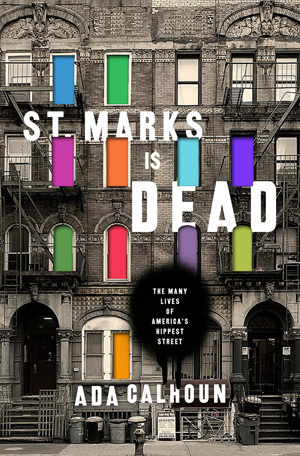
St. Marks Is Dead: The Many Lives of America's Hippest Street

25622226

Rating: 5 Stars

Review:

Ugh. Everything about this book is so beautiful and ugly and traumatic and hopeful. I don't even know where to start. So, let's just appreciate that cover for a moment. I love it. Gorgeous. Plus, with an endorsement from King Ad-Rock (my most favorite of the Beastie Boys) on the back once the book was actually in my hands, I knew this would not miss. I was not disappointed.

There are a few things that have fueled my obsession with New York over the course of my lifetime: 1. my general love of history and the fact that NYC is one of the oldest cities in the country 2. Two of my favorite movies that take place there (The Godfather and Newsies. Yes, my tastes are eclectic.) 3. My love for the idea of hanging out in The Village, sitting on a couch in a coffee house with my Friends for hours without a care in the world. I am not sure I can truly convey the powerful hold the idea of New York City has over me. I have never visited the city and the closest I've been was a quick layover in Jersey upon my and my mom's return from Amsterdam in 2010. Somehow, it just wasn't quite the same as walking the streets of the historic neighborhoods, being immersed in the culture of the city. I often wonder if I have built it up so much in my mind that the reality could never live up to the idea I have in my head, and that is a depressing thought.

The first time I ever heard of St Marks came in season 9 of Friends when Ross mentions being at St Marks comics prior to his being mugged in his youth (by Phoebe). I was delighted then to find it is/was an actual place on St Marks, as the author offers a list of pop culture references to the street. The listings are grouped by song mentions and movie/tv mentions or as the location of filming. Incidentally, Friends is not on this list, which is kind of ironic seeing as how it was my first introduction to the famous and infamous street. The book was just published, so I can not see why it would have been overlooked. But I digress.

I guess I should talk about the book itself now; I've talked about myself long enough. The first thing I appreciate about books like this is the author herself. This was not someone who chose a topic to research on whim or because an editor thought it would be a great read. I mean, those things could ALSO be true, but the author is a child of St Marks, having grown up there and experienced living their first hand. Who better qualified to write a history of such an iconic place? Calhoun is a talented writer and it is clear she has a lot of love for the street and the city.

Calhoun begins with 400 years ago, on Peter Stuyvesant's farm and from there weaves an engaging story through time, following the path as Manhattan grew up around it. I loved not only learning about St Marks, but other tidbits along the way. I loved seeing how the names evolved over the years from Bouwerie and Breukelen then to Bowery and Brooklyn now. I also was finally able to discover where the term 'knickerbocker' came from (because I was too lazy to Google it I suppose, or did not realize how much I wanted to know where it came from until I read this). I won't spoil it, the answer is on page 6.

The book flows well and is a quick read. You will cross paths with the likes of The Beastie Boys (only about a page though, my biggest complaint!), Andy Warhol, Leon Trotsky, The Ramones, and Allen Ginsberg, just to name a few. Time and again, the theme is that the street is dead, always proclaimed by the generation that leaves and a new wave takes their place. From a Dutch colony, to the Beatniks, anarchists, punks, drag queens and so on. However, as you will find, that is not actually the case. Each new group to take over St Marks leaves a piece of itself before moving on, contributing to the legend of the legendary street.

I know even as I am writing this, the review here does not do the book justice. All I can say is to read and enjoy for yourself. Only seventeen days into the new year and I think this will be a top 5 book of 2016 for me. Highly recommended.

A History of Civilization in 50 Disasters

26267691

Rating: 4 Stars

Review:

I have this habit of going through the new release section of the public library catalog and putting a bunch of books on hold that I am interested in. Half the time, the books end up being YA/juvenile, despite me clicking specifically on the history section on the adult list. Sometimes I read the book anyway and this is just such an occasion.

First, I love these kinds of history lessons, these sort of lists that look at some sub-section of human history and how those pieces matter and come together to form one aspect - another good one is 'The History of the World in 100 Objects'. Very interesting.

Anyway, despite being about a depressing subject matter, the content was highly interesting and worked well for an adult, as easily as it would for a YA reader. The book covers a wide range of topics, from earthquakes, plague, volcanoes, to a molasses flood. For real. A flood of molasses. It would be funny if people had not died. I guess the phrase "Slower than molasses in winter" is not really accurate after all. I don't say this to be cheeky, I had never heard of this disaster and it was very interesting, I love that Santorini, the burning of Rome, and Pompeii were included, though the majority of the disasters that the author focused on were 13th century and beyond. This makes sense of course, those darn dinosaurs Neanderthals never bothered to write anything down.

Each chapter is between two and four pages long, so not overly detailed for the intended audience, but still giving enough information to keep the reader interested. This would be a great resource for research, or for a reluctant reader to find topics that might be of interest to them. In addition, there are a few further resources - a glossary for readers who might be unfamiliar with the terms in the book, and additional resources related to each topic, as well as a brief introduction to the research process. There are also tons of maps and photos throughout, great color photos that add to the content.

I like this series, I think it is an interesting way to hook those readers who have had a hard time finding things that they want to read about. Short chapters, with addition resources if they do find something of interest.

My only real, tiny complaint is in the form of the 50th disaster - it was actually called 'Disaster in the Making' and discussed climate change in our century and the possible ensuing consequences that will come if we do not reverse course and try to get global warming under control. So really, this is not actually a disaster that has happened, but one that is in the process of happening as I type this review. And even then, this is not major - more of an aside.

I recommend this both for those YA readers looking for something engaging, and those who are interested in learning more about these types of disasters and how they have impacted our history.

Saturday, January 16, 2016

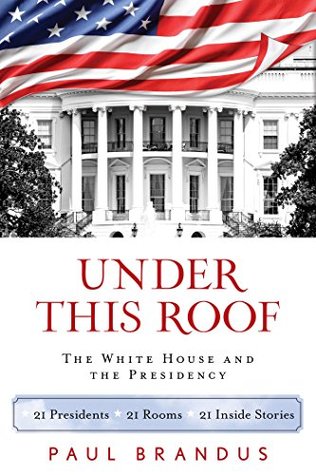
Under This Roof: The White House and the Presidency

28000079

Rating: 4 Stars

Review:

I received this ARC from NetGalley in exchange for an honest review.

I learned quite a few interesting tidbits about so many presidents who I thought I knew well. I also learned that the White House might be the most poorly constructed building in the history of the world.

As stated in the title, this book takes a look at 21 different rooms in the White House and the story of that room as relating to a specific president. The stories flow well for the most part, weaving the wider US and/or world events as related to the purpose of the room and the president of the time. The book contained several pictures per chapter which are relevant, though I wish I would have had a physical copy as I would love to see many of these in color. I also wish there had been more pictures of the rooms themselves at least for as far back as pictures would exist. It would have been nice to see reproductions of Jefferson's design plans that are mentioned. I am interested to see if they still exist, as would it be cool if plans by any other presidents exist also.

Not only is this a history of the White House, but a history of some of these presidencies at crucial times in our nation's history. For example, I did not know that it was ever a question as to who would succeed the president, should he pass away while in office. This issue came to light in the case of Harrison and Tyler when the former died after a month in office. I also do not recall ever learning about Wilson's last 18 months in office when he was no longer actually in charge due to the massive stroke he had that rendered him all but helpless and paralyzed on his left side. It is said that his wife essentially became president and made decisions. That is a very interesting but also a scary prospect.

I was pleased to see a section for FDR, though I would have been surprised if he had not been included. If only he could have lived forever and gone on being re-elected. Would he have made the decision to drop the atomic bombs on Hiroshima and Nagasaki? Could history have been dramatically different? 

There is so much history I do not know about so many of the presidents and it is my goal to read at least one book about each man to hold this office. I appreciated this book piquing my interest in some of these men who I have yet to learn about - incidentally I am far more curious now about Nixon than I was prior to reading, when all I really knew related to Watergate. Interesting that such an intensely private person would seek the highest office in the country. He is intriguing.

I realize this is only an ARC as I have received it, so my only real complaint was the final chapter and how it ended. This final chapter revolved around President Obama and the movie theatre within the house. There was no real end to the chapter though, it just kind of devolved into a brief conclusion without any heading indicating as such, then moved to the author thanking those who assisted him, and finally on to the notes. Hopefully in the final copy, this was resolved.

I've never been to the White House, though I was able to see the building from afar on a class trip to D.C. in 8th grade. I was in awe of the ease in which people could just come and go to call on the president in the infancy of the presidency. Of course this would be impossible to do today, but how awesome would that be to just stroll up the steps and see if the president was available for an evening chat?

Overall, this was an interesting look at the White House and 21 important stories in 21 rooms as related to our country's history and I highly recommend it. I must say though, it is a home I am certainly glad I don't live in - I fear one day it may really fall apart!

Sunday, November 8, 2015

An Unlikely Union: The Love-Hate Story of New York's Irish and Italians

23371635

Rating: 4 Stars

Review:

I received this many moons ago as an ARC via NetGalley in exchange for an honest review. Thank you for trusting me with so many books, I promise I will read all of them!

I can't figure out why it took me so long to finish this one, having started it months ago. It covers three of my favorite topics all nicely mooshed together in one book: New York, the Irish, and Italians. Okay, maybe the Irish and Italians in a very Godfather kind of way, because I am strangely obsessed with the Mafia circa early 1900s. And The Godfather is one of my top three movies of all time (sharing the honor with Jurassic Park and Newsies. I know, it is a very eclectic mix. I can't explain that either, except that aside from New York, Irish, and Italians, I also love dinosaurs and Christian Bale.)

It is strange to me that I dragged this one along for so long and I guess the only explanation I can come up with is that it is one of the first books I downloaded on my Kindle. Even after finally giving in after six months of back and forth, should I/shouldn't I and my mom saying, "For the love of God, BUY YOURSELF SOMETHING FOR A CHANGE!", I was not sold on reading books via a Kindle. There is simply no substitute for holding an actual book in your hands and leafing through casually, instead of making sure you use the correct amount of pressure in your fingertip so the device registers your swipe on the screen. It's really just not the same. At all. Plus, as I am a fan of reading (and reviewing!) older books, there is a certain smell that just evokes feelings of contentment. The whole library smells that way. At least, my favorite branch, Swanson, does. There are definitely some branches of Omaha Public Libraries that smell like other things - judgment and impatience (I'm looking at YOU, Millard).

Anyway, so me rebelling against my own purchase was probably a contributing factor for this one taking so long. The content of the book was truly fascinating to me. It tells the story of two ethnic groups forging their identities in America and what a struggle it was as waves of Italians began immigrating, which ruffled the feathers of the already-established Irish population. As someone of neither Irish nor Italian decent (heavy on the German with a side of Swedish right here), it gives me a bit of a different perspective, as I am an outside among these two groups. It is hard to recognize your own similarities with another group, whom you are basically taught to hold in very low-esteem, yet the Irish and Italians encountered many of the same problems and prejudices from others as they worked to establish themselves. There are far more similarities between the two groups than either would have cared to admit 150 years ago, or even 75.

I enjoyed many aspects of this book, not only the detailing of the ups and downs these two groups shared in their tumultuous relationship, but of the history lesson in which the author also looked at the groups separately to give the reader a clear picture and the groups distinguished identities. I especially find interesting the era in New York when Boss Tweed and Tammany Hall ruled with an iron fist, so there was plenty of New York history as well, all entwined together in this love-hate relationship. I've added several more books to my to-read list as a result of the myriad of interesting people I was introduced to in this book.

As the book neared the end of the line, the author also discussed how this sort of rivalry had been tamed as the two groups intermarried and became more at ease with one another. New ethnic groups moving in to traditionally Irish and Italian sections of the city also paved the way for new rivalries on par with this one, and make for interesting comparisons.

All in all, a great read. I highly recommend it, regardless of your own ancestry. This is a highly interesting look at a volatile time in the history of the US and how these two groups were so important in shaping New York.