Showing posts with label Mental Health and Illnesses. Show all posts

Sunday, April 5, 2026

Netgalley ARC | Broadmoor Inmates


I received a free digital ARC from the publisher via NetGalley in exchange for an honest review.

Rating | ⭐⭐

I would venture to guess that anyone who has an interest in historical true crime knows the name of Broadmoor. The facility opened in 1863 for the 'criminal lunatics' of society who needed to be confined for the safety of the public, and themselves. Each inmate committed some horrific crime - or attempted one, leading to their incarceration.

Of course we know that treatments of the time were in no way effective - fresh air was often considered a treatment for pretty much anything ailing someone in that time period. But inmates were also expected to work, and were provided leaisure activities to participate in as well. Even so, this was no idyllic place for anyone to be 'cured'. Doctors of the time simply did not have the knowledge or resources to provide actual treatment for the wide range of causes that brought inmates to their door.

While the stories were interesting, and many incredibly tragic, I was a bit disappointed with this book. I was hoping there would be more information about Broadmoor itself and the attempts of treatment at the time. Given the subtitle, it seemed like a logical expectation.

Instead, this was a collection of stories, some with a lot of detail and some without, about how these particular inmates ended up at Broadmoor throughoutt its history, up to the 1950s. When looking at the bibliography, much of it was simply a list of newspapers. I always appreciate when an author uses contemporary sources, but we also have to remember that Victorian-era newspaper accounts of crimes was rather...colorful.

This had the potential to be an interesting look at an infamous asylum, going back to its very beginning. Unfortunately that is not what we got here. And given that this was only about the crimes people committed, and not their later "treatment", the stories got repetitive after a while.

If you've been around a while, you might know that I am absolutely obsessed with the way Victorians were obsessed with crime and punishment, so I was really excited for this one. But with it being indidivual stories about the various murderers and would-be murderers who ended up behind Broadmoor's walls, there was no common thread to tie any of the stories together. I feel like exploration of society's attitudes toward mentall illness at the time, attitudes toward treatment and care, and toward punishment in between the stories could have made this a much more cohesive book.

I would say I still recommend this if you are interested in true crime stories from the era, as long as you do not expect a deeper look underneath the crimes at the root causes, or how they were treated for perceived lunacy.

Tuesday, July 15, 2025

Book Review | Damnation Island: Poor, Sick, Mad, and Criminal in 19th-Century New York


Rating | ⭐⭐⭐⭐

This book was absolutely horrifying and engrossing at the same time. I could not put it down.

In 1928 NYC purchased an island in the East River and called it Blackwell's Island. For the next hundred years the complex of buildings were supposedly a safe-ish place for the insane, poor, sick, and criminal. The author shows us what daily life was like for those living on the island, as well as those who worked there. We hear from the people trapped there, city officials who sent them away, reformers who knew it was not the solution, and journalists trying to shed light on the abusive and inhumane practices. We also are taken on a deep dive of the politics surrounding the on-going use of the island, how 'charity' was put into practice, and all of the horrific 'therapies' patients were subjected to.

Different facilities were built to care for each of the groups mentioned above. Great in theory, but not entirely accurate in practice. Due to funding (or lack of), staffing (or lack of), food (or lack of), and/or medication/supplies (or lack of), these populations often mixed together and the results are as awful as you would expect. With massive overcrowding, sometimes inmates were assigned to a different facility than was appropriate. And as a cost-saving measure, convicts were assigned jobs as attendants in one of the other buildings. It went as well as you would expect.

That was not the vision the city had for this project when it first began. Originally the plans were, naturally, to find humane ways to care for these populations with the highest needs. The initial plan was for a facility to house up to 200 people. There was no intention of mixing any of the populations, especially not those in the penitentiary with the mentally ill, One can see right away why that would be a receipe for disaster, a situation ripe for further abuse of those least able to defend themselves. When the building was nearly at capacity in the first few weeks, the city realized they had a much bigger problem on their hands. The asylum had to be enlarged repeatedly, and still there was never enough room for everyone. And for the doctors and nurses truly trying to do good and help those in their care, it must have been overwhelming to know that there was never enough of anything to truly help - not enough money, not enough staff, not enough supplies and food and medications. Of course, you also had those who did not care about treating patients humanely, which made an already-unbearable situation infinitely worse.

We might think we are doing so much better today, but let's be realistic. The mentally ill and the criminal are still housed together, only now it's in jails and prisons, where those with metal illness get zero treatment and they are subject to abuse again at the hands of fellow inmates. While treatments in psychiatric facilities are better now, prisons are not. Prisons are the new asylums for those who do not have access to treatments and medications and money/insurance to pay for these things that the psych facilities can provide.

The author did a fantastic job showcasing each facility on the island and how they operated. As we all know, people (mainly women) could be committed for pretty much anything, and that's exactly how Blackwell Island found itself at capacity so soon after opening. For a century, people sent to the island were subjected to absolutely disgusting living conditions. Food was often spoiled and rotting, and there was much physical abuse. It will also surprise no one that racism was also at work, and while conditions were terrible for everyone, it was usually even worse for Black patients and inmates. Plus we all know how well-liked the Irish were at this time, so their treatment was also as awful as you would expect.

This is a very well-researched and interesting read. The author had access to surviving documents and really brought to life individuals who lived and died on the island. It is a difficult read, but an important one. The complete disregard for human life over the decades of operations is heartbreaking and something that stayed with me long after I finished this one. There were certainly bright spots in the story, reformers who saw what was happening and tried to stop it, but were met with resistance at nearly every turn.

The author ends with a look at Rikers Island now, and asks if we are really doing much better today. You can probably draw your own conclusion.

Highly recommended.

Sunday, January 1, 2023

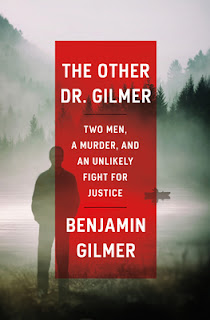
NetGalley ARC | The Other Dr. Gilmer: Two Men, a Murder, and an Unlikely Fight for Justice


I received a digital ARC from the publisher via NetGalley in exchange for an honest review

Rating ⭐⭐⭐⭐⭐

It seems an improbable coinsidence, but this is the story of Dr. Benjamin Gilmer, who begins practicing in Cane Creek, North Carolina, essentially taking over for Dr. Vince Gilmer - no relation. The men are not related, but their lives will become entwined in ways that the former never could have imagined. This is due to the fact that the latter shocked his rural community by committing a terrible crime - murdering his father.

Prior to the crime, Dr. Vince was deeply loved by his patients and community. He went out of his way to provide exceptional care, going above and beyond what would be expected. Dr. Benjamin repeatedly hears from these patients, who are now his, how they could not believe Dr. Vince was capable of something so terrible, and this serves as the basis to draw him into the case and as Dr. Benjamin looked into it more and more, that something was not right.

These facts are not in dispute: In 2004 Dr. Vince picked up his father from the assisted living facility where he stayed. He then strangled his father, cut off his fingertips, and dumped the body. On top of all that, Dr. Vince then went about his daily life, showing up to his clinic the next morning for another day with patients.

So ten years later, Dr. Benjamin arrives in Cane Creek and as he learns more, he is determined to find out what really happened. He can't reconcile the portrait painted of Dr. Vince by his former patients with the convicted murderer who was sentences to life in prison for the brutal crime.

When Dr. Benjamin finally works up the courage to visit Dr. Vince in prison, he is shocked as to who he finds sitting across from him. Dr. Vince is suffering from a combination of disabilities that could have contributed to his committing murder. The disabilites are both mental and physical, and to Dr. Benjamin it is clear that Dr. Vince is mentally unwell. Yet others dismiss this as him attempting to wiggle his way out of his lengthy prison sentence.

Yet Dr. Vince is receiving no medical care in any way, shape or form. The book is as much as an indictment of our incredibly shitty treatment of those with mental illnesses who are trapped in the endless cycle of being in and out of the prison system.

Dr. Benjamin uncovers several things that could have contributed to Dr. Vince "snapping". As a child Dr. Vince was sexually abused by his father and as a result had PTSD. On top of that he had recently suffered a traumatic brain injury. We also find out that shortly before Dr. Vince murdered his father, he stopped taking Lexapro cold turkey, which I understand is a terrible thing to do. I take Lexapro to help combat my a-typical anxiety/stress-induced migraines (they're awful, like, SERIOUSLY. They're in the same spot and when one comes on, it feels like the whole right side of my face is melting). My doctor made it very clear that missing a dose would not be good, and starting it I only took half a pill before working up to the full one. And when I went in for a med check the following year, we agreed coming off the Lexapro in the beginning of a global pandemic would not be a good idea.

The whole point of my sharing this is to show how powerful drugs like Lexapro are. Dr. Vince talked repeatedly about feeling like there was something wrong with his brain prior to him stopping the meds, and the murder. In fact, Dr. Vince chose to represent himself at his trial - something that should have also been a major red flag that something was not right in his head. Instead people just assumed that he was using it as a way to get out of a guilty verdict.

Dr. Vince uses the term SSRI brain as his defense. This was something I looked into more in-depth outside the book and it basically means the brain is attempting to withdraw from the med that it no longer has access to.

Dr. Benjamin visits Dr. Vince several times as he comes to believe that Dr. Vince has some pretty severe brain damage. At one point he brings a colleague he agrees that something is not right. He notes several symptoms - tics and tremors, difficulty walking - that could indicate Huntington's. Add to this the statements Dr. Vince made about his brain "not working", and it makes sense.

It will probably not surprise you to find that after finally securing the genetic testing needed to get a diagnosis, that Dr. Vince does in fact have Huntington's. If you are unfamiliar with this degenerative disease, it is devastating. Huntington's causes a breakdown of nerve cells in the brain. This in turn impacts a person's whole ability to live, from physical movement to cognitive functioning. It is a disease for which there is no cure, only treatments that can make the patient as comfortable as possible until dying a horrific, painful death.

Dr. Benjamin spent the next several years working tirelessly to advocate for Dr. Vince to get the treatment he needed, in an appropriate placement; prison was clearly not the right place.

In the end, this is a deeply fascinating and moving story that demands attention. Highly recommended.

Wednesday, February 17, 2021

BookSirens ARC | Fallible: A Memoir of a Young Physician's Struggle with Mental Illness


I received a free digital copy via BookSirens in exchange for an honest review.

Rating ⭐⭐⭐

I appreciate the author's experiences and his willingness to share his struggles of what most would consider deeply personal. Unfortunately the stigma surrounding mental illnesses is still in full effect so this makes it difficult for so many to speak up when they need help. Books like this are important, because it helps others going through these same struggles feel less alone. However, sometimes these books can also end up overwhelming their intentions when they involve many threads and do not all seem to connect in a complete way for the reader.

The author does not shy away from the realities of life as a med student and resident, while dealing with anxiety and depression, while also being a young husband and eventually father. It was frustrating to read about these older physicians often taking out their own anger or issues on residents, or just power-tripping for no reason. That mental strain alone would cause plenty of mental health issues on their own.

I have to say, straight-up, referring to his anxiety and depression as a "gargoyle" really got old quickly. Perhaps we can more quickly get rid of the stigma of mental illness if we simply refer to it as what it is, instead of trying to characterize it differently.

There is a lot going on here and while memoirs can often be kind of scattered at times, this one felt scattered due to the many complex issues all at play at once. The author talks about his religious life as a member of the Church of Latter-day Saints, and we see how that faith kind of ebbs and flows as he gets through med school and goes onto his residency. I am curious about whether or not his faith had anything to do with his reaction or outlook regarding therapy. I do not know a lot about the LDS church and what their stance is on psychiatry, but I wondered if that played a part, as it always seemed to be a negative experience for him - in the brief glimpses we got of that aspect of his dealing with his anxiety and depression. In fact, I would have liked to known more about that avenue, because the discussion of therapy sometimes seemed like an afterthought. There was the issue of meds and them working or not, but nothing in-depth.

This book takes many routes at once, and they don't always converge with one another. At certain points in the book it was definitely about Jones and his struggles with internally dealing with everything. Other times it was about how literally everything outside of him was only making his battles worse.

I guess the picture is disjointed, but when dealing with mental illnesses, that is often the reality, so it does make sense in that regard. Despite my issues with the text I still think this is a valuable contribution to the books and memoirs specifically that deal with such topics.

Tuesday, November 3, 2020

BookSirens ARC: Sometimes When I'm Sad


I received a free digital ARC via BookSirens in exchange for an honest review.

Rating ⭐⭐⭐⭐⭐

This book is absolutely stunning, incredibly beautiful, and exactly what our little ones need when they know/feel something is 'wrong', but they don't have the words yet to explain it.

I really hate when people say, "Don't worry, kids are resilient." While this is most often true, they shouldn't HAVE to be. Kids should not have to overcome trauma and bounce back from horrible events and circumstances. But they do, and far too often. So, unfortunately, we need books like this to help them cope.

Mental illness is very real, even among our youngest in our population. This book will do wonders in the right hands, letting children know their feelings are valid, whatever those feelings may be. Kids need strategies to deal with big emotions in a time when adults are needing the same things. If we can't cope, and overcome, we can not grow and move forward.

The book provides wonderful tools for adults as well, in how to help our children, to understand the difference between being sad and depression, and what we can do to make sure our children know we are here for them. Adults are given an overview of signs to look for when it might be something more than sadness. I feel like this is a must-have for any adults who work with children, especially psychologists, school counselors, and teachers. I will definitely be buying a copy for Eleanor, so she always knows that she can rest in whatever emotion she is feeling, feel it all the way through to the end, and then put it away once it has been dealt with properly.

What I really love about the book is exactly just what I envision and hope for for Eleanor. Sadness is a common, complex emotion. Telling kids to just smile and be happy is just about the worst thing one can do. Children internalize that, wonder what is wrong with them because they don't feel happy even when it looks like everyone else is, and those feelings of insecurity grow.

Sadness is completely embraced here, and given its space to just be. We need to learn how to also just sit and be with that sadness, or any other emotion. It is a hard skill to teach children, but is so critical for their emotional and mental health.

In the story, a young boy is dealing with some feelings and he doesn't yet know how to express those feelings in constructive ways. He hides often hides, or throws his toys. Treats and gifts do not help him deal with the emotions he is feeling. He then meets a counselor who gives the child different ways to help manage his sadness/depression and cope with this big, overwhelming feelings. He uses these throughout the remainder of the story. He says at the end that he still cries sometimes, but not for long because now he knows ways to help himself feel better. He is shown creative ways to create outlets for himself, and these are simple things that can be used by everyone, not just children - confiding in someone we know cares deeply for us, knowing they will not judge us or dismiss our feelings, is so so important for children especially.

Saturday, September 12, 2020

NetGalley ARC | Administrations of Lunacy: A Story of Racism and Psychiatry at the Milledgeville Asylum

43561506

I received a free ARC from the publisher via NetGalley in exchange for an honest review.

Rating: ⭐⭐⭐⭐

The book makes for some very grim reading, but that reading is important nonetheless. The author dives deep into the history of psychiatry. I would love to say I am shocked at the blatant racism of said origins of the field, but we all know that would be a big fat lie because racism is STILL everywhere. So many institutions that we know today were founded for the nefarious reasons of keeping Black and African-American people "in their place" and it will come as a surprise to literally no one who is a logical person that asylums operated for that purpose.

The author presents a slew of facts and anecdotes in such gripping detail that despite the horrible accounts, the book was hard to put down. The pain and trauma of so many years of abuses by those in power are hard to stomach, but Segrest's scholarship is top-notch.

The Milledgeville Asylum was founded in December of 1841, then called the Georgia State Lunatic, Idiot, and Epileptic Asylum. Within a century of its founding, Milledgeville housed 10,000 patients and held claim to the title of being the largest insane asylum in the world. Yet few people outside of the state seem to have heard of this place, and Segrest aims to change that.

I had no idea prior to reading this book of the originas of psychiatry - that psychiatry came from successful attempts to ensure that even though slavery was technically illegal, Black and African-American residents would still be held against their will. The author connects this terrible history to our modern world in a succinct and now-obvious way: the majority of psychiatry beds in the US are in prisons and jails. These same prisons and jails house a highly disproportionate amount of Blacks and African-Americans. The correlation is pretty hard to miss.

What's more, it was here at Milledgeville that the foundation would be laid on which the many eugenics theories would be built. Segrest discusses the basis of these policies and practices at length, and how the conversation by the 'experts' of the time gradually changed in order to accommodate the changing country. Slavery was good for the "Negro brain" because the constraints of slavery allowed for fewer cases of "insanity" among African-Americans. Basically, the psychiatrists believed that slaves were unbothered by stress due to their position as slaves. Sure, I am guessing that being a slave was not stressful at all. I would place my standard eye-roll here, but the subject is too horrific and infuriating.

Naturally these psychiatrists determined that emancipation would be terrible for all the "unstressed slaves" and wouldn't you know, in the eras following the Civil War - through Reconstruction, Jim Crow, and so on and so on, the conversation gradually became about mental illnesses then passing on to the next generation because it was hereditary and not the trauma after all.

Patient were subjected to all kinds of terrible procedures that had zero to do with healing. Forced sterilizations, lobotomies, the ice baths, it's all here and well-documented. Naturally these procedures were performed almost exclusively on women and African-Americans, because we all know that white dudes NEVER have mental health issues of any kind, and especially did not in the decades that Milledgeville was in operation.

Today roughly 200 buildings still stand on the 2,000 acres of land where Milledgeville was once a bustling and busy place. It is largely abandoned, but there are people working to preserve this history and I truly hope they are successful. These stories can never be forgotten, so that the thousands of nameless men, women, and children who died there are not forgotten either.