Showing posts with label Scotland. Show all posts

Thursday, March 20, 2025

NetGalley ARC | Clan Battles: Warfare in the Scottish Highlands in the Late Middle Ages


I received a free digital ARC from the publisher via NetGalley in exchange for an honest review.

Rating | ⭐⭐⭐⭐

This one is sort of unusual for me because I am typically bored to tears by any kind of warfare or military history. It's not interesting to me, I don't care about battle tactics, artillery, or anything having to do with that aspect of wars. I am far more interested in societal and cultural impacts of said wars.

That being said, I love Scotland so much, my daughter's middle name is Edin, (pronounced phonetically), because I love Edinburgh also SO MUCH (and naming her Eleanor Edinburgh seemed kind of mean). So, yes, I will read about clan battles in the Middle Ages because who wouldn't be interested in that kind of history?

I was familiar with most of the clans that the author discussed, but was delighted to get so much more detail than I expected, given the time period these battles occurred in (1430s-1540s). We see the Mackays, Sutherlands, MacDonalds, Mackenzies, Maclains, MacLeods, and Frasers at various times in that 100+ years, all vying for glory, dominance, land, revenge, and recognition.

The battles themselves were described in intense detail and at times you feel like you're there on the battlefield. We get all the things that typically do not interest me - strategies/tactics each clan employed, as well as their weapons and armor of choice. Not only are the battles recorded here for us, but so are the eventual fates of the clans as a whole and their eventual loss of independence, though the land had been theirs for hundreds of years in some cases.

The book runs a bit under two hundred pages, but the author has packed tons of research into it. Definitely recommended for those with an interest in the subject.

Tuesday, January 3, 2023

Book Review | Heroines of the Medieval World


Rating ⭐⭐⭐⭐⭐

Another essential read from the author on one of the most extraordinary periods in history, showcasing  a wide variety of women who were just as extraodinary. Connolly introduces many women both famous and obscure and shares their stories. Despite the fact that it was supposedly men who ruled the world, these women prove time and again that they were not merely subservient to the men in their lives. The choices these women make not only alter their own paths, but the wider world around them, some even changing so far as to change the course of history.

Connolly has organized the women by theme and I really liked this approach. I like that this lead to some overlap sometimes, because it shows how so many were connected. Themes include Heroines in Religion, the Medieval Mistress, Scandalous Heroines, Women Who Ruled, Captove Heroines, and the Survivors. There are others as well that I will leave you discover, just as I will let you discover these heroines and who Connolly chose to include. There were many women I was unfamiliar with, or only knew of in passing where they fit into someone else's larger story. As a result there are many more women I will seek out further books about.

Connolly is incredibly knowledgeable of the women and their world. This is a well-researched text with notes and references to back up her work. Despite not being organized by woman, there is still so much depth here that we get to know the women very well. She brings the women to life and does so in an informative but still accessible way.

I enjoyed this one quite a bit. It's a fantastic read and I hope that Connolly at some point produces a second volume because there are so many more women who also deserve their moment in the spotlight.

Highly recommended.

Sunday, May 30, 2021

NetGalley ARC | Never Greater Slaughter: Brunanburh and the Birth of England


I received a free digital ARC from the publisher via NetGalley in exchange for an honest review.

Rating ⭐⭐⭐⭐

I'm not usually one for any kind of military history, but I will always make an exception for the Anglo-Saxons I love so much. Quite lucky, aren't they? Even the Plantagenets don't get that kind of treatment from me.

Part of the draw here though is that the book is so much more than the battle itself, but the archaeology behind finding out where the battle truly took place, as this information as been long lost to history.

The Battle of Brunanburh seems inevitable, once one knows the history leading up to it. The author does a fantastic job laying this history out in an easily readable way even for those with little background knowledge on the topic. He begins with the Celtic tribes who once called England home, even though they didn't call it England. Then come the Romans, then the Saxons. Slowly but surely England begins to take shape, though it will still not be called that for a couple more centuries. When we finally see Athelstan he is doing his thang, humbling kings, conquering their lands, demanding loyalty.

But this would not have been possible for him without the equally heavy lifting done by his grandfather decades earlier.

Not until my fave, Alfred the Great, came along would the stage even be set for this to happen. It was through his uniting of several of the individual kingdoms - Wessex, Mercia, East Anglia, etc. - that Athelstan could stand on his shoulders and after this terribly violent battle, truly declare himself the King of a united England.

So, why is this battle not more well-known?

After all, for generations to come, it was simply referred to as the "great battle". Everyone would know what you were talking about with this reference. Yet today, so many have no idea it ever occurred, or what its significance is.

Part of the problem is, the location of the battle is unknown, though great care has gone into locating it and the author makes an incredibly compelling case here for his theory. I do have to admit though that I have not read other books on the subject. Even so, the author spends time in the Appendix laying out why he disagrees with the theories of other historians. This is not done in a malicious kind of way, but he points out things that don't make sense with what we know, or don't fit the pattern of evidence. I appreciate how thorough he is with the material.

Once you learn about how truly massive this battle was, the logistics that must have been involved, it feels a bit overwhelming. We are talking about Athelstan and his army standing against his enemies - an alliance that would never have come together were it not for their mutual hatred of Athelstan. In fact, these allies had previously spent a good bit of time fighting one another in previous years at various times. But they figured that the only way to defeat Athelstan, to stop him from taking over every last inch of the island, was to band together. Leading the Vikings out of Dublin was their chief, the famous Analf. Coming from Scotland was King Constantine, and rounding out the trio was King Owain of Strathclyde. These men were seasoned leaders and accustomed to fierce fighting. it is no wonder they were confident that by teaming up, they could defeat Athelstan once and for all.

It might sound kind of cheesy, but just think about that for a moment. Seeing these armies come together to form one massive group, pouring from the ships that had to have carried at least two of them there. Seeing the equally massive shield-wall of Athelstan's own army ready for a fight. It's breathtaking.

Even more so when you start thinking about the possible locations this could have occurred, and can place the armies in their respective camps.

So many people are involved in seeking out this location, finding the sight of England's birth. Professional and amateur historians, linguists trying to work out all sorts of possible place-name matches, and of course archaeologists who seek whatever scraps they might find to finally be able to say, "Here, this is the place."

Not so easy to do though, when you consider that the battle took place at some point in 937 AD. The author argues for it occurring later in the year and again, given the evidence he presents, it makes sense.

The author starts where we always must in order to have a basis, and that is with research. He uses the Anglo-Saxon Chronicles and Egil's Saga, as well as the Annals of Ulster. He also makes references to other chronicles and documents as well and even if the details do not all line up 100%, they all agree on the fact that a major battle occurred in 937 AD and untold thousands died. Like any good historian, the author is aware of the biases that each of these sources carries and has to sift through to find what can be proven by other evidence. This is where those linguists come in VERY handy, breaking apart words and putting them back together, determining the meaning then vs now, and so on. I don't envy them in that job, just reading about it was enough for me.

The author determines after a good couple rounds with all the evidence that the most likely location for this all-important battle is on the Wirral Peninsula in North West England. At this time I am not inclined to disagree, though as I said before this is my first book on the subject. Even so, the passion Dr. Livingston feels for the subject, and the obvious time and thought he has poured into trying to find the site is nothing short of extraordinary. He presents his methodology for how he arrived at his conclusions regarding troop movements, likely encampments, the battle itself, and its aftermath.

My only complaint with the book has to do with formatting, something out of the author's control. Not one single numerical value was present, which sometimes made it difficult to assess parts of the author's argument. Every value, from troop numbers to the years being discussed, was represented with a ? and it was SUUUUUPER annoying.

Otherwise, this was one I enjoyed quite a bit. I have been lucky so far in that I can never really go wrong with a book about Anglo-Saxons. It is my favorite period of England's history and even after devouring so many books on the subject, I am still learning new things.

Highly recommended.

Sunday, January 17, 2016

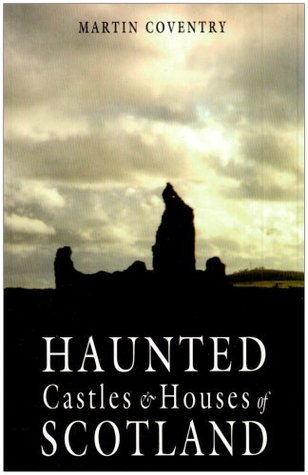
Haunted Castles & Houses of Scotland

1815951

Rating: 3 Stars

Review:

Yet another neat little book I picked up when Mom and I were in Scotland in 2009. It is a fun little romp around the country to all the haunted nooks and crannies that this beautiful land has to offer.

The book is divided into several sections within each chapter, starting with 'Ladies of Different Colors' - mainly the 'green', 'white' or 'grey' ladies supposedly seen haunting various locations. The legends behind these ghosts are further divided into how they may have met their ends - suicides, misadventure, murder, etc. I love that there was an entire section, nearly ten pages, devoted to locations said to be haunted by Mary, Queen of Scots. One must have to think she is still so busy in the afterlife, given all the places she's been seen; have to get those tourist dollars!

There are two more sections dealing with the supernatural, one regarding portents and brownies, and then the final section relating to ghostly men that haunt locales also. It is of no surprise to me that Darnley supposedly haunts Kirk O' Field - what a shame that nothing survives, even in ruins.

In addition to the stories, there is also a wealth of information in the form of further reading, maps of where the ghosts are supposedly located, and a list of the castles and houses mentioned in the book. This list is especially useful as it denotes whether the location is open to the public and if so, gives contact information and times of year to visit. Quite useful if you are planning a haunted vacation!

My only complaint is that some of the stories were so incredibly short, it seemed almost a waste to include them, unless they supplemented a more detailed story. There were also some stories that got repetitive due to lack of information and I felt like those did not add much to the collection.

Over all however, I can recommend this one to those who love a good ghost story!

Saturday, January 9, 2016

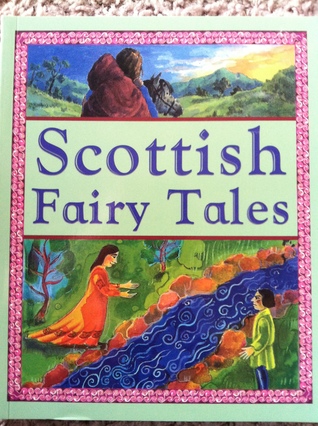
Scottish Fairy Tales

3126153

Rating: 3 Stars

Review:

I picked up this little gem in a store when Mom and I were in Scotland in 2009. We were on a day trip that included a visit to Loch Lomond, but opted not to go on the little cruise around the loch. Instead we meandered down the paths and took beautiful picture of Ben Lomond and these lovely ducks who wanted to follow us around. (All photos are my personal photos, taken in 2009).

I'm not really an 'outdoor girl' (Scotland, 2009)

My little buddies (Scotland, 2009)

Loch Lomond; Ben Lomond is hiding behind the clouds (Scotland, 2009)

This is one of several books I purchased when we wandered into the welcome center and it is definitely a treat. There is lots of trickery and shape-shifting in these stories, they all seem very strange until you then think about modern versions of fairy tales as told in the US and their earlier versions from around the world. Often these stories had wicked queen/step-mothers/both. This is a strange little collection that was entertaining, though I did not read all in one sitting, despite it being such a short text. Many of the stories are so similar in theme and characters that I would read one or two and then come back to it later. Most are no longer than 5-6 pages. The illustrations are very colorful and whimsical, perfectly matched to the subject matter.

My only complaint is that there was no historical context, something I would have appreciated. I would have found it interesting to learn where the stories may have originated, any basis in reality from where the myths evolved, etc. There was zilch in that department, and as someone who enjoys history, I was disappointed. That is the reason I could only give this one three stars and not four.

This one will be especially enjoyable for anyone who enjoys legends and folk lore, and that beautiful country that I always feel is my native land.

Friday, November 27, 2015

Queen of Scots: The True Life of Mary Stuart

653127

Rating: 5 Stars

Review:

While I would not consider Mary a heroine of mine, I can certainly say that she is an unjustly maligned figure who deserves a lot more respect than she has received in the 400+ years since her death. It is no secret that Mary made some very poor choices later in her reign, but prior to that she ruled her country well, with tolerance for religion and an aim to work together with her council to govern Scotland as an independent nation free of England's interference.

Here with Guy's biography of Mary, we are given a beautifully written, exhaustively researched play-by-play of Mary's life. That is not to say the work is perfect, it does have its flaws, just as Mary did, but it is far less biased than some of the other texts available out there. I can say this with certainty, as it even paints Elizabeth in a decent light (which I don't care for) and Cecil (rightfully so) shoulders much of the blame in Mary's downfall.

From the very beginning of her life, Mary was a queen and raised as such. When her father James V died within a week of her birth, the crown became Mary's and perhaps her fate was sealed then. Scotland has never had great luck with minor rulers, yet due to Henry VIII and his 'rough wooing' of Mary as a bride for Edward, Mary was promptly sent to France before she was even old enough to understand her place and her mother Mary of Guise became regent.

Due to the research and facts presented here, no one can really be surprised that Mary acted as she did. Her entire early life, she was the darling of the French court - already Scotland's queen and being prepared to become France's as well. People speak and write of her as though she was just this dumb, vain little girl. While she could certainly exhibit those qualities, it is certainly not all there was to Mary. It is also no surprise that she was so trusting. Family was so important to Mary, from her time in France with her Guise uncles, to her half-brother Moray. Mary never really stood a chance with all these greedy and manipulative men aligned against her for their own self-interests. Her uncles did her no favors for her future, by styling her as Queen of England while she was in France; they set up the struggle that would come to define Mary's life after her execution. Moray's constant undermining and later treachery was beyond awful. Mary trusted her half brother time and again, because family was important to her. To call her stupid for wanting to trust her family is to do a great disservice to Mary.

While over all I have a favorable opinion of this biography, it is not without its flaws. The author speaks of some things as facts when there is little evidence to actually confirm. The first time this arises is actually in reference to Elizabeth and Dudley, whom the author says had a 'fling lasting 18 months'. This is incorrect on many levels, primarily being the fact that it was certainly no fling and likely lasted longer than 18 months, despite Dudley's multiple marriages - and to think, Elizabeth thought Mary would actually jump at the chance to Mary Dudley. What a joke. It actually saddens me that so much of Mary's story involves those two.

A second issue I take with the author's version of events is that he refers to Rizzio once being Darnley's lover. This is a huge point of contention and several authors have repeatedly addressed it. Again, no proof. I did learn that at one point Rizzio was apparently part of Darnley's circle, and there were stories that they had at various times shared a bed, but this was not uncommon in this time period, so I am confused as to how sharing a bed equals being lovers.

As always seems to be the case, one can not discuss Mary without addressing Elizabeth. While the author does put a positive light on Elizabeth, her major flaws shine even brighter. For example, Elizabeth felt like she had the power to veto any attempt at marriage Mary might make. It doesn't surprise me, given the fact that Elizabeth was selfish and manipulative, but Mary was the queen of an independent nation and equal to Elizabeth in every way. Elizabeth had no rights or power of the Queen of Scots, but she never could seem to remember that fact. The bigger problem than Elizabeth though, was Cecil, always Cecil. He infuriated me with every turn of the page. He was constantly undermining Mary at every opportunity. It is almost certain that he knew of both the plots against both Rizzio and Darnley, yet he did nothing. He wanted Mary out of Elizabeth's way and he knew that these two incidents would ensure that. Cecil is repeatedly painted by Guy as the bad guy and while I have no love for the guy, the constant reference to his will being done over Elizabeth's in regards to Mary means one of two things: 1) Elizabeth wasn't as strong of a ruler as everyone believes she supposedly was, or 2) Cecil is merely a scapegoat to present Elizabeth as a better person than she actually was in regards to Mary. I have no doubt in my mind that Mary's execution was always his goal once her personal life began to fall apart - he certainly saw the opportunity. But this is problematic in regards to Elizabeth. It makes Elizabeth look weak and as though she has no control over her counselors. I'm fine either way, because I am no fan of Elizabeth, but still.

While Mary is often depicted as a queen who never ruled well, who was weak and easily swayed by her counselors, Guy shows us in fact, that is not the case. Especially in regards to Darnley, and keeping him close to her when necessary, Mary showed great strength and resolve. "When Darnley arrived at the gates of Holyroodhouse a week later, insisting that her counselors must be evicted before he would deign enter, he was personally hauled inside by his wife" (page 261). Mary was no fool. Guy's work is refreshing to read as an in-depth look at her role as queen. Time and again Mary is shown as an active queen, working with her counselors and using her method of divide and conquer so to speak, to make sure her government continued to run. Had things gone differently and Mary been able to hold onto her throne, Mary might today be recognized as the greatest ruler on that little island, not Elizabeth.

My only other gripe beyond the questionable things presented as fact was the issue of photographs. It would have been nice if at least some of them had been in color. And call me crazy, but there is something to be said for photos being printed on photo paper instead of the same paper as the text,

Especially beautiful quotes:

"For all these years, perhaps ever since the death of her first husband, she had been in someone else's way" (page 484). What a tragically beautiful truth, Mary had been surrounded her whole life by ruthlessly ambitious men who did not value her right as queen to rule.

"Mary herself was a mass of contradictions, but some qualities abided. She was glamorous, intelligent, gregarious, vivacious, kind, generous, loyal to her supporters and friends, and devoted to her Guise relations. whether or not they returned her love. She could be ingenious and courageous with the razor sharp wit, and never more animated and exuberant than when riding her horse at the head of her army wearing her steel cap.


But she had deep emotional needs. She expected love and needed to be loved. And to a large extent she got what she demanded: from her Guise family as a child, from her Maries as an adult, from her domestic servants and, until she married Bothwell, from her people, who were spellbound by her youth, beauty, and glamour. Maitland came closest to the marl when he predicted that the ordinary people of Scotland would be captivated by her merest smiles or frowns. But as queen she lacked the love of a partner, an equal, who could have bolstered her in her anxieties and tempered her impulsiveness. And this hunger for a partner, a husband, a king, led her to her most grotesque and uncharacteristic miscalculations.


Although her rank meant that she was never alone, loneliness must often have consumed her, and it was a sign of her emotional isolation during her later years that her pets became everything to her. Her final reckless throw of the dice in 1586, endorsing a madcap plot in which not even the motives of the principals were clear, is a reflection of her desperation" (pages 496-497).


And this one sums up my thoughts best:


"But to let the end of her life overshadow the whole is an injustice. The odds were stacked against her from the beginning" (page 499).


Truly, Mary never stood a chance against all of these forces who continued to put their interests ahead of her own, even as she was the sovereign ruler of Scotland. She was their queen and they did everything they could to bring her down. Though, there is some solace in this:


"Her victory was more conclusive than even she might have dared hope, because every subsequent British ruler has been descended from her, and all derive their claim to the throne from her and not Elizabeth" (page 489). 
So there, Elizabeth!


All in all, this is an amazing biography. John Guy has done a wonderful job dispelling all the abhorrent myths and rumors that have run wild in the last 400 years. It is definitely not for the casual reader who has no background knowledge of Mary or her turbulent world, as it runs 500 pages, not including the notes. Still, if you have the interest, by all means, go for it. Highly recommended.

Wednesday, October 7, 2015

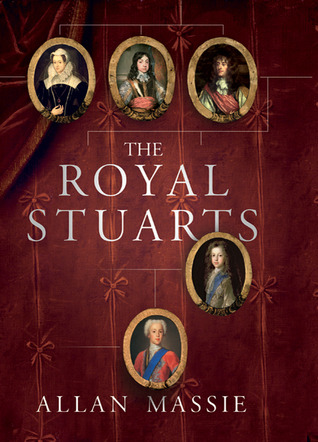
The Royal Stuarts: A History of the Family That Shaped Britain

11217378

Rating: 3.5 Stars

Review:

I keep trying to get beyond James VI/I, but I fear I never will. I picked this one up because I thought maybe if I read about the Stuart family, instead of just Great Britain AFTER James, it might make a difference. Sadly, it does not. James is really the last one who is interesting to me, I think because I kind of feel bad for him because he gets such crap for being 'undignified' for a king - I guess he was allowed to be a tipsy whenever he felt like it, because he felt the being king was a God-given right for him. The difference between James and his son Charles, who was never supposed to be king to begin with, is that while James felt that way he did not shove it in the faces of all his subjects and counselors. Charles and his father could not have been more opposite and unfortunately in the end, it cost Charles both his crown and his life. But don't even get me started on Cromwell. Ugh.

So, the good, the bad, and the ugly...

The Good: I like that a chapter was devoted to each member of the family, starting before the first Stewart king and explaining both the history and legend of the family - the name deriving from the title of Steward, someone in service of the king (The spelling would later be changed to Stuart with Mary, Queen of Scots, who spent the majority of her childhood and young adulthood in France. She used the French spelling, often signing her name Marie Stuart). I also liked that it was divided in such a way that helped me keep track of who was doing what in Scotland, to mirror my knowledge of what was going on in England at the same time. While English kings make their appearances (Hey, Hammer of the Scots!), I appreciate Scotland getting their due turn in the spotlight. If only they could be their independent nation again. But that is another story.

The Bad: Super gossipy sometimes. The author goes so far at one point as to suggest that Maximilian had fallen in love with Perkin Warbeck, the pretender to the thrown of England who claimed he was the younger of the twp Princes in the Tower (Richard, Duke of York). Really, he was in love with him? I think not, as nothing else I have ever read about Perkin Warbeck or ol' Max would ever suggest that. Also, not very creative with describing the somewhat unsuccessful reigns of Robert II and Robert III. We get it, they were older when taking the throne, and weren't great leaders. But gosh darn it, they were nice people. That's kind of how it comes across, and that's not very scholarly. Be more objective.

The Ugly: The author's extreme obsession with obscenely long sentences, broken, up, by, several, commas. Not kidding. Example (page 140): "Elizabeth, who disliked bloodshed, except when alarmed, might be, despite everything, well disposed towards her 'cousin and sister', but the men around her were Mary's enemies." SERIOUSLY? So unnecessary.

Interesting quotes:

(page 34) "Later Stewarts might fall into melancholy and depression, but Margaret is the only one recorded as dying of boredom."

(page 85) "It seems to have been a matter of no great moment to him (Henry VIII), and the coffin was left at Sheen in a storeroom. It disappeared when that monastery was dissolved more than twenty years later, and no one knows where the bones of Scotland's Renaissance King found their last resting place." Isn't that depressing?! There is no record of where James IV is buried, and Henry was, no surprise, being a jerk about giving a fellow king and appropriate burial.

It should come as no surprise that my biggest gripes come in regards to dear Mary, who for all her flaws and incredibly poor decision-making, is never given a proper look. She was not this wicked queen, she was just someone who had unfortunately not been prepared for anything but queenship, so she did not know how to be anything else once she was in captivity. The author makes some assumptions that I don't agree with, and seems to be presenting them as fact. One example, on page 114, he talks about Mary's half brother the Earl of Moray being loyal to her especially in the beginning because their interests were similar. That's completely untrue. The only reason he did not turn on her from the start, or even try to gain the throne himself while she was still in France, was because he knew he would not be successful without greater support. He waited until the right time, then showed his true colors. He was never loyal to Mary. Mary, on the other hand, certainly deserves credit for how she handled the situation after her secretary Riccio was murdered. She feigned conciliation with the murderers to continue to keep the government going and it served her well for the time being, until Darnley's untimely but not unwelcome end. I can though, appreciate the author's conclusion that Mary was not an active conspirator in Darnley's death. I think it is pretty certain that Bothwell murdered him, with help, and then forced Mary into marriage after raping her - something she herself says happened. I don't think she felt she had any choice at that point, as in the past he had always bee on her side. Unfortunately for Mary, it was because he too wanted power, hated Moray, and saw Mary as a way to accomplish both seizing control and getting rid of Moray. Luckily, Bothwell ended up dying in Denmark after being locked away and going mad. Good riddance. And thus, unfortunately again, his actions had long-reaching consequences for Mary.

I won't touch any more on what I think of Elizabeth and her false imprisonment of a fellow sovereign. Anyone who has read any other review I have written about that childish, manipulative shrew knows what I think of her and her rubbish about not meaning to sign the death warrant. Of course she meant to. Ugh.

Anyway. So, certainly recommended for anyone interested in the time period or the family. You'll have to wade through some nonsense, and if you have a background already related to the Stuarts there will be some facts you'll call bluff on. But it is an easy read, and an interesting one -  for me just through James anyway!

Sunday, September 6, 2015

Reflections of Scotland

13047143

Rating: 5 Stars

Review:

I know what you are all thinking: oh here we go again, Sarah is reviewing ANOTHER book about Scotland. And guess what? Hell yeah I am, because Scotland is pretty much my favorite place in the world and I am never going to be sorry for shouting from the mountaintops how much I love it. So, if that is an issue...why are you still reading this?

I bought this book (among many others) in 2009 when Mom and I were in Scotland. Am I the only person who buys books when traveling? I know there must be others like me, I just have not met them yet because most I know thought I was a weirdo when I came home with a suitcase full of books. Oh well.

Anyway. This isn't a regular book, exactly. I mean, it is a physical book, complete with covers and pages and words and pictures. It is also not exactly a coffee table book, because it is too small, and also too wonderful and unpretentious - something I personally find as the opposite with most so-called coffee table books.

The book is divided into sections from the Lowlands, to the Islands, Central Scotland, and the Highlands, among others. Each chapter begins with a few pages of description of that area's points of interest before giving way to the photographs. Additional information dots the chapters, ranging from paragraphs about whisky to castles to golf to Nessie - all very Scottish things.

This is simply a beautiful collection of photographs of a beautiful country, which I dare you to visit and not be taken-in by. I myself am what most people would all an "indoor girl", and the beauty of Scotland's natural surroundings is utterly breathtaking. Add in a countryside littered with ruins of once-and-still proud castles, abbeys, etc. and you have a recipe for amazing photography - which is exactly what is captured here. Normally when I peruse photography books, I think the whole time, "Nope, no way, it can't look like that in real life." But with this one, I was constantly saying, "Yep, that's exactly what it looks like, because I WAS THERE."

And as always, just to show it, here are a few pictures from my trip. No, none of them are castles. You're welcome. Read this book and visit Scotland. You won't regret either.

(All photographs below belong to me and were taken throughout Scotland in November, 2009).

Visiting Hamish on our way through the Highlands

It was a little windy and drizzly in the Highlands, but still amazing!

Probably my favorite shot from our cruise on Loch Ness.

At Loch Lomond

Mom and I in the Trossachs National Park

More Trossachs

Salisbury Crags, from Holyrood Palace. The tony dots on top are people hiking.

Monday, August 3, 2015

Citadels of Power: The Castle in History and Archeology

13456531

Rating: 5 Stars

Review:

So, I love castles. I love looking at pictures of them, watching documentaries about them, reading books about them and, above all, seeing them in person. I've been lucky enough to see a handful so far in the UK and Ireland, and can not wait to visit more in the future.

Naturally then, when I see what I think is a book about castles, I have to give it a read. I found this in the library catalog and reserved it immediately, not paying attention to the 'audio' label until later. No biggie, I figured, I can do a book on cd - then Eleanor can learn too! So, imagine my surprise to find it was not actually a book on cd, but a lecture series by Professor Finan. So, I guess technically I should not be reviewing it here because it is not a book, but it was wonderful!

Now, it was not perfect by any means, and there were portions that were somewhat repetitive, but I still enjoyed this very much. The lecture covered a variety of topics, ranging from the different kinds of castles, their place in society and the landscape, as well as castles specific to England, Wales, Ireland, Scotland, and castles built in the Holy Land by various Crusaders. I found that I knew many facts presented already, though was not nearly as familiar with the earthen and timber castles as presented in the second lecture.

Additionally, Professor Finan clearly cares very deeply about the subjects he is presenting, and even says that the last lecture pertaining to the end of castle-building is his least favorite because he loves the topic so much. While he is not necessarily the most exciting lecturer to listen to, it is worthwhile to hear the material he presents.

There is also a study guide included that has summaries, questions, suggested readings, other books of interest, and suggested websites for each of the 14 lectures. These are available through the company that produces the lecture series (free, but with a shipping charge of course), and I am considering ordering one.

Overall, highly recommended. Very interesting series and I am curious to see what other lectures are offered by The Modern Scholar.

As always, here are MY favorite castles (all photos taken by me in 2009/2010)...

Inside the gate of Stirling Castle (Scotland, 2009)

Edinburgh Castle (Scotland, 2009)

At Windsor Castle (England, 2009)

Blarney Castle (Ireland, 2010)

Malahide Castle (Ireland, 2010)

Bunratty Castle (Ireland, 2010)

(The remains of) Dublin Castle (Ireland, 2010)

Saturday, July 25, 2015

William Wallace: Man and Myth

5034357

Rating: 2.5 Stars

Review:

Anyone who has ever read a review on this blog of a book relating to Scotland knows how I feel about the country. I took my mother there for her birthday in 2009 and fell in love myself. Now I am counting down the years until we can go back and take the munchkin with us - you know, the little lady of mine who takes her middle name from my favorite city on the planet.

That refresher aside, it should then not be a surprise that in addition to defending Mary, Queen of Scots regularly, I am deeply fascinated by the story of William Wallace. I have never seen Braveheart and do not plan to. Movies based on history I am interested in fall into the same category as books of the same - I'd rather not. Additionally, the mistakes are so much worse in movies, since they are working with a much more limited time/space.

So, when I found this one at the library, I was interested. I've been to Stirling Castle, seen the landscape where Wallace's great victory took place, and wanted to read this one in order to see what might actually be fact and what can be safely reconciled into the myth category.

The problem is, this book does not do that. It seems that the author purposely chose instead to simply look at all the ways Wallace's myth has evolved and been use to support varying Scottish politics through the centuries. In the final chapter, the author even begins by writing, "By now the reader should be no closer to finding the real Wallace. If you have followed this text on its journey here to chapter eight - its close - then you might just be hoping the author will go on and tell you who this Wallace really was" (page 134). he then goes on to say we already know who Wallace is - a leader who won a great victory over England at Stirling, only to be betrayed and condemned to a traitor's death upon his capture. So here then the author is basically saying, "Too bad, I am not going to tell you." Truthfully, it is not because he does not want to (I don't think, anyway), but because he can't. In his choppy, meandering, clunky wade through history, he has chosen that path to show you that there is very little factual information that can be corroborated by any sources. And that is fine. I did not like, however, like the fact that he did take such a path. The book is basically just 152 pages of Scottish nationalism, politics, huff-puffing about the various monuments and Braveheart, and then globalization. It is certainly not what I would have expected from a book with this title, and thus a disappointment. A better title would have been something like, 'William Wallace: The Myth and How it is Used in Promoting Scottish Nationalism'. Then, this could have been an essay instead of a book, and would not have dragged on nearly as long. It is not a bad book per se, but not what I was expecting or looking for.

But, as always, when I review a book relating to Scotland, you can be sure I will include photos! All photos were taken by and belong to me, at Stirling Castle and Edinburgh Castle, 2009.

At Stirling, look out to the Wallace Monument on the far hill. The story I was told on this visit is that stone arch bridge to the left is roughly in the same area as the bridge used where the English crossed in order to engage Wallace's men in battle. Wallace and his men were to have camped on the hill where the monument now stands. In actuality I don't know if the story is true, as other accounts I have read say the hill is possible, but would be difficult for Wallace's men to have descended quickly due to it being steep and slippery in places. (Stirling Castle, Nov. 2009)

A better shot of the monument. Unfortunately, as Stirling was our last stop of the day before heading back to Edinburgh, we were unable to visit. (Nov. 2009)

Statue of Robert the Bruce at Stirling; Nov, 2009

Entrance to Edinburgh Castle. Wallace on the right, Bruce on the left (Nov, 2009)

Monday, July 6, 2015

Castles

25828055

Rating: 3 Stars

Review:

Not great, not terrible. Kind of dry at times. Great photos and illustrations, but seriously, no Edinburgh?? No Blarney?? Two amazing castles that deserved attention. No Windsor? No Stirling? Come on!

Additionally:

I decided to give this a little more attention - and also post pictures of my own favorite castles, because I love castles. I absolutely LOVE castles and have seen some awesome ones in Ireland, England, and Scotland. There are many more I want to see, but I have a good start.

This books really is informative, but it just read like a textbook sometimes and was very hard to continue - but it is by no means a long book. There are newer books available I'm sure - I hope - as we discover more and more during excavations. 

I was lucky enough to see several castles in my European travels in 2009 and 2010. When Mom and I traveled to the UK, we saw Edinburgh, Stirling, and Windsor (England was a short, short trip and much of Windsor was actually closed to tourists while the Queen was knighting people that day). Then in 2010 we traveled to Ireland, where we saw Dublin, Bunratty, Malahide, and Blarney. All amazing in their own right, though I am partial to ruins like Blarney, not furnished castles like Malahide. All photograpghs were taken by me (or my mom, or in the case where we are pictured together, a helpful but unnamed fellow tourist) in 2009 and 2010 and all belong to me.

Here are a few gems that should have been included in this book:

Our first view off the bus on the Royal Mile, after having landed, dropped our stuff at our B&B (The Ben Doran, AWESOME!), our first morning in Edinburgh (2009)

Edinburgh (2009)

Edinburgh (2009)

Urquhart Castle (2009)

Urquhart Castle (2009)

Entering the grounds of Stirling - MY FAVORITE! (2009)

Stirling (2009)

Stirling (2009)

Holyrood Palace (Okay, so not really a castle, but still awesome) (2009)

Windsor (2009)

Windsor (2009)

Blarney (2010)

Blarney (2010)

Blarney lots of small passageways to look around in! (2010)

Bunratty (2010)

Bunratty (2010)

Dublin (2010)

Dublin - this is about all that remains of the castle above-ground unfortunately. We were able to see the parts that are still underground though too (2010)

Dublin - The original castle stairs are now below street level (2010)

Dublin - remains of a city wall, below street level (2010)

Malahide (2010)

Malahide - Mom and I (2010) - the nice man who took our photo was quite the amateur photog. He kept directing us and his wife kept apologizing (she's the one standing to the left). It was quite funny, and we got this great picture.