Showing posts with label Elementary/Middle Grade. Show all posts

Sunday, August 1, 2021

Book Review | Wayside School Beneath the Cloud of Doom


Rating ⭐⭐⭐⭐⭐

There is nothing quite like reading a Wayside School book for the first time. And up until last year when this one was published, that was something I never thought would happen for me again.

I had read the first three to Eleanor a couple years ago and we laughed constantly. These three remain her favorites, and are the ones I most often find under her pillow when I am changing the bedsheets. Her copies are well-loved now, and she reads chapters at random, whichever one strikes her fancy at that moment. I love that she loves this school and these kids as much as I did when I was in elementary school. She was so excited when I told her a fourth volume was coming and we snatched it up from the library as soon as it landed.

I was, however, extremely nervous about this fourth book coming out 25 years after the third installment. I wondered if it would feel dated if it had to keep with the tone of the others, and maybe the reason the other three didn't feel dated is because I had read and loved them so much as a child. After all, the first book was written in 1978, before I was even born!

I also worried that instead of feeling dated, it would be UPdated and everyone would have iPhones and laptops.

Silly me. I should have trusted Louis Sacher more.

The plot certainly did not disappoint, if you could call it a plot? The overall goings-on is that there is this vaguely-references Cloud of Doom heading toward Wayside School and the kids are all incredibly busy and hard at work studying for the Ultimate Test so now they have two things to worry about. Yet Mrs. Jewls guides them all in her normal fashion and the children survive in the most Wayside Schoolish way possible.

I have to admit, this did feel like it had some finality to it, that this was our last chance to visit with the kids from the 30th floor. Things left hanging in other books were wrapped up nicely. Sacher's magic of the first three books is perfectly captured here and everything about the book is familiar and comforting. I think it is a pretty powerful thing when an author can do that so easily, despite the long passage of time since the last publication. The students and teachers all retained their some quirks and characteristics and if this is the last one, the series has gone out on a high note.

I'll share a highlight now of my favorite part at 97%. It made me so happy that it happened, but so sad that it took so long, that this is what she had been waiting for all this time. If you remember Miss Mush, the lunch teacher, it may strike the same chords with you:

Mr. Pepperadder grabbed and shook Miss Mush's arm.

"They like it!" he said excitedly. "Look at them! They really like it!"

Miss Mush didn't say a word. A tear rolled down her sweaty and sooty cheek.

"Did you write down the recipe?" he asked.

Miss Mush shook her head. "There is no recipe," she whispered. "No two rainbows are the same." She gazed out across the lunchroom. This was all she ever wanted.

Highly Highly Recommended.

Friday, November 6, 2020

Book Review | My Survival: A Girl on Schindler's List


Rating ⭐⭐⭐⭐⭐

Preface: I have probably watched Schindler's List more times than most people, and it's not because I just loved it so much, I watched it for fun over and over again. No, the actual reason is because when I was a senior in high school, I was taking a class called 21st Century Writing. We have four major papers to complete over the trimester and for one paper, we were supposed to select a movie from AFI's Top 100 and analyze the various components of the film - lighting, sound, color, etc. I am the giant moron who chose Schindler's List, then proceeded to have to watch it repeatedly as I took notes, wrote, revised, rewrote, etc. I have not watched it since. I can't. Ten+ times was enough and I may well only watch it once more in my lifetime - with Eleanor when she is old enough.

If you are unfamiliar with Schindler's List (and really, this should be no one), it tells the story of a German businessman who ended up saving approximately 1,200 Jews from certain death. He does this by employing workers from Krakow's Ghetto, keeping them safe and healthy and fed. To be fair, his intent was not so noble in the beginning. A businessman to the core and a member of the Nazi party because it benefited him businesswise, he wanted cheap labor to keep his factories running, thereby growing more and more wealthy each day. However, he came to be protective of 'his Jews' and fought to keep them together, bribing whoever he had to in order to keep those destined for the camps safe within his factory. The scene near the end when he must leave because the camps are being liberated, and he in tears, sobbing as it comes to him that perhaps there was more he could have done, more he could have saved, even one more. If you doubt that Liam Neesen is one of the top five greatest actors of all time, then watching that scene alone will change your mind.


Rena Finder was born in Krakow and at age eleven the Nazis arrived in full force. She and her family, along with every Jew in the city, were moved to the Ghetto. From there they are sent to Plaszow, outside of Krakow and Rena and her mother begin working in a factory owned by Schindler. Plaszow is eventually closed and Rena, her mother, and hundreds of Schindler's other employees are sent to Auschwitz. Schindler is determined to save them, so he completely up and moves his factory. He has it reassembled near Auschwitz and was able to get his workers back. They survived the Holocaust because of his actions.

It was truly a thing of horrific beauty to get a story of the Holocaust from a child who survived it. Even younger than Anne Frank, and living through the trauma of life in the Ghetto, then the camps. To have the reprieve, then it all taken away with the mix-up that sent them to Auschwitz, that feeling of lose and despair. But then to be found once more, to be saved. She recalls these events in great detail, with a kind of clarity only a child can express. When that moment of liberation finally comes, it is almost hard to believe. After the years of uncertainty, not knowing if they would again be shipped off from the safety of Schindler's factory, to finally knowing they were free once more.

This is a must for any upper elementary/lower middle school classroom library, and especially important for teaching on the subject of the Holocaust. It would also make a great small-group book for study. Highly recommended.

Sunday, August 16, 2020

Review Bomb | Jewell Parker Rhodes


I discovered Jewell Parker Rhodes in the early days of putting together the #BlackLivesMatter Reading List that continues to grow thanks to so many sending me great recommendations. I was directed toward Ghost Boys, and from there sought out additional work by the author. There are still a couple I have yet to read, but I wanted to share the ones I have read so far.

34647324. sx318 ⭐⭐⭐⭐⭐

Jerome is murdered at age twelve by a police office who mistakes the toy gun in his hand for a real one. The gun belonged to Jerome's friend, who let him take it home to play with. The story is told in befores and afters, as the narration follows Jerome's life to its end, and beyond. As a ghost he can only watch as his family struggles to go on after his death, and what it means for their community that another young Black boy has died at the hands of the police.

The story take a further interesting twist when Jerome discovers that Sarah, the daughter of the officer, can see him. This leaves Jerome very conflicted as he interacts more and more with Sarah.

Jerome also meets the ghost of Emmett Till, and learns about this whole army of Ghost Boys, children who have been murdered. Tamir Rice is mentioned in the story as well, and it is clear that the story is based on that very murder. Emmett helps Jerome understand what happened to him, how and why. The lesson on historical systemic racism is made a bit more understandable for younger readers.

24846343. sx318⭐⭐⭐⭐⭐

Deja attends a new school as a 5th grader, keenly aware of how different she is from her classmates in terms of financial stability. Even so, Deja loves to learn and though at times she is ready to give up, she doesn't. Her teacher begins a unit on community, and references the Twin Towers many times. Deja knows nothing about this event, as the story is set fifteen years after September 11. With her new friends Sabeen and Ben, Deja sets out to find out why talk of the towers sets her father off, why he reacts as he does to the mention of that day, and why he struggles so much to just to be present.

The perspective of these children is captured perfectly - how do you explain such a horrific event to people who were not even alive at the time? Every year in September 11 (and the day after, usually, because there is so much to talk about) I have discussions with my students about it and what it means. It is difficult to explain and truly articulate how drastically life was altered, but it is critical, and this book does a wonderful job for younger readers.

7118768⭐⭐⭐⭐

Yet again Rhodes weaves a beautiful and heartbreaking story set against the backdrop of yet another dark time in the recent history of our nation.

Lanesha lives with Mama Ya-Ya in New Orleans' Ninth Ward. Mama Ya-Ya is her caretaker, though not related by blood - yet that makes no difference. Despite her age, Mama Ya-Ya does everything she can to make sure Lanesha knows she is loved and cared for. Mama Ya-Ya is able to see the future and she has a troubling vision of a hurricane bearing down quickly on their tight-knit community. Given the title of the book, one knows immediately that this is Katrina, even if it were not mentioned by name. Lanesha must use all the gifts Mama Ya-Ya has given her - strength, courage, hope, perseverance - in order to survive.

19629060⭐⭐⭐

Truth be told, I was incredibly surprised that I did not quite care for this one nearly as much as I have all of Rhodes' others so far. Typically she is spot-on with her story-telling and attention to historical detail, but I found I had a hard time with Sugar. She is a ten year old orphan, living on the sugar plantation where her mom and dad met while enslaved. Her father was sold and never returned to River Road (the plantation) after the Civil War ended. Sugar's mother passed away a few years later, prior to the beginning of the book.

My main struggle was that Sugar's behavior would not have been remotely acceptable and despite adults both Black and white yelling at her for acting the way she did, there was no follow-through. This sounds weird, I am sure, and I'm glad there was no follow-through, but it was not realistic compared to what we know of life in the South during Reconstruction in 1870. This was surprising to be, given the fact that Rhodes is such a fantastic storyteller with an eye for accurate historical details.

The day comes when new workers are brought to the plantation from China by way of British Guiana. The former slaves are worried that the men from China will replace them in the planting and harvesting of the sugarcane that the Wills family depends on to maintain their wealth. Sugar, naturally, is enamored by the new arrivals and despite being repeatedly told to stay away from them, she finds she wants to learn all she can.

Sugar wants to see the world, to go somewhere, anywhere, to a new life. She manages to bring the vastly different cultures together, and the older residents of River Road are relieved to find they can work together. Even the plantation owner's son Billy, who Sugar was fond of as a playmate even though they were forbidden to see each other, decides to work in the field during the harvest, despite the fact that his mother and father stand there yelling at him to get in the house. The kids in this story just behaved so out-of-characters for what one would expect of nineteenth century children of both races.

This was a part of history I knew nothing of - that many men came from China to work on plantations after the Civil War ended and Reconstruction was on-going. Rhodes details this in her note at the end, and I will definitely be looking for more info on this subject in the future.

*******************

What I appreciate most is that Rhodes writes so beautifully about really terrible events and time periods, and does so in a way that will help young readers understand the importance of those very topics. Her books would be appropriate for middle grade, starting at 5th. In all I have read so far, real events serve as the basis for Rhodes' stories and she masterfully brings characters to life so realistically, it is sometimes hard to believe the stories are fiction.

Highly recommended.

Saturday, April 18, 2020

Book Review | The Body Under the Piano

45865916

Rating ⭐⭐⭐⭐

This one started off extremely slow for me and only the fact that I love Agatha Christie's work so much kept me going. Luckily things picked up after the first few chapters once the kids were really on the trail and gathering clues, and it moved along nicely from there.

So what we have here is a young girl named Aggie who has a big imagination and dreams of being a writer. In fact, throughout the novel we are privy to Aggie's inner thoughts whenever she is confronted with a particular situation and how she would handle it if it were a scene she was writing in her book. I loved these little asides and it is easy to believe that the Queen of Crime doing just such a thing herself. Aggie loves adventure, but is still reeling from the loss of her father, whom she loved so dearly. Two major incidents occur that both turn Aggie's world upside down, and help her to right it again. First, she meets a young refugee from Belgium named Hector Perot. Then Aggie herself discovers a dead body at the studio where she takes dance classes. Aggie is certain that her beloved dance teacher is innocent of the crime which she has been accused of, and she and Hector set off to find the real murderer.

Besides being a charming little whodunit, and a great introduction into the brilliant world of Agatha Christie, the book does so well in portraying England in the early 20th century. The author weaves together several aspects of the period and blends together a myriad of issues into a cohesive story. We see not just the police at work at the turn of the century, but all kinds of issues that would have impacted the lives of children like Aggie and Hector. Women's rights are a major issue addressed at various times and I liked seeing it through the eyes of twelve year old Aggie, in that she kind of gets it, but also finds those championing the cause to be a bit odd and out of place. Sexism itself is also addressed in various ways. We also see reactions of the villagers to the idea of 'foreigners' and the bigotry that comes with it, in regards to Hector. Only grudgingly and bit by bit is Aggie even allowed to see her new friend, until they are truly off and running headfirst into the murder mystery. We feel deeply for Hector, being so far from home and being looked at suspiciously. Luckily he finds such a good friend in Aggie. These topics and others are not pushed aside, and are accurate depictions of the period. The author's research shines in this regard.

I enjoyed following Aggie and Hector as they followed the clues, despite repeated warnings from practically every adult for them to stop meddling in the investigation. The duo were logical without it feeling forced, they made decisions that children would make, and they certainly made mistakes along the way. That in itself was refreshing to see.

Not only do I think upper elementary/middle schoolers would enjoy this, but adult Christie fans may get a kick out of it as well. Along the way there are little nods to her works and I enjoyed those immensely. I looked forward to the second book in the series.

Highly recommended.

Thursday, April 9, 2020

Book Review | Not So Happily Ever After: The Tale of King Ludwig II

42290745. sy475

Rating: ⭐⭐

When! You! Use! Lots! Of! Exclamation! Points! You! Lose! Credibility! As! A! Historian!

Okay, so they were not that bad, but they were there. A lot.

Look, I love exclamation points as much as the next person and am guilty of using them a lot. Even in work emails, where I always make sure to use the same number or less of exclamation points as the person I am responding to. But the thing about non-fiction, and a story like this in particular, is that the facts speak for themselves. There was plenty of astonishing information contained here, that the exclamation points were not needed to highlight how crucial the info was. It became a silly distraction for a story that deserves to be analyzed and discussed.

I remember hearing of "Mad" King Ludwig in German classes a bit (I took four years in high school and was even German Honor Society President for the last part of senior year. Can't speak a lick of it, except basic phrases. Yet, I can still read some of it decently. Funny how our brains respond to foreign languages) but of course the purpose of said classes were mainly to learn the language. Still, I was always hypnotized by the poster of Neuschwanstein Castle and it remains on my bucket list to this day. I mean seriously, look at it. How can anyone not be drawn in by its breathtaking beauty, both the castle and the surroundings?


Turns out, Ludwig II commissioned the castle, and a slew of others, and got himself into debt over it. He used his own money, but when that ran out he borrowed from his own government against future income coming to him from properties and as you can imagine, that did not go well.

After ruling over twenty years, doctors who never examined Ludwig personally declared him unfit to rule on the grounds that he was crazy (based on notes, letters, and testimonies some from servants), and he was eventually placed under house arrest after a coup by a jerk who wanted the power for himself and had been the de facto ruler of Bavaria for years with Ludwig distancing himself more and more from government life.

Truthfully, Ludwig was eccentric. There is no denying that and we have seen over the course of hundreds of years what marrying your cousin means for the children you produce. Everyone ends up deformed, crazy, or both, to some degree. Some just hide it better than others. Still, based on what I have read here and other research I did as I was reading, I don't think Ludwig was crazy. I do think being a product of hundreds' of years of inbreeding played its part, as did having parents who were purposely hard on their oldest child in order to 'toughen him up' for the day he would eventually rule. I think Ludwig's life might have gone quite differently had he not been the heir. He might have been left to his imagination, the operas he loved so much, and the stories he created in his head. He comes across as a sensitive child and yeah I know child-rearing was a bit different back then, but the impact of treating extra sensitive kids in harsh ways to "toughen them up" rarely goes well.

After Ludwig's house arrest was in place, he would regularly take walks with one of the doctors who had declared him insane. One night in particular the two men would leave the grounds and never return. This is where the story really gets interesting, as no one knows what happened that night that lead to both men being found dead in the lake which they were often seen strolling around. Conspiracies abound, and I do love a good intrigue (if you can guess the movie that line comes from, you get a cookie. It's a great movie!) The men were found in roughly four feet of water, so drowning is not considered a cause of death for Ludwig, as he was a strong swimmer and swam in the lake many times as a youth. An interesting fact observed was that the men's watches had stopped nearly an hour apart, which makes this all the mysterious - especially considering that Ludwig's watch was the one that had stopped first.

So, what happened?

Most people think Ludwig was trying to escape (I think so too, based on facts that would come out in the years following his death). Others think he was assassinated to prevent him from ever returning to power again (those in rural Bavaria especially loved Ludwig and to them he was a hero, a Fairy Tale King who brought them gifts when stopping by their homes to seek shelter on one of his many midnight sleigh rides. Like I said, dude was eccentric). There are reports that several boats were on the lake that night manned by those loyal to the deposed king. Earlier in the day, Ludwig has often been observed looking out the window at the lake, even using a telescope. He'd previously gotten a message to his beloved cousin Sisi, and many think they had hatched an escape plan. This makes sense when it was revealed that Sisi had actually been at the lake with a carriage for several house. While she had made a quick getaway at some point, carriage tracks were discovered near where she was staying. Now, here's where I am unsure about things, because decades later it  claims were made by various people that Ludwig had been shot. At one point a family member claimed the coat they had in their possession was the very coat Ludwig wore the night he died, and there were two bullet holes in it. This family member and her husband later died when their home burned down and they were killed in the fire. The coat, and the watches of the two men for that matter, had long-since disappeared.

One would think, surely the autopsy and investigation would reveal some answers. Except, there was no investigation. Imagine that. Whether he was assassinated, or shot by guards who saw him trying to escape, I do believe he had been shot. But this still does not account for how Dr Gudden would not have died for another hour, when his watch stopped. The theory has been proposed that he had simply forgotten to wind the watch and it stopped at 8 AM. Those close to the doctor did not believe that would have ever happened, as he was always punctual and never forgot a task such as that. The punctuality is what caused the search for Ludwig and the doctor to begin with, as Dr. Gudden had a train to catch that night, but was not back in time to board. 

Another interesting note is that Dr. Gudden had always taught his students that one should never be alone with a "crazy person". Orderlies had always joined the men for their walks, but from a distance. Yet this night in particular, Gudden waved them off, and he set off with Ludwig alone. I don't know what this means, if it was an unfortunate coincidence, or what. He was one of the doctor's who helped secure the "diagnosis" for Ludwig, so why would he potentially be helping him escape? Unless it was an assassination and the doctor was accidentally killed? But again, then how do the time differences make sense?

Basically, it is an endlessly intriguing event and a sad end to a life that was not meant to be lived as a king. But Ludwig had ruled for 22 years as such, and I think he was determined to get his throne back.

If you are new to Ludwig's story, as I still am, I don't think I would recommend this book to start with. It was just kind of silly sometimes. I made tones of notes as I was reading but when I went back to goodreads to look at them, so many were "truncated due to consecutive passage length restrictions". Does any one else have this problem? I try so hard to highlight things shortly, even dividing important paragraphs up into small chunks of two sentences just to avoid this damn truncation and no matter what I do it does not help. However, I was able to salvage a couple quotes to show what I mean about the exclamation points and in general the not-serious tone of the book.

"But wait! This is a book about King Ludwig, not King Otto. That's right. But the fact is, King Ludwig II spent the first few days of his life named Otto" (2%).

"One relative even married her own nephew! With such a heritage, what did the future hold for Ludwig? No doubt his parents were curious" (3%). What is even the purpose of this part? And WHY the exclamation points?!!!!!!!

"A typical day in Ludwig's childhood involved waking at 5:30 and spending an hour on homework before breakfast" (7%). Pretty sure it was not called homework.

"He had very little sense of humor and took life seriously. No joking around for Ludwig!" (8%) WHYYYYYYY THE EXCLAMATION POINTS?!!!!!!!!!!

"Handsome, dark, moody, and brooding, Ludwig had a lot in common with Mr. Rochester (you'll have to read Jane Eyre to understand)" (29%). These asides are as dumb as all the exclamation points!!!!!!!!!!!!!!

"...favorite activity involved Ludwig using a map to calculate the distance to a specific destination he wanted to visit (not an easy task in the days before the Internet)" (47%) You mean GPS? Or are you referring to the largely unnecessary (now) MapQuest?!!!!!!!

"Every fairly tale needs a villain, whether it is a witch, an evil stepmother, or perhaps a big bad wolf. Johann Lutz plays the role of the big bad wolf in our story" (69%). This tone is annoying!!!!!!!

"This meant that he had the royal family's tacit approval for taking action against the king!" (69%). OMG STOP!!!!!!!

"This was his worst nightmare come true. He felt buried alive!" (84%). I can't even anymore!!!!

And that is where I will end with the examples because honestly, this review is much longer than I anticipated and enough is enough. When I first picked it up I didn't not pay attention to any categories it was in (I grabbed it for free from Kindle Unlimited). But I quickly assumed by all that nonsense mentioned above that maybe this was geared toward middle/high school? But to me that is also kind of disrespectful of those age groups, almost like talking down to them? I don't know. I checked goodreads first and none of the categories indicated middle grade or high school. On Amazon however, and it does says grades 6-12.

Even knowing the age level as I was reading did not stop these things from annoying me. They just felt so out of place in a non-fiction text. I will definitely be looking for other books on the life and death of Ludwig II and I would encourage you to do the same.

I will also leave you with a final quote to sum up my feelings on the subject and his questionable mental state:

"Cousin Sisi was probably closest to the truth when she declared, 'He is not mad enough to be locked up, but too abnormal to manage comfortably in the world with reasonable people'" (64%).

Wednesday, February 19, 2020

Book Review | Thornhill

28107168. sx318

Rating: ⭐⭐⭐⭐⭐

One of the best things about teaching sixth graders is seeing what kinds of books they're reading. I found this at a student's table one day and got a copy for myself that night at the library. The stories are tragic, the illustrations haunting, and words practically scream for justice when there is none. Over and over, there is none.

Thornhill is a book with parallel plots careening alongside one another with only one obvious conclusion. We are told the story of Mary in her own words, from diary entries she wrote in 1982. She was an orphan at the Thornhill Institute for Children, which is being closed down. This appears to be a good thing, seeing as how the other children are horrible to her and the adults who pretend to care don't do well enough in their pretending, and by the end have given up on the charade altogether in those final days. Mary is completely and utterly alone, with only her puppets as friends, dolls that she lovingly and painstakingly creates for herself to fill her lonely world.

Ella lives in the present. She and her father have recently moved to a property adjacent to the abandoned Thornhill, and he is gone all the time at work. Ella's story is told entirely through detailed illustrations that need no words at all. Ella explores the abandoned property next door and eventually discovers the final secret the old orphanage holds.

I will be the first to admit that the story is not all that original, nor is the ending. But also keep in mind, I am not the target audience. A 6th grader reading this will look at it much differently, and likely be genuinely surprised by the story as it unfolds. Even so, again for me, the way in which the story was told makes the difference and I could not put the book down.

Both children are let down by the very adults in their lives who are supposed to care for them. I assume that Ella's mother has died and that is the reason for the relocating. She goes days at a time without seeing her father, who is always at work. Mary has created beautiful puppets and is quite talented at it, but has isolated herself and is mute due to the bullies who go after her relentlessly. There is one girl in particular who is the ringleader and she derives such pleasure for making Mary's life a living hell, it is no wonder the child does not want to leave her room. The adults at the orphanage do nothing to protect Mary, enabling the bully by not doing anything to stop the behaviors. All it would have taken was for the adults to give a fuck, even as the home was in its final days and closing down, and Mary's story might have gone so differently. In turn then, so would have Ella's.

I an not overstate how critical the illustrations are to Ella's half of the story. They provide such a chilling atmosphere, that coincides well with Thornhill being shut down back in Mary's time there. The illustrations are in black and white - and oh, the grays! - but are thick with emotion, grief and sadness and despair. Ella and Mary experience the same range of emotions for very different reasons, and it is easy to see why they are drawn to one another. Their stories compliment one another beautifully in terms of the text and illustrations. So many times I was so upset for both of them, nothing in their lives was fair to either girl.

Tragic and beautiful. Highly recommended.

Saturday, February 15, 2020

NetGalley ARC | Something Bad Happened

44579751. sy475

I received a free digital ARC from the publisher via NetGalley for an honest review.

Rating: ⭐⭐⭐⭐⭐

From Goodreads:
When we learn about something bad - even when we hear only bits and pieces of it - our brains get busy trying to make sense of what we've heard. Seeing distressing events on the news, or hearing about them later, can feel scary and overwhelming. Talking about what happened, and how we feel about it, is hugely important.

Something Bad Happened guides children ages 6-12 and the adults who care about them through tough conversations about news of large-scale events, addressing questions such as: "Where did it happen?" "Why did it happen?" and "Will it happen again?" Feelings like sadness, fear and confusion are  normalized, and coping tools provided.

For children and parents to read together, or by a child with a parent nearby, this helpful resource by a child psychologist best-selling author provides comfort, support and action plans for children learning about the big bad things that happen in our world.

++++++++++++++++++

Easily one of the best books I have found so far to help young children understand the sometimes-scary world we live in. It does a phenomenal job showing that, even though these events are frightening, there are always people to help you figure out what is going on, and to process it. The book is a fantastic guide for parents on how to protect and inform their children, at the same time. It is also purposely general in order to encompass pretty much any 'bad thing' that you can imagine having to try to explain to your child.

This book would be useful for so many - parents, teachers, counselors, social workers, pediatricians, pastors/youth/children's ministers, basically anyone who cares for children in any capacity. To be clear, it is NOT for children/families who have been directly involved in a traumatic event. The author makes a point to directly state this. It is for those trying to process events that did not impact them directly, but have impacted their world in general, if only by the way adults are acting/behaving/speaking/not speaking, etc. We need to be able to guide our children through what seems to be increasingly turbulent times and this guide is a great starting point to do just that.

I thought specifically of Sept 11 when I first saw this book on NetGalley - not only for my students, but first for Eleanor. She is six and a half, and loves the Who Is/Who Was/What Is/etc series - you know, the books where the subject on the cover has a GIANT head and itty bitty body. The book about the Twin Towers is one that we own and we did start it months ago, but at one point Eleanor said she wanted to take a break from it because it made her sad. We will revisit it sometime in the future whenever she is ready, and with this book I will be even better prepared to help her understand the life-changing/world-changing event that occurred long before she was born, whose impact is still seen and felt today.

Additionally, every year on Sept 11, I teach my students about it. I have taught 3rd-6th grade and I appreciate the author's push for discussion and dialogue. I use material from kid-friendly, age-appropriate websites (such as readworks.org and BrainPop) to present the material to them, and give them the opportunity to ask as many questions as they need or want in order to make sense. It truly is so hard even for 6th graders to understand that day, the destruction on such a massive scale. After reading this, I have ideas on how to incorporate its suggestions into the lesson for my future students.

The introduction really helps adults understand how to use the book, and the author gives seven tips to help guide the conversations. The following chapters then focus on various points in the process - from finding out the bad thing that happened, calming oneself, learning information, identifying those who can help, dealing with a variety of emotions, caring for oneself, and finally - perhaps one of the most important - healing the world. Most of the chapters are 6-7 pages. The longest chapter is also one that it critically important - that of explaining the likelihood of a bad thing happening to someone. This is so crucial because it can help calm a child's worst fears, help them to understand that even though this bad thing happened, it does not mean it will happen to them. I like the examples that the author used, along with the illustrations, of using marbles in a jar to demonstrate possible vs likely.

It is sometimes so hard to know what or how much to say to younger children when something bad does happen. They will likely hear about it at some point, maybe from kids at school with older siblings, or overhearing a conversation between parents, etc. We have only so much ability to control what our children hear and when they hear it, and this book goes a long way in helping guide that process of understanding when a tragic event has entered their radar.

Personally, I do not ever share the "something bad" events with Eleanor. She is six. There is no reason to bring trauma and despair into her world, when there will be enough for her to see for herself when she is much older. I hate that books like this even need to exist, but there will come a day when she will see a news report, or hear a conversation, and I want her to come to me, to ask me questions. This book will be just the tool needed to start the healing process and show her that bad things happen, but we can understand the complex issues, work through them, and help try to make our world a better place.

Highly recommended.

Saturday, January 25, 2020

Review Bomb | Mary Downing Hahn Edition


I have loved Mary Downing Hahn since elementary school. My most favorite book of hers has always been Wait Til Helen Comes. I also enjoyed Dead Man in Indian Creek and Stepping on the Cracks, which I read countless times as well.

Last fall at my school's book fair, I was psyched to find the new release from Hahn, The Girl in the Locked Room. I had seen it on NetGalley and been so disappointed to not get approved, so I snatched it right up, along with a few other ghostly stories that I told myself were for my students, but were also pretty much for me too. After that I decided to look up all the book Hahn has written in the years since I last read her books when I was a student myself. here were quite a few and I was so happy to find that I enjoyed most of them just as much now as I had when I was a child.

1830241 ⭐⭐⭐⭐ 

A girl finds a doll buried in the garden of a home where she and her mother are renting an apartment space from a crabby old lady who seems to hate everyone. Ghostly time-travel ensues. Great adventure.

26959786. sy475  ⭐⭐⭐

The cover of this one is GORGEOUS and had great expectations for it. I liked that it was set during the tragic influenza outbreak of 1918, but I had a hard time liking any of the girls, even the victim, because they were all terrible in their own special ways. Not a terrible story by any means, but not my favorite.

23719217 ⭐⭐⭐⭐⭐

This one had me from the start. Watch out for Old Auntie...

43261096 ⭐⭐⭐⭐

I was on the fence about reading this one because I think the whole changeling scenario is weird, but I ended up really liking this one after all. It's still creepy AF though.

6242978 ⭐⭐⭐⭐⭐

Hahn doing what she does best, bringing the chills in this murder mystery. I like that she writes kids in such a believable way, and it has always been one of her strengths.

7737902 ⭐⭐⭐⭐⭐

Hahn + ghosts = magic. Definitely one of my favorites. Who wouldn't want to go live with family they've never known and be berated and yelled for not being as wonderful as the dead cousin who was actually a major be-yotch.

2294984 ⭐⭐⭐⭐⭐

Another spine-tingling, though I did not realize until I started it that I had read this one about ten years ago with one of my classes. Obviously I kept reading it anyway even though I knew how it was going to end. It's easy to feel bad for the boys trapped there, and to want to help them out.

646681 ⭐⭐⭐

Eh, I did not care much for this one - until the end. I am not much into the time-travel aspect, but I loved seeing how history was changed for this family because of said time travel.

541341 ⭐⭐⭐⭐⭐

Another deliciously ghostly story. I really like how Hahn can make the ghosts be so horrible or rude or mean, and also still make you feel sorry for them because they were not necessarily always that way. Even when they try to kill you.

237117 ⭐⭐⭐

Not too into the vampire thing here. It was a decent story but the main character was whiny AF. And really, if the vampire is not named Angel, it is super hard for me to care.

37570578. sy475  ⭐⭐⭐⭐⭐

The book that got me back into reading all the Mary Downing Hahn books I could find at the library. I was so glad to find after reading this one and thinking about it, that Hahn is still a gifted story teller who can provide all kinds of chills and thrills for her readers.

I know these are not much in the way of actual reviews, but I loved most of them and if you have a late elementary/early middle grade reader who is a bit reluctant when it comes to picking out books, you can't go wrong with any of these!

Have you read any of these as a child, or an adult? What's your favorite or least favorite Hahn book?

Happy Reading!
Sarah

Saturday, July 6, 2019

Eleanor Says...Magic Tree House Edition III


I started this feature in order to not only give children's books more time and space, but to hear from a child about the very books they should (or should not) be reading. Eleanor often pretends to be blogging on her own 'laptop' and I thought this would be a fun way to combine the two things I love most: my daughter, and books.

While I try not to blog too much while Eleanor and I are both home, she knows that I write about books I love and loathe, and that I have a blog. I asked if she would like to tell people what she thinks of kids' books, and if we could put her ideas on my blog too. She liked this idea a lot. I explained to Eleanor what the star-rating means, and that she can say anything she thinks about the book, that nothing is wrong; she can talk about things she did or did not like, as well as how the story made her feel. She now asks as soon as we finish a book if we can talk and write about it.

Here are Eleanor's thoughts on a few of our recent reads, straight out of her five year old brain:

 3842639⭐⭐⭐⭐
Eleanor Says: I liked when Annie pretended to be a soldier. It made me sad that girls could not go to the Olympics. I loved Pegasus. I like how he rescued them.

 948527⭐⭐⭐⭐
Eleanor Says: I liked when the polar bears were sliding on their bellies. The Arctic was super duper cold, colder than you could imagine. It was very nice for the seal hunter to help Annie and Jack. It was scary when the ice started to crack, but the momma polar bear kept them safe.

 3303777⭐⭐⭐⭐
Eleanor Says: I did not like when many people got killed. This happened in the real war, not in the book. It makes me sad and uncomfortable. I did like when Jack and Annie taked care of the soldiers, and met John, their ancestor. They didn't know he was their ancestor until they got home. Jack also told an old man who used to be a slave that in the future, African-American kids would grow up and be doctors and teachers and many kinds of jobs. He gave the man hope.

Mom says: I am so glad that this book did not shy away from the cause of the Civil War. Slavery was the cause, states' rights to have slaves. Don't ever let anyone ever tell you differently!

 122914⭐⭐⭐⭐
Eleanor Says: Jack and Annie went to the moon and that is why it is called Midnight on the Moon. I did not like when they fell because it was dumb and they couldn't get up. They needed help. The mysterious person helped them. They did not know him. The moon was astonishing, because we saw pictures of what the moon looks like. I like that they didn't need a rocket ship to get to the moon because they went in the tree house. it was funny when Annie drove the moon buggy and Jack was scared. I want to drive a moon buggy.

Saturday, June 29, 2019

Eleanor Says...Magic Tree House Edition II


I started this feature in order to not only give children's books more time and space, but to hear from a child about the very books they should (or should not) be reading. Eleanor often pretends to be blogging on her own 'laptop' and I thought this would be a fun way to combine the two things I love most: my daughter, and books.

While I try not to blog too much while Eleanor and I are both home, she knows that I write about books I love and loathe, and that I have a blog. I asked if she would like to tell people what she thinks of kids' books, and if we could put her ideas on my blog too. She liked this idea a lot. I explained to Eleanor what the star-rating means, and that she can say anything she thinks about the book, that nothing is wrong; she can talk about things she did or did not like, as well as how the story made her feel. She now asks as soon as we finish a book if we can talk and write about it.

Here are Eleanor's thoughts on a few of our recent reads, straight out of her five year old brain:

526643 ⭐⭐⭐⭐
Eleanor Says: I did not like the tornado because it almost killed them. I liked that Jeb was mean at first but then they became friends. If you want to become friends with someone, be nice and say hi. And then if you see each other a lot more times you might become friends. Jack and Annie and Jeb became friends.

89612 ⭐⭐⭐⭐
Eleanor Says: They were freaking out because of the big wave. It came from the ocean because of the earthquake. They were safe. I didn't like when they laughed at Jack. I liked when they were all happy and friends again at the end. They told their story of everything they did with a hula dance.

434928 ⭐⭐⭐⭐
Eleanor Says: It was funny when the gorillas played with Jack and Annie. I didn't like when Jack scared Bu-Bu. I liked when they all played together. Big Guy was happy, he patted Jack on the head after Jack scared the black leopard away.

34057235 ⭐⭐⭐⭐⭐
Eleanor Says: I liked it because Otis and Olive helped Jack and Annie. They helped them since they got kicked out of the game. They helped them with secret shortcuts. I didn't like when the not nice people said mean things to Jackie Robinson.

Saturday, June 22, 2019

New Feature! Eleanor Says...Magic Tree House Edition I


In a statement that will surprise no one...Eleanor and I have been reading a TON this summer. She is super into the Magic Tree House books right now and I love them because they give her examples of adventurous, independent kids (who are marginally bratty and whiny in the first couple books, but thankfully that changes quickly). I also love the non-fiction titles that go with them to give kiddos more information about people, places, and events that have most interested them, while still being very kid-friendly.

While I try not to blog too much while Eleanor and I could be doing things like, you know, reading and playing games and building giant forts that take up our entire living room (this is seriously a thing, as I type this post right now), she knows that I write about books I love and loathe, and that I have a blog. I asked if she would like to tell people what she thinks of kids' books, and if we could put her ideas on my blog too and she said yes. We've already been typing up very brief reviews on Goodreads, with Eleanor dictating what she did and did not like in the books we have read so far, and this is the perfect time to let her be part of this blog too. I explained to Eleanor what the star-rating means, and that she can say things she did or did not like in the book, as well as how parts of the story made her feel. She liked the idea and now asks me as soon as we finish a book if we can talk and write about it.

Here are Eleanor's thoughts on a few of our recent reads, straight out of her five year old brain:

824734 ⭐⭐⭐⭐⭐
Eleanor Says: It was like a tree house that you only play in, except this one is different because it is magic and you can point to the picture and go there. I liked when the t. rex almost ate them because I like Scotty (Mom edit: the dinosaur currently on display at the Durham is Scotty, I have mentioned this a time or two before...). 

948526 ⭐⭐⭐⭐⭐
Eleanor Says: I liked that the knight helped Annie and Jack escape. I just liked all of it.

19732947 ⭐⭐⭐⭐⭐
Eleanor Says: I liked this book because it was funny. I like when Annie snuck and took the bear. She saved him. The crowd was cheering, then it was silent.

126574 ⭐⭐⭐⭐⭐
Eleanor Says: I love this book very much. They go to Pompeii. Pompeii was by a volcano that exploded. Pompeii got buried in ash. Some people lived and some people died. Jack and Annie had to run so fast to get away as quick as a flash.

Friday, May 10, 2019

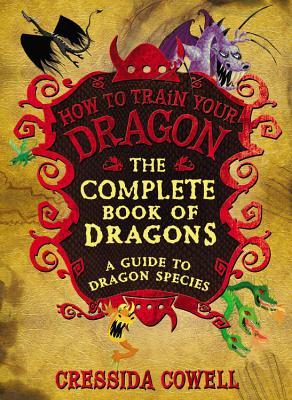
Book Review: The Complete Book of Dragons: A Guide to Dragon Species

18453111

Rating: No Rating

So Eleanor and I love Love LOVE How to Train Your Dragon. Her fifth birthday last summer was dragon-themed, complete with a custom-made cake from the best bakery in the country, and do you know how hard it was to find Dragon decorations and party favors, seeing as how the third movie did not even come out until THIS YEAR?! It was rough. And pricey. (And when we did see the third movie, I ain't one bit ashamed to say I CRIED at the end. Straight up cried.)

Anyway.

At least...we love the movies and shows. We saw those first, and so reading the books has been a bit strange because they are so vastly different. We are slowly working our way through book one, and Eleanor picked this one out at some point in one of the binges where I randomly let her choose $25 worth of books from our Amazon shopping cart.

The artwork is fine and the material is fine, it is just so different. I suppose we would feel the opposite if we had read the books first, but we didn't, so here we are. Eleanor sometimes gets confused when something from the book is different than what we have seen in the movie, so she is unsure which is "right". I tell her that the books came first, but that she can prefer whichever she likes, and she seems pretty content with the movie and show versions. As she gets older I do not doubt, however, that we will continue reading our way through the series. After all, they've already announced that Dragons 3 would be the final installment (don't even get me started, I might cry again), so at least with the books we can continue with characters we know and love, albeit a tad differently than we are used to.

Truthfully, this is a solid ⭐⭐⭐⭐ and any fan of the book series will enjoy it. 

Friday, November 16, 2018

The Collector

37825424

Rating: 4 Stars

First off, dolls are creepy AF. Always have been, always will be. I am so incredibly grateful that Eleanor has a very limited interest in dolls, so we don't have a bunch lying around the house staring at me.

This was exactly the kind of book I would have gone for in elementary school, based on the cover alone. It's creepy and the story is pretty interesting. In fact, I discovered this book when one of my students brought it to school and has been reading it for the last two weeks or so. I kept telling her to hurry and finish it, so I could borrow it. Luckily, I didn't have to wait because this week Eleanor's school had a family literacy night and the book was available for purchase at the book fair. I had to buy it, and 5th grade Sarah was not at all disappointed.

The story centers on a girl named Josie, who has to move with her mom and sister to their grandmother's house in the country after her mom loses her job in Chicago. Josie has all the typical worries as a new kid in sixth grade, and juggles those worries with the strange rules her grandma has laid out:

1. Do not bring dolls into the house
2. Never go to the house in the woods

Pretty straight forward, no?

Josie starts hanging out with this girl Vanessa, and immediately everyone stops teasing and picking on Josie. She likes this, because she thinks Vanessa is just the cooooolest, and the other kids seem to be afraid of her. As an adult of course it was pretty easy to see what role Vanessa would play in the story, even without knowing exactly how the story would get where it was heading. The notation of the locket was a pretty big hint, especially when followed later by Josie's grandmother telling Josie the story of her childhood friend, Victoria. 

I'm tellin' y'all, anyone has something antique? They're the villain or an accomplice.

This book is definitely appropriate for upper elementary/middle schoolers. There's enough creepy suspense to keep some of those on-the-fence readers interested. I personally enjoyed it and it reminded me of the books I used to read at that age. I will absolutely be reading it to my class at some point this year.