Showing posts with label Healthcare. Show all posts

Sunday, January 1, 2023

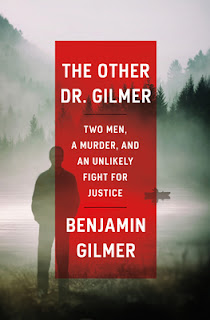
NetGalley ARC | The Other Dr. Gilmer: Two Men, a Murder, and an Unlikely Fight for Justice


I received a digital ARC from the publisher via NetGalley in exchange for an honest review

Rating ⭐⭐⭐⭐⭐

It seems an improbable coinsidence, but this is the story of Dr. Benjamin Gilmer, who begins practicing in Cane Creek, North Carolina, essentially taking over for Dr. Vince Gilmer - no relation. The men are not related, but their lives will become entwined in ways that the former never could have imagined. This is due to the fact that the latter shocked his rural community by committing a terrible crime - murdering his father.

Prior to the crime, Dr. Vince was deeply loved by his patients and community. He went out of his way to provide exceptional care, going above and beyond what would be expected. Dr. Benjamin repeatedly hears from these patients, who are now his, how they could not believe Dr. Vince was capable of something so terrible, and this serves as the basis to draw him into the case and as Dr. Benjamin looked into it more and more, that something was not right.

These facts are not in dispute: In 2004 Dr. Vince picked up his father from the assisted living facility where he stayed. He then strangled his father, cut off his fingertips, and dumped the body. On top of all that, Dr. Vince then went about his daily life, showing up to his clinic the next morning for another day with patients.

So ten years later, Dr. Benjamin arrives in Cane Creek and as he learns more, he is determined to find out what really happened. He can't reconcile the portrait painted of Dr. Vince by his former patients with the convicted murderer who was sentences to life in prison for the brutal crime.

When Dr. Benjamin finally works up the courage to visit Dr. Vince in prison, he is shocked as to who he finds sitting across from him. Dr. Vince is suffering from a combination of disabilities that could have contributed to his committing murder. The disabilites are both mental and physical, and to Dr. Benjamin it is clear that Dr. Vince is mentally unwell. Yet others dismiss this as him attempting to wiggle his way out of his lengthy prison sentence.

Yet Dr. Vince is receiving no medical care in any way, shape or form. The book is as much as an indictment of our incredibly shitty treatment of those with mental illnesses who are trapped in the endless cycle of being in and out of the prison system.

Dr. Benjamin uncovers several things that could have contributed to Dr. Vince "snapping". As a child Dr. Vince was sexually abused by his father and as a result had PTSD. On top of that he had recently suffered a traumatic brain injury. We also find out that shortly before Dr. Vince murdered his father, he stopped taking Lexapro cold turkey, which I understand is a terrible thing to do. I take Lexapro to help combat my a-typical anxiety/stress-induced migraines (they're awful, like, SERIOUSLY. They're in the same spot and when one comes on, it feels like the whole right side of my face is melting). My doctor made it very clear that missing a dose would not be good, and starting it I only took half a pill before working up to the full one. And when I went in for a med check the following year, we agreed coming off the Lexapro in the beginning of a global pandemic would not be a good idea.

The whole point of my sharing this is to show how powerful drugs like Lexapro are. Dr. Vince talked repeatedly about feeling like there was something wrong with his brain prior to him stopping the meds, and the murder. In fact, Dr. Vince chose to represent himself at his trial - something that should have also been a major red flag that something was not right in his head. Instead people just assumed that he was using it as a way to get out of a guilty verdict.

Dr. Vince uses the term SSRI brain as his defense. This was something I looked into more in-depth outside the book and it basically means the brain is attempting to withdraw from the med that it no longer has access to.

Dr. Benjamin visits Dr. Vince several times as he comes to believe that Dr. Vince has some pretty severe brain damage. At one point he brings a colleague he agrees that something is not right. He notes several symptoms - tics and tremors, difficulty walking - that could indicate Huntington's. Add to this the statements Dr. Vince made about his brain "not working", and it makes sense.

It will probably not surprise you to find that after finally securing the genetic testing needed to get a diagnosis, that Dr. Vince does in fact have Huntington's. If you are unfamiliar with this degenerative disease, it is devastating. Huntington's causes a breakdown of nerve cells in the brain. This in turn impacts a person's whole ability to live, from physical movement to cognitive functioning. It is a disease for which there is no cure, only treatments that can make the patient as comfortable as possible until dying a horrific, painful death.

Dr. Benjamin spent the next several years working tirelessly to advocate for Dr. Vince to get the treatment he needed, in an appropriate placement; prison was clearly not the right place.

In the end, this is a deeply fascinating and moving story that demands attention. Highly recommended.

Sunday, April 18, 2021

Publisher Gift (via NetGalley) | Between Two Kingdoms: A Memoir of a Life Interrupted


I received a free digital copy from the publisher via NetGalley in exchange for an honest review.

Rating ⭐⭐⭐⭐

When I was contacted by the publisher via email with the offer of this book, I admit I hesitated quite a bit at first. The news of the world was already hard enough, and adding something even more awful to my life seemed like something I did not want to do.

Still, I dove in anyway and I am glad I did. I had a few stops and starts, and there were places I skimmed only because some descriptions of her sickness and treatments were graphic and I don't have the stomach for that. Even so, I recommend this read.

The author graduated from college and promptly moved to Pairs that summer. Her dream was to be a war correspondent, but not long after settling into her new life fate had other plans.

It started with a strange symptom - a constant itchiness on her feet and legs. Then came the fatigue and no amount of sleep could make it go away. Don't forget the sores in her mouth. The more she slept, the more tired she became. Just before the author turned 23 she received the diagnosis that I would not wish on my worst enemy - leukemia. Even worse, this version came with a 35% survival rate. Suddenly the world she had been slowly building for herself in Paris was gone, obliterated by that one terrifying word.

Jaouad returned home to New York and began her fight to survive - all of which she chronicled as an on-going story for the New York Times. For nearly four years she underwent all kinds of traumatic events - rounds of chemo, a clinical trial, and then a bone marrow transplant. She made and lost friends who suffered as she did, and those stories are especially heartbreaking. I can't imagine going through something so life-altering, finding those who understand because they are in the same position, then losing them to the very thing you've beaten. Survivor's guilt would crush me.

When Jaouad is finally deemed cancer-free, she finds that in her fight to live, she has forgotten how to do that very thing - to live. This is understandable, having spent the last four years constantly stalked by death. To begin her journey of healing mentally and emotionally, she decides to crisscross the country on a 100-day journey to meet with people who had written to her while she was in the hospital and writing about her battle with the disease for the Times.

Jaouad's account is brutally honest. I can't imagine having to make some of the decisions she did, and so quickly. This is especially clear when it came to the issue of the clinical trial and whether she would do it if she was a candidate. Also the decisions made when it came to fertility and how any treatments could later impact her ability to become pregnant if she decided she wanted to have children. Jaouad had a solid support system there every step of the way. I can't imagine going through this alone and was glad that she did not have to.

Knowing the story has a happy ending did not make the hard stuff any easier. This is a powerful memoir of a life interrupted and the search for how to begin again.

Highly recommended.

Monday, March 15, 2021

Book Review | The Butchering Art: Joseph Lister's Quest to Transform the Grisly World of Victorian Medicine


Rating ⭐⭐⭐⭐

It will surprise no one that surgery was dangerous in the nineteenth century (and, as a result, every century before that). Not the surgery itself, but the aftermath when infections were likely, causing death rates to soar. Here you will read about the operating theatres and can easily imagine being in the room as surgeons worked quickly and without anesthesia. I am grossed out very easily by all manner of bodily fluids, so there were definitely parts I had to skim or I would have been gagging. If you suffer from a similarly quick gag-reflex I would still recommend this highly engaging and illuminating work, and skim over certain parts like I did.

Not until Dr. Joseph Lister came along would this seemingly complex mystery be solved - what caused infections post-op, and how could they be prevented? We are fully immersed in his world from the start. In addition to front row seats in the operating theatres, we go along to the dreary and disgusting hospitals, dead houses, even graveyards to procure bodies for the med students to practice on. Hospitals were considered the last option, especially if you were wealthy, due to the filthy conditions, and were basically where one went to die instead of heal.

Surgeons in particular were a nasty bunch. They certainly did not wash their hands, nor their tools or clothing as they went from patient to patient, living or dead. At the time, the death rate post-op was a ghastly 90%. Congrats on surviving a painful and bloody surgery, your reward is a painful and less-bloody death. The idea of germs, something so small they could not be seen, being the root cause of so much death was unfathomable and it would take several long, arduous years for Lister to convince colleagues of his discoveries.

Yet this is the world Dr. Lister wanted to be part of and we should be eternally grateful for that fact. I can't even begin to count the number of lives saved due to Dr. Lister's experiments and the confidence he had in himself that he had found not only the cause of so many needless deaths, but also the cure. With the discovery of those pesky and microscopic germs, the field of medicine/healthcare was completely transformed - though not without struggle on Lister's part to get his colleagues to see the error of their ways and convince them of the merits of cleanliness.

Dr. Lister focused on the cleaning of surgical tools and operating tables, as well as cleanliness of hospitals and specifically the beds in which patients were supposed to recover. Often patients returned to lice and bedbugs, and were somehow expected to recover in such conditions.

Dr. Lister began experimenting with the best ways to rid both surgeons and patients of the germs he was certain were causing so many deaths. He conducted experiments and took extensive notes on what worked and what did not. He put his antiseptic theories to test by creating a system in which he used carbolic acid to clean both his hands and surgical equipment. He also used the acid to soak gauze, then he applied gauze to the would post-surgery.

As Dr. Lister found success with his new system, he faced extreme backlash from colleagues in the medical community - big surprise, many did not believe that germs were the root cause of the problem. This would prove to be his toughest battle, as few surgeons were willing to come around to his way of thinking.

Overall I found this to be an incredibly captivating account of the practices of medicine in the 19th century. The advances Dr. Lister made still impact us today. I admire his work greatly; it would have very easy for him to give up, given the pushback he received from others. Yet he persevered and we should be grateful for that.

Highly recommended.

Thursday, March 11, 2021

Publisher Gift | Our Story: Coming Out in the Time of HIV and AIDS


I received a physical copy free from the publisher in exchange for an honest review.

Rating ⭐⭐⭐1/2

This is an incredibly powerful memoir of coming of age and finding oneself in the late 70s, just a few years before the terror of the AIDS-crisis would unleash itself onto an unsuspecting populous. I will say straight away that the reason for my rating has more to do with editing than anything else and I feel like one more round with an editor and this is easily a solid four-five star read. The story is told in a diary format, which I sometimes struggled with because the narrative could be choppy in places.

The author takes us on a journey through his life story from young adulthood and on.  Hamilton leaves his hometown in New Brunswick in 1977. With not much going for the paper mill town, he has little choice, really, if he wants to see all that life has to offer. At that point in his life he was not out, though that did not stop some family members from talking and I feel such heartache for young women and men who still go through this experience today. Hamilton spends two years in Toronto, then moves on to Edmonton , still a bit naïve about the world as a whole and the world he is about to become part of.

As Hamilton begins testing the waters and somewhat hesitantly comes out while living in Toronto. He finds his best friend in Joe, a drag queen who rules the night. The friendship is not without its difficulties but it proves to be a lasting one, as they become roommates and eventually move to Vancouver. This occurs in the summer of '82, and they believe they have their whole lives ahead of them, nothing but good times and good friends on the horizon.

Soon reality comes crashing in as a mysterious and terrifying illness starts making its way through their large and extended group of friends, just as it did to so many around the world. Suddenly the AIDS crisis is in motion and no one is immune. With so little information but plenty of homophobia, young men in particular die at alarming rates. In hospital rooms the doctors and nurses are too afraid to enter, these young men often spent their final moments alone.

Hamilton writes of all of this with brutal honesty, never shying away from the difficult parts. His focus specifically is on living life with his best friend, from those days before Joe tested positive for HIV, right up to his death and the aftermath. It isn't always pretty, but it is honest and that is the best way to honor the memory of a loved one who passes too soon. Hamilton tells his story, Joe's story, and the story of so many young men just like them, going out to live their lives, never imagining where it might lead.

Recommended.

Wednesday, February 17, 2021

BookSirens ARC | Fallible: A Memoir of a Young Physician's Struggle with Mental Illness


I received a free digital copy via BookSirens in exchange for an honest review.

Rating ⭐⭐⭐

I appreciate the author's experiences and his willingness to share his struggles of what most would consider deeply personal. Unfortunately the stigma surrounding mental illnesses is still in full effect so this makes it difficult for so many to speak up when they need help. Books like this are important, because it helps others going through these same struggles feel less alone. However, sometimes these books can also end up overwhelming their intentions when they involve many threads and do not all seem to connect in a complete way for the reader.

The author does not shy away from the realities of life as a med student and resident, while dealing with anxiety and depression, while also being a young husband and eventually father. It was frustrating to read about these older physicians often taking out their own anger or issues on residents, or just power-tripping for no reason. That mental strain alone would cause plenty of mental health issues on their own.

I have to say, straight-up, referring to his anxiety and depression as a "gargoyle" really got old quickly. Perhaps we can more quickly get rid of the stigma of mental illness if we simply refer to it as what it is, instead of trying to characterize it differently.

There is a lot going on here and while memoirs can often be kind of scattered at times, this one felt scattered due to the many complex issues all at play at once. The author talks about his religious life as a member of the Church of Latter-day Saints, and we see how that faith kind of ebbs and flows as he gets through med school and goes onto his residency. I am curious about whether or not his faith had anything to do with his reaction or outlook regarding therapy. I do not know a lot about the LDS church and what their stance is on psychiatry, but I wondered if that played a part, as it always seemed to be a negative experience for him - in the brief glimpses we got of that aspect of his dealing with his anxiety and depression. In fact, I would have liked to known more about that avenue, because the discussion of therapy sometimes seemed like an afterthought. There was the issue of meds and them working or not, but nothing in-depth.

This book takes many routes at once, and they don't always converge with one another. At certain points in the book it was definitely about Jones and his struggles with internally dealing with everything. Other times it was about how literally everything outside of him was only making his battles worse.

I guess the picture is disjointed, but when dealing with mental illnesses, that is often the reality, so it does make sense in that regard. Despite my issues with the text I still think this is a valuable contribution to the books and memoirs specifically that deal with such topics.

Saturday, September 12, 2020

NetGalley ARC | Administrations of Lunacy: A Story of Racism and Psychiatry at the Milledgeville Asylum

43561506

I received a free ARC from the publisher via NetGalley in exchange for an honest review.

Rating: ⭐⭐⭐⭐

The book makes for some very grim reading, but that reading is important nonetheless. The author dives deep into the history of psychiatry. I would love to say I am shocked at the blatant racism of said origins of the field, but we all know that would be a big fat lie because racism is STILL everywhere. So many institutions that we know today were founded for the nefarious reasons of keeping Black and African-American people "in their place" and it will come as a surprise to literally no one who is a logical person that asylums operated for that purpose.

The author presents a slew of facts and anecdotes in such gripping detail that despite the horrible accounts, the book was hard to put down. The pain and trauma of so many years of abuses by those in power are hard to stomach, but Segrest's scholarship is top-notch.

The Milledgeville Asylum was founded in December of 1841, then called the Georgia State Lunatic, Idiot, and Epileptic Asylum. Within a century of its founding, Milledgeville housed 10,000 patients and held claim to the title of being the largest insane asylum in the world. Yet few people outside of the state seem to have heard of this place, and Segrest aims to change that.

I had no idea prior to reading this book of the originas of psychiatry - that psychiatry came from successful attempts to ensure that even though slavery was technically illegal, Black and African-American residents would still be held against their will. The author connects this terrible history to our modern world in a succinct and now-obvious way: the majority of psychiatry beds in the US are in prisons and jails. These same prisons and jails house a highly disproportionate amount of Blacks and African-Americans. The correlation is pretty hard to miss.

What's more, it was here at Milledgeville that the foundation would be laid on which the many eugenics theories would be built. Segrest discusses the basis of these policies and practices at length, and how the conversation by the 'experts' of the time gradually changed in order to accommodate the changing country. Slavery was good for the "Negro brain" because the constraints of slavery allowed for fewer cases of "insanity" among African-Americans. Basically, the psychiatrists believed that slaves were unbothered by stress due to their position as slaves. Sure, I am guessing that being a slave was not stressful at all. I would place my standard eye-roll here, but the subject is too horrific and infuriating.

Naturally these psychiatrists determined that emancipation would be terrible for all the "unstressed slaves" and wouldn't you know, in the eras following the Civil War - through Reconstruction, Jim Crow, and so on and so on, the conversation gradually became about mental illnesses then passing on to the next generation because it was hereditary and not the trauma after all.

Patient were subjected to all kinds of terrible procedures that had zero to do with healing. Forced sterilizations, lobotomies, the ice baths, it's all here and well-documented. Naturally these procedures were performed almost exclusively on women and African-Americans, because we all know that white dudes NEVER have mental health issues of any kind, and especially did not in the decades that Milledgeville was in operation.

Today roughly 200 buildings still stand on the 2,000 acres of land where Milledgeville was once a bustling and busy place. It is largely abandoned, but there are people working to preserve this history and I truly hope they are successful. These stories can never be forgotten, so that the thousands of nameless men, women, and children who died there are not forgotten either.