Wednesday, May 11, 2016

Hypatia of Alexandria: Mathematician and Martyr

797668

Rating: 2.5 Stars

I hate math. I mean, I really hate it. It made me miserable for years. What made my misery ever worse is that my mom is really good at math, so I could never understand when she would try to explain my homework to me, and she could never understand why I couldn't understand her.

It might seem strange then, that I am completely obsessed with Hypatia, a mathematician who lived over 1500 years ago. Part of the allure I think, is that we know so little about her - kind of like Boudicca, another fabulously fierce heroine my daughter will some day know all about. Or, know as much as she can, given how little concrete information we have about either of these women.

And therein, of course, lies the problem. There is so little information about Hypatia herself, that one can hardly write an entire book about her, Instead, one would have to not only include the facts we do know, but give explanation of the times she lived in, the math and philosophy she worked on, and so forth. 

That is exactly what the author does, and really it is almost too much. The math alone is very in-depth and academic. I am all for scholarly and academic texts, I read them often. But for someone like myself who is predisposed to hate math because that gene skipped me somehow, this was like reading a text book at times. I wanted to like this book and for it to be everything I was looking for, but it can't. That is no fault of the author, he did the best he could with the information he had to work with, but there is simply not enough know for certain to fill a book.

The author uses what sources still exist to flesh out Hypatia and at least give her a form - but in truth we do not even know what she looked liked. I appreciate though, that there is not a lot of conjecture here. In truth, very little of the book is about Hypatia. Without beating a dead horse too much, there just is not enough info.

So, I can really only recommend this one to people who love math. Hypatia is there of course, and we know what we can. Sadly though, that is not much and I fear that will never change.

May Podcast!

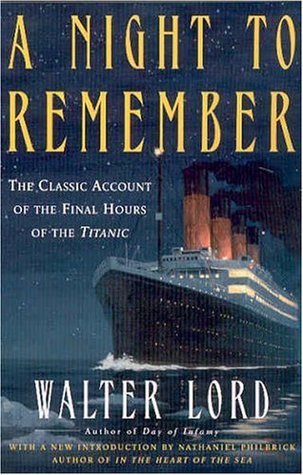
My May podcast is up. I had a tough time in April deciding between a review of books about Nirvana or Titanic. I figured, why not do both. Last month I talked about Kurt and ranted about Courtney. This month, I discuss Walter Lord's 'A Night to Remember'. Fantastic book, even 50+ years later. You'll have to scroll down on the media player to see either last month or this month's podcast.

Check it out!

http://www.depthxpressions.com/#!sbn/op5sq

Women of Colonial America: 13 Stories of Courage and Survival in the New World

Women of Colonial America: 13 Stories of Courage and Survival in the New World

Rating: 4 Stars

For its purpose - to inform younger readers of this time period - this book serves is purpose very well. I did not now when I first snagged it off an end cap in the library that it was YA. This happens to me quite often, but I went ahead with it anyway because when I was younger I really loved this time period. As I have gotten older, my interests have jumped across the pond, but still gave this one a go.

The purpose of this text specifically is to introduce readers to various women of the time. This includes Native American women, indentured servants from Europe, young (mail-order-ish) brides sent for to help the colonies survive, and African women brought to the colonies as slaves.

Though I was familiar with a couple of the women - Pocahontas, Anne Hutchinson, Martha Corey, and Eliza Lucas Pinckney - I still learned new information about them. I had no idea that Pocahontas was kidnapped and held hostage for over a year, or that that is how she came to be married to John Rolfe. Whether she ever actually agreed to the marriage herself or not, is something we will likely never know, but either way she accompanied him to England eventually, where she subsequently died. The later facts I knew, but the rest of my knowledge was scanty at best.

One of the reasons I have lost interest in colonial and revolutionary times is the details regarding the battles and skirmishes between Native Americans and colonists. After I became a mother, it became nearly impossible for me to even watch the news anymore, with such terrible things being reported all the times in regards to crimes against children. Seriously, I can't even watch Law and Order: SVU anymore, and those are fictionalized stories. But there are so many terrible accounts of babies and children murdered by raiding parties, it just makes my heart break for these little ones who were murdered and their mothers who sometimes survived. This book was no exception, as there are accounts both of Anne Hutchinson and many of her children, who were scalped and murdered. Later on in the text there is the account of a young woman who had recently had a baby, and the baby was murdered in a raid as well. I an hardly type the words, it just makes me sick.

Now, I do of course realize the terrible crimes committed against the Native Americans as well, their lands taken, their cultures destroyed, their entire way of life changed after thousands of years. However, my sympathies are not solely given only to the little ones belonging to the colonists. It is all children period, that I simply can not abide the violence against them, regardless of the violence of the age. It just sickens me and makes me hold my sweet girl tighter and give her more hugs, and thank God once again that we live now and not then. This world is not without its own dangers of course, but that is a whole different can of worms I do not care to open right now, nor is it directly related to my review.

I appreciated the way the information in the text was organized. The women are divided up among categories and a brief kind of summary, just a few pages, of relevant information is given before getting to the women themselves. For example, one chapter is called 'In This New Discovered Virginia', where we find first the section on Pocahontas, then the next on Cecily Jordan Farrar. The last chapter, 'A Changing World', gave information about the later period, before discussing four more remarkable women - Eliza Lucas Pinckney, a slave known only as Eve, and Christiana Campbell and Jane Vobe - two women busy running competing taverns in that time.

Overall I would definitely recommend this one for its intended demographic. It is well-written and well-researched. The author left a dedication at the beginning of the text, which I find especially poignant and accurate.

"Dedicated also to the women of Colonial America. How I wish you'd left more of yourselves behind, your stories in your own words."

If only, indeed.

Monday, May 9, 2016

Monday Meme

My tumblr blog where I post about books, photography, culture, and all things #education-with a serving of inspirational quotes on the side. Join Me!:

Yes, yes, a thousand times yes. My To-read list on Goodreads is well over 3,000 books and I make the constant mistakes of going on BookBub daily and also perusing the new titles available at the library. Sometimes it makes me sad to think there are books I will never get to read, because just think how many I would be interested in that are not even published yet! But then I stop being sad and get to reading, because no one can be sad AND read at the same time.

How massive is your to-read list?

Saturday, May 7, 2016

Miles of Files

28331867

Rating: 3.5 Stars (EDIT: I have decided after a lot of thought to go with 3.5 Stars. The main character, Paul, really just got on my nerves too often to be 4 Stars.)

I received this book for free in exchange for an honest review from the author, Michael Sahno.

I was debating for a long time between 3 and 4 stars. I thought about 3.5 and then kind of figured out what my deal is with fiction: I read so much non-fiction about extraordinary people doing extraordinary things and that makes me expect too much from all fictional characters. Like, I expect all the fictional characters I read about to do grand and amazing things. I realize this is just not possible, so I have to accept that sometimes fictional characters are going to be like regular people and irritate me, and go on with my day.

I like the premise of the story. Paul, the main character, stumbles across two strange accounts at the insurance company he works for and eventually discovers that his boss is stealing from the employees' 401(k) plans. He has to decide if he is going to do something about it and turn his boss in, or keep quiet. The story is told from multiple perspectives of those involved; Paul, the one who discovers something is not right, his immediate boss Graham, the perpetrator of the crime, and James, the head honcho who runs the company.

I won't give much more of the plot away because it would involve spoilers and I really try not to do that with fiction, but over the course of the book Paul meanders from being so gung-ho about investigating what is going on, then suddenly a couple months go by and he's just kind of put the little 'project' to the side. Then after that, he dilly-dallies about whether or not to tell his higher up boss what is going on, and eventually the police. Basically, he just drags his feet about the whole thing and while I was reading I wanted to shake him and tell him to man-up. At one point the girl he is dating, Suzanne, calls him out for that very thing and she was not wrong.

Speaking of Suzanne, I just could not deal with her last name. Beidertyme. Like Bide her time? The word play with character names came up a couple times, whether intentional or not. One would have to think it was. There was also a character named Cora Gable; the story takes place in Florida. Funny little things like that throughout.

The story is also a bit like the movie Go, in that there are multiple little subplots going on, but they are all connected by common characters (no raves though, sorry?). I enjoy stories like that and seeing how everyone knows one another and how the whole thing fits together in the end. The own of the company, James, had a brother who worked at the family law firm and was totally scummy and gross and due to his scummy ways, ended up losing his condo to his ex-wife and sleeping on their parents' couch while having to move out. He leers at all the females it seems, including James' daughter's nanny, who is friends with Suzanne, who dated Paul. A friend of theirs, Mercedes, was in love with a local weatherman and honestly his part of the story was least connected, but we also see the cook that James and his wife employ and his relationship with a girlfriend who was jealous of the nanny. Basically, all the characters' lives were interconnected somehow and those webs are always interesting to me.

One thing that I did not understand was why the police did not begin investigating themselves when told about the scam that Paul's immediate boss had been running. I guess I do not know a lot about police procedure, aside from what I saw when I used to watch SVU before Christopher Meloni left and I had a baby (while I wish those two events were connected, sadly, they are not. Christopher Meloni is not the father of my child). It just seems odd that the crime was reported but they said a private investigator might be able to get more information. Who knew.

Overall, it was an interesting story and one that I breezed through pretty quickly. Be prepared for a main character who may irritate you at times though.The story wraps up well for the most part and I found it an interesting read.

Sunday, May 1, 2016

Blood Will Tell: A Medical Explanation of the Tyranny of Henry VIII

15843518

Rating: 2 Stars

Well.

Let's start with the positives, shall we?

...

...

Okay, so the author stated very early on (4% according to my Kindle) that "there is extreme difficulty in proving beyond doubt..." when discussing whether or not Henry was Kell positive and developed McLeod Syndrome later in life.This seemed to me a very good start. After all too many times I have read pompous authors who claim to have solved all the mysteries ever in the whole world on "new" readings of the same old documents, conjecture, etc. There were some reviewers seeming to be all up in a tizzy about the author's subject matter and at first I did not understand. After all, if the other was merely proposing a theory and not presenting it as fact, I do not take issue with that. What I do take issue with is when authors apply modern social norms and medically diagnose people who lived centuries before us. Of course there are a plethora of diseases we know today how to diagnose and treat, so it is not crazy to suppose what possibilities might apply. Again, this is all assuming it remains a theory and does not get injected into our collective consciousness as truth without hard evidence confirming it.

Unfortunately for me and the $3.99 I'll never get back, things went down hill rather quickly. And it is not even because of anything medical related - at first. It is because of all the historical inaccuracies that were presented. The medical portion too would spin wildly out of control, but not for some time. First prime example, it is my understanding that Henry and his mistress Bessie Blount had only one son, Henry Fitzroy, and that their affair ended once she became pregnant with the child. Perhaps there are other children he never acknowledged by her, especially if they were girls I could see why, yet I do not recall a single other author thus far mentioning any children after Fitzroy was born. If there are books that claim such, I would love to know about them.

The writing itself eventually became a distraction in itself and if plagiarism wasn't a thing, I would have seriously considering rewriting the book to make it more readable and less meandering. The author provides background information on each of the marriages in chronological order, but again with the meandering. How rapidly the chapter titled regarding Katherine of Aragon became about Henry VII, the Wars of the Roses, and the Tudors. I thought Katherine and her marriage to Henry would be the main focus of a chapter she lent her name to. As we move into Anne's chapter, the author seemed again to be all over the place. There are two very glaring examples of this. The first comes at 31% when the author is discussing how Henry was treating Katherine even in the break-up of their marriage. In one paragraph she is talking about Henry treating her so badly, them immediately in the next paragraph she claims Henry still treated her with some respect. So, which is it? The second one is directly in regards to Anne, who the author claims she felt bad for what had happened to Katherine: "She at least began to feel some sorrow about Katherine's death, and more importantly, remorse about how Katherine had been treated" (39%). Seriously? I mean, the author uses Starkey as a source for this, but come on. Anne wasn't sorrowful about Katherine's death in a way the author would apparently like you to believe. With Katherine gone, Anne knew it was that much easier for her to be set aside just as Henry has set Katherine aside. Anne was concerned with her own well-being and her own fate. Katherine was not of concern to her.

There are a whole slew of quotes mainly throughout the sections relating to Henry's relationship with Anne that just baffle me for a variety of reasons. Some definitely ensure the author's loss of credibility, either with me personally, or in general for this to be taken seriously as an academic work. Here is just a sampling:

1. Describing Anne Boleyn as "lovely" and "dynamic" (19%)

2. Actual sentence regarding Henry and his pursuit of Anne. "You could almost feel sorry for Henry, if he wasn't being such a putz" (19%). How scholarly.

3. "Is it fair to despise her simply because she was the best in the game?" (20%). Ummm, are you really framing the situation in that context? Her 'game' brought huge, dangerous, disruptive and even deadly changes to an entire nation, very abruptly. Are we supposed to feel sympathy for Anne that people were calling her names and speaking so poorly of her? She was playing her own part in breaking up a marriage - though let's be clear, the majority of the blame lies with Henry alone. Still, I have zero sympathy for Anne for her part.

For the most part, the chapters detailing Henry's marriages are merely re-tellings of already-known information of events that occurred at the time, splashed with interjections of, "he must have done this because he was suffering from McLeod's Syndrome!" To be fair, the exclamation mark is my own, just to emphasize the enthusiasm with which the author abandoned the theory to make this fact.

The author seems to have an issue with marriage and family politics of the 16th century. At one point she claims that while people like to paint Katherine as such a wonderful mother to Mary, there is really no evidence of any maternal concern for Mary. She states Katherine's only concern and goal was to prove that her marriage to Henry was valid. OF COURSE that was her goal. Had the marriage not been valid, Mary would have lost the inheritance that was rightfully hers. Everything Katherine did seems to be for both herself and her daughter. The Anne-bias is strong throughout, but let's still be realistic. She also not only uses a modern medical diagnosis on someone from the 16th century - dangerous, no matter how well-known and well-documented his life may have been - but she wants to apply modern thinking about gender roles. She seems to take issue with the fact that it was accepted that males had affairs but was completely out of the question for a woman to do so. First of all, women did have affairs too, though it was of course kept a much better secret and not generally expected. Secondly though, and more importantly, it was completely out of the question even the idea that a queen would have an affair. A point the author seems to forget is that the legitimacy of the royal line depended on the children being the king's. It doesn't make it right or fair - and seriously, the right and fair thing would be for NO ONE to be having affairs - but again, you can't apply 21st century thinking to 16th century situations.

There was a decent rundown of the accepted medical beliefs and practices of the time. The author included a lot of background information here, including the reliance on astronomy and the belief that the four humors guided health. This idea of these different humors controlling different aspects of body and mind is terribly fascinating to me and I enjoy it wherever I find it. There is also a 'what-if' kind of chapter (around 91%) and was certainly interesting; what if Henry's reign had been different had he not been Kell positive or had McLeod Syndrome? Note: Long before this, at 63% or even earlier, the author had abandoned being objective. She had gone from saying it was a possible diagnosis, to he must have had McLeod Syndrome in order to do the things he did. That aside, it would have been nice to explore these possibilities more in-depth. England, and indeed Europe might look very different today today.

All in all, it should come as no surprise that I say I can not recommend this one. So many times I wanted to stop reading. But for $3.99, I knew I had to finish it. I ended up being highly disappointed with both the presentation of the diagnosis and the historical facts alongside. I have never paid that much for a book for my Kindle and I certainly never will again, though this had been one I was so excited to read. As if there were any lingering doubt by the final paragraph of the entire book, the last line was the final nail of several nails in this coffin:

"How very, very sad it is that because of a mutation in Henry's blood he became a monster, and is now known primarily as a savage tyrant who slaughtered wives and martyred scholars."

Well, there you have it. Henry had McLeod Syndrome and that's that. I guess.

A Night to Remember

61834

Rating: 5 Stars

Review:

I am not sure what else can be said about this account of the sinking that has not already been said - aside from something personal for me in that I have no idea why it has taken me so long to read this one. I mean seriously, I have owned it for ages, at least a year. And really there is no excuse even before that, for someone who claims to be such a Titanic-enthusiast. Okay, that sounds terrible, to be an enthusiast of some a tragedy of such proportion. But if you have ever read a single other review of any book about Titanic tat I have read, I think you understand what I am awkwardly trying to get at. Basically, I should have read this one a long time ago.

There are several reasons this remains the classic account of Titanic's final hours. Lord is a very good writer and at the time this was written - in 1955 - he was able to interview over sixty survivors. That in itself is amazing to me. To gain insight and recollections from people firsthand, not simply reading their memoirs or diaries later, but straight from their own mouths. 

The shifting of points of view is important to the story as well. This is not an account of the entire voyage, but begins immediately in the crow's nest with Fleet spotting the iceberg. There's no need for superfluous prose, we are at the heart of the matter within moments and there the iceberg looms. For those of us having the luxury of reading about the event 100 years on, we can do nothing but helplessly read as the minutes tick by as the ship slowly meets her fate.

We also see the events as they occur from the perspectives of both the Carpathia and the Californian. Just an aside, the lack of response from the latter ship will never cease to be infuriating. If they knew the ship steaming past them was Titanic, something the crew even discussed among themselves apparently, then they also thought they saw the ship stopped, trying ti signal with Morse code, and firing several flares after midnight WHY WOULD THEY THINK EVERYTHING WAS OKAY??!!

The actions in those early morning hours of the Carpathia and her crew are also deserving of attention, but in a much more positive way. Too full steam ahead into an ice field, faster than the ship has ever sailed before, preparing for survivors, passengers giving up clothing, bedding, toiletries, etc. I also have always found the account particularly worthy of a mention in that when Carpathia finally reached New York, she did not dock at the Cunard pier first. Instead, Captain Rostron guided his ship to Pier 59 where the White Star Line ships were docked and returned the company's property - the lifeboats. What a wholly heartbreaking sight that must have been, when those on-shore realized what was happening.

Here we get all the standard Titanic accounts we are used to - Ida Strauss unwilling to leave her husband after so many years together, J.J. Astor inquiring if he might join his pregnant wife in the lifeboat but his request being decline, Guggenheim and his personal attendant dressing in their best to go down like gentlemen, Thomas Andrews in the smoking room in those final terrible minutes, and so on. We HAVE those stories BECAUSE of this book. Without this account, we might not know of these stories, or others detailing cowardice or bravery on the part of many crew and/or passengers.

If you only ever read one book about Titanic, it should be this one. Highly recommended.

Saturday, April 30, 2016

You're Never Weird on the Internet (Almost)

23705512

Rating: 3.5 Stars 4 Stars

EDIT: Changing to a full 4 Stars because Felicia Day liked my Tweet of my review and any celebrity who notices the little people is a-oh-kay in my book. I am still shaking a little bit.

Review:

I am definitely not a geek. Nerd, yes. Geek, no. My extent of gaming involves an original Nintendo, and SNES, a PS2, and a Wii. Don't get too excited to point out I have just contradicted myself. I play the most un-gamer games. Mostly Guitar Hero and The Godfather on the PS2 and The Godfather Blackhand Edition for the Wii. And right now, the Wii is mostly used for watching VeggieTales and Mighty Machines on NetFlix for my little lady.

I decided to give this one a go despite my completely rational fear of gingers, for one reason alone: I love Joss Whedon. I adore him, despite the fact that he spent several season of Buffy and Angel ripping my heart out again and again and again. It was never-ending. And to this day, I love him. So, I vaguely knew that Felicia Day was some kind of actress who annoyed the bejeezus out of me on Buffy in the final season when all these stupid potentials thought they knew better than the greatest slayer of all time. I always find it strange when people so young write memoirs, but whatever. I was willing to give this chick a second chance because, well, Joss.

And my three and a half stars is not because of Felicia. I certainly like her much better now than I did before opening the book, which I breezed through in a couple hours total. I mean, it is because of her, but it is not. That makes no sense, I understand. I guess because I am not part of this whole culture that she exists in...I don't get it. But that does not stop me from recognizing she is incredibly intelligent, witty, clever, and we would probably be friends, because she strikes me as the kind of person who also sometimes lays awake at night thinking about every stupid thing she has ever said or done, all at one time. And she would then imagine everyone she ever knew still thinking about those same events with the same intensity she does, and laughing at her to this day. I definitely get that.

The problem is, I just don't relate to her in most of the ways she is known for. We do have the same personal philosophy, which is to expect the worst because then you can never be disappointed. We also had a burning desire to BE Anne of Green Gables as children. I mean seriously, my best friend from elementary school and I would play Anne of Green Gables at recess every day. I would be Anne and she would be Diana and we would play out our favorite scenes and try to make one of the boys in class be Gilbert to act out the scene on the lake but it never happened, so we would just pretend. But otherwise, we are very unalike. As a teacher and a human being, I can really feel for her in the extreme loneliness she describes in growing up, and how online gaming, and eventually World of Warcraft, consumed her. I do understand this, I mean, Buffy consumed me for years. I stayed home sick in high school one day just because David Boreanaz was doing a short phone interview with a local radio station. I mean, seriously, 10-15 minutes, tops. And Mom totally knew I was faking being sick, just to stay home. But, Buffy was my thing, so she let me have it.

While we are being honest, the whole World of Warcraft thing really weirds me out. I don't get it. I had two roommates in college who seriously loved video games and dated their friend, who also seriously loved video games. There were consoles everywhere, controllers everywhere, games everywhere. But they did not play WoW. It was all NCAA College Football, all the time. At least when they were together, I know they played lots of other games too, but this was always IT when they were all at the apartment. One of them is the reason I started playing The Godfather, because it is one of my favorite movies of all time and aside from Super Mario, it is just about the only game I am good at.

...but I still was willing to give The Guild a try. I found it on Netflix and watched the first episodes. It is funny, and I understand it because I know people like that in real life.

So, I can appreciate the honesty here. I can appreciate a well-crafted narrative about a child prodigy who could have been a professional musician but chose to go after her dream of being an actress. I appreciate the risk-taking, the highs and lows, and the fact that she is doing what she loves, regardless of what others might say because she is female who happens to enjoy things that have typically been male-dominated. So, let's be friends, okay Felicia Day? 

...and can you introduce me to Joss?

Bess: The Life of Lady Ralegh, Wife to Sir Walter

Bess: The Life of Lady Ralegh, Wife to Sir Walter

Rating: 4 Stars

Review:

I received this book for free in exchange for an honest review from the publisher, Endeavour Press.

First and foremost, this book made me want to punch Ralegh in the face. It took him how long into their marriage to see Bess as an asset? What a tool. But of course she could not just divorce him, nor did she want to because she loved him, but good lord. He was just a raging d-bag much of the time. I was particularly incensed when he was released from The Tower and Bess was left prisoner, with their young child - who succumbed to the plague that was ravaging the city. How sad for Bess that not only was she still locked away and her husband was off ignoring her and their marriage, but to lose a child.

While on the subject of Bess and her first child, this text served to reaffirm my general disdain for Elizabeth: "It was, however, no coincidence that Bess and her baby were left in plague-ridden London" (27%). Time and again Elizabeth is spoiled and manipulative. And as always, there is the glossing-over of her role in the execution of Mary, Queen of Scots. It was not just "counselors giving orders, and the execution being carried out". Elizabeth knew exactly what she was doing when she signed the warrant. She knew it would be carried out and I do not believe for one moment that she felt bad about it.

But, back to Bess. She on the other hand, turned out to be quite a remarkable woman who endured much hardship throughout her lifetimes in order to provide for her family. She had no choice, after all, seeing as how her husband was absent much of the time on ill-fated adventures, chasing myths. Walter has the nerve to be all pissed off about Bess supposedly ruining his career with their marriage, yet I am pretty sure he had a part in it...or it would not have been a marriage. To him I would say, Man up, Buttercup. Luckily it seems as though he came to value her more and more as their marriage went on, through his terrible decision-making, and in the end she would be the one to promote her husband's legacy. Much of the time I felt sorry for Bess, thinking how sad and lonely it must have been to have had a husband who was off gallivanting around, wasting the Queen's money and drawing her ire more often than not. But luckily there is plenty of evidence to show what Bess' life was like and with a full household, she really could not have been lonely very often. Especially early on in the marriage, it is of comfort to know that Bess had her brother and family and household to support her, even as her husband still did not publicly even acknowledge the marriage despite having been married a few years.

The author does as well a job as she can in bringing Bess to life. The story is quite detailed in some aspects, but there are several occasions though where it felt like this was just as much a biography of her husband and the times as it was of Bess. This is to be expected and the author can not be faulted, as it would be more unusual for us to have heaps of information about any woman who was not a ruler or very near the top of the social ladder. This aspect is important, I think, for us to understand who Bess was and  how she became a strong, shrewd businesswoman/lawyer, so to speak. It felt like early on, Bess and Walter's stories were almost separate, as they themselves were physically so far apart at times. But gradually their stories came together, especially in those later years when Walter was spending more and more of his time being a prisoner instead of an explorer.

Some of Bess' letters survive, as do many of Walter's and - surprise, surprise - he rarely, if ever, mentions his wife until later, when he came to rely on her quite heavily. To be honest, overall I really just found that Walter Ralegh was kind of a douchenozzle at first. I realize douchenozzle is not a very professional term, but I was just so angry at him for most of the book. Don't get me wrong, there are some questionable decisions Bess made at various points in her life as well, but if he really felt Bess was a hindrance to him (and he KNEW Elizabeth was a giant baby who would have a fit when she discovered his marriage), then why did he never seek a divorce? If he had ever considered it, I am sure that by the end of his life he was glad he did not, as Bess never stopped working for him, to keep her family together and to regain the family inheritance for their only surviving son, Carew.

In the end, we do not actually know how or when the life of this incredibly strong, remarkable woman came to a close. I find this unsurprising, albeit sad. She survived her husband's execution and told his story, built up his legacy. But when Bess passed, there was no one to do so for her. Luckily for us, the author made wonderful use of surviving letters, documents, court papers, and such so we can have a more full portrait of an unusual woman in dangerous times. Highly recommended.

Monday, April 25, 2016

Kitty Genovese: The Murder, the Bystanders, the Crime that Changed America

22253762

Rating: None

Review:

At first I was not going to review this book. I just could not bring myself to do so. In fact, here is all I said about it on Goodreads and I was going to just leave it at that:

"It is hard to rate and review a book like this so I'm not even going to try; I hate reading true crime, but something about this story is so heartbreakingly compelling to me. I guess there is some comfort in the fact that "38 witnesses" isn't really true, but aside from the neighbor yelling to leave her alone, no one went out to help her until it was too late. It's also comforting, as much as it possibly could be, that at least she really did not die alone. This whole case is just so heartbreaking, even 50 years later. And what makes it so heartbreaking, is the fact that it is not uncommon."

But after thinking about it for a few days, I realized Kitty deserves better than that. She deserves to have her story told, her voice heard, so that people can really understand what happened that terrible night.

For those of you who are unfamiliar with the story, or vaguely aware of what '38 witnesses' means, Kitty Genovese was a young woman living with her girlfriend in Kew Gardens in Queens in 1964 when she was brutally attacked, stabbed several times and raped over the course of about a half an hour just steps from her apartment. Due to misinformation at the time, it was somehow reported that 38 neighbors saw or heard the attack for half an hour and did nothing. No one called the police, no one went out to help, nothing. Some of this is true. Much of it is not. There were witnesses, but on the darkened street, it was hard to tell what was going on. When Kitty was first attacked by her murderer, someone shouted from an apartment for him to leave 'that girl' alone. This scared him off and Kitty managed to inch herself toward safety. Unfortunately she only made it around the corner to the entry way of her neighbor and so-called friend's apartment when her attacker returned. This 'friend', Karl Ross, heard the commotion both times, and when it was literally happening right in front of his apartment, he OPENED THE DOOR, SAW WHAT WAS GOING ON, and CLOSED IT AGAIN. There is all this lead-up, how he was basically a big scaredy-cat, afraid of everything and a guy who could barely bring himself to leave his apartment most of the time. He was also gay and terribly paranoid people would find out, and even in the 60s, New York was of course no friend to anyone who was gay. I get the paranoia, but he watched his friend being attacked and did nothing to intervene. He did call a friend, who told him to stay out of it, but then he eventually did call the police after sneaking out his apartment by way of his window and going across the roof. At this point others in the building were alerted by phone to what was happening and another of Kitty's friends, Sophie Farrar, went to her aid. Sophie is the only person in this whole sad tale deserving of any respect. As soon as she knew what was going on, she was out the door, even steps ahead of her husband who followed. Despite not knowing what was really going on, that she herself could be walking into a dangerous situation, Sophie did not care. She found Kitty in the stairway, and held the dying young woman in her arms, reassuring her that help was on the way.

In the end it would be too late, and Kitty Genovese would succumb to her injuries. There are so many what-ifs about that night. Had one single person done something when the attack first occurred, Kitty might very well have survived. But many witnesses thought perhaps, at the late hour, what they were witnessing was a lover's spat or people leaving the nearby bar when Kitty was first approached and attacked by her killer. No one actually witnessed the second attack except Karl Ross, as it literally happened on his doorstep. One witness, Joseph Fink, seems to be the only person who actually knew Kitty had been stabbed in the first attack. He was an assistant superintendent of the building across the street and witnessed Kitty being stabbed in the back. He claims he considered going to get his baseball bat, but in the end simply went to sleep. He could have saved Kitty right there in that moment, and his only response for why he did not do anything when asked by police was a shrug of his shoulders. Ross and Fink both had the immediate opportunity to aid Kitty, yet chose to do nothing and it was this idea of "not wanting to get involved" that made these supposed 38 witnesses the poster children for the idea of apathy in New York at the time. Luckily, in some way as much as we can call it that, we can at least know that when others found out what was happening, they chose to act. We know in fact that Kitty did not really die alone.

The author does a really wonderful job bringing the backdrop of the story, New York City and Queens, to life. It seems like such a safe place, even though we know that is not really true, even in the 60s. But we get this idyllic kind of existence for Kitty and her (secret) girlfriend Mary Ann as they lived and worked and played in the city. Some complained about the background information both in relation to Kitty's life and that of her murderer's, but I found it interesting. And it certainly helped to provide a stark contrast of the city Kitty lived in, and the one she was killed in - despite the fact that they were actually the same place.

I did have to skim some of the book, notably the parts directly about the murder itself. As mentioned above, I do not enjoy true crime. Honestly, I can hardly even handle the news anymore, with all the terrible things happening all over the world. I think becoming a parent really made me not be able to stomach these awful things, and I am content to live in a little bit of ignorance. You might have also noticed that I also never mention the killer by name and the reason for that is, everything about him makes my skin crawl. Even just reading his name, especially as it got more into the crimes he was committing both before murdering Kitty, and in the events after his brief escape from prison, made my stomach turn. Aside from his horrific crimes (being a serial rapist before and after Kitty's murder), I can't even look at his picture on the cover of the book without shuddering in total revulsion. I am not ashamed to admit I am glad this scum is dead, having just died in prison in the last month or so. I am also glad he was never paroled and died a caged animal as he should have, for all the terrible things he did.

If you are really into the true crime genre, I highly recommend this one. It is fast-paced and sheds new light on an enduring myth that has persisted for years about the so-called by-stander effect, thinking that if there were something horrible happening then surely SOMEONE ELSE MUST HAVE called the police by now. It also makes Kitty Genovese a real person again, brings her back to life in a way, so that her true story can be told.