It's that time of year again...the dreaded teacher meetings week. While I will not be as active during the day as I am over the summer, I will continuing posting my reviews, memes, TTTs, etc., so keep checking back and watching on Twitter for new posts!
Happy Reading!
Sarah
Thursday, August 11, 2016

Tuesday, August 9, 2016
Top Ten Tuesday!

I am super excited to get to participate for a second week in a row, for The Broke and The Bookish Top Ten Tuesday.
This week's prompt: August 9: Top Ten Tuesday REWIND -- go back and do a topic you missed over the years or recently or a topic you really want to revisit.
So I went back through and found one that was perfect for me, because I love beautiful covers and it is totally possible for non-fiction books to have A-MAY-ZING covers. This is the prompt from 3-6-12, titled "Top Ten Favorite Covers". Here you go, behold the stunning visual displays of some of my most favorite, in no particular order.




1. So simple, but so beautiful. I love everything about this one (except John himself, because he was a terrible king and nearly ruined the Plantagenet empire), but the lettering, the seal, it is all wonderful.
2. I know, I know. I used this book last week also, but can you really blame me?
3. I am kid of a sucker for books having to do with the White House. I really like this one because it incorporates the gardens too and that shot of the house, beautiful.
4. This one is hauntingly beautiful, especially if you know the story of Huguette Clark and her life - especially because it is one of the few photos of her and perhaps one of the last ever taken.
6. Love this shot of old-time Monte Carlo, the black and white photo that gives way to that bright blue sky; it really pops.
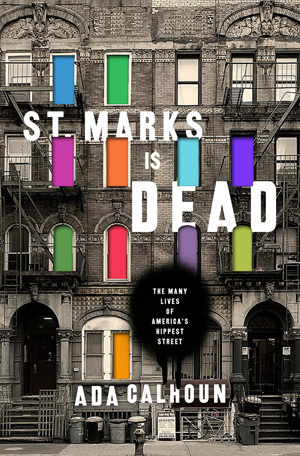
7. I did mention in my last Top Ten Tuesday post that I love NYC and this should further solidify that. I am really a fan of the black and white covers with a splash of color, something this book and St Marks is Dead both do really well.
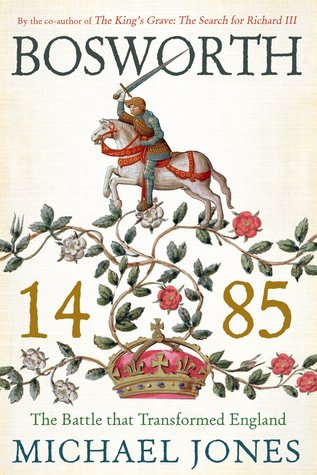
8. Love this one for the entwining of the red and white roses, symbolizing the houses Lancaster and York. The Battle of Bosworth, and Henry Tudor's win and marriage to Elizabeth of York, would bring the houses together and finally end the Wars of the Roses
9. Another simple but very effective cover.
10. I utterly adore Scotland. I can't wait to go back again and again. I purchased this book, among many others, when Mom and I went in 2009 and whenever I especially miss it, I pull out books like this and look at the beautiful photos of this beautiful country.
So, fellow readers, what topic did you choose for the Top Ten Tuesday Rewind this week?? Leave a link to your blog with your comment so I can check yours out too!
Happy Reading!
Sarah
Monday, August 8, 2016

Sunday, August 7, 2016
Ask Not: The Inauguration of John F. Kennedy and the Speech That Changed America

Rating: 4 Stars
"Ask not what your country can do for you, but what you can do for your country."
Perhaps among the most recognized speeches in history, Kennedy's inaugural words were viewed by many as the dawn of a new era filled with optimism, with a stunning young family now living at one of the most famous addresses in the world.
This book details the week prior to Kennedy speaking those very words, and we are given of glimpse of how his mind worked as he wrote and re-wrote, added to and changed his speech. This was all-consuming for him and Kennedy was determined to make it the best of his career. Papa Joe did not help matters much, constantly telling Jack that he had already wasted his best speech prior to this - but Jack never took the bait and would keep his inaugural address a secret even from the family patriarch. Kennedy wanted his words to reflect the changing of the times and usher in an era of hope in the bleak Cold War landscape. I think we might consider him a success, seeing as how this speech and the Gettysburg Address are the most well-known speeches in the history of American politics.
Before the prologue we are treated to Kennedy's address in its entirety and even 56 years on they hold their own weight. I can read the words and hear them inside my head in JFK's voice. I have seen footage of the address, but never in its entirety. It is not a long speech, but it is powerful. Reading about all the work that went into it makes the speech even grander. I never knew before that there was such hubbub over the speech to begin with, or arguments/misremembering about how much Kennedy wrote himself vs how much his speechwriter, Ted Sorensen, contributed. The author makes a very important point early on, that "...The issue of whether Kennedy composed his own inaugural address, or simply delivered Sorensen's beautiful words, is not some arcane historical footnote. The speech is generally acknowledged to have been the greatest oration of any twentieth-century American politician" (page 9). This speech was a big deal, and still is. It marked the moment in time when America was moving forward into this state of being, and the myth Kennedy was creating was a big part of that. If it were to turn out that Kennedy did not write it, one can only imagine how devastating that would be. Luckily, it would seem that according to the author and evidence we have in the form of Kennedy's secretary's shorthand notes, Kennedy did in fact dictate to her, "...the most immortal and poetic passages of his inaugural address" (page 13).
(As a side note, I am also currently reading Kennedy's 'Profiles in Courage' and I never knew there was also controversy as to how much of that book he wrote himself as well. People seem to forget that Kennedy was one of the most highly educated presidents we'd had up to that point, so why couldn't he have written it himself?)
Beyond the prologue and debate over who wrote which parts and whether the most important and memorable passages were from Kennedy's brain or Sorensen's, the book is broken up into chapters that detail every day leading up to his delivery of the address. We see not only Kennedy's work on the speech, but the physical work he put into his own appearance (I firmly believe he would have eventually died of skin cancer had he not been assassinated). This was key to pushing the myth of the Kennedy mystique - to always appear youthful and carefree - especially following the administration of Eisenhower. Despite the fact that we now know of the myriad of health problems that Kennedy suffered from nearly all his adult life, on that blustery, cold day in January, he looked to be a picture of perfect health. despite the cold, Kennedy did not even wear an overcoat, though much later it would be reported that he stayed warm due to the long underwear he wore beneath his clothing. Image was everything to the Kennedys.
As with most other Kennedy books, this one too touches on some of the Kennedy/Johnson friction. I do not know enough yet about the two men and their politics to understand why there was such aggravation or why Bobby and LBJ especially did not get along. I guess I don't yet understand why LBJ was the VP if the Kennedys could not stand him, or if that was even true, and so on. Every other book I have read about Kennedy so far as mentioned this at least in specific situations and there is much I have yet to understand about this dynamic between the president and vice president.
I was mildly creeped out by the extent of Evelyn Lincoln's devotion to Kennedy, though perhaps it is not entirely fair based on one author's assertions - or maybe it is, who knows. But she kept many of his papers and such, some of which could only have been retrieved from the garbage after he had tossed them out. So, kind of creepy. But at the same time, anything a president wrote could have been historical so perhaps we should also thank her for preserving what she did.
Overall, as with many books about the Kennedy family, I really like this one. It was not sensational, as some books about the family tend to be, and stays focused on the speech and Kennedy's preparations for it in those final ten days before addressing the nation. Definitely recommended for anyone with an interest in Kennedy, the speech, or US history in general.
Two quotes that amused me:
Page 142: "Neither Evelyn Lincoln's appointment book nor the newspapers tell us how long Kennedy stayed at Mahoney's party. We only now he woke up at 6:45 AM on January 19th to the roar of a motorcycle, threw open his second-floor bedroom window, and shouted down, "How about a little more quiet on my last day as a private citizen!"
Page 182: "Grudged and politics go together. Still, so many of the VIPs at the Kennedy inauguration had such a long and contentious history of slights and rivalries that had their thoughts been vocalized, the air would have crackled with a Babel of competing voices, like dozens of broadcasts jammed onto a single shortwave radio band."
Saturday, August 6, 2016
Magna Carta: The Birth of Liberty
Rating: 5 Stars
I heart Dan Jones. He is my favorite historian and if he wrote a book about watching paint dry, I would read it because he is the kind of writer who could make it so engaging you would not realize how boring the topic actually is.
Luckily, he writes about people and things that are already very decidedly NOT boring - namely my two favorite families - the Plantagenets and the Tudors - and the eras in which they lived.
Magna Carta is perhaps the most misused document in the history of the world. It had nothing to do with democracy, as Jones makes very clear, and everything to do with the rights of the barons who were opposing King John at an incredibly tumultuous time in the kingdom. Yet in the 800 years since its initial issue, it has threaded its way through a myriad of other documents, most notably the Declaration of Independence in 1776. As Jones recounts, even in 2014 then-Prime Minister David Cameron pledged that all the children in the UK would study the document because "...its principals shine as brightly as ever, and they paved the way for the democracy, the equality, the respect an the laws that make Britain" (pgs 198-199). Yet studying the actual text of the document itself (which you can do without going to DC or England, thanks to the fact that the original 1215 charter is included in its entirety in Appendix A) shows that was not its purpose at all. In fact, many of the clauses did just the opposite and its purpose was to limit the power of the king, as well as certain groups of people such as women and Jews (page 198). Yet this great myth has been perpetuated for years and years that Magna Carta is the basis of democracy, something the authors of it would definitely disagree with, and the idea would have been completely foreign to them.
Th author does a fantastic job taking us back in time to 1215 to see why the document was even written in the first place. Due to John's complete lack of ability to be a good king, the aristocracy took it upon themselves to put John in his place, so to speak. Naturally, John had no intention of adhering to the agreement signed that day at Runnymede. Perhaps this quote from the book best sums up John, better than anything I have read before:
"People loathed John. For all the attempts that have been made by historians to rehabilitate his reputation, any study of England's third Plantagenet ruler must account for the fact that he was a cruel and unpleasant man, a second-rate soldier, and a slippery, faithless, interfering, uninspiring king. It is true that at times John was no less ruthless than his brother Richard, nor any less manipulative than his father, Henry. Kings in this age were not supposed or expected to be nice...But if John's relatives shared some of his worst traits, he shared almost none of their best" (page 28).
I loved this book for many reasons. In addition to its in-depth look at the events leading up to, and after Magna Carta was first signed, I greatly appreciated the nod to Eleanor of Aquitaine. Some historians are quick to downplay her importance or dismiss her altogether, but Jones does not do that. Instead he says, among other things, "On March 31, 1204, John's spirited but ancient mother, Eleanor of Aquitaine, died at eighty-two. Her formidable presence had kept some order in the empire's south, but her death prompted the King of Castile to invade Gascony" (page 33).
Another historical figure who is finally getting his due in general is that of William Marshal, who I also find highly fascinating. I am always curious how the early Plantagenet rulers can even be discussed without mention of the greatest knight in England's history, but Jones makes sure to note his presence and importance whenever necessary. He served five kings and did his best to ensure order was kept (or restored when John did something stupid) - Henry the Young King (crowned while Henry II lived, but never given any real power, thus leading to his rebellion. He died before his father though, and would never see his way to the throne), Henry II, Richard I, John, and Henry III.
Despite the short length of the book, 200 pages exactly of text discounting the appendixes, it is packed full of information. The pages are peppered with footnotes, with additional notes after Appendix C and before the substantial bibliography. There are two maps: one showing England in John's time and the other detailing the whole of the Plantagenet empire in what is now France, both at its height in 1189 and then after John lost several territories by 1215. Appendix A is Magna Carta 1215, Appendix B lists "The Enforcers of the Magna Carta" and gives a brief one-paragraph summary of each of the 25 baron who were supposed to enforce the charter as it was written, and Appendix C is a timeline of important events in the 900 years since Henry I became King of England and first granted a charter which listed similar clauses as Magna Carta. It also details some of the critical events leading up to 1215, as well as various events in the aftermath, including reissues of the charter by Henry III and Edward I. Also included are references to the charter in the following centuries up to 2015, the 800th anniversary.
While highly informative, this is still an easily accessible read. Dan Jones is a fantastic writer who conveys the importance of what he is writing without dumbing anything down. Highly recommended.
180 Days Abroad With the Chinese Locals: What Textbooks and Classrooms Don't Tell Us About China

Rating: 3.5 Stars (4 Stars with an additional proofread/edit)
I received a free PDF copy of this manuscript from the author, Aldo Quintana, in exchange for an honest review.
At this time there is not a cover but I will add it to the post when it becomes available.
My rating means just that. While the copy that I received had been proofed, the author indicated in an email exchange that he was planning to do at least one more read aloud and I provided a short list of minor errors I came across such as typos or awkward phrasing. There are not things that necessarily take away the strength of the story, which is the author's voice and personal experiences while in a foreign country, but are needed fixes in order to make the story a bit more polished.
The author and I have been Twitter and Facebook page followers of one another for some time now and I have to admit that as I was seeing his posts or Tweets about the manuscript, I was was kind of hoping he would ask me to review it. I know next to nothing about China, save for snippets about the Great Wall, and the documentaries I have watched about the Terracotta army of Emperor Qin Shi Huang. To use a phrase you might recognize as one I say often, "It is almost embarrassing how little I really know about China." I was interested in reading it because of the premise, of spending six months in a foreign country, as well as the topic, China.
I learned four very valuable lessons that I would like to share right off the bat that make me positive that I could never actually live in China:
- Fireworks are legal every single damn day of the year. If you know me, then you know that every year, from roughly June 25th through July 3rd, I rage about idiots shooting off fireworks every day leading up to the 4th. It would drive me batshit insane to hear them year-round. The 4th is one of my favorite holidays and every year these morons around me try to ruin it by setting them off constantly. If though, as it is mentioned in the book, they are set off to signify the birth of a baby, I am okay with that.
- The pollution is seriously out of control. If there was ever a need for environmental reforms, this is it. When your government has to issue a chart that helps determine pollution level each day, and that there will be some days the pollution is so bad that the general public is told to stay indoors, then you have a problem. China has just such a problem. In the book the author discusses the mask he wore on the high-pollution days and he says he still has it. What a souvenir! As an additional note, the author included this chart as a graphic within the text. It was nice to have the visual.
- Negotiating would make me seriously crazed and impatient. I am not a patient person to begin with (I'm working on it), and to haggle with street vendors is something I would not be able to do well because I don't like wasting time, and I don't like people trying to sucker me out of money. I know this is common in many countries besides China, but I would either never buy anything or end up broke really quickly because I just don't have time for tomfoolery.
- You are not allowed to use Google Chrome. Sorry China, this was the deal breaker. All I use is Google Chrome.
Upon graduating with an MBA, the author noticed an internship via an Internet job board and applied, never imaging he would actually get it. But he did, after a few phone interviews, and he found the job was actually in China, not the US as he had thought. The book that followed is a conversational collection of his observations, thoughts, and conversations with fellow interns and the local population that he worked with and lived among. I love to travel and this would be amazing - though I would be highly anxious jumping into living in a city where an estimated 90% of the population did not speak the same language as me. That would terrify me - I was scared enough when Mom and I got separated at the tube station at Heathrow in London our first night in England. I can't even imagine being in a country where I couldn't read road signs, directions, anything. I do admire someone who can take risks like this and just pack up and go. The author provides many tips for getting around the language barrier. He suggests having phrases already written or typed out in a doc on your phone, which he would then show to taxi drivers and such. When that did not work, having a photo of the place you want to go works well also. I also appreciate the fact that the author attempted to learn some Mandarin before leaving (he had about 30 days to do so, from the time he had the phone interviews to the day he got on the plane). I think this piece is critical, whether you are going on vacation, or moving to a foreign country. Regardless of whether or not the 'business language' of the country is English, I think it goes a long way to show those you come in contact with that you made the effort to speak their language instead of expecting them to speak yours.
I really related to the author when he made reference to the fact that textbooks and class work are great in theory or hypothetical situations, but not so much for problems and situations encountered in the real world. This has never been more clear to me than when I was working on my own Master's degree in Special Education. I had a couple professors who had been out of the classroom for many years, and while some of the scenarios and solutions worked in a perfect world, they were simply not applicable anymore.
The way the author presented the information, I would consider this book a combination of a how-to guide (for living abroad), memoir (sharing his own experiences with both work and leisure), a travelogue (for the places he visited while living in Langfang), and non-fiction/history (for what he shares regarding the history of China). he also uses a variety of ways to present information - checklists, graphics and printed conversation. The third one is tricky; if you have read any of my reviews in the past, you know I am not a fan of this. Unless any author recorded the conversation at the time to know word-for-word what was said, I generally find it suspicious. But here I think it works, because of the topic. It relates to the author's experiences and observations. All throughout the book, the author uses initials to identify the various people he lives with, works with, and socializes with. In regards to these conversations, he also identifies the person by gender and nationality, the latter of which I think is helpful because it speaks to that person's perspective in regards to whatever they are discussing. Other graphics the author included referred to items needed while working abroad (and this would apply to any country, not just China. He also included a currency table, which is highly important - especially on a budget. This is useful whether on vacation or not - as I can attest to. In 2010 Mom and I were stranded in Amsterdam for an extra week and it was terrible because we had definitely not planned for 7 additional days of hotel fare.
There are so many things I learned about daily life in China, that I am not sure I could actually recount everything here without making my review into a book itself. The "Beijing Belly" and kids just peeing and pooping at will on sidewalks in public weirdness aside, there were many moments that made China more real to me and gave me a clear picture of life as the author lived it for those 6 months. Some of these stories make China almost seem like a very primitive country with no modern conveniences (such as the fact that some buildings have no addresses, such as the author's apartment complex which was "untraceable on Google Maps"). Then in other instances, China seems like the place to be in the future, such as when Langfang (population roughly 700,000) is considered to be "next Silicone Valley of China". It is definitely a study in opposites, and a country with a very complex past, present, and future.
I know China is kind of used as the big bad bogeyman here in the US, and most people who know me would classify me as pretty liberal, but I have to admit I am kind of a fan of the way the Chinese government deals with rapists and child molesters. In a nutshell, the guilty party must apologize to their victim's family, pay the family an amount of money, after which time they are executed by the military. The victim and their family are invited to watch the execution. China does not mess around when it comes to sex offenders and I am a staunch supporter of this. Given the rape culture flourishing in the US and the insane amount of victim-blaming that goes on here, coupled with the laughable-if-it-wasn't-so-infuriating prison sentences handed down (prime example: RAPIST BROCK TURNER and his lousy 3 months), it is almost refreshing to see these horrific crimes dealt with in such a definitive manner.
Overall, I enjoyed reading about the author's experiences as he lived in China for this time. The book reads almost like you are having a (one-sided) conversation, and for those who like a little more formality in their non-fiction, it may bother you. The author makes a point to explain as much as he can in a variety of ways about his experiences (i.e. the conversations, graphics, etc). I also appreciated that he took the time to show both the ups and downs of his experiences. He was off to a rough start when he first arrived, due to his assigned living quarters being totally disgusting, and the fact that no one at the company seemed to expect him when he arrived on his first day. He dealt with insane amounts of pollution, public transportation, and people constantly coughing all around him and never covering their mouths. But then again, he also got to see fascinating tourist stops like the Forbidden City and the Great Wall, and gain valuable work experience through his internship. This is an interesting and informative read that I can definitely recommend to others who enjoy that travelogue/memoir combo.
Wednesday, August 3, 2016
1066 Turned Upside Down

Rating: 5 Stars
I will be the first to admit that I am incredibly to hard to please when it comes to historical fiction. I love history so much, and consider myself pretty well-read on the subjects I love the most, that historical fiction kind of irritates me because it is authors making up conversations and shoving them in the mouths of people I admire. So, you imagine my trepidation over not just historical fiction, but ALTERNATIVE history. Under normal circumstances I could not imagine anyone messing with my Anglo-Saxons, Plantagenets, or Tudors, but to make their lives something completely different?!
And yet.
I am fascinated by the Anglo-Saxons. From King Alfred, to Aethelstan, to Edward the Confessor, and all those in between. So too, does this fascination extend to the short-lived rule of the last two Anglo-Saxon kings: Harold Godwinson and Edgar (grandson of Edmund Ironside). While kingship was generally heredity, ultimately it was the Witan who chose the next king. What accounts we have indicate the Witan chose Harold, though he was only Earl of Wessex and not of royal blood. Edgar was still a teenager at the time, but the son of Edward the Exile, who was Ironside's younger son. Harold was killed at the Battle of Hastings and from there the Witan elected Edgar as king even though he was considered too young to rule (which is why they'd chosen Harold in the first place).
I have a love-hate relationship with the Normans, because I despise the fact that William the Bastard invaded the island I love so dearly and wrecked havoc on the people, towns, and countryside. On the other hand, without William coronation, would the Plantagenet dynasty ever have come to rule? Would we even know Eleanor of Aquitaine's name? Therein lies the dilemma.
I do not believe Harold a saint. It is entirely possible he had Edgar's father Edward the Exile - not to be confused with Edward the Confessor - murdered shortly after The Exile and his young family arrived in England on a summons from The Confessor. The Exile and his family had been living in Hungary for many years, he having settled there after the also-mysterious death of his father, Edmund Ironside - after which The Exile and his older brother, also named Edmund, were spirited out of the country and Cnut's grasp. But by the meager accounts we do have he was a just king who ruled well in his nine month reign and likely could have been good, maybe great. William, on the other hand, insisted he had claim to the throne and was determined to fight for it, reminding everyone that Harold swore an oath to him a few years earlier to support William's claim to the throne. It is very likely that could have happened, but that it was sworn under duress and Harold did so only to ensure that he and his men would live and make it back home. A promise can hardly be considered valid if the person swearing the oath is threatened with death. Unfortunately, while William was pressing his claim from Normandy, Harold's good-for-nothing (and some say insane) brother Tostig was tagging along with the mighty Harald Hardrada, King of Norway, also making his claim to the throne. Harold and his men claimed a huge victory at Stanford Bridge (along with the lives of Tostig and Harald, the last of the mighty Viking warriors), but after that is where things fall apart. Hearing of William's arrival, Harold marches his men straight for him at Hastings, without waiting for back-up or to give his men some rest before the next bloody engagement.
You might wonder what all this has to do with the book, and I will say, well, everything - because the events as I have described above are how history actually went, as far as we can ever really know. The premise of this wonderful little gem is that a series of authors provide their own takes on the year 1066 and COMPLETELY REWRITE HISTORY, sometimes in the most glorious of ways. Ways that made my heart so happy, that for a moment seemed so real. 1066 is one of the most important events in the history of Europe, if not the world. So may paths might have been altered if any number of events had a different outcome. The possibilities are almost endless and in this book we see several of those play out.
So, if I have thoroughly convinced you of how crazy I am about the Anglo-Saxons, then you can believe that this is a must-read. The book is broken up month by month accounts of how events might have occurred instead in 1066. A couple authors contributed more than once, so it was also interesting to compare one of their versions to another. One of the things I really appreciated was a brief summary of the actual history of that month that occurred before each new story. I feel like this is especially important for those who do not know a lot about 1066, so they are able to differentiate between what really occurred and what is a product of that particular author's imagination. It is also nice for people like me who do have that knowledge base but might need a quick refresher of a specific event. In addition, after each story there are two discussion questions to make you ponder further repercussions of the event you just read about. I feel like this was a nice touch, because as you start thinking about changing one outcome, it makes you realize how many other things afterward might be altered as well.
While the entire collection of stories is strong, there are a few that really stood out to me for various reasons and those are the stories I will highlight.
January 1066 begins with the story 'To Crown a King' by Helen Hollick. I appreciated this one right off the bat because it addressed Edgar directly. So often when I am reading books purporting to be the 'history of England', Ironside's death is glossed over and his sons and grandsons are often not mentioned at all. Ironside had been king of England, co-ruling with Cnut, sort of, when he died suddenly. He also happened to be the older half-brother of Edward the Confessor, the one who could have saved everyone a lot of trouble if he would have managed to have a couple children with his wife (not coincidentally, Harold Godwinson's sister) before he died. So, being that Edgar was Ironside's grandson, he was the true heir. But as I mentioned above in my not-so-brief history lesson, the Witan ultimately chose the king and Harold was their pick. Not so in this story though. Edgar voiced his strong argument and was ultimately chosen as England's next king, bypassing Harold altogether.
Another story of particular interest to me was "Emperor of the North" by Joanna Courtney. because it is an option I had never really considered before. My focus in all of my reading about 1066 had always revolved around Harold defeating William at Hastings. I had never before considered what might happen had Harald defeated Harold at Stanford, weeks BEFORE Hastings. But this is exactly what we see happen in this one. As a result of that victory for Harald (and unfortunately, Tostig), the Norwegians eventually succeed in taking the whole of France by 1070. Harald was no longer King, but Emperor. Still not an outcome I would have wanted, but intriguing nonetheless.
The biggest surprise (in two ways) came for me during the May/June 1066 story by Richard Dee. It is called "If You Changed One Thing" and dealt with time-travel. That was the first surprise. The second surprise was that I enjoyed it. I would have to say this might be my favorite story of the whole collection, which is kind of a big deal because they're all great and all have many strengths. This story is told from the perspective of a teacher talking with his students. They are discussing 1066 and the idea of going back in time to change the outcome, but then how that might impact their lives, if they would exist - basically the Butterfly Effect. A boy in the class says that his father's work involves a time machine and he would be able to go back to that fateful battle. His teacher does not believe him...and I will not spoil the rest. Just know that it has the perfect outcome, which also makes it a most-favorite.
Another unusual story is to be found in July 1066, "A Roman Intervenes" by Alison Morton. This was another completely unexpected idea that I think turned out well for the most part. In this author's re-imagining, there is a small country called Roma Nova, entirely independent - basically, Rome survives in this tiny little country where the people still worship Roman gods and they play secret and not-so-secret roles in keeping the peace so to speak. Again, I do not want to give too much away because it is a really wonderful little story, but the ending is quite pleasing for the pro-Anglo-Saxon sect.
There is so much history here and I really want to touch on every single story because they all paint very realistic portraits of so many outcomes, so many what-ifs, and I want to talk about ALL OF THEM. But this review is rapidly approaching one of my longest yet and I think that anyone who only has a passing interest in 1066 has given up long ago. So, I'll touch discuss one more. If you are really interested in absolutely EVERY thought I had while reading, you can check out the notes I made in my progress updates on Goodreads. There are 45 altogether. Just a warning.
In the chapter dedicated to the actual month, October 1066, "Hold England Firm" by Joanna Courtney, I will just say it was everything my Anglo-Saxon-lovin' heart could have hoped for in the real battle. If only Harold had rested his men. If only they had waited for reinforcements. If only, if only, if only.
Okay I lied. Sorry. One more story because it again highlighted Edgar as king and in all honesty that is how the succession should have gone anyway (forgive me, Harold, but at least you'd have been alive had they chosen him to begin with). Unfortunately in this story, Harold had still been killed at Hastings and Edgar chosen by the Witan. In November 1066, "The Battle of London Bridge" by GK Holloway, we see Edgar now as king and this makes all the earls around him uneasy, because he is young and untested in battle. They've been through Stanford and Hastings. They do not know if he really has what it takes. I touched on Edgar's back story previously, so I won't repeat it here, but I think some of their fears were legit. Yet Edgar and his father deserve to have their place in history acknowledged, and it is sometimes overlooked in the chaos and drama of the year. When I was first reading this, I thought of the other difficulties his rule might have presented. Off the top of my head I could not recall how old Edgar had been when his family were summoned by Edward the Confessor and thought it had been when he was in his teens. Language certainly would have been a huge barrier. But I went back and did a little research (yes, I research while reading. I am THAT big of a nerd) and found that it is generally accepted that Edgar was in England around 10 years or so. Thus, he would have been able to learn the language and the customs in that time. I like the issues that arise in this story, the idea that William defeated Harold and was still denied the crown, so he had to save-face with his men so to speak and continue pursuing it anyway - especially after they were promised plenty of plunder. After Edgar and his men are successful in driving back the Normans and defending London, there is a bit of an open-end to the story. At one point it was mentioned that Harold's widow gave birth to a baby boy, so that is something in the back of Edgar's mind. Here he is crowned, rightfully so, yet the dead king's wife has just given birth to her husband's heir - and her brothers happen to be powerful northern earls. That is how the story ends and you are left to imagine what might happen in the ensuing years. Edgar has fended off the Normans, and he might have to do so to his own subjects in the future.
Okay, so I know I have gushed and gushed about how much I adored this book and I do. It is very worthy of those five stars. It is not, however, without its flaws. There were certain phrases used throughout stories that struck me as out of place. Now, I may very well be wrong and these things are totally accurate - just more for me to research! In one story the phrase 'God save the King' was used and I was not sure that was 'a thing' in 1066? I was trying to find out the earliest known use of the phrase but could not find anything that was conclusive. The same thing occurred with the phrase 'step-mother'. I don't know for sure when this became common use and again found nothing conclusive.
Another issue I had was the spelling of names. It was mentioned in the introduction that each auther used the spellings they preferred - and the intro even includes the example of Edith being spelled in various way (Edith, Edyth, Aldytha, Svana, Richenda; 4%). It is confusing enough for newcomers to the subject to sort out all the people who have the same name, but to then have ONE person referred to in so many different ways? I think that could invite confusion. I do understand and respect why the decision was made. On the other hand, I think each story had its own distinct voice, while still meshing well with the others, that a little uniformity could have been a good thing.
So...I guess there is not much else to say except this is a must-read. This is one of THE defining moment in England's history. These tales are superbly imagined and told. And even if you are pro-Norman, you will still find stories of interest to you. Wonderful read, highly recommended.
Tuesday, August 2, 2016
Top Ten Tuesday!
A few weeks ago I stumbled upon The Broke and the Bookish meme, Top Ten Tuesday. I don't usually get to participate because a lot of the topics are geared toward fiction and at this point we all know I am primarily a non-fiction reader. But finally! This week is one I can full participate in and I am so excited! This week's topic:
Right?? Like I can really choose just ten! But I am going to try, because I am excited just to finally be able to participate!!
Okay, so here they are, in no particular order. Just the ten books I would buy right now:




Ten books you'd buy right this second if someone handed you a fully loaded gift card!
Right?? Like I can really choose just ten! But I am going to try, because I am excited just to finally be able to participate!!
Okay, so here they are, in no particular order. Just the ten books I would buy right now:
This was kind of a gimme. If you read the review, or listened to the podcast, you would have expected this one - and first no less! This is an awesome compilations of so many awesome things that make Manhattan, well, Manhattan. I will have this one someday, and take it with me when I visit the city. So good. So, so good.
You might be noticing a theme. I kind of dig NYC. There's so much history, and the city continues to evolve and reinvent itself year after year after decade after decade after century after century. St Marks is one of the places on my list of must-sees!
I mean, do I need to say anything else besides 'the library at Alexandria'? Just think, all that knowledge, gone. I want to tear up just thinking about it.
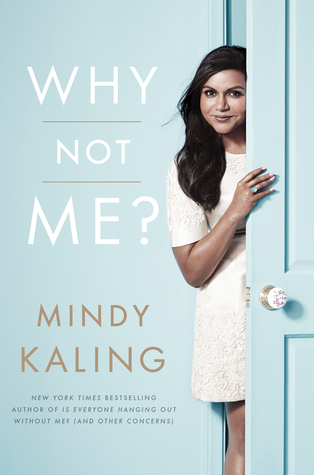
I am kind of obsessed with being Mindy Kaling's BFF. I think we would be very compatible. Apparently many other women think this same way because this very idea is addressed (either in this book or her last one. I can't remember now). I adore Mindy.
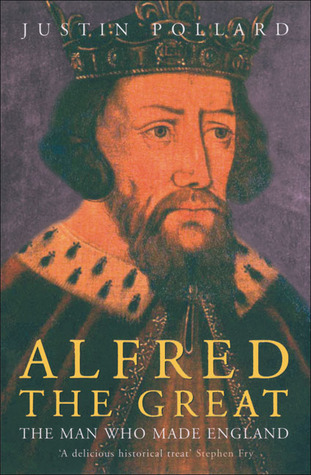
Easily my favorite king. Though he did not technically rule the England we know today, he was hugely the reason England exists as we know it today - if that makes sense. He united the smaller kingdoms, made reading a priority and in general was pretty awesome. He is one of the reasons I love reading about the Anglo-Saxons, and because of him we can!
Above all others, this year provides endless fascination for me. There are so many what-ifs about this year. What if they'd chosen the rightful heir Edgar over Harold? What if Harold has rested his troops instead of marching to Hastings after Stanford Bridge? What if William had not bee able to cross before winter? So many ways to speculate. The end of the Anglo-Saxon kings has always been a bit depressing to me.
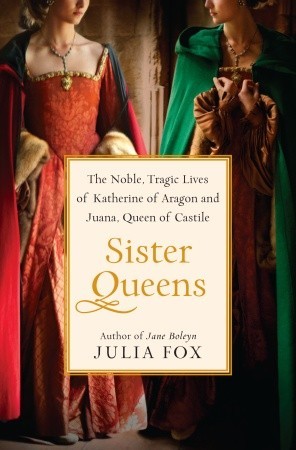
Katherine of Aragon has always been Henry's true queen to me, yet discussed only in that capacity. It was refreshing then to see a biography of both Katherine and her sister Juana (often called 'the Mad') and how they navigated the world they were thrown into. I was pleasantly surprised to see equal attention given to each and this book really helps to see why Juana acted as she did, and was not really so crazy after all, despite the efforts of her father, husband, and son to portray her as such.
I have yet to find a book put out by Thames & Hudson that is not wonderful and beautiful and full of yummy knowledgey goodness. This one is no exception. I am endlessly intrigued by Pompeii and can not wait to see it for myself in the future.
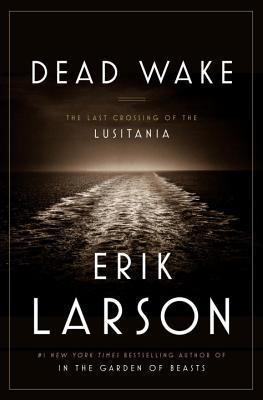
Loved. Love love loved. You can not go wrong with an Erik Larson book and this is a serious contender for new favorite by him (currently Devil in the White City holds that distinction, but it may actually be a tie because this one is seriously THAT GOOD.) This tragedy could have been prevented, yet the many forces at work just could not let that happen.
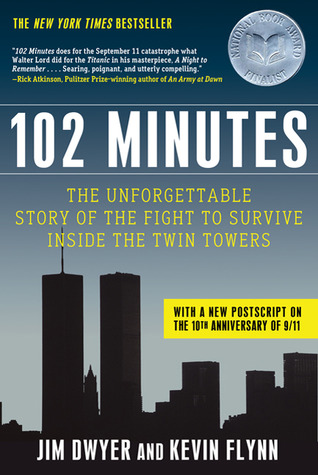
Easily the definitive account of a day I will never forget. Even 15 years later, at the mention of 9-11 I pause and reflect on the chaos and tragedy of that day. It will always be for my generation what the assassination of JFK or attack on Pearl Harbor was for those respective generations. I remember where I was and what I was doing with almost perfect clarity. This is a must read for EVERYONE.
So, those are my ten books. I could easily pick 10 (or 50) more, but am trying to stick to the general idea of the meme.
Which books would YOU want if money were not an issue??
Monday, August 1, 2016
Monday Meme!

Okay, so this is not exactly a meme so much a floor plan to the most perfect house ever. Notice how there is no marks indicating entrance/exit? Lock me up with my books and I a am good! If you must visit, we can speak through an open window, ha!
Summer Reading Program
Another summer of reading is in the books!
The contest officially ends today for OPL, and I was able to surpass my goal of 50 books by reading 64. I probably could not have done it without that stupid Pretty Little Liars series, but I still passed my goal which is better than I was expecting. I also ended up at level 41 for my reading hours badge. The requirement for OPL was 10 hours to earn the badge. You then leveled up for every additional 10 hours you read. So...yes I ended up with 417 hours (out of a possible 1,872 hours, from May 15th to August 1st.). I know it seems insane that I read for what amounts to 17 days, but you have to consider all the times E was with her dad, all the time I read while she was napping, and before she woke up and after she went to sleep. I literally utilized every minute I had to read. AND you can't leave out all the time Eleanor and I read stories together, that added up to some serious minutes (actually, hours!) Some might say I am too competitive. I am not inclined to disagree.
Happy Reading!
Sarah
The contest officially ends today for OPL, and I was able to surpass my goal of 50 books by reading 64. I probably could not have done it without that stupid Pretty Little Liars series, but I still passed my goal which is better than I was expecting. I also ended up at level 41 for my reading hours badge. The requirement for OPL was 10 hours to earn the badge. You then leveled up for every additional 10 hours you read. So...yes I ended up with 417 hours (out of a possible 1,872 hours, from May 15th to August 1st.). I know it seems insane that I read for what amounts to 17 days, but you have to consider all the times E was with her dad, all the time I read while she was napping, and before she woke up and after she went to sleep. I literally utilized every minute I had to read. AND you can't leave out all the time Eleanor and I read stories together, that added up to some serious minutes (actually, hours!) Some might say I am too competitive. I am not inclined to disagree.
Happy Reading!
Sarah
Subscribe to:
Posts (Atom)